Track your nutrition and health goals

Prediabetes Diet Indian: 7-Day Meal Plan, Food List & Regional Guide

By Asfia Fatima, Chief Dietitian at Clearcals
TL;DR
- Prediabetes is reversible for most people through diet and lifestyle changes alone — a 7-day Indian meal plan, full food list, and regional variations are below.
- The core principle: low-glycemic carbs, high fiber, lean protein, and consistent meal timing to keep blood sugar steady.
- This guide covers vegetarian, ovo-vegetarian, and non-vegetarian versions.
- For the medical side — symptoms, diagnosis, HbA1c ranges, and whether prediabetes can be cured — see our dedicated prediabetes guide. This page focuses specifically on the diet.
Prediabetes means your blood sugar is higher than normal but not yet in the diabetic range. The good news: unlike type 2 diabetes, prediabetes is often fully reversible through diet and exercise alone, typically within 3 to 6 months of consistent changes. This guide gives you a practical, India-specific eating plan to do that.
How Diet Reverses Prediabetes
Three things matter most:
Low-glycemic carbohydrates. Foods that release glucose slowly — whole grains, legumes, most vegetables — prevent the blood sugar spikes that drive insulin resistance. Swapping white rice/maida for brown rice, millets, and whole wheat is the single biggest lever for most Indian diets.
Fiber and protein at every meal. Pairing carbs with dal, paneer, curd, or vegetables slows digestion and blunts the glucose spike that would otherwise follow a carb-heavy meal eaten alone.
Consistent meal timing. Long gaps between meals followed by a large meal cause bigger swings than smaller, more frequent meals spaced through the day.
Even modest weight loss — 5 to 10% of body weight — meaningfully improves insulin sensitivity on top of these dietary changes.
7-Day Indian Prediabetes Diet Plan
| Time | Meal | What to Eat |
|---|---|---|
| 6:30 AM | Early morning | Lukewarm water with 1 tsp methi (fenugreek) seeds soaked overnight; optional pinch of cinnamon |
| 7:00 AM | Pre-workout fruit | 1 small guava or apple (low GI); optional 5–6 soaked almonds |
| 7:30 AM | Morning workout | 30–40 min brisk walk or yoga |
| 9:00 AM | Breakfast | 2 moong dal cheelas or vegetable oats upma + mint chutney (no added sugar) + unsweetened green tea or black coffee |
| 11:00 AM | Morning snack | Sprouted moong salad with lemon and cucumber, or herbal tea |
| 1:00 PM | Lunch | 1–2 multigrain rotis or 1 cup brown rice + lauki/torai sabzi or low-fat palak paneer + masoor or toor dal + plain curd |
| 4:30 PM | Evening walk | 15–20 min light walk to blunt post-meal blood sugar |
| 5:30 PM | Evening snack | 1 boiled sweet potato or a handful of roasted chana + cinnamon/ginger tea |
| 7:00 PM | Dinner | Vegetable dalia or quinoa pulao + stir-fried mixed vegetables + a small portion of boiled egg or tofu |
| 9:00 PM | Bedtime | Unsweetened turmeric almond milk; a small square of 70%+ dark chocolate if craving something sweet |
Avoid white rice, excess salt, or fried accompaniments at lunch — this is where most blood sugar spikes happen in a typical Indian thali.
Repeat this structure across the week, rotating breakfast (vegetable daliya, sprouts chaat with egg, oats upma), lunch grains (brown rice, millet roti, quinoa), and dinner vegetables to keep variety while holding the same low-GI, high-fiber principles.
📋 Prediabetes Food List: What to Eat vs. What to Avoid
| Eat Regularly | Limit / Avoid |
|---|---|
| Whole grains: brown rice, millets (ragi, jowar, bajra), multigrain atta, oats, quinoa | White rice, maida, refined flour, white bread |
| Legumes: moong, masoor, chana, rajma, sprouts | Sugary fruits in excess: mango, grapes, banana (small portions are fine) |
| Low-GI vegetables: lauki, torai, bhindi, palak, methi | Deep-fried snacks, bakery items, processed foods |
| Lean protein: paneer, curd, eggs, tofu, lean chicken/fish | Sugary drinks, sodas, packaged fruit juices |
| Healthy fats: nuts, seeds, mustard/olive oil in moderation | Jaggery and other concentrated sweeteners — these spike blood sugar similarly to refined sugar |
| Beverages: buttermilk, green tea, cinnamon/ginger tea | Tea or coffee on an empty stomach (can cause sugar fluctuations in some people) |
Diet Type: Choose What Fits You
- Vegetarian — Plant-based foods and dairy; excludes eggs, meat, fish, and seafood.
- Ovo-Vegetarian — The vegetarian base plus eggs; still excludes meat, fish, and seafood.
- Non-Vegetarian — A mix of vegetarian staples, eggs, dairy, lean meat, and fish/seafood for those who want a more protein-diverse diet.
All three follow the same low-GI, high-fiber principles — only the protein sources differ.
Prediabetes Diet Across Indian Regions
- South Indian: Swap polished rice for brown or unpolished rice; choose ragi or millet dosa/idli over rice-heavy versions; go light on coconut chutney and avoid the sugar often added to sambar.
- North Indian: Prefer multigrain or bajra/jowar roti over maida-based naan and paratha; choose tandoori or grilled preparations over butter- and cream-heavy gravies.
- East Indian (Bengali/Odia): Use brown or parboiled rice in smaller portions; favor lighter fish curries over heavy mustard-oil preparations; limit khoya- and sugar-syrup-based sweets.
- West Indian (Gujarati/Maharashtrian): Favor bajra/jowar rotla and dal over sweetened curries and farsan; watch portions of jaggery, which appears in many traditional Gujarati dishes.
Are There Apps to Help Track a Prediabetes Diet?
Yes — and for most people, a tracking app makes the biggest difference in the first few months, when you're still learning which foods and portions work for your body. Look for an app that can log Indian dishes specifically (most calorie trackers are built around Western food databases and struggle with dal, sabzi, and mixed dishes), track fiber and carbs (not just calories), and ideally let you log home-cooked meals quickly rather than only packaged products.
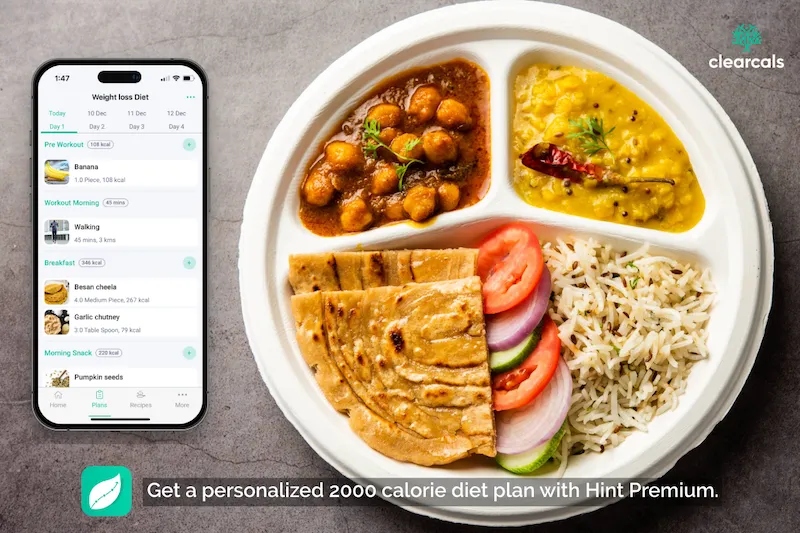
The Hint app is built around Indian food data for exactly this reason, with an option to generate a personalized meal plan and, through Hint Premium, get ongoing dietitian support if you want more hands-on guidance.
Metformin and Semaglutide for Prediabetes
Metformin and semaglutide are sometimes prescribed for prediabetes to improve insulin sensitivity and help control blood sugar, particularly for people with additional risk factors (strong family history, obesity, or limited improvement from lifestyle changes alone). They are not a substitute for diet and exercise — most guidelines recommend lifestyle change as the first-line approach for prediabetes, with medication considered case by case. If you've been prescribed either, talk to your doctor about how to pair it with the eating pattern in this guide, and never start or stop a prescribed medication based on online information alone.
Do's and Don'ts for a Prediabetes Diet
Do's:
- Start your day with soaked fenugreek water to help stabilize morning blood sugar.
- Get 30–40 minutes of morning exercise — walking, yoga, or light strength training.
- Eat balanced meals with a protein or fiber side at every meal, not just lunch and dinner.
- Snack on buttermilk, roasted chana, or green tea between meals rather than skipping snacks entirely.
- Eat raw vegetables or a small salad before your main meal to slow sugar absorption.
- Include healthy fats — nuts, seeds, fish — for heart health alongside blood sugar control.
- Finish dinner by 9 PM and aim for 7–8 hours of sleep; poor sleep raises fasting blood sugar.
- Recheck your fasting glucose or HbA1c every 3 months to track whether your changes are working.
Don'ts:
- Don't have tea or coffee on an empty stomach — for some people this causes blood sugar fluctuations.
- Don't rely on sugary beverages or processed snacks, even "diet" or "sugar-free" versions, as a regular habit.
- Don't skip meals — long gaps followed by a large meal cause bigger blood sugar swings than smaller, regular meals.
- Don't over-rely on deep-fried or highly processed foods, even if portions are small.
- Don't ignore stress — unmanaged stress raises cortisol, which can itself raise blood sugar.
General Tips for Managing Prediabetes
- Monitor your blood sugar periodically (not necessarily daily) to see how specific foods and meals affect you personally.
- Prioritize fiber at every meal — whole grains, legumes, and vegetables — to slow glucose absorption and support digestion.
- Aim for at least 30 minutes of physical activity most days; this improves insulin sensitivity independent of diet changes.
- Stay hydrated throughout the day; dehydration can affect blood sugar readings.
- Practice stress-relief techniques — yoga, meditation, deep breathing — since chronic stress can work against your dietary efforts.
Frequently Asked Questions
1. What should I eat for breakfast if I have prediabetes?
Favor protein- and fiber-rich options over carb-heavy ones: moong dal cheela, vegetable oats upma, or sprouts chaat with egg all work well. Avoid sugary cereals, white bread, and fruit juice first thing in the morning.
2. Is rice good for prediabetes?
White rice has a high glycemic index and is best limited or swapped for brown rice, millets, or quinoa, which raise blood sugar more gradually. Small portions of white rice paired with dal and vegetables are a reasonable middle ground if you can't avoid it entirely.
3. Is fruit okay on a prediabetes diet?
Yes, but choose lower-GI fruits — guava, apple, papaya, berries, orange — and watch portions on higher-sugar fruits like mango, banana, and grapes rather than cutting fruit out entirely.
4. Can a vegetarian Indian diet reverse prediabetes?
Yes. Indian vegetarian staples — dal, vegetables, whole grains, curd — already align well with a low-GI, high-fiber diet. The main adjustments are usually reducing white rice/maida and increasing protein and vegetable portions relative to refined carbs.
5. How long does it take to see results from a prediabetes diet?
Many people see improvement in fasting blood sugar within weeks, but HbA1c — a 2–3 month average — typically takes a full 3-month cycle to show meaningful change. Most guidance points to 3 to 6 months of consistent changes for measurable reversal.
6. Is jaggery a safe substitute for sugar in a prediabetes diet?
No. Despite being marketed as "natural," jaggery raises blood sugar similarly to refined sugar and should be limited the same way.
7. Do I need a dietitian, or can I follow a diet plan on my own?
Many people manage prediabetes successfully with a self-guided plan like the one above. A dietitian becomes more valuable if you have other conditions (PCOS, thyroid issues), aren't seeing progress after a few months, or want a plan precisely tailored to your numbers and preferences.
Want This Diet Personalized to You?
Everything above works as a self-guided plan. If you'd rather have it tailored to your age, weight, activity level, and food preferences, the Hint app can generate a personalized prediabetes meal plan, and Hint Premium adds dietitian consultations if you want ongoing, hands-on support.
Final Thoughts
Prediabetes is one of the few health conditions where diet alone can genuinely reverse the diagnosis for most people. The principles here — low-GI carbs, fiber and protein at every meal, consistent timing, and regular movement — apply whether you're eating South Indian, North Indian, or any regional thali.
Give it a full 3-month cycle before judging results, since that's how long it takes your HbA1c to reflect the change.
About the Author
Asfia Fatima is the Chief Dietitian at Clearcals, with a Master's Degree in Dietetics and Clinical Nutrition and over a decade of experience in clinical nutrition and lifestyle management. She specializes in evidence-based diet planning for weight loss, diabetes, and metabolic health.
🔗 Connect with Asfia on LinkedIn