Track your nutrition and health goals

Diabetic Diet Chart: A Complete Daily Chart for Managing Blood Sugar

By Asfia Fatima, Chief Dietitian at Clearcals
TL;DR
- A full daily diabetic diet chart — meal timings, what to eat, approximate calories, and why each choice works — is below, along with a food exchange chart organized by glycemic index.
- This chart applies to Type 2 diabetes (the most common form) and works as a starting template for prediabetes and gestational diabetes too; adjust portions to your own calorie needs.
- If you also manage high blood pressure or high cholesterol alongside diabetes, see the adapted chart further down — the core principles overlap more than people expect.
- A diet chart is a starting point, not a fixed prescription — your exact calories and portions should reflect your weight, activity level, and any medication, ideally checked with a doctor or dietitian.
Why a Diet Chart Helps With Diabetes
A diet chart isn't about restriction for its own sake — it works because of two related ideas: glycemic index (GI), which measures how fast a food raises blood sugar, and portion size, which determines how much of that effect you actually get in one sitting. A chart that's planned around low-GI foods, sensible portions, and consistent meal timing keeps blood sugar from spiking and crashing through the day, instead of leaving it to guesswork meal by meal.
This isn't just theory. Research on medical nutrition therapy shows it meaningfully improves glycemic control in people with diabetes¹, and a meta-analysis of randomized controlled trials found that a low-glycemic-index diet produced better blood sugar control than a high-GI diet in people with Type 2 diabetes².
The Diabetic Diet Chart (Full Day)
This sample chart targets roughly 1,500–1,600 kcal — adjust portions up or down based on your own calorie needs, body weight, and activity level.
| Time | Meal | What to Eat | Approx. Calories | Why It Works |
|---|---|---|---|---|
| 6:30 AM | Wake-up | Lukewarm water with 1 tsp soaked methi seeds | ~10 kcal | Methi (fenugreek) has shown modest blood-sugar-lowering effects |
| 8:00 AM | Breakfast | 2 multigrain dosas + mint chutney + 1 glass unsweetened buttermilk | ~320 kcal | Low-GI grains + protein from buttermilk slow glucose release |
| 11:00 AM | Mid-morning snack | Small handful (15–20g) roasted almonds or walnuts | ~110 kcal | Healthy fats and protein blunt insulin spikes between meals |
| 1:00 PM | Lunch | 1–2 multigrain rotis or ½ cup brown rice + 1 bowl dal + non-starchy sabzi + salad + 1 cup buttermilk | ~480 kcal | Fiber, protein, and low-GI carbs balanced on one plate |
| 4:30 PM | Evening snack | Sprouted moong chaat with onion, tomato, and lime | ~120 kcal | High protein and fiber regulate the pre-dinner sugar dip |
| 7:30 PM | Dinner | Grilled paneer or fish + steamed spinach and broccoli (light on carbs) | ~340 kcal | Low-carb, protein-forward dinners help manage overnight glucose |
| 9:00 PM | Post-dinner | Warm chamomile or cinnamon tea, unsweetened | ~5 kcal | Caffeine-free wind-down that doesn't affect blood sugar |
Vegetarian by default — swap paneer/fish for sprouts, tofu, or egg if you follow a different pattern. For a full 7-day rotation with regional (South/North/East/West Indian) variations, see our Indian Diabetic Diet Chart guide; a Hindi-language version is available here.
Diabetic Food Exchange Chart (By Glycemic Index)
Use this as a quick reference when swapping foods in or out of the chart above.
| Food Group | Eat Often (Low GI, ≤55) | Eat in Moderation (Medium GI, 56–69) | Limit or Avoid (High GI, ≥70) |
|---|---|---|---|
| Grains | Whole moong, multigrain atta, oats, quinoa | Basmati rice, cracked wheat | White rice, maida, white bread |
| Millets/Roots | Ragi, jowar, bajra | Sweet potato (small portion) | Potato (large portion), instant mash |
| Fruits (100g serving) | Guava, papaya, apple, orange, pear | Pineapple, watermelon (small portion) | Overripe banana, mango, grapes in excess |
| Legumes | Masoor, chana, rajma, sprouts | — | — |
| Dairy/Protein | Curd, paneer, eggs, lean chicken/fish | Full-fat milk | Sweetened/flavored yogurt, processed meats |
| Sweeteners | — | Jaggery (small amount, occasional) | Refined sugar, honey in excess, sugary syrups |
| Beverages | Water, buttermilk, plain green/herbal tea | Fresh fruit (whole, not juiced) | Fruit juice, soda, sweetened tea/coffee |
Diet Chart for Diabetes With High Blood Pressure or High Cholesterol
If you're managing diabetes alongside high blood pressure or high cholesterol — a common combination — the same chart above works with a few adjustments:
- Cut sodium, not just sugar: limit added salt to roughly one teaspoon a day, and watch hidden sodium in pickles, papad, and packaged snacks.
- Add heart-healthy fats: a tablespoon of flaxseed or chia, a handful of walnuts, and fatty fish (if non-vegetarian) help manage cholesterol alongside blood sugar.
- Lean further into vegetables: green leafy vegetables and other non-starchy produce help on both fronts — blood sugar and blood pressure — without adding meaningful calories.
- Watch saturated fat: swap ghee-heavy preparations for a moderate amount of mustard or olive oil, and limit full-cream dairy.
These changes layer onto the same diabetic diet chart rather than replacing it — you're not following two separate diets.
How to Personalize This Chart
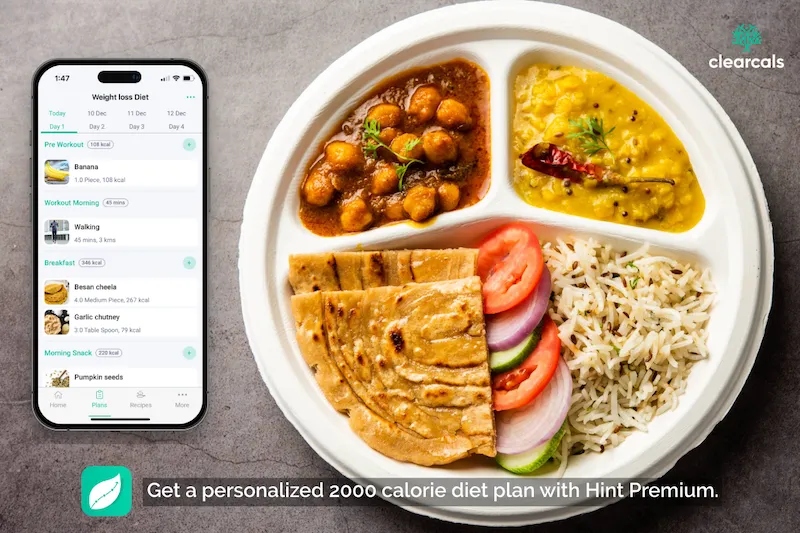
The chart above is a generalized starting template. Your actual calorie needs depend on your age, gender, weight, height, and activity level — someone sedentary needs meaningfully less than someone training regularly. If you'd rather not calculate that yourself, the Hint app builds a diabetic diet chart personalized to your profile (vegetarian, ovo-vegetarian, or non-vegetarian), and Hint Premium adds direct access to dietitians who can adjust it around comorbidities like blood pressure or cholesterol.
Frequently Asked Questions
1. What should be in a diabetic diet chart?
A good diabetic diet chart balances low-glycemic-index carbohydrates, lean protein, fiber-rich vegetables, and healthy fats across regular meal times, while limiting refined sugar, refined flour, and fried foods. The chart above is a complete example.
2. How many calories should a diabetic eat per day?
There's no single number — it depends on age, gender, weight, height, and activity level. The sample chart above targets roughly 1,500–1,600 kcal as a moderate starting point; a personalized number factors in your specific profile.
3. Is rice allowed in a diabetic diet chart?
Yes, in controlled portions. Brown rice or unpolished rice has a lower glycemic index than white rice and is generally preferred; either way, pairing rice with dal, vegetables, and protein (rather than eating it alone) reduces its blood sugar impact.
4. What's the best diet chart for Type 2 diabetes?
There's no single "best" chart — what matters is consistent low-GI carbohydrates, adequate protein and fiber, regular meal timing, and portions matched to your calorie needs. The chart above follows these principles and can be adjusted as your numbers improve.
5. Can a diabetic diet chart include diabetes with high blood pressure or cholesterol?
Yes — see the adapted version above. The same core chart works, with added attention to sodium, saturated fat, and heart-healthy fats.
6. Can a diet chart actually lower HbA1c?
A consistent low-GI, portion-controlled diet is one of the more evidence-backed ways to improve average blood sugar over time, but it takes consistency over 2–3 months to show up in an HbA1c result, and works best alongside any prescribed medication. Use our HbA1c Calculator to track progress.
7. Is this chart different from a 7-day diabetic diet plan?
This page focuses on a single, complete daily chart you can follow or adapt immediately. For a full 7-day rotation with regional Indian meal variations, see our Indian Diabetic Diet Chart guide.
8. Where can I get a diet chart personalized to me?
The Hint app generates a diabetic diet chart based on your own age, weight, height, activity level, and dietary preference, rather than a generic template.
Conclusion
A diabetic diet chart works best as a structure, not a strict rulebook: low-GI carbohydrates, lean protein, fiber, and consistent meal timing, in portions that match your own calorie needs. The chart and food exchange table above give you everything needed to start today — and the comorbidity adjustments mean you don't need a separate plan if you're also managing blood pressure or cholesterol. None of this replaces medical care; it's meant to make your next conversation with your doctor or dietitian more productive.
References
- Franz MJ, MacLeod J, Evert A, et al. Academy of Nutrition and Dietetics Nutrition Practice Guideline for Type 1 and Type 2 Diabetes in Adults: Systematic Review of Evidence for Medical Nutrition Therapy Effectiveness and Recommendations for Integration into the Nutrition Care Process. J Acad Nutr Diet. 2017;117:1659–1679.
- Ojo O, Ojo OO, Adebowale F, Wang X-H. The Effect of Dietary Glycaemic Index on Glycaemia in Patients with Type 2 Diabetes: A Systematic Review and Meta-Analysis of Randomized Controlled Trials. Nutrients. 2018;10:373.
About the Author
Asfia Fatima is the Chief Dietitian at Clearcals, with a Master's Degree in Dietetics and Clinical Nutrition and over a decade of experience in clinical nutrition and lifestyle management. She specializes in evidence-based diet planning for weight loss, diabetes, and metabolic health.
🔗 Connect with Asfia on LinkedIn