Track your nutrition and health goals

Foods to Avoid with High Blood Pressure: Complete Indian Guide (2026)
By Hafsaa Farooq | Medically Reviewed | Updated April 2026
For the 220 million Indians living with hypertension, dietary changes can reduce systolic blood pressure by 8 to 14 mmHg, comparable to a single antihypertensive medication (Appel et al., 1997, NEJM).
But knowing which foods to avoid is often more immediately actionable than knowing which to add, especially when the most harmful foods are everyday staples disguised as normal or even healthy choices.
This guide covers the complete list of foods to avoid or limit with high blood pressure, organised by the mechanism of harm, with particular attention to the Indian diet context, where hidden sodium sources, traditional preparations, and packaged foods create unique risks.
The sodium target: People with high blood pressure should aim for under 1,500 mg of sodium per day (WHO recommendation for hypertensive adults).
The average Indian currently consumes 3,500 to 4,800 mg per day, more than double this target. Most of the excess comes from sources that don't taste salty.
Category 1: High-Sodium Foods (The Biggest BP Risk)
Sodium raises blood pressure through a straightforward mechanism: excess sodium causes the kidneys to retain water, increasing blood volume, which stretches vessel walls and raises pressure.
Reducing sodium from 3,500 mg to 1,500 mg per day lowers systolic BP by an average of 5 to 6 mmHg in hypertensive adults, with some individuals seeing reductions of 10 mmHg or more (He & MacGregor, 2013, BMJ).
1. Packaged Snacks: Namkeen, Chips, Bhujia, Mathri
India's most popular snack category is also among its most sodium-dense.
A single small packet (30g) of commercial namkeen delivers 400 to 650 mg of sodium, roughly 25 to 43% of the daily target for a hypertensive adult in one snack. Bhujia, chakli, mathri, and flavoured makhana are similarly high.
The problem is compounded by portion size: a casual tea-time snack easily becomes 60 to 90g.
Better choice: Unsalted roasted chana, plain unsalted makhana, plain unsalted nuts, or homemade poha with minimal salt. If buying packaged snacks, look for products with under 200 mg of sodium per 30g serving, and stay within that single serving.
2. Pickles (Achaar) and Chutneys
Commercial achaar is preserved in salt and oil.
A single teaspoon of mango achaar or mixed vegetable achaar typically contains 250 to 500 mg of sodium. Many Indian households use two to three teaspoons per meal across both lunch and dinner, easily adding 1,000 to 3,000 mg of sodium from condiments alone.
Even home-made achaar, if made with traditional recipes, uses very high salt quantities.
Ready-made chutneys (tamarind, mint, garlic) sold commercially are almost always high in sodium and preservatives. Fresh home-made chutneys with limited added salt are a completely different matter and can be enjoyed freely.
3. Papads
A single commercial papad contains 200 to 400 mg of sodium, depending on the brand and type (urad dal papads are among the saltiest). Many families eat two to three papads per meal as a routine side.
Roasted papads have the same sodium content as fried, since the salt is in the dough, not added during cooking. Low-sodium papads are available and are a worthwhile swap.
4. Instant Noodles and Packaged Soups
Instant noodles are one of the most sodium-concentrated foods in the Indian market.
A standard 70g packet with its masala sachet contains 800 to 1,400 mg of sodium, representing 50 to 90% of the daily target in a single meal.
Packaged soups, cup noodles, and ready-to-eat dals carry similar sodium loads. These should be treated as occasional foods rather than weekday meals for anyone managing blood pressure.
A useful test: If a packaged food's nutrition label shows more than 600 mg of sodium per serving (or per 100g if the serving size is unclear), it is too high for regular inclusion in a hypertension diet.
This eliminates the majority of instant, packaged, and convenience foods on the Indian market.
5. Processed and Cured Meats
Sausages, salami, ham, processed chicken nuggets, and cured fish are preserved with large amounts of salt. A 50g serving of commercial chicken sausage contains 500 to 800 mg of sodium.
Processed meats are also high in saturated fat and have been independently linked to cardiovascular disease.
While their consumption is lower in India than in Western countries, they are increasingly common in urban households and in school tiffins.
6. Bread and Commercial Baked Goods
This is one of the most surprising hidden sodium sources for Indian consumers.
Two slices of commercial white bread contain 300 to 450 mg of sodium, even though bread does not taste salty. The same applies to pav, dinner rolls, and most commercial rotis and parathas sold ready-made.
Rusks, biscuits, and crackers are similarly high. Buying bread specifically labelled 'low sodium' or baking roti at home from plain atta are the most reliable ways to control this source.
7. Restaurant and Takeaway Food
Restaurant cooking across all cuisines in India uses salt and oil in quantities far beyond what you would add at home.
A typical restaurant meal (dal makhni, naan, sabzi, rice) can deliver 2,000 to 3,500 mg of sodium in a single sitting.
Chinese-style Indian restaurant food (Manchurian, fried rice, noodles) uses soy sauce and ajinomoto (MSG), both very high in sodium, and can deliver 3,000 to 5,000 mg in one meal.
Street food (chaat, pani puri, bhel) relies heavily on salt, sev, and chutneys that together add 500 to 1,500 mg per serving.
This does not mean restaurant meals must be avoided entirely, but people with hypertension should treat restaurant meals as special occasions rather than routine, ask for sauces and chutneys on the side, choose grilled or tandoori preparations over gravies and fried items, and compensate with very low-sodium meals the rest of that day.
Hidden Sodium in Common Indian Foods: Quick Reference
| Food Item | Serving Size | Sodium (mg) | % of 1,500 mg Daily Target |
|---|---|---|---|
| Commercial namkeen / bhujia | 30g (small pack) | 400 to 650 mg | 27 to 43% |
| Instant noodles (with masala) | 1 packet (70g) | 800 to 1,400 mg | 53 to 93% |
| Mango achaar (commercial) | 1 tbsp (15g) | 250 to 450 mg | 17 to 30% |
| Papad (commercial, 1 piece) | 1 papad (~10g) | 180 to 400 mg | 12 to 27% |
| White bread | 2 slices | 300 to 450 mg | 20 to 30% |
| Butter / salted butter | 1 tbsp | 90 to 100 mg | 6% |
| Commercial sambar powder | 1 tsp | 150 to 250 mg | 10 to 17% |
| Soy sauce (Chinese cooking) | 1 tbsp | 900 to 1,000 mg | 60 to 67% |
| Ketchup (commercial) | 1 tbsp | 150 to 180 mg | 10 to 12% |
| Processed cheese slice | 1 slice (20g) | 250 to 400 mg | 17 to 27% |
| Salted peanuts / roasted mix | 30g handful | 150 to 250 mg | 10 to 17% |
| Restaurant dal makhni | 1 serving (~200ml) | 800 to 1,400 mg | 53 to 93% |
Category 2: Saturated Fat and Trans Fat
Dietary fat affects blood pressure indirectly by influencing arterial stiffness, inflammatory pathways, and endothelial function.
The specific concern is not all fat, but saturated fat from certain sources and trans fat from partially hydrogenated oils.
8. Vanaspati Ghee (Dalda) and Partially Hydrogenated Vegetable Oils
Vanaspati, also known as dalda, contains trans fatty acids produced during partial hydrogenation of vegetable oils.
Trans fats raise LDL cholesterol, lower HDL cholesterol, increase systemic inflammation, and impair endothelial function, all of which contribute to arterial stiffness and higher blood pressure over time.
The WHO called for the global elimination of industrially produced trans fats by 2023. Vanaspati is still widely used in Indian commercial bakeries, street food stalls, and industrial snack manufacturing.
Check ingredient labels for 'partially hydrogenated vegetable oil' and avoid products that list it.
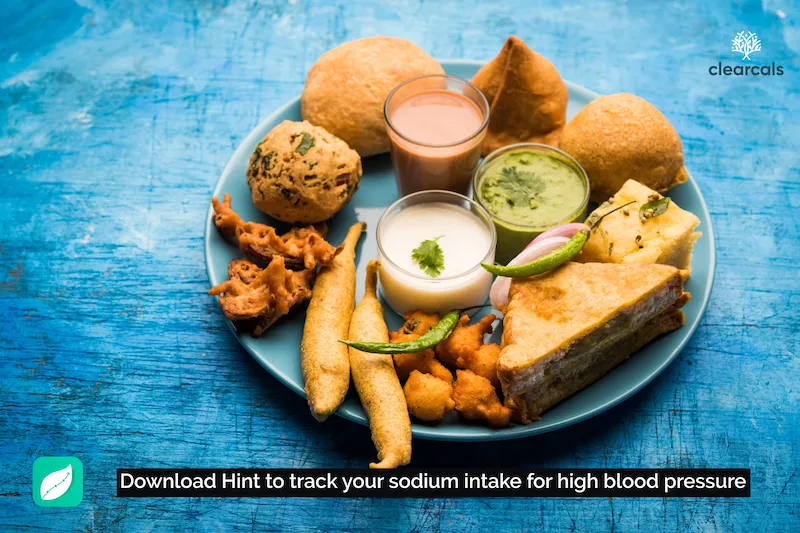
9. Fried Street Food: Pakoras, Bhaturas, Puri, Samosas
Deep-fried foods prepared in recycled or partially hydrogenated oil carry a double burden: high trans/saturated fat from the oil and high sodium from salt in the dough and filling.
A single restaurant-style samosa can contain 300 to 500 mg of sodium and 8 to 12g of fat, largely from the frying medium. The concern is not an occasional samosa but the pattern of daily deep-fried items, which is common in many Indian households.
Context: A small amount of pure ghee (1 to 2 tsp per day) is not a concern for blood pressure and has a different fatty acid profile from vanaspati. The problem is large amounts of ghee on every meal (common in Punjabi and Rajasthani cooking) and the use of dalda in commercial preparations.
10. Full-Fat Commercial Dairy: Processed Cheese, Cream, Malai
Plain full-fat dahi and milk are acceptable in moderation for most people with hypertension, but processed cheese slices, cream cheese, flavoured cream, and malai combine high saturated fat with significant sodium (processed cheese especially).
A single processed cheese slice contains 200 to 400 mg of sodium and 5 to 7g of saturated fat. Switching to low-fat plain dahi and skimmed or toned milk captures the calcium benefit of dairy without the saturated fat load.
Category 3: Refined Carbohydrates and Added Sugar
Refined carbohydrates and added sugar do not raise blood pressure acutely the way sodium does, but their chronic effect is significant.
Repeated blood sugar spikes from high-GI foods drive insulin resistance over time.
Insulin resistance causes the kidneys to retain more sodium, increases sympathetic nervous system activity, and promotes arterial wall thickening, all of which maintain chronically elevated blood pressure.
11. White Rice in Large Portions
White rice is a dietary staple across India and is not categorically harmful for blood pressure. The concern is portion size.
A typical restaurant or home serving of 2 to 3 cups of white rice delivers 80 to 120g of rapidly digested starch with minimal fibre.
Replacing even one serving of white rice with brown rice, daliya, or ragi significantly improves the glycaemic and fibre profile without eliminating rice from the diet.
12. Maida-Based Foods: Naan, Bhatura, White Bread, Refined Roti
Maida (refined wheat flour) is stripped of its bran and germ, removing fibre, magnesium, and B vitamins. Naan, bhaturas, kulcha, puri, and most commercial bread are made with maida or a combination of maida and atta.
The high glycaemic index of these foods, combined with their sodium content (in commercial versions), makes them a double risk factor.
Switching to whole wheat atta for home rotis and choosing tandoori roti over naan at restaurants are practical first steps.
13. Sugar-Sweetened Beverages: Cold Drinks, Packaged Juices, Sweetened Chai
Each additional sugar-sweetened beverage per day is associated with a 1 to 2 mmHg increase in systolic blood pressure over time in large prospective studies (Xi et al., 2015, Journal of Human Hypertension).
The mechanism is insulin-mediated sodium retention and increased sympathetic tone. Cold drinks (cola, lemon drinks), packaged fruit juices (even 'natural' ones without added sugar), and commercial flavoured drinks all fall into this category.
Sweetened chai consumed 4 to 6 times daily is a particular concern in the Indian context. Four cups of chai with 2 teaspoons of sugar each delivers 32g of added sugar per day, 28% above the WHO's daily maximum of 25g for adults with health conditions.
Packaged juice is not a healthy substitute for sugary drinks: a 200ml carton of commercial apple or mango juice typically contains 20 to 25g of sugar (equivalent to 5 to 6 teaspoons) and negligible fibre. Whole fruit is always preferable to juice, for blood pressure and for blood sugar.
14. Indian Sweets and Mithai in Excess
Traditional Indian mithai, including barfi, halwa, gulab jamun, rasgulla, and ladoos, combines high sugar with significant saturated fat (from ghee, khoya, or cream) and often refined flour.
A single gulab jamun contains roughly 150 to 200 kcal, 20 to 25g of sugar, and 4 to 6g of fat. Daily mithai consumption, particularly common during festivals and family occasions, can easily add 400 to 600 kcal and 40 to 50g of sugar per day.
The issue is frequency, not occasional enjoyment. One ladoo at Diwali is not a medical concern. Two to three pieces of barfi every evening is.
Category 4: Alcohol
Alcohol is one of the most clearly established modifiable causes of hypertension.
A systematic review and meta-analysis of 36 trials found a dose-response relationship: every 10g of additional alcohol per day raises systolic blood pressure by approximately 1 mmHg chronically, with heavier drinkers showing much larger effects (Roerecke et al., 2017, Lancet).
Heavy drinking (more than 30g/day for men, more than 20g/day for women) significantly increases hypertension risk and can blunt the effectiveness of antihypertensive medications.
For people with diagnosed hypertension, the practical guidance from major cardiology guidelines is to limit alcohol to no more than 1 standard drink per day for women and 2 per day for men, with several alcohol-free days each week.
One standard drink is approximately 330ml of beer, 150ml of wine, or 30ml of whisky/rum.
Important: Alcohol is not dose-equivalent to other dietary risks. Reducing sodium or sugar improves BP gradually. Stopping or significantly reducing alcohol in heavy drinkers can reduce systolic blood pressure by 5 to 10 mmHg within weeks, one of the most impactful single lifestyle interventions available.
Category 5: Indian-Specific Foods That Raise Blood Pressure
Several traditional Indian foods deserve specific mention because they are often perceived as healthy, neutral, or 'natural' but carry significant sodium or other BP-relevant concerns.
| Food | The Hidden Problem | BP Impact | What to Do |
|---|---|---|---|
| Sendha namak / rock salt | Marketed as 'healthier' than table salt; same sodium per gram; iodine-deficient | Same BP effect as table salt | Use in small measured amounts; do not treat as a free substitute |
| Coconut water (commercial packaged) | Fresh coconut water is low-sodium; packaged versions often add salt | Added sodium negates the potassium benefit | Choose fresh coconut water or check label for <50 mg sodium per serving |
| Chaas / buttermilk (restaurant) | Restaurant versions often contain added salt, cumin, and masala with high sodium | 250 to 400 mg of sodium per glass in many restaurants | Make at home with no added salt; just plain dahi + water |
| Paneer (commercial) | Commercial paneer is often made with high-salt preservatives | 50 to 150 mg sodium per 100g vs near-zero in home-made | Make paneer at home from low-fat milk when possible |
| Nimbu paani / shikanji (commercial) | Street and packaged versions use black salt (kala namak) or table salt generously | A single glass can contain 400 to 600 mg of sodium | Make at home with minimal or no added salt; squeeze only fresh lime |
| Chaat (pani puri, bhel, dahi puri) | Multiple high-sodium components: sev, chutneys, spice mixes, papad | 500 to 1,500 mg of sodium per serving, depending on preparation | Occasional treat only; ask for less chutney and no sev if possible |
| Rajma and chole (canned) | Canned legumes are preserved in salt brine: 400 to 600 mg sodium per serving | Significant amounts of sodium that home-cooked versions avoid entirely | Always use dried legumes cooked from scratch at home |
| Kala namak (black salt) | Contains hydrogen sulphide (gives sulphurous flavour), but still has similar sodium per gram to table salt | Same BP effect as table salt | Use sparingly; do not treat it as a healthy or unlimited alternative |
How to Read Food Labels for Blood Pressure
Indian packaged food labels are required to list sodium content since the FSSAI regulations were updated in 2020. Here is how to interpret what you see:
- Look for sodium (or salt) in the nutrition information panel, usually per 100g and per serving
- Per serving: anything above 200 mg is moderate; above 400 mg per serving is high
- Per 100g: a food with over 600 mg per 100g is high-sodium and should be limited or avoided
- Watch for serving size manipulation: a packet may say '200 mg per serving' but list 3 servings per packet, making the full pack 600 mg
- Ingredients list: if salt, sodium, MSG (monosodium glutamate), or sodium bicarbonate appear in the first five ingredients, the product is high in sodium
- Claims like 'low fat' or 'natural' say nothing about sodium content; always check the numbers
Quick label rule: For a product to fit into a hypertension diet, it should have under 200 mg of sodium per serving, AND you should not eat more than one serving. If either condition is difficult to meet, the product is not suitable for regular consumption.
Complete List: Foods to Avoid or Strictly Limit with High Blood Pressure
| Category | Avoid or Strictly Limit | Acceptable Alternative |
|---|---|---|
| Packaged snacks | Namkeen, bhujia, chips, chakli, mathri, salted peanuts | Unsalted makhana, unsalted roasted chana, plain nuts |
| Condiments | Commercial achaar, ketchup, soy sauce, chilli sauce, readymade masala mixes | Fresh home-made chutney (minimal salt), lemon juice, home-ground spices |
| Preserved foods | Commercial papads, canned vegetables, canned legumes, pickled items | Home-cooked dal, fresh vegetables, low-sodium papads |
| Processed meats | Sausages, salami, cold cuts, processed chicken products | Fresh home-cooked chicken/fish/eggs with no added salt sauces |
| Convenience foods | Instant noodles, cup noodles, packaged soups, and readymade gravies | Home-cooked dal, sabzi, oats upma, daliya |
| Bread and baked goods | Commercial white bread, pav, maida roti, biscuits, rusks, crackers | Home-made atta roti, low-sodium whole grain bread |
| Refined carbohydrates | Maida (white flour), large portions of white rice, cornflakes | Whole wheat atta, ragi, jowar, bajra, brown rice, oats |
| Fats and oils | Vanaspati / dalda, commercially fried foods, excess butter or cream | 1 to 2 tsp cold-pressed mustard or groundnut oil; a small amount of pure ghee |
| Dairy (specific) | Processed cheese slices, cream cheese, full-fat malai, flavoured yogurt | Plain low-fat dahi, home-made paneer, skimmed or toned milk |
| Sweets and sugar | Daily mithai, barfi, halwa, gulab jamun; sweetened beverages | Fresh fruit, plain date-walnut balls (small, homemade), unsweetened chai |
| Alcohol | Heavy or daily alcohol consumption | Limit strictly; hibiscus tea, green tea, nariyal paani as alternatives |
| Restaurant and street food | Daily restaurant meals, chaat, deep-fried street food, Chinese-style food | Home-cooked meals; restaurant as an occasional treat with smart ordering |
Track What You Avoid, and What to Replace It With, Using Hint
Hint Premium: Your Personal Dietitian
Knowing which foods to avoid is the first step. Knowing what to replace them with in your specific daily routine, and maintaining those changes consistently over months, is where most people need support.
- Personalised avoidance plan: Your Hint Premium dietitian reviews your food log and identifies the specific foods in your current diet that are driving your sodium intake above target, rather than giving you a generic list to memorise.
- Sodium audit: Hint tracks your daily sodium intake from logged foods and shows you exactly which meals and ingredients are pushing you over the 1,500 mg target.
- Practical swaps: Your dietitian suggests realistic replacements for the problematic foods you actually eat, taking into account your schedule, cooking habits, family preferences, and regional food culture.
- Label reading support: When you are unsure whether a packaged food fits your diet, you can ask your dietitian directly and get a clear answer based on your specific daily targets.
- Progress tracking: Hint's BP trend charts help you see which dietary changes are making the most difference, so you can prioritise accordingly.
The average Indian hypertensive patient reduces sodium intake by less than 15% after receiving standard dietary advice. Personalised tracking and dietitian feedback improve adherence significantly, because the changes are specific, visible, and continuously adjusted based on what you are actually eating.
All Hint Plans Include
- Daily sodium, potassium, and calorie tracking with personalised targets
- Hypertension diet plan aligned with DASH guidelines and Indian food preferences
- 300+ Pro Workout routines (strength, cardio, yoga) for blood pressure management
- Guided exercise animations and in-app calorie tracking, no wearable needed
- Progress charts for BP, weight, and dietary adherence
Download Hint on iOS or Android and start logging your meals to see your sodium intake in real time.
Upgrade to Hint Premium to unlock your dedicated registered dietitian, who will review your food log, identify your biggest BP risk foods, and build a personalised plan around what you actually eat.
Summary: Foods to Avoid with High Blood Pressure
- Sodium is the primary concern: avoid packaged namkeen, commercial achaar, instant noodles, processed meats, papad, commercial bread, and restaurant gravies
- Hidden sodium hides in food that does not taste salty: bread, packaged coconut water, restaurant chaas, commercial chutneys, and canned legumes
- Vanaspati / dalda and trans fats worsen arterial stiffness: avoid commercial fried snacks, baked goods made with dalda, and restaurant frying oils
- Refined carbohydrates raise BP indirectly through insulin resistance: limit white rice portions, maida-based breads, and daily mithai
- Sugar-sweetened beverages add to insulin resistance and raise BP over time: avoid cold drinks, packaged juices, and high-sugar chai
- Alcohol is one of the most potent modifiable BP risks: limit to 1 standard drink per day, maximum, or avoid entirely
- Sendha namak, kala namak, and rock salt are not BP-safe substitutes for table salt: they contain comparable sodium per gram
The most impactful single change for most Indian adults with hypertension is reducing sodium. This does not require eliminating flavour from meals.
It requires shifting from packaged and restaurant food to home cooking with measured salt, eliminating daily achaar and namkeen habits, and reading labels on the few packaged products that remain in your diet.
These changes, made consistently, lower blood pressure measurably within four to eight weeks.
References
- Appel LJ et al. (1997). A clinical trial of the effects of dietary patterns on blood pressure. New England Journal of Medicine, 336(16), 1117-1124.
- He, FJ & MacGregor GA (2013). Salt reduction lowers cardiovascular risk: meta-analysis of outcome trials. BMJ, 346, f1325.
- Intersalt Cooperative Research Group (1988). Intersalt: an international study of electrolyte excretion and blood pressure. BMJ, 297(6644), 319-328.
- Roerecke M et al. (2017). Alcohol consumption and blood pressure: a systematic review and meta-analysis. Lancet Public Health, 2(2), e108-e120.
- Xi B et al. (2015). Sugar-sweetened beverages and risk of hypertension and CVD. Journal of Human Hypertension, 29(7), 415-422.
- Mozaffarian D et al. (2011). Changes in diet and lifestyle and long-term weight gain in women and men. New England Journal of Medicine, 364(25), 2392-2404.
- Johnson C et al. (2017). Potential societal savings from reducing sodium intake in India. BMJ Open, 7(1), e013773.
- Sacks FM et al. (2001). Effects on blood pressure of reduced dietary sodium and the Dietary Approaches to Stop Hypertension (DASH) diet. NEJM, 344(1), 3-10.
About the Author
Hafsaa Farooq is a Consultant Dietitian at Clearcals with a strong passion for nutrition, fitness, and evidence-based health practices.
She is deeply interested in clinical nutrition and enjoys helping individuals build healthier lifestyles through practical dietary guidance.
Beyond her professional work, Hafsaa enjoys developing healthy recipes, writing evidence-based nutrition blogs, and staying active through sports.
She is also expanding her expertise in the science of exercise and weight training to better support holistic health and fitness goals.
🔗 Connect with Hafsaa on LinkedIn