Track your nutrition and health goals

Top 10 Fruits for High Blood Pressure: Ranked and Explained
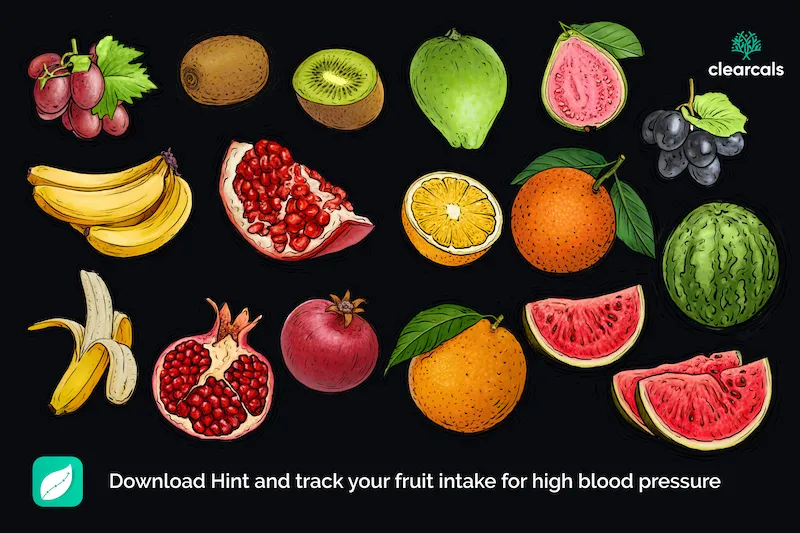
By Hafsaa Farooq | Medically Reviewed | Updated April 2026
Fruit is one of the few food groups where the clinical evidence for blood pressure reduction is consistently strong across interventional trials, large cohort studies, and major dietary guidelines.
The DASH diet, which lowers systolic blood pressure by 8 to 14 mmHg in hypertensive adults, specifies 4 to 5 servings of fruit per day as a cornerstone of the pattern (Appel et al., 1997, NEJM).
Not all fruits are equally beneficial, however.
The most effective ones share a cluster of antihypertensive mechanisms: high potassium for sodium excretion, flavonoids and anthocyanins for endothelial function, natural nitrates or citrulline for vasodilation, and vitamin C for reducing oxidative stress in arterial walls.
This guide ranks the 10 best fruits for high blood pressure, with specific attention to options available across India, and explains the science behind each one.
How Fruits Lower Blood Pressure: The Mechanisms
Fruits act on blood pressure through several distinct pathways, which is why combining multiple fruits is more effective than relying on any single one.
- Potassium: The most direct mechanism. Potassium promotes renal excretion of sodium, reducing blood volume and vascular pressure. A meta-analysis of 22 trials found each 1,640 mg/day increase in potassium intake reduced systolic BP by 3.5 mmHg (Poorolajal et al., 2017, JRSM Cardiovascular Disease).
- Flavonoids and anthocyanins: Polyphenols found in berries, pomegranate, jamun, and citrus fruits improve nitric oxide bioavailability, relax arterial smooth muscle, and reduce inflammation in vessel walls (Cassidy et al., 2011, American Journal of Clinical Nutrition).
- L-citrulline: An amino acid in watermelon that converts to L-arginine and then to nitric oxide in the body, directly widening blood vessels (Figueroa et al., 2012, American Journal of Hypertension).
- Vitamin C: Acts as an antioxidant in endothelial tissue, preserving nitric oxide from oxidative breakdown. Higher plasma vitamin C is consistently associated with lower blood pressure in large observational studies (Juraschek et al., 2012, American Journal of Clinical Nutrition).
- Dietary fibre: Soluble fibre from fruits slows glucose absorption, reduces insulin spikes, and supports gut microbiome diversity, all of which indirectly support vascular health.
Quick Reference: Top 10 Fruits for Blood Pressure
| Rank | Fruit | Key BP Mechanism | Serving Size | Best Form |
|---|---|---|---|---|
| 1 | Banana | Potassium (422 mg/medium) | 1 medium | Fresh |
| 2 | Pomegranate | Polyphenols, ACE inhibition | 150 ml juice or 1/2 fruit | Juice (unsweetened) or arils |
| 3 | Amla | Vitamin C, flavonoids | 2 to 3 fresh or 20 ml juice | Fresh or juice |
| 4 | Watermelon | L-citrulline, lycopene | 2 cups (300g) | Fresh, chilled |
| 5 | Berries | Anthocyanins, endothelial function | 1 cup (150g) | Fresh or frozen |
| 6 | Kiwi | Vitamin C, potassium, bioactive peptides | 2 medium | Fresh |
| 7 | Guava | Potassium, lycopene, and vitamin C | 1 medium | Fresh, raw |
| 8 | Jamun | Anthocyanins, low GI (diabetic-safe) | 10 to 15 fruits | Fresh (seasonal) |
| 9 | Citrus (orange/mosambi) | Hesperidin, potassium, vitamin C | 1 medium or 150 ml juice | Whole fruit preferred |
| 10 | Papaya | Potassium, folate, antioxidants | 1 cup (150g) | Fresh |
The Top 10 Fruits for High Blood Pressure, Explained
1. Banana
Banana is the most accessible high-potassium fruit in India and arguably the most practical daily habit for hypertension management.
One medium banana contains approximately 422 mg of potassium, contributing nearly 9% of the DASH daily target of 4,700 mg. It is also a decent source of magnesium (32 mg) and vitamin B6.
The potassium-sodium balance is the primary driver here. When dietary potassium is low relative to sodium, the kidneys retain more sodium, increasing blood volume and pressure.
Restoring this balance through regular banana consumption is one of the most evidence-based dietary interventions for mild-to-moderate hypertension.
How to use: One banana per day with breakfast, as a mid-morning snack, or blended into a low-sodium smoothie. People with kidney disease or on potassium-sparing diuretics should check with their doctor before significantly increasing banana intake.
2. Pomegranate (Anar)
Pomegranate has among the strongest clinical evidence of any fruit for blood pressure reduction.
A 2012 meta-analysis of six randomised controlled trials found pomegranate juice consumption significantly reduced both systolic BP (mean: -4.96 mmHg) and diastolic BP (mean: -2.01 mmHg) (Sahebkar et al., 2012, Pharmacological Research).
The mechanism involves punicalagins, ellagic acid, and anthocyanins that act as natural ACE inhibitors, the same mechanism as a widely prescribed class of antihypertensive drugs.
Pomegranate polyphenols also reduce LDL oxidation and improve endothelial function, making it beneficial beyond blood pressure alone.
How to use: 150 ml of fresh unsweetened pomegranate juice per day, or the arils from half a pomegranate. Avoid commercial pomegranate drinks that contain added sugar. For people with diabetes, the whole fruit with fibre is preferable to juice.
3. Amla (Indian Gooseberry)
Amla is possibly the most underappreciated antihypertensive food in the Indian diet.
A single amla fruit contains approximately 600 to 700 mg of vitamin C, which is 8 to 9 times more than an orange. Vitamin C protects nitric oxide from oxidative degradation, preserving its vessel-relaxing effect in arterial walls.
A 2012 clinical trial in the Indian Journal of Traditional Knowledge found that amla extract supplementation significantly reduced systolic and diastolic BP in hypertensive adults over 28 days, with the effect attributed to its flavonoids, emblicanin A and B, and quercetin content.
Amla is also anti-inflammatory, supporting the endothelial health that underpins long-term BP control.
How to use: 2 to 3 fresh amlas eaten raw or with a pinch of rock salt, 20 ml of fresh amla juice in the morning, or amla chutney prepared without excess salt. Murabba (amla preserve) is high in sugar and is not an effective substitute.
4. Watermelon (Tarbooz)
Watermelon is the richest dietary source of L-citrulline, an amino acid that converts to L-arginine in the kidneys.
L-arginine is the substrate for nitric oxide synthase, the enzyme that produces nitric oxide in the endothelium. Nitric oxide relaxes vascular smooth muscle, reducing peripheral resistance and lowering blood pressure.
A 2012 randomised crossover trial found watermelon extract supplementation reduced aortic systolic BP by 7 mmHg and reduced mean arterial pressure in obese adults with pre-hypertension, compared with placebo (Figueroa et al., 2012, American Journal of Hypertension).
Watermelon also provides lycopene (a carotenoid antioxidant), potassium, and is 92% water, supporting hydration and overall vascular function.
How to use: 2 cups (approximately 300g) of fresh chilled watermelon as a snack, particularly in summer months. Watermelon juice without added sugar is also effective. People with diabetes should note that watermelon has a moderate glycaemic index (72) and should limit portions to 1 cup per serving.
5. Berries (Blueberry, Strawberry, Falsa)
Berries are among the most extensively researched foods for cardiovascular health. Their primary active compounds, anthocyanins and flavonoids, improve endothelial function by increasing nitric oxide production, reducing arterial stiffness, and lowering systemic inflammation.
An 8-week randomised trial found that daily blueberry powder consumption reduced systolic BP by 5 mmHg and diastolic BP by 3 mmHg in postmenopausal women with pre-hypertension (Johnson et al., 2015, Journal of the Academy of Nutrition and Dietetics).
A larger analysis of data from 157,000+ participants found those with the highest anthocyanin intake had a 12% lower risk of hypertension (Cassidy et al., 2011, AJCN).
In India, fresh blueberries are expensive and seasonal. Excellent alternatives include falsa (Indian sherbet berries, available May to June), strawberries (widely grown in Maharashtra, Himachal Pradesh, and Uttarakhand), and dark-coloured grapes, all rich in anthocyanins.
How to use: 1 cup (approximately 150g) of fresh or frozen berries daily. Frozen blueberries retain their anthocyanin content and are more affordable. Strawberries can be added to oats, curd, or eaten plain. Falsa sherbet made with minimal sugar is a traditional Indian preparation that retains the fruit's antihypertensive benefits.
6. Kiwi
Kiwi punches above its weight for blood pressure.
A well-designed randomised controlled trial assigned 118 participants with mildly elevated blood pressure to eat either 3 kiwis per day or 1 apple per day for 8 weeks.
The kiwi group showed a 3.6 mmHg greater reduction in systolic BP and a 2.8 mmHg greater reduction in diastolic BP compared with the apple group (Svendsen et al., 2015, Blood Pressure).
The effect is attributed to a combination of vitamin C (one kiwi provides 93 mg, exceeding the daily requirement), potassium (215 mg per fruit), and bioactive peptides that inhibit ACE activity. Kiwi is also a good source of magnesium and folate.
How to use: 2 medium kiwis per day, eaten with or without the skin (the skin is edible and adds fibre). Available year-round in most Indian supermarkets and is one of the more affordable imported fruits.
7. Guava (Amrood)
Guava is one of India's most nutritionally dense fruits and an excellent choice for hypertension.
A medium guava contains approximately 688 mg of potassium, 50% more than a banana, along with high lycopene content (particularly in pink guava), vitamin C, and dietary fibre.
A 12-week trial in the Journal of Human Hypertension found that subjects who ate guava before meals for 12 weeks experienced reductions in systolic BP of 9 mmHg and total cholesterol of 9.9%, compared with the control group (Singh et al., 1992).
While older, this trial used whole fruit in quantities achievable through a normal diet, making the findings practically relevant.
How to use: 1 medium guava (with skin and seeds for maximum fibre) as a mid-morning or afternoon snack. Pink-fleshed guava provides more lycopene than white-fleshed varieties. Avoid guava juice with added sugar or salt.
8. Jamun (Black Plum)
Jamun is a seasonal Indian fruit that deserves a prominent place in the hypertension diet, particularly for the large population of Indians managing both high blood pressure and diabetes.
It has one of the lowest glycaemic indices of any Indian fruit (GI around 25), making it safe for blood sugar, while its high anthocyanin content (dihydromyricetin, malvidin) supports vascular health.
Jamun's seed extract is used in Ayurvedic medicine for diabetes, and a 2014 study in the Journal of Food Science and Technology found jamun seed powder significantly reduced fasting blood glucose and improved lipid profiles in Type 2 diabetic subjects over 12 weeks.
Its antihypertensive effect is supported by its potassium content and its role in reducing oxidative stress in endothelial cells.
How to use: 10 to 15 fresh jamun during the June to September season. The fruit is best eaten 30 minutes before a meal to benefit from its glycaemic blunting effect. Jamun vinegar is available year-round and retains some polyphenol content, though the evidence for the vinegar form is less robust than for whole fruit.
9. Citrus Fruits (Orange, Mosambi, Grapefruit)
Citrus fruits are rich in hesperidin, a flavonoid glycoside associated with improved endothelial function and reduced arterial stiffness.
A 4-week crossover trial found that daily orange juice consumption reduced diastolic BP by 3.4 mmHg in healthy adults compared with a hesperidin-depleted control drink (Morand et al., 2011, American Journal of Clinical Nutrition).
Mosambi (sweet lime) is the most widely consumed citrus fruit in India and provides comparable flavonoid content to oranges. Oranges, mosambi, and grapefruit also deliver potassium (180 to 240 mg per fruit) and vitamin C, adding to their antihypertensive value.
Important: Grapefruit interacts with several antihypertensive medications, including amlodipine, felodipine, and some statins, by inhibiting the CYP3A4 enzyme, which increases drug concentration in the blood. If you are on these medications, consult your doctor before eating grapefruit. Orange and mosambi do not carry this interaction risk.
10. Papaya (Papita)
Papaya rounds out the top 10 as a consistently available, affordable, and nutrient-dense Indian fruit for blood pressure.
A medium papaya provides approximately 781 mg of potassium, one of the highest amounts among commonly available fruits in India, along with folate, vitamin C, beta-carotene, and the enzyme papain.
Folate is relevant to blood pressure because it reduces homocysteine, an amino acid that, at elevated levels, damages arterial walls and is associated with hypertension.
A diet adequate in folate-rich foods is associated with lower cardiovascular risk independent of other factors (Ganguly & Alam, 2015, Nutrition Journal).
How to use: 1 cup (approximately 150g) of ripe papaya as breakfast or a snack. Semi-ripe papaya used in salads or chutneys also contributes to potassium intake. Avoid papaya shakes with condensed milk or sugar syrup.
Fruits to Limit or Use Carefully with High Blood Pressure
No fruit raises blood pressure directly, but some fruits, in the forms typically consumed in India, add significant sugar loads that affect insulin sensitivity and indirectly worsen BP over time. Juiced or dried forms of fruit are the main concern.
| Fruit / Form | Concern | Guidance |
|---|---|---|
| Mango (aam) | High natural sugar (45g per fruit); mango shake versions add significant calories | Limit to 1 cup diced per day; avoid mango juice with added sugar |
| Chikoo (sapota) | High glycaemic index (~65), high sugar per fruit | Limit to 1 small fruit per day if BP co-exists with diabetes |
| Grapes (especially black/red) | Eating a large bunch adds significant sugar; juiced forms lose fibre | Stick to 1 small cup; prefer whole grapes over grape juice |
| Fruit juices (any type) | Removes fibre, concentrates sugar, causes a faster glucose spike | Always prefer whole fruit; if juicing, add no sugar and limit to 150 ml |
| Dried fruits (raisins, dates, figs) | Fibre is intact, but caloric density is very high; easy to overeat | 3 to 4 dates or 1 tablespoon of raisins is a reasonable portion |
| Grapefruit | Drug-nutrient interaction with amlodipine and several statins (CYP3A4 inhibition) | Avoid if on calcium channel blockers or certain statins; confirm with your doctor |
How Much Fruit Should You Eat Per Day for Blood Pressure?
The DASH guidelines recommend 4 to 5 servings of fruit per day. One serving is defined as one medium fruit, half a cup of fresh fruit, or 120 ml of unsweetened juice (though whole fruit is always preferred over juice).
| Serving Count | Example | Potassium Contribution |
|---|---|---|
| Serving 1 (morning) | 1 banana with oats | ~420 mg |
| Serving 2 (mid-morning) | 1 guava or 2 kiwis | ~600 to 700 mg |
| Serving 3 (with lunch) | 1 cup papaya or 10 to 15 jamun | ~500 to 700 mg |
| Serving 4 (afternoon) | 1 orange or 1 cup berries/falsa | ~250 to 300 mg |
| Total from fruit | ~1,770 to 2,120 mg |
Note: The DASH potassium target is 4,700 mg/day. Fruit contributes roughly 1,800 to 2,000 mg of that total. The remaining 2,700 to 2,900 mg should come from vegetables, lentils, low-fat dairy, and nuts across the rest of the day's meals.
People with chronic kidney disease or those on potassium-sparing diuretics (such as spironolactone) or ACE inhibitors may need to moderate their potassium intake. A registered dietitian can help calculate your safe range based on your blood tests.
Build Your Personalised Fruit Plan with Hint
Hint Premium: Your Personal Dietitian
Knowing which fruits are beneficial is useful.
Knowing exactly how many servings of which fruits work for your specific blood pressure readings, your kidney function, your diabetes status, and your regional food access is where a dedicated dietitian makes the real difference.
- Personalised fruit plan: Your Hint Premium dietitian designs your daily fruit intake around your latest BP readings, lab results, and health goals, not generic recommendations.
- Seasonal adaptation: India's fruit availability changes significantly by season. Your dietitian rotates your plan around jamun in monsoon, amla in winter, watermelon in summer, and year-round options in between.
- Drug-nutrient interaction checks: If you are on antihypertensives, your dietitian will flag potential interactions, like the grapefruit-amlodipine issue, before they become a problem.
- Potassium tracking: Hint logs your daily potassium intake and alerts you if you are consistently below target, a common gap in Indian diets that directly affects BP control.
- Diabetes-safe options: If you manage both hypertension and diabetes, your dietitian selects low-GI fruits (jamun, guava, berries) and structures your servings to avoid glucose spikes.
Why this matters: The potassium gap is one of the most underaddressed factors in Indian hypertension management. Most Indian diets deliver 1,500 to 2,000 mg of potassium per day against a target of 4,700 mg. A strategic fruit plan built around the options in this list can close that gap meaningfully, often without any medication change.
All Hint Plans Include
- Daily potassium, magnesium, and sodium tracking with progress graphs
- Customised fruit and vegetable plan aligned with DASH targets
- 300+ Pro Workout routines, including low-intensity options safe for hypertensive beginners
- Guided exercise animations with in-app calorie and session tracking, no wearable needed
- Food logging with instant nutritional breakdown per meal
Download Hint on iOS or Android to start tracking your fruit intake and potassium balance today.
Upgrade to Hint Premium to unlock your dedicated registered dietitian, who will turn the science in this guide into a personalised daily plan that works for your body and your kitchen.
Summary: The 10 Best Fruits for High Blood Pressure
- Banana: most accessible potassium source, 422 mg per fruit, eat one daily
- Pomegranate (anar): strongest clinical evidence, 4 to 5 mmHg systolic reduction, use unsweetened juice or arils
- Amla: richest Indian vitamin C source, protects nitric oxide, eat 2 to 3 fresh or 20 ml juice
- Watermelon (tarbooz): L-citrulline for vasodilation, 2 cups fresh in summer
- Berries (and falsa): anthocyanins for endothelial health, 1 cup per day
- Kiwi: 3.6 mmHg systolic reduction in RCT, vitamin C + ACE-inhibiting peptides, 2 per day
- Guava (amrood): higher potassium than banana, lycopene, 1 medium per day
- Jamun: low GI, diabetic-safe, anthocyanins, seasonal June to September
- Citrus (orange/mosambi): hesperidin for endothelial function, 1 fruit or 150 ml fresh juice
- Papaya (papita): 781 mg potassium per fruit, folate for homocysteine reduction, 1 cup per day
The most effective strategy is variety: eating 4 to 5 different fruits across the day ensures you benefit from multiple antihypertensive mechanisms simultaneously.
The Indian fruit season provides a natural rotation, with amla and citrus in winter, berries and guava in spring, watermelon and jamun in summer, and papaya and banana available year-round.
References
- Appel LJ et al. (1997). A clinical trial of the effects of dietary patterns on blood pressure. New England Journal of Medicine, 336(16), 1117-1124.
- Poorolajal J et al. (2017). Oral potassium supplementation for management of essential hypertension. JRSM Cardiovascular Disease, 6.
- Cassidy A et al. (2011). Habitual intake of flavonoid subclasses and incident hypertension in adults. American Journal of Clinical Nutrition, 93(2), 338-347.
- Sahebkar A et al. (2012). Effect of pomegranate juice on blood pressure: a systematic review and meta-analysis. Pharmacological Research, 65(2), 73-82.
- Figueroa A et al. (2012). Watermelon extract supplementation reduces ankle blood pressure and carotid augmentation index in obese adults with prehypertension or hypertension. American Journal of Hypertension, 25(6), 640-643.
- Johnson SA et al. (2015). Daily blueberry consumption improves blood pressure and arterial stiffness. Journal of the Academy of Nutrition and Dietetics, 115(3), 369-377.
- Svendsen M et al. (2015). Effect of kiwi fruit consumption on blood pressure in subjects with moderately elevated blood pressure. Blood Pressure, 24(1), 48-54.
- Morand C et al. (2011). Hesperidin contributes to the vascular protective effects of orange juice. American Journal of Clinical Nutrition, 93(1), 73-80.
- Singh RB et al. (1992). Can guava fruit intake decrease blood pressure and blood lipids? Journal of Human Hypertension, 6(1), 33-37.
- Ganguly P & Alam SF (2015). Role of homocysteine in the development of cardiovascular disease. Nutrition Journal, 14, 6.
About the Author
Hafsaa Farooq is a Consultant Dietitian at Clearcals with a strong passion for nutrition, fitness, and evidence-based health practices.
She is deeply interested in clinical nutrition and enjoys helping individuals build healthier lifestyles through practical dietary guidance.
Beyond her professional work, Hafsaa enjoys developing healthy recipes, writing evidence-based nutrition blogs, and staying active through sports.
She is also expanding her expertise in the science of exercise and weight training to better support holistic health and fitness goals.
🔗 Connect with Hafsaa on LinkedIn