
Track your nutrition and health goals

Function of Thyroid Gland: How It Works + Subclinical Hypothyroidism Explained Simply
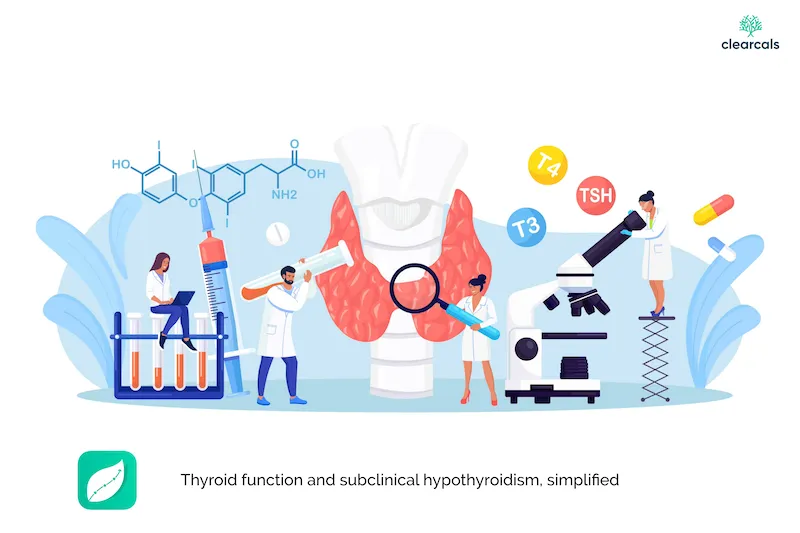
Thyroid disorders often begin quietly. You might feel tired, notice subtle weight changes, experience hair fall, or feel unusually cold, yet your routine tests may look “normal.” This is exactly why many people feel confused when they hear terms like subclinical hypothyroidism.
To understand subclinical hypothyroidism clearly, we must first understand a simple concept: what the thyroid gland does, and how thyroid hormones are regulated.
In this blog, we’ll cover:
- the function of the thyroid gland (in simple terms)
- what subclinical hypothyroidism means
- TSH, T3, and T4 ranges and what they indicate
- symptoms and causes
- when treatment is needed—and when it isn’t
- how the Hint app can support lifestyle and nutrition tracking for thyroid health
What Is the Thyroid Gland?
The thyroid gland is a small, butterfly-shaped gland located in the front of your neck. Despite its size, it plays a huge role in keeping your body’s systems running smoothly.
It produces two main hormones:
- T4 (Thyroxine)
- T3 (Triiodothyronine)
These hormones influence almost every major function in your body.
Function of Thyroid Gland (What It Does in the Body)
Think of thyroid hormones as your body’s metabolic “speed controller.”
The thyroid gland helps regulate:
- metabolism and energy levels (how your body converts food into energy)
- body weight and fat storage
- heart rate and blood pressure
- body temperature
- digestion and gut motility
- skin and hair health
- menstrual health and fertility
- brain function and mood
- muscle strength and recovery
That’s why thyroid imbalance can create symptoms that seem “random” and spread across multiple systems.
How Thyroid Hormones Are Controlled: The TSH–T3–T4 Feedback Loop
Your thyroid gland does not work alone. It’s controlled by a feedback system involving your brain.
Here’s how it works:
- The hypothalamus releases TRH (thyrotropin-releasing hormone)
- TRH signals the pituitary gland to release TSH (thyroid-stimulating hormone)
- TSH tells the thyroid gland to produce T3 and T4
- When T3 and T4 rise, the brain reduces TSH production (feedback control)
Key takeaway:
- if thyroid hormones are low, TSH usually rises
- if thyroid hormones are high, TSH usually drops
TSH is often the earliest signal that thyroid function is changing—sometimes even before T3/T4 go out of range.
What Is Subclinical Hypothyroidism?
Subclinical hypothyroidism is when:
- TSH is elevated, but
- T3 and T4 levels are still normal
This means your thyroid is starting to slow down, but your body is compensating well enough that hormone levels remain within the “normal” range.
It’s called “subclinical” because it may:
- have mild symptoms, or
- have no noticeable symptoms at all
However, it can progress into overt hypothyroidism over time, especially in certain groups.
Subclinical Hypothyroidism Symptoms (If Present)
Many people with subclinical hypothyroidism feel completely fine. But some experience subtle symptoms that are easy to blame on lifestyle or stress.
Symptoms may include:
- mild fatigue or low energy
- slight weight gain or difficulty losing weight
- dryness of skin
- mild hair fall
- constipation
- mood changes (low mood, irritability)
- brain fog or poor concentration
- feeling colder than usual
- menstrual irregularities (in women)
Important note: these symptoms are not specific to thyroid issues. They can also occur due to sleep problems, nutrient deficiencies, or stress. That’s why lab testing plus symptom patterns together give the best clarity.
Subclinical Hypothyroidism Test Ranges (TSH, T3, T4)
Reference ranges vary slightly between labs. But typically:
Common lab ranges:
- TSH: ~0.4 to 4.0 mIU/L
- Free T4: ~0.8 to 1.8 ng/dL
- Free T3: ~2.3 to 4.2 pg/mL
Subclinical hypothyroidism is often suspected when:
- TSH is above the upper limit, usually >4.0–4.5 mIU/L
- Free T4 is normal
Severity based on TSH:
- mild subclinical hypothyroidism: TSH 4.5–10 mIU/L
- more significant: TSH >10 mIU/L (higher likelihood of needing treatment)
What Causes Subclinical Hypothyroidism?
The most common cause is autoimmune thyroiditis, especially Hashimoto’s thyroiditis.
Other causes include:
- iodine imbalance (excess or deficiency)
- post-pregnancy thyroid changes
- certain medications (e.g., lithium, amiodarone)
- thyroid surgery or radiation
- aging-related changes in thyroid function
- family history of thyroid conditions
Thyroid Antibody Tests: When They Matter
If your TSH is elevated and your doctor suspects autoimmune thyroiditis, they may recommend a thyroid antibody test, especially:
- Anti-TPO antibodies
- Thyroglobulin antibodies (TgAb)
If antibodies are positive, there’s a higher chance that subclinical hypothyroidism may progress over time. This helps in deciding monitoring frequency and treatment strategy.
Should Subclinical Hypothyroidism Be Treated?
This is the most important question—and the answer is not the same for everyone.
Treatment decisions depend on:
- TSH level
- symptoms
- age
- pregnancy status
- cardiovascular risk
- antibody status
When Treatment Is Often Recommended
Treatment is commonly considered if:
- TSH > 10 mIU/L
- you are pregnant, planning pregnancy, or struggling with fertility
- you have significant symptoms that match hypothyroidism and persist
- thyroid antibodies are positive, especially with rising TSH
- you have high cholesterol or cardiovascular risk and thyroid is contributing
When Treatment Is Often Not Needed
Treatment may not be necessary if:
- TSH is mildly elevated (4.5–10)
- you have no symptoms
- Free T4 is normal
- antibodies are negative
- your TSH returns to normal on repeat testing
In many cases, doctors recommend:
- repeat testing in 6–12 weeks
- lifestyle modifications
- monitoring every 6–12 months based on risk factors
Can Subclinical Hypothyroidism Go Away?
Yes—sometimes.
TSH can rise temporarily due to:
- stress
- illness
- poor sleep
- iodine changes
- lab variability
- medication timing
That’s why a single high TSH result is usually not enough for diagnosis. Doctors often confirm it with repeat tests.
Lifestyle Support in Subclinical Hypothyroidism (What Helps)
Even when medication is not needed, lifestyle changes often improve symptoms and overall metabolic health.
Practical steps include:
- improving sleep quality
- increasing protein intake to support muscle and metabolism
- ensuring adequate intake of selenium, zinc, iodine, and B vitamins
- strength training and daily movement
- stress management (yoga, breathing, mindfulness)
- reducing ultra-processed foods and excess sugar
These steps may not “cure” thyroid dysfunction, but they can reduce symptom burden and improve weight and energy outcomes.
How the Hint App Can Help
One of the most challenging parts of managing thyroid symptoms is that fatigue, weight gain, and low mood can have multiple causes. You need patterns—not assumptions.
With the Hint app, you can:
- track daily calories and meal quality
- monitor protein intake (helps with energy and muscle maintenance)
- track key micronutrients like selenium, zinc, and B vitamins
- monitor weight trends over time (instead of day-to-day noise)
- build consistent diet routines that support metabolism
Hint Pro (Personalized Plans)
- Hint Pro offers an instant personalized diet plan based on your profile, goal, and dietary preferences.
- This can be useful if you’re trying to manage weight changes and energy issues associated with thyroid imbalance.
Hint Premium (Unlimited Dietitian Guidance)
- Hint Premium gives access to experienced dietitians who can guide you based on your symptoms, lifestyle, and goals.
- This is useful when symptoms persist despite “normal” lab reports, or when you need sustainable adjustments rather than extreme diets.
FAQs: Function of Thyroid Gland + Subclinical Hypothyroidism
1. Is subclinical hypothyroidism serious?
It can be mild and harmless in many cases, but it needs monitoring—especially if TSH rises over time or antibodies are positive.
2. Can subclinical hypothyroidism cause weight gain?
It may contribute to slight weight gain or difficulty losing weight, but lifestyle, sleep, and diet also play a major role.
3. Should I start thyroid medicine immediately?
Not always. Treatment is usually based on TSH levels, symptoms, pregnancy plans, antibodies, and repeat test results.
4. How often should I test if I have subclinical hypothyroidism?
Doctors often recommend repeating tests in 6–12 weeks initially, then every 6–12 months depending on risk.
Conclusion: Understand It Early, Manage It Smartly
Subclinical hypothyroidism is best seen as an early signal—not a diagnosis to panic about. For many people, monitoring and lifestyle support are enough. For others, timely treatment prevents progression and improves quality of life.
The goal is simple:
- understand your test results clearly
- track symptoms consistently
- build diet and lifestyle habits that support your metabolism
If you want practical support, the Hint app can help you track nutrition patterns and weight changes, while Hint Pro and Hint Premium offer structured plans and expert guidance.


