Track your nutrition and health goals

Papaya Calories: 22 kcal per 100g | Nutrition, Benefits & Health Guide
By Asfia Fatima, Chief Dietitian at Clearcals
Papaya, with its vibrant orange flesh and sweet tropical flavour, is one of India's most beloved fruits. Whether you're enjoying a ripe Red Lady papaya from Maharashtra or the golden Taiwan variety from South India, this nutritious fruit is a staple in everything from breakfast bowls to fruit salads.
At just 22 kcal per 100g, papaya is one of the lowest-calorie fruits available — but its nutritional profile goes far beyond calories. Packed with papain (a unique digestive enzyme), lycopene, vitamin C, folate, and fibre, it delivers benefits for digestion, immunity, skin, heart health, and more.
This guide covers everything: calories by serving size, complete nutrition facts, all health benefits, papaya leaf benefits, benefits for women and men, pregnancy guidance, and Hindi information.
TL;DR
- Papaya calories per 100g = 22 kcal — one of the lowest-calorie fruits
- 1 medium papaya (~300g) = 66 kcal; 500g = 110 kcal
- Papaya protein per 100g = 0.4g; fibre = 2.8g
- Vitamin C: 43 mg per 100g (~50% of daily requirement)
- Lycopene: 833 mcg per 100g — powerful antioxidant for skin and heart
- Papain enzyme — aids protein digestion and reduces bloating
- Papaya leaf juice — shown to raise platelet counts in dengue; also supports liver and immunity
- Glycemic index: ~60 (moderate) but glycemic load per serving is low — suitable for diabetics in portions
How Many Calories Are in Papaya?
| Quantity | Weight | Calories |
|---|---|---|
| 50g papaya | 50g | 11 kcal |
| 100g papaya | 100g | 22 kcal |
| 150g papaya | 150g | 33 kcal |
| 200g papaya | 200g | 44 kcal |
| 250g papaya | 250g | 55 kcal |
| 300g papaya | 300g | 66 kcal |
| 500g papaya | 500g | 110 kcal |
| 1 small papaya (~150g) | 150g | 33 kcal |
| 1 medium papaya (~300g) | 300g | 66 kcal |
| 1 large papaya (~500g) | 500g | 110 kcal |
| 1 kg papaya | 1,000g | 220 kcal |
Papaya is one of the most diet-friendly fruits available. Compared to banana (89 kcal/100g) or apple (62 kcal/100g), papaya at 22 kcal/100g is exceptionally low in calories for its volume and satiety value.
Track your papaya intake with the Hint app — accurate calorie tracking for thousands of Indian foods.
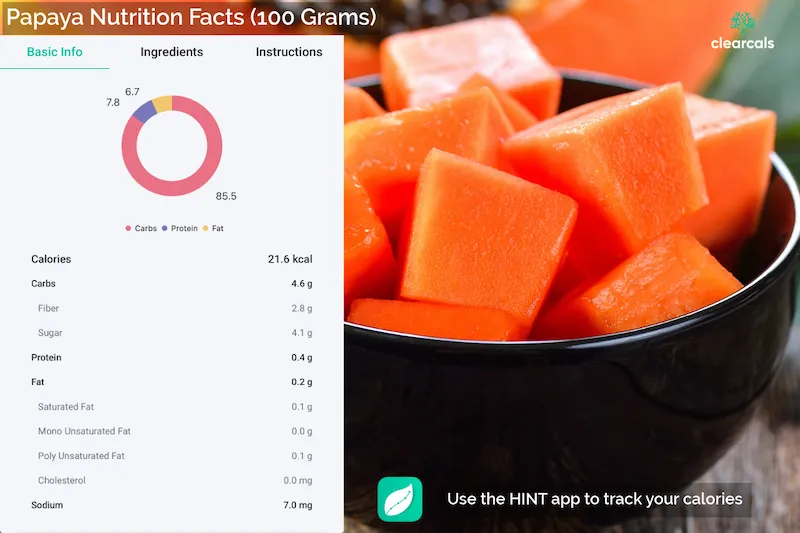
Papaya Nutrition Facts Per 100g
Macronutrients
| Nutrient | Per 100g |
|---|---|
| Calories | 22 kcal |
| Protein | 0.4g |
| Carbohydrates | 4.6g |
| Sugar | 4.1g |
| Dietary Fibre | 2.8g |
| Fat | 0.2g |
| Water | ~88% |
Vitamins and Minerals
| Nutrient | Per 100g | % Daily Value |
|---|---|---|
| Vitamin C | 43 mg | ~48% DV |
| Vitamin A | 58 mcg RAE | ~6% DV |
| Folate | 37 mcg | ~9% DV |
| Potassium | 173 mg | ~4% DV |
| Lycopene | 833 mcg | — |
| Magnesium | 11 mg | ~3% DV |
| Calcium | 15 mg | ~1% DV |
| Biotin | 3.1 mcg | — |
Papaya's standout nutrients: Vitamin C (nearly half your daily requirement in 100g), lycopene (powerful antioxidant that gives papaya its orange-red colour), folate (important for cell division and fetal development), and papain (unique digestive enzyme not found in most fruits).
Papaya Benefits — Full Health Guide
1. Improves Digestion and Reduces Bloating
Papaya is best known for papain, a proteolytic enzyme that breaks down tough protein fibres far more efficiently than digestive enzymes produced by the body alone. Benefits:
- Reduces gas, bloating, and discomfort after protein-heavy meals
- Promotes regular bowel movements (fibre: 2.8g/100g)
- Soothes inflammatory bowel conditions
- Supports intestinal healing
Traditional Indian medicine has used ripe papaya for centuries to treat digestive complaints — modern research validates this use.
2. Boosts Immunity
43 mg of vitamin C per 100g delivers ~48% of your daily requirement from one serving — making papaya an excellent immunity-boosting food. Vitamin C stimulates white blood cell production, supports the skin barrier against pathogens, and neutralises free radicals that damage immune cells.
3. Promotes Healthy, Glowing Skin
- Vitamin C: Essential for collagen synthesis — keeps skin firm and youthful
- Lycopene (833 mcg/100g): Protects against UV-induced skin damage and premature ageing
- Vitamin A: Promotes skin cell turnover and repair
- Papain (topical): Exfoliates dead skin cells when applied as a face pack
Eating papaya regularly delivers these skin benefits internally, while papaya pulp applied as a face mask provides direct exfoliation.
4. Supports Heart Health
- Lycopene: Associated with reduced cardiovascular disease risk in multiple studies
- Vitamin C: Reduces oxidative stress in blood vessels
- Potassium (173 mg/100g): Supports healthy blood pressure by counteracting sodium
- Fibre: Helps reduce LDL (bad) cholesterol levels
5. Protects Eye Health
- Vitamin A: Critical for retinal health and night vision
- Lutein and zeaxanthin: Filter harmful blue light; protect against macular degeneration
- Vitamin C: Associated with reduced risk of cataracts
6. Supports Cancer Prevention
Papaya's lycopene, vitamin C, and quercetin have anti-cancer properties in preliminary research, particularly against breast, prostate, and colon cancers. While more research is needed, regular antioxidant intake from fruits like papaya supports cellular protection.
Papaya Benefits for Female / Women
Papaya offers specific benefits for women's health:
Menstrual Health
Papaya is a natural emmenagogue — it contains papain and phytochemicals that can stimulate oestrogen production and promote uterine contractions. Traditionally used in India to:
- Regulate irregular periods
- Reduce menstrual pain and cramping
- Support menstrual flow when delayed
To use papaya for periods: Eating ripe papaya regularly during the week before your period is due may support regular cycles. Unripe/raw papaya has a stronger emmenagogue effect — traditionally consumed as raw papaya sabzi or juice.
Hormonal Balance
Papaya's vitamin C, folate, and antioxidants support healthy oestrogen metabolism and reduce oxidative stress associated with hormonal imbalance and PCOS.
Skin and Anti-Aging
Women frequently experience skin changes with hormonal fluctuations. Papaya's collagen-boosting vitamin C and UV-protective lycopene support skin resilience through these changes.
Bone Health
Vitamin K (present in papaya) and calcium work together for bone density maintenance — particularly relevant for women as they approach perimenopause.
Pregnancy Nutrition
Folate (37 mcg/100g) supports fetal neural tube development in early pregnancy. See the full pregnancy section below.
Papaya Benefits for Men
Papaya offers several health benefits specifically relevant for men:
- Prostate health: Lycopene consumption is associated with reduced prostate cancer risk in observational studies — papaya is one of the richest lycopene sources
- Heart health: Men have higher cardiovascular risk earlier in life; papaya's lycopene and potassium support blood pressure and arterial health
- Digestive recovery: Papain helps break down the higher protein intake common in active men's diets
- Fertility: Vitamin C and antioxidants support sperm quality by reducing oxidative damage to sperm DNA
- Immunity: Vitamin C supports immune function, particularly relevant for men who typically undereat fruits
Raw Papaya Benefits
Raw (unripe) papaya is nutritionally and functionally distinct from ripe papaya:
| Property | Raw Papaya | Ripe Papaya |
|---|---|---|
| Papain concentration | Very high | Moderate |
| Sugar content | Low | Higher (~4.1g/100g) |
| Emmenagogue effect | Strong | Mild |
| GI impact | Very low | Moderate (~60) |
| Taste | Neutral/mild | Sweet |
| Common uses | Salad, sabzi, curry | Fresh, smoothie, dessert |
Key raw papaya benefits:
- Higher papain concentration — stronger digestive enzyme effect; more effective for bloating and protein digestion
- Lower sugar — better for strict calorie control and diabetics
- Stronger emmenagogue effect — more effective for menstrual regulation
- Anti-inflammatory compounds — particularly isothiocyanates in raw form
- Raw papaya salad (Thai-style or Indian-style) — a popular way to consume it with lime, chilli, and spices
⚠️ Raw papaya in pregnancy: Avoid entirely during pregnancy. The high latex and papain content in raw papaya can stimulate uterine contractions (see pregnancy section).
Is Papaya Good for Diabetes?
Papaya can be part of a diabetic-friendly diet when consumed in appropriate portions. For a complete guide on glycaemic index, serving sizes, and blood sugar impact, see our dedicated article: Is Papaya Good for Diabetes?
Quick summary:
- GI ~60 (moderate), but glycemic load per 100g serving is low
- High fibre (2.8g/100g) slows glucose absorption
- Stick to 100–150g per serving; pair with protein to minimise blood sugar impact
- Ripe papaya is preferable to juice (juice removes fibre and raises GI)
Papaya in Pregnancy — Complete Guide
Is Papaya Good During Pregnancy?
Ripe papaya is safe and nutritious during pregnancy. Unripe/raw papaya must be avoided.
| Nutrient | Amount per 100g | Pregnancy Benefit |
|---|---|---|
| Folate | 37 mcg | Neural tube development — reduces spina bifida risk |
| Vitamin C | 43 mg | Immune support; enhances iron absorption |
| Fibre | 2.8g | Relieves pregnancy-related constipation |
| Potassium | 173 mg | Manages blood pressure fluctuations |
| Vitamin A | 58 mcg | Fetal eye and immune development |
Can Papaya Cause Miscarriage?
This is one of the most commonly searched questions about papaya and pregnancy — and the distinction between ripe and unripe papaya is critical:
Unripe (raw/semi-ripe) papaya: Contains high concentrations of papain and latex (a milky white substance). Papain has uterotonic properties — it can mimic prostaglandins and oxytocin, stimulating uterine contractions. High papain intake, particularly from unripe papaya, is associated with increased risk of miscarriage and premature labour, especially in the first and second trimesters.
Ripe papaya: Contains significantly less papain and latex (the ripening process degrades them). The evidence for miscarriage risk from fully ripe papaya is limited. Most obstetricians and nutritional guidelines consider moderate consumption of ripe papaya safe during pregnancy.
Pregnancy guidelines:
- ✅ Fully ripe, soft papaya — safe in moderate portions (100–150g/day)
- ❌ Unripe, semi-ripe, or green papaya — avoid completely during pregnancy
- ❌ Raw papaya juice, papaya leaf juice — avoid during pregnancy
- ❌ Papaya seeds — avoid during pregnancy
- Wash ripe papaya thoroughly before eating
- Consult your obstetrician if you have any concerns
Can We Eat Papaya During Periods?
Yes — papaya is traditionally recommended during periods in India:
- Papain and phytochemicals in papaya stimulate uterine contractions, which can help ease the passage of menstrual blood
- May reduce menstrual cramps and discomfort
- Raw papaya has a stronger effect than ripe papaya for this purpose
- Papaya's fibre and anti-inflammatory compounds reduce period-related bloating
Women with very heavy menstrual flow (menorrhagia) should consume papaya in moderate amounts, as its mild emmenagogue effect may increase flow. Consult a gynaecologist if you have concerns.
Can We Eat Papaya at Night?
Yes — papaya is an excellent evening or night snack. There is no nutritional basis for avoiding papaya at night.
Why papaya works well at night:
- Very low in calories (22 kcal/100g) — won't disrupt a calorie deficit
- Papain enzyme supports overnight protein digestion
- Fibre promotes overnight digestive regularity and morning bowel movements
- Low calorie density means even a 200g serving is just 44 kcal
- Easily digestible — won't cause heaviness or bloating before sleep
The belief that fruit should not be eaten after sunset is not supported by nutrition science. Total daily calorie intake determines weight, not meal timing.
One practical tip: If you have diabetes, pair nighttime papaya with a small amount of protein (a handful of nuts or a spoon of peanut butter) to moderate the glycaemic response.
Papaya Leaf Juice Benefits
Papaya leaves and their juice have significant therapeutic properties that are distinct from — and in some cases stronger than — those of the fruit.
1. Dengue — Platelet Count Support
The most well-documented benefit of papaya leaf juice is its ability to raise platelet counts in dengue patients. Multiple clinical studies, including a randomised controlled trial published in Evidence-Based Complementary and Alternative Medicine (2011), found that papaya leaf extract significantly increased platelet counts in dengue fever patients. The active compounds are believed to be acetogenins and flavonoids that stimulate platelet production.
How to use: Extract juice from 2–3 fresh papaya leaves; consume 30–50ml twice daily during dengue illness (in addition to medical care — not as a replacement).
2. Blood Sugar Management
Papaya leaf extract has shown hypoglycaemic (blood sugar-lowering) effects in animal studies, believed to be due to flavonoids that improve insulin sensitivity. Human clinical data is limited but promising.
3. Liver Support
Traditional use in India and Southeast Asia for liver conditions including jaundice. Compounds in papaya leaves have hepatoprotective (liver-protecting) properties shown in animal models.
4. Anti-Cancer Properties
Papaya leaf extract has shown anti-tumour activity in laboratory studies, particularly against cervical, breast, and liver cancer cell lines. The active compounds include acetogenins. Human clinical trials are still ongoing.
5. Digestive Health
Papaya leaf juice contains papain, chymopapain, and other enzymes — with higher concentrations than the fruit. Supports digestion, reduces bloating, and has antimicrobial effects against gut pathogens.
6. Immune Stimulation
Rich in flavonoids, phenolic compounds, and vitamin C — papaya leaf juice has immunomodulatory effects, stimulating white blood cell production.
How to make papaya leaf juice at home:
- Take 2–3 fresh, mature papaya leaves (not yellowing)
- Wash thoroughly
- Remove the central stem and ribs (very bitter)
- Blend with 50–100ml water
- Strain and drink immediately
- It is bitter — may add a small amount of honey if needed
⚠️ Avoid papaya leaf juice during pregnancy. Consult a doctor before use if you are on blood-thinning medications.
Papaya in Hindi — Papita ke Fayde
Papaya meaning in Hindi: पपीता (Papita) or पपाया
Papita khane ke fayde (पपीता खाने के फायदे):
- पाचन सुधारता है: पपीते में papain enzyme होता है जो protein को तोड़ता है और bloating/gas कम करता है
- रोग प्रतिरोधक क्षमता बढ़ाता है: Vitamin C (43mg/100g) — रोज़ की ज़रूरत का 48% एक serving में
- वजन घटाने में मददगार: सिर्फ 22 calories प्रति 100g — बहुत कम calorie वाला fruit
- त्वचा के लिए अच्छा: Lycopene और Vitamin C collagen बनाते हैं और skin को glowing रखते हैं
- महिलाओं के लिए: Periods नियमित करने में मदद, menstrual cramps कम करना
- डायबिटीज में: कम glycemic load — उचित मात्रा में खाया जा सकता है
- हृदय के लिए: Lycopene और potassium blood pressure और heart health support करते हैं
Papita ki taseer: पपीते की तासीर गर्म मानी जाती है — गर्भावस्था (pregnancy) में कच्चा पपीता न खाएं।
Papaya leaves (papite ke patte) ke fayde: डेंगू में platelets बढ़ाने, blood sugar नियंत्रित करने, liver को सुरक्षित रखने में मदद करते हैं।
Papaya for Weight Loss
At 22 kcal/100g, papaya is one of the most calorie-efficient filling foods available:
- Low calorie density: 300g (a generous serving) = just 66 kcal
- 88% water content: High volume, high satiety at minimal calorie cost
- 2.8g fibre/100g: Slows digestion, stabilises blood sugar, reduces cravings
- Low GI: Prevents blood sugar spikes and the crash-cravings cycle
- Papain enzyme: Supports efficient protein digestion — important when eating higher protein on a calorie deficit diet
Best ways to include papaya for weight loss:
- 100–150g as mid-morning or evening snack
- Blend into smoothies with spinach and ginger
- Add to fruit salads for volume and sweetness without high calories
- Replace high-calorie desserts with fresh papaya
Papaya Varieties in India
Ripe Papaya Varieties
- Red Lady: Most common commercial variety; vibrant orange flesh, consistent sweetness
- Taiwan Yellow / Golden: Smaller, more intense sweetness; widely grown in South India
- Pusa Delicious: Indian variety with reddish-orange flesh; developed by IARI
Raw / Green Papaya
Used extensively in Indian and Thai cooking — raw papaya salad, papaya sabzi, and pickles. Lower in sugar, higher in papain concentration.
Pink Papaya
Smaller, oval-shaped; mild taste; available in North and Central India.
All varieties have similar nutritional profiles with minor differences in lycopene (pink/red flesh varieties are higher) and papain concentration.

How the Hint App Helps You Track Papaya
The Hint app makes nutrition tracking simple:
- Comprehensive Indian Food Database: Track raw papaya, ripe papaya, papaya smoothies, and papaya-based recipes — log by weight or size
- Accurate Calorie Breakdown: Exact calories, protein, fibre, and vitamins per serving
- Personalised Goals: Weight loss, diabetes management, or muscle gain — Hint sets the right targets for your situation
- Expert Dietitian Consultations: Hint Premium provides unlimited access to registered dietitians for personalised meal planning
Frequently Asked Questions
How many calories in 100g papaya?
22 kcal. 100g papaya = 22 kcal, 0.4g protein, 4.6g carbs, 2.8g fibre. One of the lowest-calorie fruits available.
How many calories in 500g papaya?
110 kcal. 500g papaya = 110 kcal — still very low for the volume and satiety provided.
How many calories in 1 papaya?
Depends on size: small papaya (~150g) = 33 kcal; medium (~300g) = 66 kcal; large (~500g) = 110 kcal.
Is papaya good for weight loss?
Yes — at 22 kcal/100g with 88% water content and 2.8g fibre, papaya is filling and satisfying at minimal calorie cost. It is one of the best fruits for a calorie deficit diet.
Can I eat papaya at night?
Yes — papaya is a good evening snack. It is low-calorie, easily digestible, and the papain enzyme actively supports overnight digestion. Meal timing does not determine weight — total daily calories do.
Is papaya safe during pregnancy?
Ripe papaya: yes (in moderation, up to 150g/day). Unripe/raw papaya: no — the high papain and latex content can stimulate uterine contractions and increase miscarriage risk.
Can papaya cause miscarriage?
Raw/unripe papaya can — its high papain and latex content has uterotonic (uterus-contracting) properties. Fully ripe papaya carries very low risk when eaten in moderate portions. Avoid all papaya in the first trimester if you are concerned.
What are papaya leaf juice benefits?
Papaya leaf juice is clinically shown to raise platelet counts in dengue fever. It also has potential benefits for blood sugar control, liver health, immunity, and cancer prevention. Avoid during pregnancy.
Can I eat papaya during periods?
Yes — papaya is traditionally recommended during periods. Its papain and phytochemicals can help ease menstrual flow and reduce cramping. Raw papaya has a stronger effect than ripe.
Is papaya good for diabetes?
Yes, in portions. Papaya has a moderate GI (~60) but low glycaemic load per 100g serving. Its high fibre content slows sugar absorption. Stick to 100–150g per serving. For a detailed guide, see: Is Papaya Good for Diabetes?
What are papaya seeds benefits?
Papaya seeds contain antibacterial, antiparasitic compounds, antioxidants supporting liver health, and fibre. Start with ½–1 tsp if trying them. Avoid during pregnancy entirely.
References
- Muss C, Mosgoeller W, Endler T. (2013). Papaya preparation (Caricol®) in digestive disorders. Neuro Endocrinol Lett, 34(1):38–46. PMID: 23524622
- Ahmad N, et al. (2011). Carica papaya leaves juice significantly accelerates the rate of increase in platelet count among patients with dengue fever. Evid Based Complement Alternat Med. DOI: 10.1093/ecam/nep088
- Nguyen TT, et al. (2013). Anticancer activity of Carica papaya: a review. Mol Nutr Food Res, 57(1):153–64. PMID: 23197449
- USDA FoodData Central. Papaya, raw. https://fdc.nal.usda.gov/
- Otsuki N, et al. (2010). Aqueous extract of Carica papaya leaves exhibits anti-tumor activity and immunomodulatory effects. J Ethnopharmacol, 127(3):760–7. PMID: 19961915
🎁 Exclusive Offer for Clearcals Store Customers
- Buy select Garmin watches → Get 1 Month FREE Hint Premium (worth ₹1,999)
- Buy Apple Watch models → Get FREE Hint Pro access
Explore More
- Guava Calories, Nutrition and Health Benefits
- Apple Calories, Nutrition and Health Benefits
- Banana Calories, Nutrition and Health Benefits
- Is Papaya Good for Diabetes?
About the Author
Asfia Fatima is the Chief Dietitian at Clearcals, with a Master's Degree in Dietetics and Clinical Nutrition and over a decade of experience in clinical nutrition and lifestyle management.
She specialises in evidence-based diet planning for weight loss, diabetes, and metabolic health. At Clearcals, she leads the nutrition strategy behind the Hint app, helping users achieve their goals with science-backed guidance.
🔗 Connect with Asfia on LinkedIn