Track your nutrition and health goals

Thyroid Cancer Symptoms: Early Signs, Red Flags, and When to See a Doctor
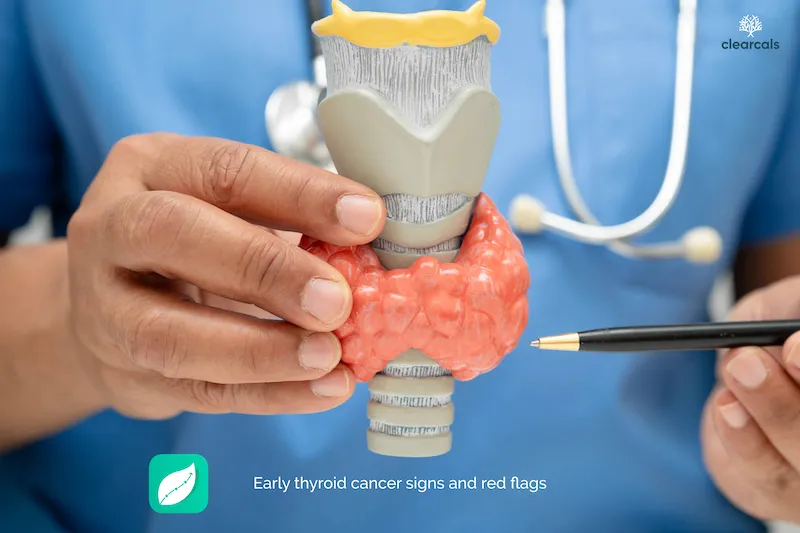
Finding a lump in your neck or noticing voice changes can be frightening. Many people immediately worry: “Is this thyroid cancer?”
The reality is reassuring:
- most thyroid nodules are not cancer
- many thyroid cancers grow slowly
- early detection often leads to excellent outcomes
Still, it’s important to know the warning signs and when medical evaluation is necessary.
In this blog, you’ll learn:
- common thyroid cancer symptoms
- early signs vs red flags
- how thyroid cancer differs from thyroid hormone problems
- tests used for diagnosis
- what to do if you notice symptoms
What Is Thyroid Cancer?
Thyroid cancer occurs when abnormal cells grow in the thyroid gland. It often presents as a thyroid nodule (a lump) or swelling in the neck.
There are different types of thyroid cancer, such as:
- papillary thyroid cancer (most common)
- follicular thyroid cancer
- medullary thyroid cancer
- anaplastic thyroid cancer (rare, aggressive)
The most important fact: most types, especially papillary thyroid cancer, are highly treatable when detected early.
Common Thyroid Cancer Symptoms
Thyroid cancer may not cause symptoms in the early stages. Many cases are detected incidentally during:
- routine health checkups
- ultrasound
- scans done for another reason
But when symptoms do appear, they often include:
A lump or swelling in the neck
- usually painless
- may grow slowly
- may feel firm
Changes in voice
- hoarseness
- voice becoming deeper or weaker
- especially if persistent
Difficulty swallowing (dysphagia)
- feeling that food gets stuck
- pressure in the throat
Difficulty breathing
- sensation of throat tightness
- shortness of breath, especially when lying down (in advanced cases)
Persistent cough
- not related to cold or infection
- lasting for weeks
Enlarged lymph nodes
- swelling on the sides of the neck
- sometimes the first visible sign
Early Signs vs Red Flags
Not every thyroid lump is cancer. Many nodules are benign (non-cancerous). But some red flags require urgent evaluation.
Early signs that should be checked
- new neck lump
- lump that is gradually increasing
- discomfort or pressure in the neck
Red flags that need prompt medical attention
- lump growing rapidly
- persistent hoarseness or voice changes
- trouble swallowing or breathing
- enlarged lymph nodes
- history of radiation exposure to the head/neck
- strong family history of thyroid cancer
- unexplained weight loss with neck symptoms (not always present)
Thyroid Cancer vs Thyroid Hormone Problems: Key Differences
Many people confuse thyroid cancer symptoms with hypothyroidism or hyperthyroidism symptoms.
Thyroid cancer often causes:
- neck lump
- localized symptoms (voice, swallowing, lymph nodes)
Thyroid hormone imbalance (hypothyroidism/hyperthyroidism) causes:
- fatigue, weight changes
- constipation or loose motions
- heat/cold intolerance
- heart rate changes
- mood changes
Important note: A person can have thyroid cancer and still have normal thyroid hormone levels.
This is why physical symptoms like lumps and voice changes should not be ignored, even if thyroid tests are normal.
What Causes Thyroid Cancer?
Risk factors include:
- female gender (more common)
- family history (especially medullary thyroid cancer)
- radiation exposure (especially during childhood)
- certain genetic syndromes (rare)
- age (some types are more common in older adults)
But many people diagnosed with thyroid cancer have no clear risk factors.
How Is Thyroid Cancer Diagnosed?
If a thyroid nodule is detected, doctors usually recommend:
- Thyroid ultrasound
- measures size, shape, structure
- identifies suspicious features
- Blood tests
- TSH, Free T4, sometimes calcitonin (for medullary thyroid cancer)
- blood tests alone cannot confirm cancer
- Fine needle aspiration (FNA biopsy)
- the most important test to evaluate nodules
- quick and minimally invasive
- Additional imaging (if required)
- CT/MRI or radioactive iodine scans (in specific cases)
What Should You Do If You Notice a Lump?
The best step is not panic. It is structured evaluation.
What you should do:
- book a doctor visit (ENT, endocrinologist, or physician)
- get a thyroid ultrasound
- follow medical advice for biopsy if needed
Avoid:
- massaging the lump aggressively
- relying on internet-based self-diagnosis
- delaying evaluation because “it doesn’t hurt”
Lifestyle and Nutrition Support During Thyroid Evaluation
Diet cannot diagnose or treat cancer, but maintaining consistent nutrition helps manage anxiety, energy levels, and overall health.
If you feel anxious or start skipping meals due to fear, your fatigue may worsen even before the diagnosis is clear.
Using tools like the Hint app can help you:
- maintain balanced eating patterns
- track protein intake to support energy and muscle health
- avoid extreme dieting during stressful periods
Hint Pro can provide structured, personalized nutrition plans based on your profile and preferences. If you need guidance around sustainable eating patterns, Hint Premium offers access to experienced dietitians.
FAQs: Thyroid Cancer Symptoms
Can thyroid cancer be painless?
Yes. Many thyroid cancers cause a painless lump and no other symptoms early on.
Does every thyroid nodule mean cancer?
No. Most thyroid nodules are benign.
Can thyroid cancer cause weight loss?
Not commonly. Weight changes are more typical of hyperthyroidism, not thyroid cancer.
Can thyroid cancer show up in blood tests?
Blood tests can be normal. Ultrasound and biopsy are usually required for diagnosis.
Is thyroid cancer curable?
Most thyroid cancers, especially papillary thyroid cancer, have excellent treatment outcomes when detected early.
Conclusion
Thyroid cancer symptoms are often local (neck lump, voice changes, swallowing issues). Many thyroid cancers grow slowly, and early treatment has a strong success rate.
If you notice a persistent lump or voice change, the smartest step is evaluation—not fear.
Explore More