
Track your nutrition and health goals

Thyroid Storm: Symptoms, Causes, Emergency Treatment, and Prevention (Explained Simply)
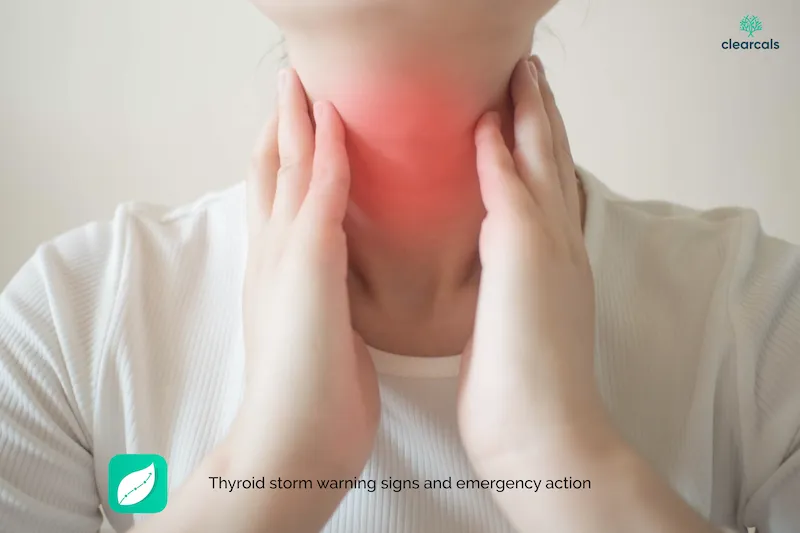
Thyroid storm is rare, but it is one of the most dangerous thyroid-related emergencies.
It happens when the body is suddenly exposed to extremely high thyroid hormone activity, leading to a life-threatening “metabolic overload.”
If you or someone you know has hyperthyroidism, learning the warning signs of thyroid storm can be lifesaving.
In this blog, you’ll learn:
- what thyroid storm is
- who is at risk
- symptoms to watch for
- what causes it
- emergency treatment
- how to prevent it
What Is Thyroid Storm?
Thyroid storm (also called thyrotoxic crisis) is a severe, sudden worsening of hyperthyroidism. The body enters a state where organs begin to fail due to extreme thyroid hormone effects.
Thyroid storm is a medical emergency. It requires immediate hospital care.
Important note: thyroid storm is not “just very high thyroid.” It’s a critical condition that can rapidly affect the heart, brain, and liver.
Who Is at Risk of Thyroid Storm?
Thyroid storm most commonly occurs in people who already have:
- untreated hyperthyroidism
- Graves’ disease
- toxic multinodular goiter
- thyroiditis (rarely)
It is more likely when hyperthyroidism is poorly controlled, or when medication is missed or stopped suddenly.
Thyroid Storm Symptoms (Emergency Warning Signs)
Symptoms develop quickly and may include:
High fever
- often above 38.5°C (101.3°F)
- can be very high
Fast heart rate
- severe palpitations
- heart rate often >140 bpm
- may trigger irregular rhythms
Nervous system symptoms
- confusion
- extreme agitation
- restlessness
- delirium
- seizures
- drowsiness or loss of consciousness
Digestive symptoms
- diarrhea
- vomiting
- abdominal pain
- dehydration
Breathing difficulties
- shortness of breath
- severe fatigue
- weakness
Sweating and heat intolerance
- profuse sweating
- feeling extremely hot
If these symptoms appear in someone with known hyperthyroidism, it is an emergency.
What Causes Thyroid Storm?
Thyroid storm is usually triggered by physical stress on the body, such as:
- infection (pneumonia, UTI, viral infections)
- surgery or trauma
- childbirth
- stopping antithyroid medicine suddenly
- uncontrolled hyperthyroidism for a long time
- severe emotional stress (less common)
- heart attack or stroke
- diabetic crisis
Even if thyroid hormone levels aren’t dramatically higher, the body’s response can be extreme due to stress triggers.
What To Do If Thyroid Storm Is Suspected
Do not wait.
- call emergency services or go to the emergency room immediately
- do not attempt home treatment
- do not delay by searching online for “natural remedies”
Thyroid storm can become fatal without urgent treatment.
How Is Thyroid Storm Treated? (Hospital Management)
Treatment is done in ICU-level medical care and usually includes:
Supportive care
- IV fluids
- oxygen
- temperature control
- cooling measures for fever
Medications to control symptoms
- beta blockers (to control heart rate and tremors)
Medications to stop thyroid hormone production
- antithyroid drugs (like methimazole or PTU)
Iodine treatment (used after antithyroid meds)
- helps block hormone release (given at the correct timing)
Steroids
- reduce conversion of T4 to T3
- support adrenal function
Treating the trigger
- antibiotics for infection
- managing heart issues
- treating dehydration
Thyroid storm is a multi-step medical treatment process. Timing and sequencing matter.
Can Thyroid Storm Be Prevented?
In most cases, yes.
Prevention is mainly about controlling hyperthyroidism well.
Key steps include:
- taking antithyroid medicine consistently
- never stopping medication suddenly without medical advice
- regular thyroid blood tests (TSH, Free T3/T4)
- early treatment of infections
- discussing surgery or pregnancy planning in advance if you have hyperthyroidism
If you have Graves’ disease, long-term follow-up is important even after symptoms improve.
Tracking and Awareness: How the Hint App Can Help (Supportive)
Thyroid storm is a medical emergency, so apps cannot prevent it on their own. But tracking symptoms and routine patterns can help you notice early warning signs of uncontrolled hyperthyroidism, such as:
- rising heart rate
- unexplained weight loss
- persistent anxiety and heat intolerance
- fatigue and poor sleep
With the Hint app, users can track:
- weight trends
- meal patterns and calorie intake (important when weight drops unexpectedly)
- energy and symptom patterns
If lifestyle support is needed alongside medical treatment, Hint Pro can help users follow structured eating habits, and Hint Premium offers access to experienced dietitians for guidance around food routines during recovery.
FAQs: Thyroid Storm
Is thyroid storm common?
No. It is rare, but extremely serious.
Can thyroid storm happen in hypothyroidism?
No. Thyroid storm occurs due to severe hyperthyroidism.
Can thyroid storm happen suddenly, even if I feel fine?
It usually occurs when hyperthyroidism is uncontrolled, often triggered by infection, surgery, or stopping medication.
Is thyroid storm fatal?
It can be life-threatening if untreated, which is why early emergency care is critical.
Conclusion
Thyroid storm is a rare but life-threatening emergency caused by severely uncontrolled hyperthyroidism. Recognizing the early warning signs and getting immediate hospital care can save lives.
If you have hyperthyroidism, the best prevention is consistent treatment, regular monitoring, and avoiding sudden medication stops.


