
Track your nutrition and health goals

Thyroid Test Preparation: Fasting, Best Time for Testing, Antibody Tests, and How to Check Thyroid at Home
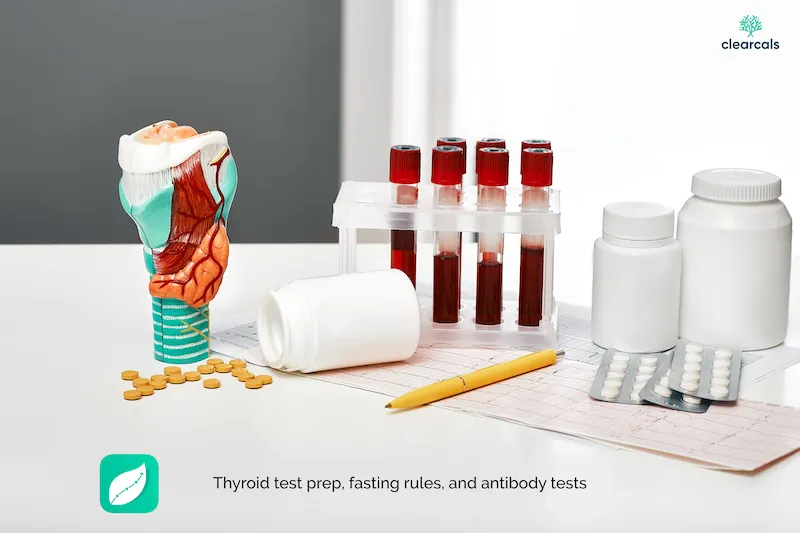
Thyroid tests are among the most common blood tests ordered today. But many people are unsure about basic questions such as:
- Do I need to fast for a thyroid test?
- Should I take my thyroid medicine before the test?
- What time of day is best for TSH testing?
- What is a thyroid antibody test, and when is it needed?
- Can I check my thyroid at home without a blood test?
This blog answers all of these questions in a simple, practical, and science-backed way—so your test results are accurate and easy to interpret.
What Tests Are Done for Thyroid?
A thyroid panel typically includes:
- TSH (Thyroid Stimulating Hormone)
- Free T4 (Thyroxine)
- Free T3 (Triiodothyronine)
Depending on your symptoms and history, your doctor may also order:
- Thyroid antibody tests (Anti-TPO, TgAb)
- Thyroglobulin
- Reverse T3 (less commonly)
- Ultrasound (if swelling, nodules, or goiter is suspected)
Do You Need Fasting for a Thyroid Test?
In most cases, fasting is not required for thyroid blood tests.
You can do TSH, Free T3, and Free T4 tests without fasting.
However, there are a few situations where you may be advised to fast:
- if you’re doing other tests on the same day (lipid profile, fasting glucose, insulin)
- if your doctor has specifically told you to fast for a combined panel
So, for a thyroid-only test, fasting is usually not necessary.
For combined health testing, fasting may be required depending on what else is being tested.
Thyroid Test Empty Stomach or Not?
This is one of the most common questions.
In general:
- you do not need an empty stomach for thyroid testing
- but you do need consistency to interpret results properly
For people taking thyroid medication (levothyroxine), the timing matters more.
Should You Take Thyroid Medicine Before the Test?
If you take levothyroxine, many doctors recommend:
- giving blood before taking your morning dose
This reduces variation in Free T4 levels that can happen soon after medication intake.
A simple routine many people follow:
- Go for the test in the morning
- Give blood sample
- Take the thyroid tablet after the test
- Have breakfast after 30–60 minutes (as usual)
That said, different doctors follow slightly different preferences. The most important thing is to be consistent and follow your doctor’s guidance—especially if you are monitoring long-term trends.
Best Time for Thyroid Blood Test (Morning vs Evening)
TSH levels follow a natural daily rhythm and can vary depending on the time of day.
For most consistent results:
- morning testing (8–10 AM) is commonly recommended
If you always test around the same time, it becomes easier to compare results over time.
Avoid random testing times, especially if you are tracking TSH trends and adjusting dose.
What to Avoid Before a Thyroid Test
Thyroid tests don’t require heavy restrictions, but there are a few things that can affect results.
1. Biotin supplements
Biotin (often found in hair/skin/nail supplements) can interfere with thyroid test results and cause misleading readings.
Many labs recommend stopping biotin:
- 48–72 hours before the test Some doctors advise stopping it for up to 1 week if the dose is high.
2. High-dose iodine supplements
Unless prescribed, iodine supplements can sometimes alter thyroid function and affect results.
3. Major illness or infection
If you are currently sick (fever, infection), thyroid tests may temporarily shift due to stress response.
If possible, consider postponing routine thyroid monitoring until recovery (unless it’s urgent).
4. Recent steroid treatment or certain medications
Some medications can influence thyroid tests. Always inform your doctor about medications you are taking.
What Is a Thyroid Antibody Test?
Thyroid antibody tests are used to check whether your immune system is attacking your thyroid.
This is important because the most common cause of hypothyroidism is autoimmune thyroiditis (Hashimoto’s).
Common thyroid antibody tests include:
- Anti-TPO (Thyroid Peroxidase Antibodies)
- TgAb (Thyroglobulin Antibodies)
Antibody tests are not always needed for everyone. They are usually ordered when:
- your TSH is high or fluctuating
- you have symptoms but borderline test results
- there’s suspected autoimmune thyroid disease
- you’re pregnant or planning pregnancy (in some cases)
- you have a family history of thyroid disorders
What If Thyroid Antibodies Are Positive?
If antibodies are positive:
- it suggests autoimmune thyroiditis
- it increases the likelihood of progression from mild or subclinical hypothyroidism to overt hypothyroidism over time
But a positive antibody test does not automatically mean you need medication today.
Treatment decisions depend more on:
- TSH level
- Free T4 level
- symptoms
- pregnancy or fertility plans
- age and cardiac risk
Some people may simply need monitoring every 6–12 months.
How Often Should You Test Thyroid?
The frequency depends on your situation:
If you are newly diagnosed or adjusting dose
- testing every 6–8 weeks is common until stable
If you are stable on the same dose
- testing every 6–12 months is often sufficient
If you are pregnant
- monitoring is more frequent (as advised by your doctor)
If you have subclinical hypothyroidism
- testing every 3–6 months initially (based on symptoms and antibody status)
How to Check Thyroid at Home (What You Can and Cannot Do)
There is no accurate way to diagnose thyroid disease at home without a blood test.
But you can check patterns that indicate whether you should get tested.
Signs that may suggest thyroid imbalance
- persistent fatigue despite good sleep
- unexplained weight gain or weight loss
- constipation or frequent loose motions
- dry skin, hair fall, or brittle nails
- irregular periods
- low mood or anxiety
- palpitations or tremors
- feeling unusually cold or sweaty
- swelling in the neck (possible goiter)
You can also monitor:
Weight trends
Weight changes over weeks and months are more meaningful than day-to-day fluctuations.
Resting heart rate
A consistently high resting heart rate (especially with anxiety and weight loss) can hint at hyperthyroidism, while low heart rate with fatigue can appear in hypothyroidism.
Neck appearance (not diagnostic)
A visible swelling in the front of the neck can suggest goiter or nodules, but it needs medical evaluation and ultrasound.
Important note: these signs are not proof. They only help you decide if testing is necessary.
Can Home Thyroid Test Kits Work?
Some home kits allow you to collect a sample and send it to a lab. These can be convenient, but they still rely on lab testing.
If your results are abnormal:
- you should confirm them with a certified lab
- and consult a doctor for interpretation and treatment decisions
How the Hint App Can Support Thyroid Monitoring and Preparation
Thyroid symptoms are often subtle and overlap with lifestyle issues. Many people feel confused because their symptoms do not match one lab report.
That’s why tracking patterns makes a difference.
With the Hint app, you can:
- track calories, protein, and meal consistency
- monitor micronutrients like selenium, zinc, and B vitamins
- track weight trends over weeks and months
- note fatigue, digestion patterns, and energy levels
- build routines that support long-term thyroid health
Hint Pro (Personalized Support)
- Hint Pro offers instant personalized diet plans based on your profile, goals, and health conditions.
- This can support weight and energy management when thyroid levels fluctuate.
Hint Premium (Unlimited Expert Guidance)
- Hint Premium gives access to experienced dietitians who can help you make practical adjustments based on your symptoms and diet patterns.
- This can be useful when symptoms persist despite normal reports, or when you need sustainable lifestyle support.
FAQs: Thyroid Test Preparation and Antibody Tests
1. Do I need fasting for thyroid test?
Usually no. Fasting is not required for TSH, Free T3, and Free T4. But if you are doing lipid or glucose tests too, fasting may be required.
2. Should I take levothyroxine before the thyroid test?
Many doctors recommend testing before taking your morning dose. Follow your doctor’s guidance and be consistent.
3. Which is the best time to do a thyroid test?
Morning (8–10 AM) is commonly recommended for consistency, especially for TSH.
4. What does a thyroid antibody test show?
It indicates whether the thyroid problem may be autoimmune (like Hashimoto’s). Positive antibodies increase the likelihood of progression, but treatment depends on hormone levels and symptoms.
5. Can I check my thyroid at home without a blood test?
You cannot diagnose thyroid at home without testing, but you can monitor symptoms, weight trends, and heart rate patterns to decide if you should get tested.
Conclusion: Get Accurate Results, Then Track the Patterns
Thyroid testing is simple, but correct preparation and consistent timing make results more reliable.
To get the clearest picture:
- test at a consistent time (preferably morning)
- discuss medicine timing with your doctor
- avoid biotin supplements before testing
- use antibody tests when autoimmune thyroid disease is suspected
And remember: your symptoms matter just as much as the numbers. Tracking nutrition, weight trends, and lifestyle patterns using tools like the Hint app can support better day-to-day management and long-term consistency.


