Track your nutrition and health goals

Low-Calorie Indian Dinner Ideas for Weight Loss (With Calorie Counts)
Low-Calorie Indian Dinner Ideas for Weight Loss (With Calorie Counts)
Why Dinner Is Worth Getting Right
Dinner is often the meal that quietly undoes a good day of eating — it's later, more relaxed, and easy to over-portion after a long day. It's also a meal you don't need to make heavy to make satisfying: a lighter dinner built around protein and vegetables can be just as filling as a heavier one, without the extra 200-300 kcal that oil, ghee, and larger grain portions tend to add in the evening.
Low-Calorie Indian Dinner Ideas (With Calorie Counts)
| Dinner Option | Approx. Calories | Notes |
|---|---|---|
| Vegetable soup (clear, no cream) | ~80-150 kcal | Very low calorie, high volume, good starter or light meal |
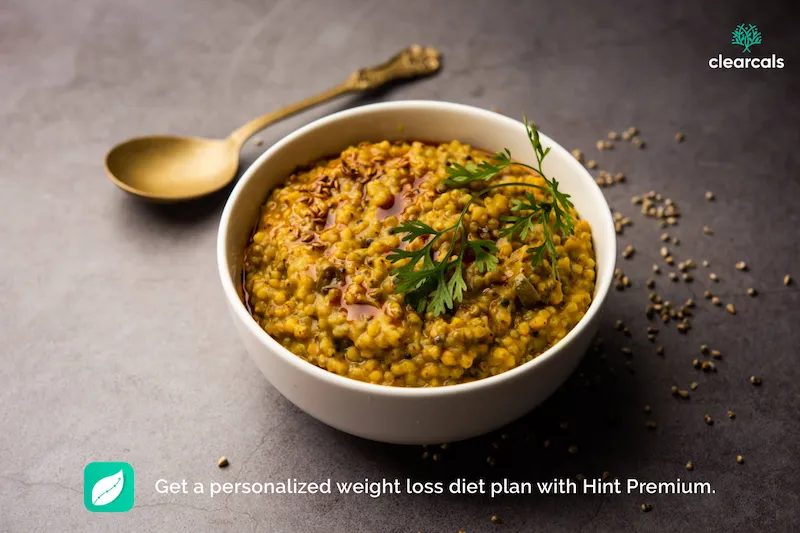
| Moong dal khichdi, 1 bowl | ~180-220 kcal | Balanced protein and carbs, easy to digest before bed |
| Grilled paneer with sautéed spinach | ~280-350 kcal | High protein, low carb |
| Stuffed capsicum (vegetable/paneer filling), 2 pieces | ~200-280 kcal | Filling, vegetable-forward |
| Dal with steamed vegetables, no rice/roti | ~200-260 kcal | A lighter option when you want to trim carbs at dinner |
| 1 roti + dal + sabzi | ~350-420 kcal | A standard, balanced lighter thali |
| Grilled chicken/tofu with stir-fried vegetables | ~300-400 kcal | High protein, works well for both vegetarian and non-vegetarian |
| Vegetable and paneer salad | ~200-280 kcal | High volume, protein-inclusive |
| Grilled chicken breast (100g) with steamed vegetables | ~220-280 kcal | Lean, high protein, low carb |
| Egg bhurji (2 eggs) with sautéed vegetables | ~220-260 kcal | Quick, high protein, widely available |
| Dalia (broken wheat) khichdi-style, 1 bowl | ~180-220 kcal | High fibre, light on digestion for a late meal |
Counts vary with oil and portion — log your exact meal in the Hint app for a precise number.
Should You Skip Dinner for Weight Loss?
Skipping dinner entirely isn't a shortcut worth taking for most people — it often leads to poor sleep, next-morning overeating, and in some cases the body conserving energy in response to a long overnight fast, which works against the goal. A lighter, well-timed dinner — eaten a couple of hours before bed, built around protein and vegetables rather than heavy carbs — is a more sustainable approach than skipping the meal altogether.
High-Protein, Low-Calorie Dinner Options
Protein at dinner matters for the same reason it does at other meals — it keeps you full and helps preserve muscle if you're in a calorie deficit. Grilled paneer, tofu, dal-based dishes, and lean chicken (if non-vegetarian) are your best options here. See our high-protein, low-calorie foods guide for the full ranked list, our high-protein vegetarian foods guide for more ideas, and our calorie deficit diet guide for how much protein to target overall.
Non-Vegetarian, Low-Calorie Dinner Options
If you eat non-vegetarian, grilled or lightly cooked chicken and eggs are both strong low-calorie, high-protein dinner choices — a 100g portion of grilled chicken breast runs roughly 165 kcal on its own, and egg bhurji or a light egg curry with vegetables adds up similarly to a comparable vegetarian protein source. Fish is a good option too if you enjoy it — a light, non-fried fish preparation with vegetables is broadly comparable to a chicken portion for calories while adding omega-3s, though keep in mind battered or heavily fried fish preparations can easily run 400+ kcal for a similar-sized portion. As with lunch, the preparation matters more than the protein source itself: a rich butter chicken or a creamy fish curry can push well past 500-600 kcal, while the same protein grilled or in a lighter curry stays in a genuinely low-calorie range.
Low-Carb Dinner Options
Dinner is a natural place to go lighter on carbs, since you're typically less active for the rest of the evening. Grilled chicken or fish with steamed vegetables, egg bhurji, grilled paneer with spinach, dal with steamed vegetables (skipping rice or roti), and a vegetable-paneer salad are all relatively low-carb options from the table above while still being filling. If you want a starch that's gentler on carbs than rice or a large roti portion, a small bowl of dalia or a single roti is a reasonable middle ground rather than cutting grains entirely.
Is Poha, Oats, or Dalia Good for Dinner?
These are usually thought of as breakfast foods, but all three work well at dinner too, especially if you want something light before bed. Poha (180-250 kcal per bowl) and dalia (180-220 kcal, as in the table above) are both easy to digest and lower in fat than a typical roti-sabzi thali, which can be useful if you're eating later than usual. Oats work less traditionally as a savory Indian dinner but can be made into a light vegetable upma-style oats dish for a similar calorie range — the main thing to watch is not turning any of these into a heavy, ghee-loaded preparation just because the base ingredient is light.
Tips for a Lighter Dinner
- Eat dinner earlier when you can — even shifting it 30-60 minutes earlier can reduce late-night snacking.
- Lead with vegetables or a light soup before the main dish — it takes the edge off hunger, so you naturally eat less of the higher-calorie parts of the meal.
- Go lighter on carbs at dinner than at lunch — you're typically less active for the rest of the day, so a smaller grain portion in the evening is a reasonable, sustainable place to trim calories.
- Don't make dinner your biggest meal by default — if lunch is already substantial, dinner doesn't need to match it.
Sample Low-Calorie Dinner Plan
- Standard: 1 roti + dal + sabzi + a side salad (~400-450 kcal)
- Lighter/low-carb: Grilled paneer with sautéed spinach + a small bowl of soup (~350-400 kcal)
- Very light: Vegetable soup + a small portion of khichdi (~300-350 kcal)
A 7-Day Low-Calorie Dinner Rotation
If you'd rather follow a plan than decide fresh each evening, here's a week's worth of variety across the options above:
| Day | Dinner | Approx. Calories |
|---|---|---|
| Day 1 | 1 roti + dal + sabzi + salad | ~400-450 kcal |
| Day 2 | Grilled paneer with sautéed spinach | ~280-350 kcal |
| Day 3 | Moong dal khichdi | ~180-220 kcal |
| Day 4 | Grilled chicken breast with steamed vegetables | ~220-280 kcal |
| Day 5 | Stuffed capsicum (2 pieces) | ~200-280 kcal |
| Day 6 | Egg bhurji with sautéed vegetables | ~220-260 kcal |
| Day 7 | Vegetable soup + dalia khichdi-style | ~260-340 kcal |
Swap days around freely, or repeat favourites — the goal is variety and staying within your target, not following a fixed sequence.
Dinner Timing and Movement After Eating
Is there a "best" time to eat dinner? Not a universal one, but eating earlier rather than later — ideally with a 2-3 hour gap before you sleep — tends to help with digestion and sleep quality for most people, which indirectly supports weight management even though the calories themselves don't change based on clock time. An early dinner also naturally reduces the odds of a second round of snacking before bed.
Does walking after dinner help with weight loss? A short walk (even 10-15 minutes) after dinner is genuinely useful for digestion and for helping regulate blood sugar response to the meal, and it's a low-effort habit that's easy to sustain. It won't burn a large number of calories on its own, but combined with a lighter, protein-forward dinner, it's a reasonable, evidence-friendly habit rather than a myth.
Track Your Dinner With Hint
Dinner recipes vary more night to night than breakfast or lunch usually does, which makes consistent logging more useful, not less. The Hint app makes it quick to log home-cooked Indian dishes so you can see, over a week, whether your dinners are actually landing where you think they are.
FAQs
What is a good low-calorie Indian dinner? Vegetable soup, moong dal khichdi, grilled paneer with vegetables, or a light roti-dal-sabzi thali are all filling options typically running 200-450 kcal.
Should I skip dinner to lose weight? Generally not recommended — it often leads to poor sleep and overeating the next day. A lighter, well-timed dinner built around protein and vegetables is a more sustainable approach.
What's a high-protein, low-calorie Indian dinner? Grilled paneer or tofu with vegetables, dal-based dishes, or lean chicken (if non-vegetarian) are strong options that keep you full without a large calorie cost.
How many calories should dinner be for weight loss? It depends on your total daily target, but 350-450 kcal is a reasonable range for most people, especially if lunch was the larger meal of the day.
Is soup a good dinner option for weight loss? Yes, especially clear or vegetable-based soups without cream — they're low in calories and high in volume, which helps with fullness. Pairing soup with a protein source makes it more complete as a full meal.
What's a good non-vegetarian, low-calorie dinner? Grilled chicken breast with steamed vegetables, egg bhurji, or a light, non-fried fish preparation are all strong options — a 100g portion of grilled chicken runs roughly 165 kcal, and eggs or fish in a similar preparation land in a comparable range.
Is a dinner under 600 calories enough for weight loss? For most people, yes — a dinner in the 350-500 kcal range is typically enough to feel satisfied, especially if it's protein-forward. A dinner well above 600 kcal isn't automatically a problem either, though, if it fits your total daily target — the number itself matters less than how it fits into the rest of your day.
Will a low-calorie dinner give me a flat stomach? No single meal targets fat loss from one area of the body — this is sometimes called "spot reduction," and it isn't supported by the evidence. A consistent calorie deficit across your whole diet, dinner included, leads to fat loss overall, including eventually around the midsection, but no dinner recipe or food specifically flattens the stomach on its own.
About the Author
Asfia Fatima is the Chief Dietitian at Clearcals, with a Master's Degree in Dietetics and Clinical Nutrition and over a decade of experience in clinical nutrition and lifestyle management. She specialises in evidence-based diet planning for weight loss, diabetes, and metabolic health, and leads the nutrition strategy behind the Hint app.
Connect with Asfia on LinkedIn