Track your nutrition and health goals

Which Salt Is Best for High Blood Pressure? Rock Salt, Black Salt, Sea Salt & More Compared
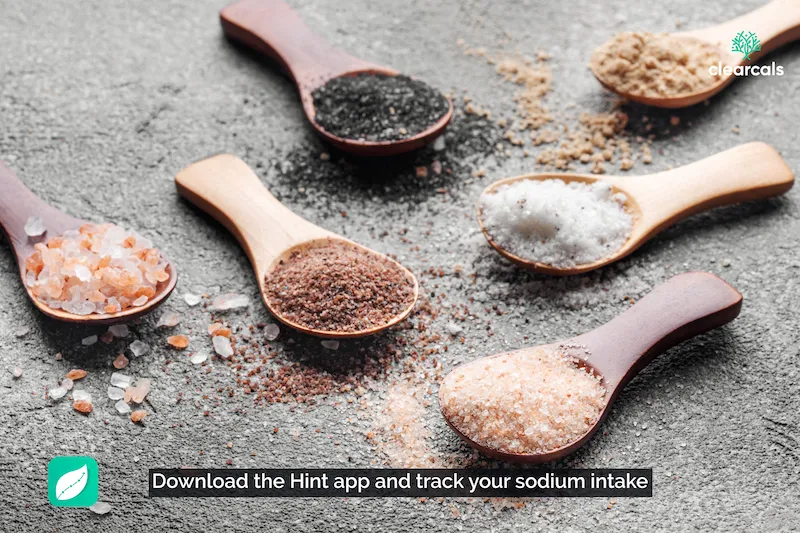
By Hafsaa Farooq | Medically Reviewed | Updated April 2026
Walk into any Indian kitchen managing high blood pressure, and you will likely find a debate in progress. Is sendha namak (rock salt) safer than regular salt?
Does kala namak (black salt) raise blood pressure?
What about Himalayan pink salt, sea salt, or the low-sodium salt your doctor mentioned?
With so many options and so much conflicting advice circulating online, it is easy to end up confused and using the wrong salt in the wrong quantities. This guide cuts through the noise with the actual sodium numbers for every major salt type.
| The short answer: No salt is safe for high blood pressure in large quantities. All common salt types, including sendha namak, kala namak, sea salt, and Himalayan pink salt, contain 36 to 39% sodium by weight, nearly identical to regular table salt. The only salt type that meaningfully reduces sodium intake is low-sodium salt (potassium chloride blend). For blood pressure management, how much salt you use matters far more than which type you choose. [1] |
|---|
What Makes Salt Raise Blood Pressure?
The component of salt responsible for raising blood pressure is sodium, not chloride, not trace minerals, not crystal size or colour.
Sodium causes the kidneys to retain water, increasing blood volume and the pressure on artery walls. [2]
Every gram of sodium consumed above the body's requirement contributes to this effect, regardless of what other minerals accompany it.
This is the critical point that most salt-related health claims miss. Sendha namak does contain small amounts of calcium, potassium, and magnesium alongside its sodium. Himalayan pink salt contains up to 84 trace minerals.
But the quantities of these beneficial minerals are so small, relative to the sodium content, that they provide no clinically meaningful benefit. You would need to consume dangerously high amounts of these salts to get a useful dose of their trace minerals. [3]
All Common Salt Types Compared
| Salt Type | Sodium per 1 tsp (6 g) | % Sodium by Weight | Trace Minerals? | Verdict for Blood Pressure |
|---|---|---|---|---|
| Table salt (iodised) | 2,300 mg | ~38% | None (iodine added) | High sodium; iodine is beneficial, but does not offset sodium risk |
| Sendha namak (rock salt / Himalayan white) | 2,200 to 2,300 mg | ~36 to 38% | Trace amounts of Ca, K, Mg | Essentially the same as table salt; no blood pressure advantage |
| Kala namak (black salt / Indian volcanic salt) | 2,100 to 2,300 mg | ~35 to 38% | Sulphur compounds (the smell), trace Fe | No lower in sodium than table salt; it does raise blood pressure at typical usage |
| Himalayan pink salt | 2,200 to 2,300 mg | ~36 to 38% | Up to 84 trace minerals in negligible amounts | No blood pressure advantage over table salt despite marketing claims [3] |
| Sea salt (unrefined) | 2,200 to 2,300 mg | ~37 to 38% | Small amounts of Mg, K, and Ca | Same sodium content as table salt; a coarser grind may mean slightly less per teaspoon by volume, but not by weight |
| Low-sodium salt (potassium chloride blend) | 900 to 1,150 mg sodium | ~15 to 20% sodium (rest is potassium) | Potassium, which actively lowers blood pressure | Best option for blood pressure: cuts sodium by 50 to 60% and adds potassium [4] |
| Salt-free seasoning (herb blends) | 0 mg sodium | 0% | Herbs, spices, dried garlic, lemon | Ideal for people on strict sodium restriction; no blood pressure impact |
The Sendha Namak Myth: Is Rock Salt Safe for Blood Pressure?
Sendha namak holds a special place in Indian culture, particularly associated with Navratri fasting and Ayurvedic dietary principles.
It is widely believed to be a healthier, more natural alternative to processed table salt, and many people with high blood pressure switch to it, believing it is safer. This belief is not supported by the evidence.
Sendha namak is minimally processed rock salt, which does mean it retains trace minerals that are removed from refined table salt. However, its sodium content is essentially unchanged: approximately 36 to 38% sodium by weight, compared to 38% for regular iodised salt. [3]
A teaspoon of sendha namak raises blood pressure by the same mechanism and to the same degree as a teaspoon of table salt.
| There is one practical difference worth noting: sendha namak is not iodised. India has significant iodine deficiency in many regions, and iodised table salt is a primary public health intervention to address this. Switching entirely to non-iodised sendha namak, particularly for children and women of reproductive age, may increase the risk of iodine deficiency disorders. If you prefer sendha namak for cultural or taste reasons, ensure you get iodine from other dietary sources such as dairy, eggs, and seafood. |
|---|
Does Kala Namak (Black Salt) Raise Blood Pressure?
Kala namak is a pungent, sulphur-rich volcanic salt widely used in Indian chaat, raita, and spice blends like chaat masala. Its distinctive egg-like smell comes from hydrogen sulphide and other sulphur compounds formed during its traditional production in clay kilns.
From a blood pressure perspective, yes, kala namak raises blood pressure in the same way as regular salt, because it contains comparable amounts of sodium.
Its sodium content ranges from approximately 35 to 38% by weight. The trace minerals and sulphur compounds it contains do not counteract this effect. [1]
However, kala namak has an important practical advantage: its strong flavour means people typically use far less of it than regular salt to achieve the same flavour impact.
A small pinch of kala namak on chaat or raita provides a pronounced saltiness with much less actual sodium than an equivalent pinch of table salt would.
Used as a finishing spice in small quantities rather than as a primary cooking salt, kala namak can be a useful tool for reducing overall sodium intake while maintaining flavour.
What About Himalayan Pink Salt?
Himalayan pink salt has been heavily marketed in recent years as a healthier alternative to regular salt, with claims ranging from improved hydration to better electrolyte balance.
Its distinctive pink colour comes from trace iron oxide. It does contain up to 84 trace minerals, which sounds impressive until you look at the quantities.
An analysis published in the Journal of the American Nutrition Association found that to obtain a meaningful daily dose of calcium from Himalayan pink salt, you would need to consume approximately 30 times the recommended daily sodium limit. [3]
The trace mineral content, while real, is nutritionally irrelevant at any safe level of salt consumption. Its sodium content (36 to 38%) is no different from regular table salt.
| Bottom line on premium salts: Sendha namak, Himalayan pink salt, and sea salt are not harmful in moderate quantities, but they provide no blood pressure advantage over regular table salt. Their higher cost is driven by marketing, not by meaningful health differences. For blood pressure management, the total amount of sodium consumed is what matters, not the source or colour of the salt. |
|---|
The One Salt Type That Actually Helps: Low-Sodium Salt
Low-sodium salt, also called salt substitute or potassium salt, replaces 25 to 50% of sodium chloride with potassium chloride.
This produces two simultaneous blood pressure benefits: less sodium means less fluid retention and lower blood volume, while more potassium directly relaxes blood vessel walls and helps the kidneys excrete sodium more efficiently. [4]
A large meta-analysis of randomised trials by Neal et al. (2021) found that potassium-enriched salt substitutes reduced systolic blood pressure by an average of 4.6 mmHg and diastolic blood pressure by 1.6 mmHg compared to regular salt, and were associated with a 13% lower risk of cardiovascular events and an 11% lower risk of death. [4]
These are clinically meaningful reductions, achieved simply by switching the type of salt used without changing the quantity.
| Feature | Regular Salt | Low-Sodium Salt (50:50 blend) |
|---|---|---|
| Sodium per teaspoon | ~2,300 mg | ~1,150 mg (50% reduction) |
| Potassium per teaspoon | 0 mg | ~1,500 mg (actively lowers BP) |
| Taste difference | Standard salty taste | Slightly bitter aftertaste for some; minimal when cooked |
| Best uses | All cooking and seasoning | Cooking; less suitable as a table condiment for some palates |
| Availability in India | Widely available | Available at pharmacies, health stores, and online |
| Who should avoid it | No restrictions | Kidney disease, potassium-sparing diuretics, ACE inhibitors (check with doctor) |
| Cost | Low | 2 to 4 times the cost of regular salt |
| Important caution: Low-sodium salt is not suitable for everyone. People with chronic kidney disease, those on potassium-sparing diuretics (like spironolactone), or those taking ACE inhibitors or ARBs must consult their doctor before switching, as excess potassium can accumulate to dangerous levels in these conditions. For healthy adults with hypertension and no kidney disease, low-sodium salt is safe and effective. |
|---|
Practical Recommendations: Which Salt to Use
| Your Situation | Recommended Salt | Why |
|---|---|---|
| Hypertension, no kidney disease | Low-sodium salt (potassium blend) for cooking; minimise all salt overall | Cuts sodium by 50%, adds blood-pressure-lowering potassium [4] |
| Hypertension with kidney disease or on potassium medications | Regular iodised table salt in strictly limited quantities | Low-sodium salt is unsafe due to the potassium load; focus on total quantity reduction |
| Pre-hypertension or family history of HBP | Low-sodium salt or regular iodised salt in reduced quantities | Prevention strategy: gradually reduce total sodium intake |
| Cultural preference for sendha namak during fasting | Use in the same small quantities as regular salt; no additional benefit or harm | Sodium content is identical; ensure iodine from other dietary sources |
| Chaat, raita, and finishing seasoning | Small pinch of kala namak | Strong flavour means less is needed; reduces total sodium per serving |
| Strict sodium restriction (below 1,500 mg/day) | Herb-based salt-free seasoning blends | Eliminates sodium from seasoning while maintaining flavour |
The More Important Question: How Much Salt Are You Using?
The type of salt you use matters far less than the quantity.
A person using Himalayan pink salt liberally, adding it at multiple stages of cooking, to dals and sabzis, raita, and at the table, will have a significantly higher sodium intake than someone using regular iodised salt sparingly, adding it only at the end of cooking and nowhere else.
The most effective strategies for reducing sodium intake are behavioural, not product-based:
- Add salt only once, at the end of cooking, where it sits on the surface of food and delivers more saltiness per milligram
- Never add salt at the table after cooking
- Eliminate pickle, papad, and packaged snacks, which are the highest sodium-per-serving items in the Indian diet
- Replace salt-based flavour with lemon juice, tamarind, amchur, and spices
- Cook from scratch rather than using packaged masala mixes, which are typically very high in salt
| A useful exercise: measure out 3/4 of a teaspoon of salt into a small bowl at the start of the day. That is your entire sodium budget for the day (approximately 1,500 mg). Every grain of salt you use in cooking, from dal to sabzi to roti dough, comes from that bowl. This makes the quantity viscerally real in a way that milligrams on a label rarely does. |
|---|
Get the Right Salt Advice for Your Blood Pressure with Hint
Salt management sounds straightforward, but it is genuinely complex in practice, especially within Indian cooking culture.
The right approach depends on your baseline sodium intake, your specific blood pressure readings, your kidney function, and the medications you are on.
Hint Premium: Personalised Salt and Sodium Guidance
Hint Premium gives you access to a dedicated registered dietitian who will:
- Assess your current sodium intake from a detailed food log and identify your biggest sources
- Advise on whether low-sodium salt is appropriate for you based on your medical history and medications
- Build a personalised low-sodium Indian meal plan that hits your blood pressure targets while keeping meals flavourful
- Teach you practical cooking techniques that reduce sodium without making food taste bland
- Monitor your progress and adjust your sodium targets as your blood pressure improves
All Hint Plans Include
- Meal logging with sodium and potassium tracking from an extensive Indian food database
- A personalised daily sodium target and real-time tracking against it
- Expert-designed low-sodium Indian meal plans and recipe suggestions
- Pro Workouts: 300+ guided strength and conditioning routines available on Hint Pro and Hint Premium, to complement dietary sodium reduction for blood pressure management
Download the Hint app from the App Store or Google Play.
Upgrade to Hint Premium for a dedicated dietitian who will help you find the right salt strategy for your specific blood pressure situation.
Frequently Asked Questions
Is sendha namak (rock salt) good for high blood pressure?
No more than regular salt. Sendha namak contains approximately 36 to 38% sodium by weight, essentially the same as iodised table salt.
It is not lower in sodium, does not raise blood pressure less than table salt, and offers no clinically meaningful trace mineral benefit at safe consumption levels.
Use it in small quantities if you prefer it culturally, but do not use more of it under the assumption that it is safer.
Does black salt (kala namak) increase blood pressure?
Yes, kala namak raises blood pressure through the same sodium mechanism as any other salt. Its sodium content is 35 to 38% by weight.
However, its strong flavour means people typically use smaller amounts, which can result in less total sodium per dish compared to regular salt used to achieve the same taste.
Use it as a finishing spice in small quantities rather than as a primary cooking salt.
Is sea salt healthier than table salt for blood pressure?
No. Sea salt and table salt have nearly identical sodium content.
Sea salt may contain small amounts of minerals not present in refined table salt, but these are nutritionally insignificant at safe salt consumption levels.
The coarser texture of some sea salts means a level teaspoon may contain slightly fewer sodium milligrams than fine table salt by volume, but by weight, the difference is negligible.
What is the safest salt for someone with high blood pressure?
For people with hypertension and no kidney disease or potassium-related medication concerns, a low-sodium potassium chloride blend is the best option. It reduces sodium by 25 to 50% and adds potassium, which actively lowers blood pressure.
For everyone else, the priority is using less of whatever salt you currently use, combined with reducing the high-sodium packaged foods that contribute the most sodium to most Indian diets.
How can I make food taste less bland when reducing salt?
The most effective approaches for Indian cooking are a stronger tadka (tempering) with mustard seeds, cumin, curry leaves, garlic, and ginger; adding lemon juice or amchur (dry mango powder) at the end of cooking for brightness; using freshly toasted and ground spices rather than pre-mixed masalas; and finishing dishes with a small pinch of kala namak for a powerful flavour hit with minimal sodium.
Most people find that their taste buds adapt to lower salt levels within 2 to 4 weeks, after which heavily salted food begins to taste unpleasantly salty.
References
- He FJ, MacGregor GA. A comprehensive review on salt and health, and the current experience of worldwide salt reduction programmes. J Hum Hypertens. 2009;23(6):363-384.
- Intersalt Cooperative Research Group. Intersalt: an international study of electrolyte excretion and blood pressure. Results for 24-hour urinary sodium and potassium excretion. BMJ. 1988;297(6644):319-328.
- Bhagya D, Prema L, Balakrishna Bhatt P. Nutritional composition of Himalayan rock salt versus sea salt and table salt. J Am Nutr Assoc. 2022;41(2):172-176.
- Neal B, Wu Y, Feng X, et al. Effect of salt substitution on cardiovascular events and death. N Engl J Med. 2021;385(12):1067-1077.
- Sacks FM, Svetkey LP, Vollmer WM, et al. Effects on blood pressure of reduced dietary sodium and the Dietary Approaches to Stop Hypertension (DASH) diet. N Engl J Med. 2001;344(1):3-10.
About the Author
Hafsaa Farooq is a Consultant Dietitian at Clearcals with a strong passion for nutrition, fitness, and evidence-based health practices.
She is deeply interested in clinical nutrition and enjoys helping individuals build healthier lifestyles through practical dietary guidance.
Beyond her professional work, Hafsaa enjoys developing healthy recipes, writing evidence-based nutrition blogs, and staying active through sports.
She is also expanding her expertise in the science of exercise and weight training to better support holistic health and fitness goals.
🔗 Connect with Hafsaa on LinkedIn