Track your nutrition and health goals

Fatty Liver Symptoms on Face and Skin: What the Signs Look Like
By Dr. Sumedha Verma | Medically Reviewed | Updated April 2025
Fatty liver disease is often called a 'silent' condition because it causes no obvious symptoms in its early stages.
However, as the disease progresses, it can leave visible clues on your face and skin. Knowing what these signs look like could prompt earlier diagnosis and treatment.
| Quick Note: Most facial and skin symptoms associated with fatty liver are more common in moderate to severe stages (Grade 2 and Grade 3). At Grade 1, visible signs are rare. If you notice any of the symptoms below, consult a doctor rather than self-diagnosing. |
|---|
Can Fatty Liver Affect Your Face and Skin?
Yes, though not always directly. The liver plays a central role in:
- Filtering toxins from the blood
- Producing proteins that regulate blood clotting and fluid balance
- Metabolising hormones, cholesterol, and bilirubin
- Producing bile for fat digestion
When the liver is overloaded with fat, inflamed, or compromised, these functions start to fail, and the effects can show up on the skin, eyes, and face. The symptoms range from subtle (like skin dryness or darkening) to obvious (like yellow eyes or visible blood vessels).
Fatty Liver Symptoms on the Face
1. Yellowing of the Eyes and Skin (Jaundice)
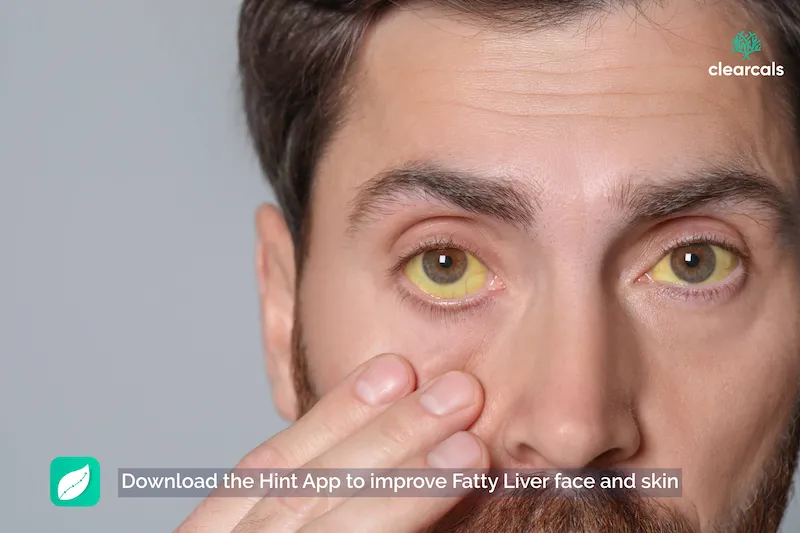
Jaundice is the most well-known facial sign of liver disease. It occurs when bilirubin, a yellow compound produced when red blood cells break down, builds up in the blood because a compromised liver cannot process it efficiently.
What it looks like: The whites of the eyes (sclera) turn yellow first, followed by a yellowish tinge to the skin. In people with darker skin tones, yellowing of the eyes is often the most visible indicator.
When it appears: Jaundice at the fatty liver stage is uncommon and usually indicates progression to NASH, cirrhosis, or acute liver stress. If you notice yellowing, seek medical attention promptly.
2. Facial Puffiness or Swelling
A damaged liver produces fewer albumin proteins, which regulate fluid balance in the body. Low albumin levels can cause fluid to collect in tissues, resulting in puffiness of the face, particularly around the eyes and cheeks.
Note: Facial puffiness is more commonly associated with advanced liver disease (cirrhosis) rather than early-stage fatty liver. However, it can occasionally appear when liver function is significantly impaired.
3. Pallor (Pale or Washed-Out Complexion)
The liver is involved in red blood cell metabolism. When it is not functioning optimally, mild anaemia can develop, giving the face a pale or grey appearance. Chronic fatigue from liver disease can also reduce skin vitality and brightness.
4. Dark Circles and Sunken Eyes
Chronic fatigue, poor sleep, and nutritional malabsorption associated with fatty liver can lead to pronounced dark circles and a sunken appearance around the eyes. While not diagnostic, these signs can indicate systemic metabolic stress.
Fatty Liver Symptoms on the Skin
1. Acanthosis Nigricans (Dark, Velvety Skin Patches)
This is one of the most frequently noticed skin signs associated with fatty liver disease in India. Acanthosis nigricans causes dark, thick, velvety patches of skin to develop, most commonly in the following areas:
- Back of the neck
- Armpits (underarms)
- Groin
- Knuckles and elbows
Why it happens: Acanthosis nigricans is directly linked to insulin resistance, the same metabolic condition that drives most non-alcoholic fatty liver disease. The darkening is caused by excess insulin stimulating skin cell growth. It is not caused by a lack of hygiene and cannot be scrubbed away.
| If you notice dark, thickened patches on your neck or armpits, get your fasting insulin and blood sugar checked. These patches are a visible marker of insulin resistance, which is both a cause and a consequence of fatty liver disease. |
|---|
2. Itchy Skin (Pruritus)
A compromised liver that cannot properly process bile salts may allow these substances to accumulate in the bloodstream. This causes generalised itching across the body, often without a visible rash. The itching is typically worse at night and may affect the palms, feet, and torso.
Itching from liver disease tends to be persistent and unrelieved by ordinary antihistamines or moisturisers. If you experience this, mention it specifically to your doctor.
3. Spider Angiomas (Spider-Like Blood Vessels)
Spider angiomas are small, visible blood vessels that radiate outward from a central point, resembling a spider's web. They appear on the face (especially the nose and cheeks), chest, and upper arms.
They occur because liver disease raises oestrogen levels (the liver normally breaks down excess hormones). Elevated oestrogen dilates surface blood vessels. A few spider angiomas can be normal, but multiple spider angiomas, particularly in the presence of other liver symptoms, warrant medical evaluation.
4. Xanthelasma (Yellow Patches Around Eyes)
Xanthelasma are soft, yellowish cholesterol deposits that appear as flat or slightly raised patches around the eyelids. They are associated with elevated blood cholesterol levels, which often accompany fatty liver disease.
They are not dangerous in themselves, but their presence suggests abnormal lipid metabolism and warrants a full lipid profile test.
5. Palmar Erythema (Red Palms)
Redness of the palms, particularly on the thenar eminence (the fleshy area at the base of the thumb) and the fingertips, can occur with liver disease. It results from altered hormone metabolism and increased circulation near the skin surface.
It tends to blanch (turn white) when pressed and return to red when pressure is released. Palmar erythema is more common in advanced liver disease.
6. Dry, Dull Skin
The liver plays a role in metabolising essential fatty acids and fat-soluble vitamins (A, D, E, K), which are critical for skin health. When liver function is impaired, deficiencies in these nutrients can cause dry, dull, or flaky skin.
Summary: Which Signs Appear at Which Stage?
| Sign | When It Typically Appears | What It Indicates |
|---|---|---|
| Acanthosis nigricans | Any stage (linked to insulin resistance) | Insulin resistance, metabolic syndrome |
| Dry, dull skin | Grade 1 onwards | Nutritional malabsorption |
| Dark circles, pallor | Grade 1 to 2 | Fatigue, mild anaemia |
| Itchy skin | Grade 2 to 3 | Impaired bile processing |
| Spider angiomas | Grade 2 to 3, or cirrhosis | Elevated oestrogen from liver dysfunction |
| Jaundice | Grade 3, NASH, or cirrhosis | Elevated bilirubin, serious liver impairment |
When Should You See a Doctor?
See a doctor promptly if you notice any of the following:
- Yellowing of the eyes or skin
- Persistent generalised itching without an obvious cause
- Multiple spider angiomas on the face or chest
- Significant swelling of the face, abdomen, or legs
- Confusion, memory problems, or extreme fatigue alongside skin changes
For milder signs like acanthosis nigricans, dry skin, or dark circles, a routine blood test (liver function tests, fasting blood sugar, lipid profile) is a good starting point.
These signs warrant investigation even without obvious symptoms.
How Treating Fatty Liver Improves Skin Health
The good news is that as liver health improves, many of these skin symptoms can improve or resolve entirely:
- Acanthosis nigricans fades as insulin resistance improves through weight loss and dietary changes
- Skin tone and vitality often improve as liver enzyme levels normalise
- Itching resolves as bile salt processing improves
- In early-stage disease, even spider angiomas can be reduced in number with treatment
This means that taking care of your liver is one of the best things you can do for your skin.
A liver-friendly diet, regular exercise, and managing your weight all contribute to clearer, healthier skin alongside better internal health.
Refer to our Indian Fatty Liver Diet Chart for practical food guidance.
Frequently Asked Questions
Does fatty liver cause acne or pimples?
There is no direct evidence that fatty liver causes acne. However, the hormonal imbalances and insulin resistance associated with fatty liver can contribute to acne, particularly in women with PCOS. Managing insulin resistance often helps both conditions.
Can fatty liver make your face look puffy?
In advanced stages, yes. When liver function is significantly impaired, fluid balance is affected, causing facial puffiness. This is more common in Grade 3 or cirrhosis than in early-stage fatty liver.
What does fatty liver skin look like?
There is no single 'fatty liver look'. The most visible signs are: dark velvety patches on the neck or armpits (acanthosis nigricans), yellowing of the eyes or skin (jaundice), and spider-like blood vessels on the face or chest (spider angiomas). Most early-stage patients have no visible skin signs at all.
Is itchy skin a sign of fatty liver?
Persistent, generalised itching without a rash can be a sign of liver disease, particularly when the liver cannot adequately process bile salts. This is more associated with moderate to severe fatty liver or bile duct problems. See a doctor if itching is persistent and unexplained.
About the Author
Dr. Sumedha Verma is a Consultant Physician at Clearcals with extensive experience in clinical medicine and healthcare services.
She has significant expertise in managing chronic conditions such as diabetes, thyroid disorders, PCOS, infertility, and other gynecological health concerns.
Known for her patient-centered approach, Dr. Verma focuses on improving patient compliance and helping individuals achieve better health outcomes through personalized medical guidance and long-term care.
🔗 Connect with Dr. Sumedha on LinkedIn