Track your nutrition and health goals

Is Sweet Potato (Shakarkandi) Good For Diabetes? It Depends On How You Cook It

By Asfia Fatima, Chief Dietitian at Clearcals | Medically Reviewed | Updated May 2025
TLDR
- The answer depends entirely on how you cook it. Boiled sweet potato has a GI of 44 (low). Baked sweet potato has a GI of 91 (high).
- Boiled shakarkandi: safe for diabetics in 100g portions — the same GI as lentils.
- Baked sweet potato: avoid — the GI nearly doubles during prolonged high-heat cooking.
- Sweet potato is a nutritionally rich food with strong antioxidant and vitamin A content — the key is choosing the right preparation method.
Sweet Potato and Diabetes: The Cooking Method Changes Everything
Most articles on sweet potato and diabetes give a single, oversimplified answer — either "it's good" or "avoid it." Both are incomplete, because the glycemic index of sweet potato can range from 44 to 91 depending solely on how it is cooked.
Here is the critical table that every person with diabetes needs to see:
| Cooking Method | GI | GL per 100g | Safe for Diabetics? |
|---|---|---|---|
| Boiled sweet potato | 44 | 8.8 (Low) | ✅ Yes |
| Deep fried (5 minutes) | 58 | 11.6 (Medium) | ⚠️ Occasionally |
| Orange / yellow variety (boiled) | 77 | 15.4 (Medium–High) | ⚠️ Small portions only |
| Baked for 30 minutes | 91 | 18.2 (High) | ❌ No |
Boiling sweet potato raises the GI to just 44 — identical to boiled chickpeas and lower than white rice (GI ~73). Baking sweet potato for 30 minutes raises the GI to 91 — in the same range as white bread.
The reason is moisture. Boiling keeps the starch granules hydrated and compact, slowing their breakdown into glucose. Dry heat (baking) gelatinises the starch more completely, making it far more rapidly digestible. The same sweet potato. Entirely different blood sugar response.
If you are a diabetic who loves shakarkandi, eat it boiled. Enjoy it regularly. Just don't bake it.
Sweet Potato Nutrition Facts
| Nutrient | Per 100g (boiled) |
|---|---|
| Calories | 52 kcal |
| Carbohydrates | 20 g |
| Sugar (natural) | 4.2 g |
| Protein | 1.2 g |
| Fat | 0.1 g |
| Dietary Fibre | 2.5 g |
| Vitamin A (beta-carotene) | 11,000 IU (220% DV) |
| Vitamin C | 13 mg |
| Manganese | 0.3 mg |
| Potassium | 230 mg |
| Vitamin B6 | 0.2 mg |
Sweet potato is an exceptional source of beta-carotene (vitamin A) — one of the richest in the plant world. Vitamin A deficiency is common in people with long-standing diabetes, making this particularly valuable.
What Makes Boiled Sweet Potato Safe for Diabetics?
1. Low GI (44) means a gradual blood sugar rise A GI of 44 falls firmly in the low category. Boiled sweet potato digests slowly, causing a gradual, sustained rise in blood sugar rather than the rapid spike caused by baked sweet potato or white rice.
2. Resistant starch content Boiling and then cooling sweet potato (as in a salad) increases its resistant starch content further — resistant starch bypasses digestion in the small intestine and does not raise blood sugar at all.
3. High in beta-carotene — an antioxidant for diabetic protection People with diabetes experience elevated oxidative stress, which accelerates complications including retinopathy and nephropathy. Beta-carotene is a potent antioxidant that helps neutralise oxidative damage. One 100g boiled sweet potato provides more than twice the daily recommended intake of vitamin A.
4. Good source of fibre The 2.5g of fibre per 100g helps slow sugar absorption, supports gut health, and contributes to satiety — all beneficial for blood sugar management.
5. Potassium and B6 support metabolic health Potassium helps maintain healthy blood pressure (often elevated in type 2 diabetes), and vitamin B6 is involved in glucose metabolism.
What Does the Research Say?
A study on mice with diabetes found that white sweet potato had an antihyperglycemic effect, improving pancreatic islet function and reducing blood glucose levels (Shih et al., 2020). However, this was an animal study and cannot be directly applied to humans.
A randomised controlled trial on elderly residents with type 2 diabetes found that white sweet potato supplementation improved both nutritional status and glycaemic control over 12 weeks (Chen et al., 2019). This was a small study (54 participants) but provides human evidence for sweet potato's benefits in a diabetic context.
The broader evidence for sweet potato in diabetes management comes from its nutritional profile: low GI (when boiled), high fibre, high antioxidant content, and meaningful potassium and vitamin content.
How Much Sweet Potato Can a Diabetic Eat Per Day?
100g of boiled sweet potato is a safe daily amount for most people with type 2 diabetes.
This is the equivalent of approximately one medium-sized sweet potato, peeled and boiled.
| Form | Recommended Portion | Frequency |
|---|---|---|
| Boiled shakarkandi | 100g | Daily if desired |
| Boiled sweet potato (cooled in salad) | 100g | Daily if desired |
| Deep-fried sweet potato (tikki/chips) | 50g maximum | Occasionally only |
| Baked sweet potato | Avoid | — |
| Mango sweet potato smoothie | Avoid | — |
Always pair sweet potato with a source of protein (dal, curd, eggs) and healthy fat to further reduce the glycemic response of the meal.
Track your shakarkandi intake and full meal nutrition with the Hint app. Download on the App Store | Get it on Google Play
Sweet Potato Indian Recipes: Calorie and Diabetes Guide
1. Boiled Sweet Potato (shakarkandi) Per 100g: 52 kcal | GI 44 | GL 8.8 Excellent for diabetics. Eat plain with a pinch of rock salt and lime, or as part of a meal. Best as a snack — filling and low GL.

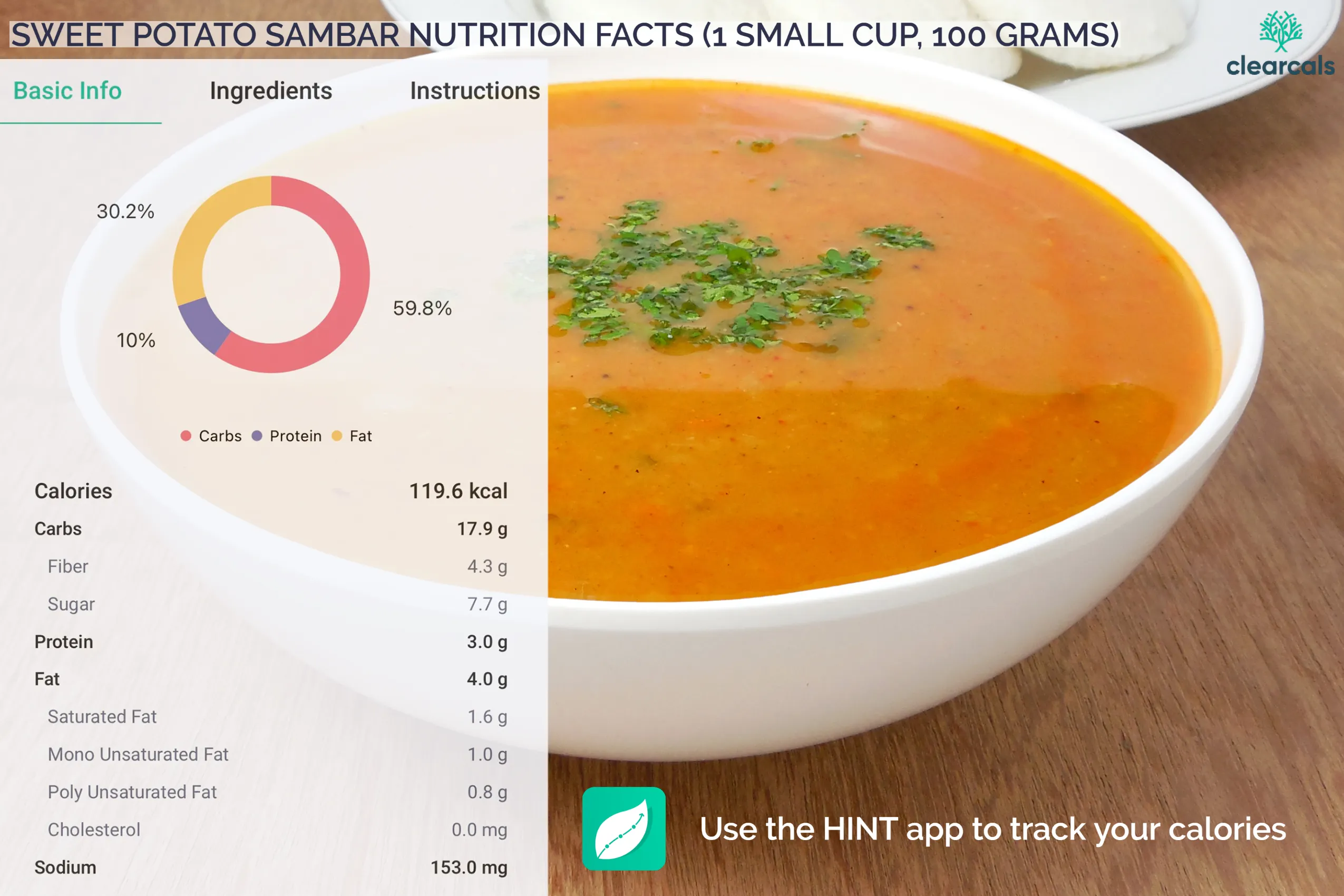
2. Sweet Potato Sambar Per 100g (sambar): 120 kcal | GI moderate | GL medium The protein and fibre from the dal in sambar significantly reduce the glycemic response of the sweet potato. Suitable for diabetics in 100–150g portions alongside protein-rich foods.
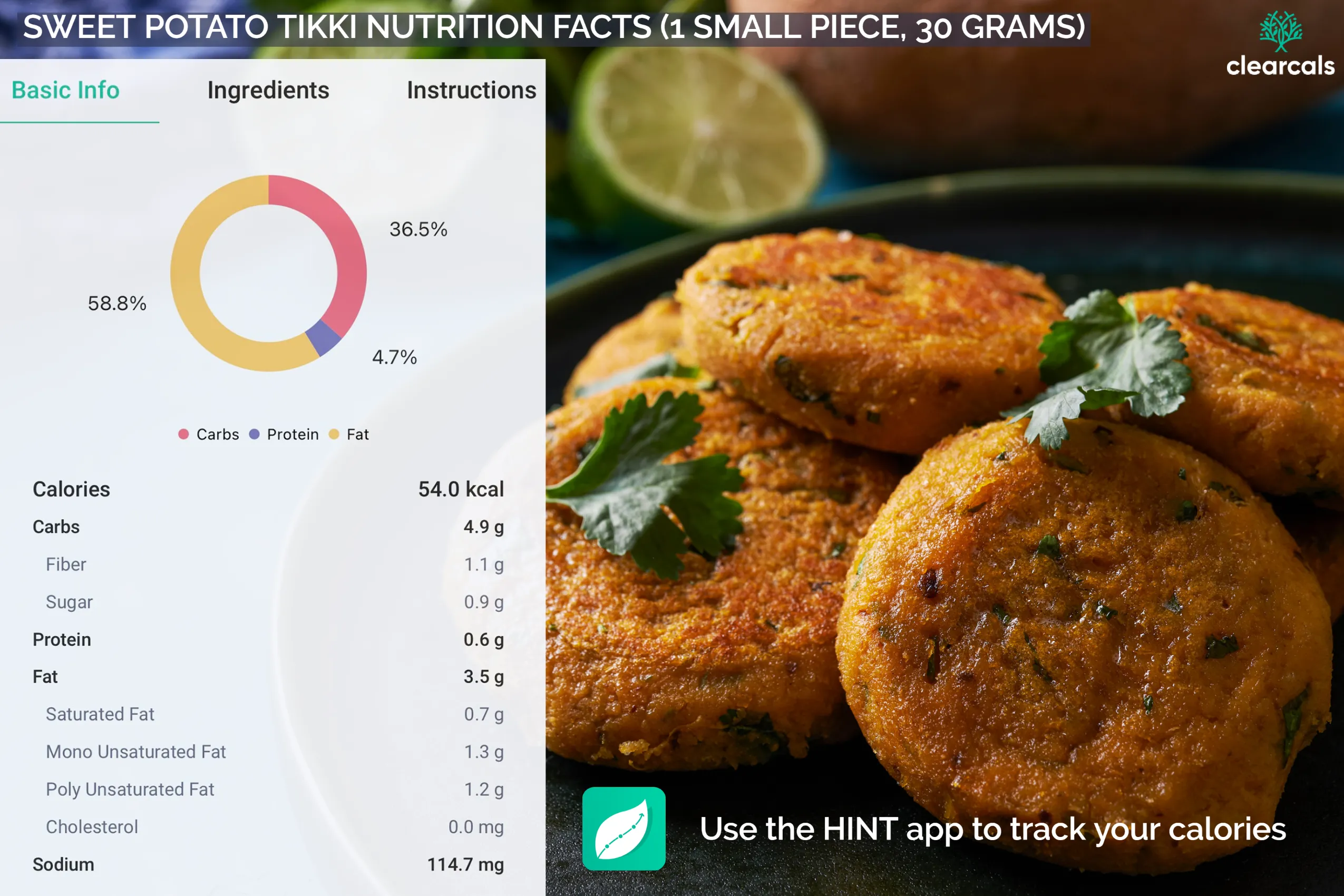
3. Sweet Potato Tikki Per one piece (30g): 54 kcal | GI ~58 (fried) | Higher fat Made with shallow or deep frying — the frying fat content moderates the GI somewhat, but the high fat and occasionally added ingredients (potato starch, refined flour) make this less suitable. Limit to 1–2 pieces occasionally.
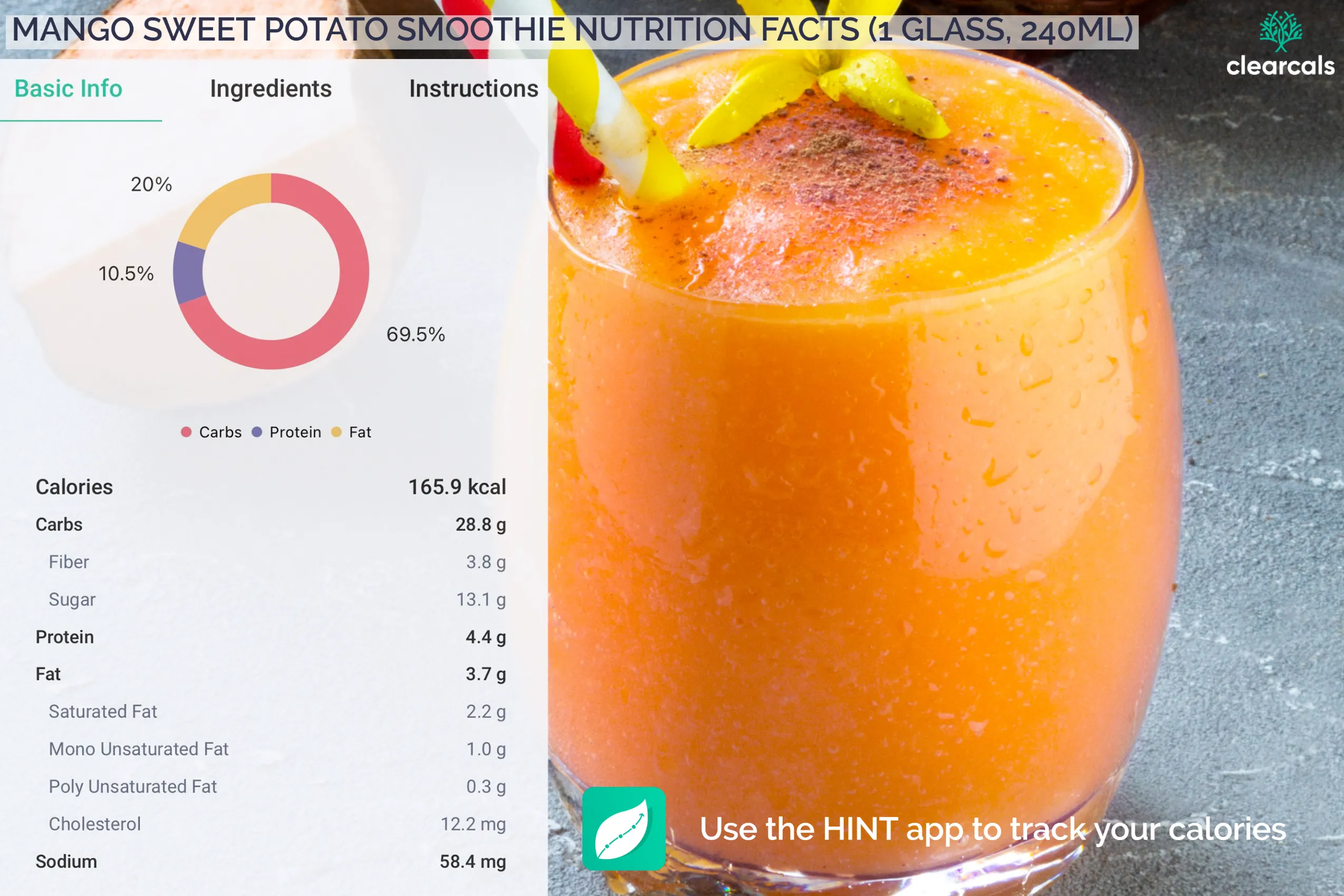
4. Mango Sweet Potato Smoothie Per 200ml glass: 166 kcal | High sugar and carbs Avoid. The combination of sweet potato, mango, and milk/curd creates a high-carbohydrate, high-sugar drink — not suitable for diabetics.
What to Avoid
- Baked sweet potato (GI 91) — the most common way to eat sweet potato in Western recipes; worst for blood sugar
- Sweet potato chips — deep fried in oil, high in fat, and medium-high GI
- Mango sweet potato smoothies — high carb, high sugar
- Sweet potato with added sugar or honey — a common festive preparation that should be avoided
For a complete guide to the Indian diabetic diet, read our Diabetes Diet Guide.
Frequently Asked Questions
1. Is sweet potato (shakarkandi) good for diabetes? Yes — but only when boiled. Boiled sweet potato has a GI of 44 and a glycemic load of 8.8 per 100g — both in the low range. Baked sweet potato has a GI of 91, which is in the same range as white bread and should be avoided by diabetics.
2. Does sweet potato increase blood sugar? Boiled sweet potato causes only a modest, gradual rise in blood sugar at a 100g portion (GL 8.8). Baked sweet potato causes a rapid, significant rise in blood sugar (GI 91, GL 18.2). The cooking method determines whether sweet potato is safe for blood sugar.
3. Is shakarkandi good for sugar patients? Yes, when boiled. Shakarkandi (boiled sweet potato) at 100g is a safe, nutritious food for sugar patients — high in vitamin A, fibre, and potassium, with a low GI of 44. Avoid eating it baked or with added sugar.
4. Can a diabetic eat boiled sweet potatoes daily? Yes. A 100g portion of boiled sweet potato per day is safe for most people with type 2 diabetes. Its GI of 44 is comparable to boiled chickpeas or lentils. Pair it with a source of protein and fat to further moderate the blood sugar response.
5. What is the glycemic index of sweet potato? The GI of sweet potato varies significantly by cooking method: boiled = 44 (low), deep fried (5 min) = 58 (medium), orange variety = 77 (medium-high), baked 30 min = 91 (high). For diabetics, boiling is always the recommended method.
6. Will sweet potato increase blood sugar levels? A boiled sweet potato will cause only a moderate blood sugar rise. Baked sweet potato will cause a rapid, significant blood sugar rise. The preparation method is the single most important factor, more important than the quantity consumed.
7. Is it safe to eat sweet potatoes if you have type 1 diabetes? People with type 1 diabetes can eat boiled sweet potatoes, but should carefully account for their 20g of carbohydrates per 100g when calculating insulin doses. Baked sweet potatoes' unpredictably high GI (91) makes it more difficult to dose accurately and is better avoided.
Download the Hint App
The Hint app helps you plan and track every meal with accurate calorie and carbohydrate data for Indian foods, including all forms of sweet potato preparations.
Download on the App Store | Get it on Google Play
Garmin users: Buy a Garmin watch and get Hint Premium free for 1 month (worth ₹1,999) — including unlimited dietitian consultations.
Apple Watch users: Buy an Apple Watch and get Hint Pro free — including personalised meal plans and 300+ guided workouts.
About the Author
Asfia Fatima is the Chief Dietitian at Clearcals, with a Master's Degree in Dietetics and Clinical Nutrition and over a decade of experience in clinical nutrition and lifestyle management.
She specializes in evidence-based diet planning for weight loss, diabetes, and metabolic health.
At Clearcals, she leads the nutrition strategy behind the Hint app, helping users achieve their goals with science-backed guidance.
🔗 Connect with Asfia on LinkedIn
Also Read: Diabetes & Food Guide
- Is Coconut Water Good For Diabetes?
- Is Papaya Good For Diabetes?
- Is Jackfruit Good For Diabetes?
- Is Curd Good For Diabetes?
- Is Beetroot Good For Diabetes?
- Is Pomegranate Good For Diabetes?
- Is Orange Good For Diabetes?
- Is Guava Good For Diabetes?
- Complete Diabetes Diet Guide
References
- Atkinson FS, Brand-Miller JC, Foster-Powell K, Buyken AE, Goletzke J. International tables of glycemic index and glycemic load values 2021. Am J Clin Nutr. 2021;114(5):1625–1632. ↗
- Wang S, Nie S, Zhu F. Chemical constituents and health effects of sweet potato. Food Res Int. 2016;89(1):90–116. ↗
- Shih CK, Chen CM, Varga V, et al. White sweet potato ameliorates hyperglycemia and regenerates pancreatic islets in diabetic mice. Food Nutr Res. 2020;64. ↗
- Chen CM, Shih CK, Su YJ, et al. Evaluation of white sweet potato tube-feeding formula in elderly diabetic patients: a randomized controlled trial. Nutr Metab. 2019;16:70. ↗
- Laveriano-Santos EP, et al. Sweet Potato Is Not Simply an Abundant Food Crop: A Comprehensive Review. Antioxidants (Basel). 2022;11(9):1648. ↗