Track your nutrition and health goals

Udiliv 300 for Fatty Liver: Uses, Dosage, Benefits & Side Effects
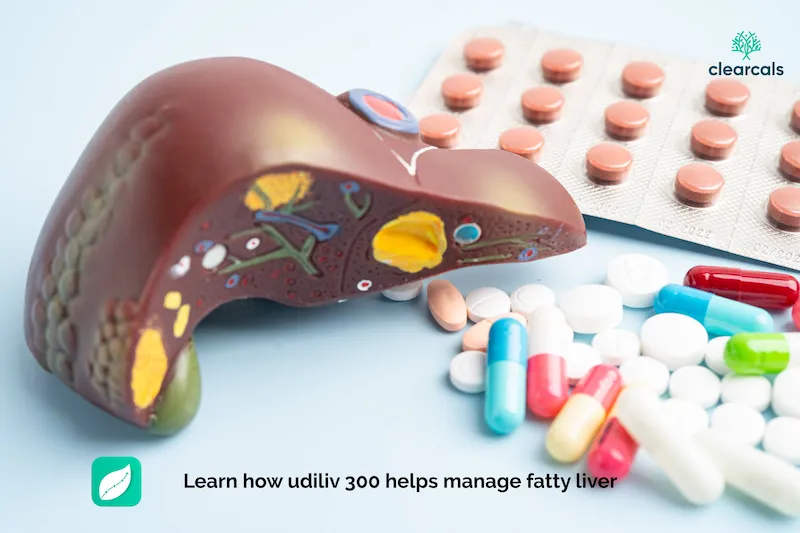
By Dr. Sumedha Verma | Medically Reviewed | Updated April 2026
If your doctor has prescribed Udiliv 300 for fatty liver, or if you have seen it mentioned online, you may have questions about what it is, how it works, and whether it is actually effective.
This guide answers those questions clearly, based on available medical evidence.
| Disclaimer: This article is for educational purposes only. Udiliv is a prescription medication. Always take it under the supervision of a qualified doctor and never self-medicate. Do not adjust your dose without medical advice. |
|---|
What Is Udiliv 300?
Udiliv 300 is a brand of ursodeoxycholic acid (UDCA), sometimes also called ursodiol, manufactured by Abbott India. Each tablet contains 300 mg of UDCA.
UDCA is a naturally occurring bile acid that makes up a small proportion of the bile produced by the human liver.
When taken as a supplement in tablet form, it alters the composition of bile, making it less toxic and more water-soluble. This protective effect on liver cells is the reason it is prescribed for various liver conditions.
Other brand names for UDCA in India:
- Ursocol (Sun Pharma)
- Ursodac (Zydus Cadila)
- Hepamerz (used differently, but sometimes co-prescribed)
All of these contain the same active ingredient (UDCA) and work in similar ways. Your doctor may prescribe any brand depending on availability and preference.
How Does UDCA Work in Fatty Liver?
UDCA has several mechanisms of action that are relevant to fatty liver disease:
- Replaces toxic bile acids: UDCA displaces more harmful, hydrophobic bile acids in the bile pool, reducing their damaging effect on liver cells
- Anti-inflammatory effect: UDCA has been shown to reduce inflammatory markers in liver cells, which is relevant in NASH (non-alcoholic steatohepatitis), where inflammation is the key driver of liver damage
- Cytoprotective effect: It stabilises the membranes of liver cells, making them more resistant to damage from bile acids and oxidative stress
- Improves bile flow: UDCA promotes bile secretion, helping the liver clear toxins and metabolic waste more efficiently
Does Udiliv 300 Actually Help Fatty Liver?
This is the critical question, and the honest answer is: UDCA helps, but it is not a cure and should not be the primary treatment.
What the evidence says:
- UDCA is approved by drug regulators primarily for primary biliary cholangitis (PBC) and gallstone dissolution, not specifically for NAFLD
- Several studies have shown that UDCA can improve liver enzyme levels (ALT, AST) in patients with NAFLD/NASH
- However, most major gastroenterology guidelines (including those from AASLD and EASL) state that UDCA is not recommended as a standalone treatment for NAFLD because it has not consistently improved liver histology (tissue-level changes)
- In Indian clinical practice, UDCA is widely prescribed as a supportive medication to reduce liver enzyme elevation and improve bile function while patients undertake lifestyle changes
In other words, UDCA can support liver health and improve blood test results, but it cannot reverse fatty liver on its own. Diet, exercise, and weight loss remain the primary treatment.
| Key Takeaway: Udiliv 300 is a supportive medication that helps protect liver cells and improve bile flow. It is most effective when used alongside meaningful lifestyle changes, including a fatty liver diet and regular exercise. It is not a substitute for weight loss. |
|---|
Udiliv 300 Dosage for Fatty Liver
The typical prescribed dosage of Udiliv 300 for fatty liver is:
| Condition | Common Dosage | Duration |
|---|---|---|
| Grade 1 to 2 fatty liver | 300 mg once or twice daily (with meals) | 3 to 6 months, reassessed |
| Grade 3 or NASH | 300 mg two to three times daily | 6 to 12 months under specialist care |
| Primary biliary cholangitis | 10 to 15 mg/kg/day (higher dose) | Long-term, as prescribed |
| Important: The dosage above is for general reference only. Your doctor will prescribe the correct dose based on your weight, liver condition, other medications, and test results. Never self-prescribe or adjust your dose. Taking more than prescribed does not improve outcomes and may cause side effects. |
|---|
When to Take Udiliv 300
Udiliv 300 is typically taken after meals to reduce the chance of gastrointestinal side effects. If prescribed twice daily, take one tablet in the morning and one in the evening, both with food. Take it at the same time each day to maintain consistent blood levels.
Side Effects of Udiliv 300
Udiliv 300 is generally well tolerated. Side effects are uncommon but may include:
- Diarrhoea or loose stools (the most common side effect, usually mild and resolves with time)
- Nausea, particularly if taken on an empty stomach
- Stomach pain or discomfort
- Itching (rare)
- Hair loss (reported in a small number of patients on long-term use)
Serious side effects are rare. If you experience severe stomach pain, persistent vomiting, jaundice, or worsening liver function tests while on Udiliv, contact your doctor immediately.
Who Should Not Take Udiliv 300?
- People with acute inflammation of the gallbladder or bile ducts
- People with gallstones that are calcified (calcium-containing)
- Pregnant or breastfeeding women (unless specifically prescribed by a doctor)
- People with known hypersensitivity to bile acids
Udiliv 300 and Other Medications
Certain medications can interact with UDCA and affect its absorption or effectiveness:
- Antacids containing aluminium: reduce absorption of UDCA; take at least 2 hours apart
- Cholestyramine or colestipol (cholesterol-lowering resins): bind to UDCA and reduce its effectiveness
- Some lipid-lowering drugs and oral contraceptives may reduce efficacy
Always inform your doctor about all medications, supplements, and herbal remedies you are taking before starting Udiliv.
Udiliv vs. Lifestyle Changes: What Matters More?
This is an important question. The short answer is: lifestyle changes matter far more than Udiliv for reversing fatty liver.
Studies consistently show that losing 7 to 10% of body weight reduces liver fat by 40 to 60%, improves liver enzyme levels, and reduces the risk of NASH progression. Udiliv alone, without lifestyle changes, shows modest improvement in blood tests but does not consistently reverse the underlying fat accumulation.
Think of Udiliv as support for your liver while you do the work. The medication helps protect liver cells and reduces inflammation during the reversal period, but the actual reversal happens through diet, exercise, and weight management.
For a complete Indian fatty liver diet plan that pairs well with your Udiliv prescription, refer to our Fatty Liver Diet Chart.
Frequently Asked Questions
Can I take Udiliv 300 without a prescription?
No. Udiliv 300 is a prescription-only medication in India. Self-medicating with it without a doctor's evaluation is not recommended, as the dose must be tailored to your liver condition and body weight.
How long does it take for Udiliv to show results?
Most patients see improvement in liver enzyme levels (LFTs) within 4 to 8 weeks of starting Udiliv, alongside dietary changes. However, for significant improvement in the grade of fatty liver as seen on ultrasound, 3 to 6 months of treatment is usually required.
Can Udiliv 300 reverse fatty liver completely?
On its own, no. Combined with significant weight loss (7 to 10% of body weight) and dietary changes, it can support reversal, particularly at Grade 1 and Grade 2. At Grade 3, it plays a supportive role in a broader treatment plan.
Is Udiliv the same as Ursocol?
Yes, both contain ursodeoxycholic acid (UDCA) as the active ingredient. Udiliv (Abbott) and Ursocol (Sun Pharma) are different brands of the same molecule. Your doctor may prescribe either one.
Can I stop taking Udiliv once my liver tests become normal?
Do not stop Udiliv without consulting your doctor, even if your blood tests improve.
Your doctor will assess when it is safe to discontinue the medication based on ultrasound findings, blood tests, and your overall progress.
About the Author
Dr. Sumedha Verma is a Consultant Physician at Clearcals with extensive experience in clinical medicine and healthcare services.
She has significant expertise in managing chronic conditions such as fatty liver, diabetes, thyroid disorders, PCOS, infertility, and other gynecological health concerns.
Known for her patient-centered approach, Dr. Verma focuses on improving patient compliance and helping individuals achieve better health outcomes through personalized medical guidance and long-term care.
🔗 Connect with Dr. Sumedha on LinkedIn