Looking for an Indian Food Calorie Calculator?

arrowTry the Hint app

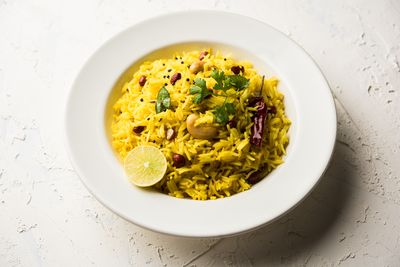
Lemon rice

Lemon rice has 237.1 calories per serving (1 Medium Cup) — that's 118.9 calories per 100g. It provides 5.5g protein, 35.9g carbs, and 7.9g fat. With a low glycemic index (GI: 48), this recipe is suitable for diabetes management, heart health, PCOS. The 3.1g of dietary fiber per serving adds to its nutritional value. It contains anti-inflammatory ingredients like turmeric and ginger.

Track the exact calories and macros of Lemon rice in the Hint app — India's comprehensive recipe and nutrition tracking platform.

Lemon rice
  • Serving Size 1 Medium Cup (200 g)
  • Calories237.1 kcal
  • Carbs35.9 g (143.6 kcal)
  • Protein5.5 g (22.2 kcal)
  • Fats7.9 g (71.3 kcal)

Nutrition Label

Lemon rice

  • Serving Size1 Medium Cup (200 g)
  • Calories237.1 kcal
  • Carbs35.9 g
  • Fiber3.1 g
  • Sugar0.8 g
  • Protein5.5 g
  • Fat7.9 g
  • Saturated fat1.5 g
  • Mono unsaturated fat3.4 g
  • Poly unsaturated fat2.5 g
  • Cholesterol0.0 mg
  • Sodium332.1 mg

Nutrition per 100g

  • Calories118.9 kcal
  • Carbs18.0 g
  • Fiber1.6 g
  • Sugar0.4 g
  • Protein2.8 g
  • Fat4.0 g
  • Cholesterol0.0 mg
  • Sodium166.5 mg

1 serving = 199.4g

Cooking time: 5 minutes

Serves: 6 persons

Ingredients

Milled raw rice
250 Grams
Bengal gram dal
1 Tea Spoon
Black gram dal
1 Tea Spoon
Lemon juice
2 Table Spoon
Chillies green - all varieties
10 Grams
Coriander leaves
30 Grams
Curry leaves
20 Grams
Ginger fresh
2 Grams
Asafoetida
1 Grams
Chillies red
5 Grams
Turmeric powder
0.5 Tea Spoon
Cashew nut
15 Grams
Ground nut
15 Grams
Mustard seeds
1 Tea Spoon
Rice bran oil
2 Table Spoon
Salt
1 Tea Spoon
Water
770 Milliliter

Instructions

1
Cooking rice
Wash and soak rice in water for 10 minutes. Add the water and salt to a saucepan and bring to a boil over high heat. Add the rice and stir, letting the water come to a boil again. Place the lid on the saucepan and lower the heat to a simmer. Simmer for 20 minutes. Turn off the heat and let the rice steam for 5 minutes. Keep the cooked rice aside.
2
Roasting
Firstly, in a large kadai heat oil and fry peanuts. Also, fry cashew. Keep the fried peanuts and cashews aside.
3
Sauteing
In the same oil add mustard, urad dal, chana dal, dried red chili. Also add 1-inch ginger, green chilli, pinch hing and few curry leaves. splutter the tempering on medium flame. Add in turmeric and saute slightly.
4
Mixing
Further, add cooked rice and ½ tsp salt. Mix well making sure everything is well combined. also, add coriander and lemon juice. Mix well.
5
Serving
Finally, enjoy lemon rice with papad or pickle

Glycemic Index

48 Low
Low
Medium
High

Likely to produce a slower, steadier rise in blood glucose for most people.

How to flatten the spike

  • Pair this dish with a protein source (dal, paneer, eggs, fish, or curd).
  • Add a fiber-rich side salad or non-starchy vegetables.
  • Avoid combining this with another high-carb side in the same meal.

Compare & Substitute

NutrientLemon riceBitter gourd peanut fryKakara Verusanagapu VepuduKarela Moongfali Taliya
Calories237.1 kcal174.3 kcal174.3 kcal174.3 kcal
Carbs35.9 g9 g9 g9 g
Protein5.5 g5.9 g5.9 g5.9 g
Fat7.9 g12.7 g12.7 g12.7 g
Fiber3.1 g5.8 g5.8 g5.8 g
Sugar0.8 g0.8 g0.8 g0.8 g
Sodium332.1 mg255.9 mg255.9 mg255.9 mg
Cholesterol0 mg0 mg0 mg0 mg

Health Goals Suitability

Weight Loss

At 237.1 kcal per serving, this can fit into a weight loss diet with mindful portion control. Pair with a fiber-rich salad to improve satiety.

Diabetes

With a low glycemic index of 48, this recipe supports stable blood sugar levels. The 3.1g fiber further slows glucose absorption.

Muscle Gain

Low protein content (5.5g per serving) — not sufficient alone for muscle building. Combine with high-protein sides like paneer, eggs, chicken, dal, or a protein shake to reach 25-30g protein per meal.

Heart Health

Zero cholesterol and low saturated fat (1.5g) make this heart-friendly. Anti-inflammatory ingredients benefit overall heart health.

PCOS

Low GI (48) with 3.1g fiber supports insulin sensitivity — key for PCOS management. Anti-inflammatory ingredients like turmeric and ginger are especially beneficial for PCOS. The high fiber content supports hormone balance by aiding estrogen metabolism.

Thyroid

No goitrogenic ingredients — generally safe for thyroid conditions. The spices aid digestion, which can be sluggish in hypothyroidism.

Portion Guidance

Weight Loss

1 Medium Cup (~199.4g) or slightly less. Pair with a high-fiber side like cucumber raita or salad to feel full on fewer kcal.

Muscle Gain

1 Medium Cup (~199.4g) plus a protein-rich addition (100g paneer, 2 eggs, or 1 cup dal) to hit 25-30g protein per meal.

Diabetes

1 Medium Cup (~199.4g). Pair with whole wheat roti (not rice) to lower glycemic load. Eat protein and fiber portions first, carbs last.

General

1 Medium Cup (~199.4g) provides a balanced portion. Adjust based on your daily kcal target — track accurately in the Hint app.

Recipe Modifications

Boost protein

Add 50g paneer, a boiled egg, or a side of sprouted moong dal. Stirring in 1 tbsp of peanut butter also adds 4g protein.

Lower glycemic load

Replace refined flour (maida) with whole wheat atta, or swap white rice with brown rice or millets like jowar/bajra.

Make diabetes-friendly

Replace potato with cauliflower or bottle gourd. Add a squeeze of lemon — the acidity lowers glycemic response.

Meal prep friendly

Lemon rice stores well for 2-3 days refrigerated. Reheat on stovetop for best texture. Prepare ingredients in advance for quick weeknight cooking.

Common Mistakes

Using too much oil or ghee

Why it matters: Excess oil can double the calorie content without adding nutritional value.

Fix: Measure oil with a tablespoon instead of pouring freely. 1 tbsp = 120 kcal.

Adding salt without measuring

Why it matters: Excess sodium increases blood pressure risk. Indian cooking already uses salt-heavy ingredients like pickles and chutneys alongside.

Fix: Use ½ teaspoon salt and taste before adding more. Account for sodium from other meal components.

Not measuring serving size

Why it matters: The nutrition values are for 1 standard serving. Eating 2-3x the serving means 2-3x the kcal (474.2-711.3 kcal).

Fix: Use the Hint app to scan and log the exact portion you eat for accurate tracking.

Pairing with another high-GI food

Why it matters: Eating rice with another starchy dish doubles the glycemic load, causing sharp blood sugar spikes.

Fix: Choose one carb source per meal. Pair with roti instead of rice, or add a protein-rich side.

Frequently Asked Questions

Scientific References

  1. Low glycemic index foods help improve blood sugar control in people with diabetes

    Brand-Miller J et al. (2003). Low-glycemic index diets in the management of diabetes. Diabetes Care.

    DOI: 10.2337/diacare.26.8.2261
  2. Increased dietary fiber intake is associated with lower body weight

    Slavin JL (2005). Dietary fiber and body weight. Nutrition.

    DOI: 10.1016/j.nut.2003.09.004
  3. Dietary fiber slows glucose absorption and reduces post-meal blood sugar spikes

    Weickert MO & Pfeiffer AFH (2008). Metabolic effects of dietary fiber consumption. Journal of Nutrition.

    DOI: 10.1093/jn/138.3.439
  4. Curcumin in turmeric has significant anti-inflammatory properties

    Hewlings SJ & Kalman DS (2017). Curcumin: A Review of Its Effects on Human Health. Foods.

    DOI: 10.3390/foods6100092

Looking for an Indian Food Calorie Calculator?

Try the Hint app

promo banner