Track your nutrition and health goals

arrowTry the Hint app

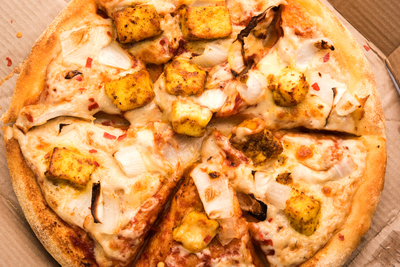
Paneer tikka pizza

Paneer tikka pizza has 328.6 calories per serving (150 Grams) — that's 198.8 calories per 100g. It provides 15.1g protein, 33.9g carbs, and 14.8g fat. With a medium glycemic index (GI: 60), this recipe is suitable for muscle gain. The 2.8g of dietary fiber per serving adds to its nutritional value. It contains anti-inflammatory ingredients like turmeric and ginger. The probiotic content supports gut health.

Track the exact calories and macros of Paneer tikka pizza in the Hint app — India's comprehensive recipe and nutrition tracking platform.

Paneer tikka pizza
  • Serving Size 150 Grams ( g)
  • Calories328.6 kcal
  • Carbs33.9 g (135.4 kcal)
  • Protein15.1 g (60.4 kcal)
  • Fats14.8 g (132.8 kcal)

Nutrition Label

Paneer tikka pizza

  • Serving Size150 Grams ( g)
  • Calories328.6 kcal
  • Carbs33.9 g
  • Fiber2.8 g
  • Sugar4.6 g
  • Protein15.1 g
  • Fat14.8 g
  • Saturated fat6.0 g
  • Mono unsaturated fat6.4 g
  • Poly unsaturated fat1.2 g
  • Cholesterol23.6 mg
  • Sodium461.3 mg

Nutrition per 100g

  • Calories198.8 kcal
  • Carbs20.5 g
  • Fiber1.7 g
  • Sugar2.8 g
  • Protein9.1 g
  • Fat8.9 g
  • Cholesterol14.3 mg
  • Sodium279.0 mg

1 serving = 165.3g

Cooking time: 120 minutes

Serves: 8 persons

Ingredients

Mozzarella cheese
300 Grams
Butter
1 Tea Spoon
Olive oil
3 Table Spoon
Sugar
2 Tea Spoon
Refined wheat flour
300 Grams
Wheat semolina
1 Table Spoon
Capsicum green
50 Grams
Tomato ripe local
250 Grams
Lemon juice
1 Table Spoon
Garlic big clove
5 Grams
Onion big
50 Grams
Paneer
100 Grams
Salt
1 Tea Spoon
Water
100 Milliliter
Curd
50 Grams
Garam masala powder
0.5 Tea Spoon
Cumin powder
0.5 Tea Spoon
Black pepper powder
1 Tea Spoon
Red chilli powder
0.5 Tea Spoon
Yeast instant dried
1 Tea Spoon
Oregano dried
1 Tea Spoon
Chilli flakes
1 Tea Spoon

Instructions

1
Make pizza dough
Firstly, in a large mixing bowl take warm water, sugar, and dry yeast and give a quick mix. Allow it to rest for 5 minutes. Now add maida, salt, and olive oil. knead the dough adding water as required. Tuck the dough and form to a ball. Place in a large mixing bowl. Cover rest and rise in a warm place for about 2 hours. Punch the dough with a fist to release down the air.
2
Washing and cutting
Wash the veggies, and cut them into pieces.
3
Prepare pizza sauce
Make a puree of tomatoes. Now heat oil in a pan add chopped garlic and saute it. Now add chilli flakes, tomato puree, salt, sugar, oregano and mix well. Cook until the sauce thickens and is of spreading consistency.
4
For paneer preparation
Heat butter on medium heat in a frying pan or wok. Add paneer cubes and saute slightly.
5
Tossing
Take all the veggies and sauteed paneer, curd in a mixing bowl. Sprinkle red chili powder, cumin powder, garam masala powder, lemon juice, and 1 pinch of salt and mix.
6
For pizza base
Place the dough on dusted pizza plate or tray. Flatten the dough by stretching with both hands. further, leaving a cm or more and create a dent. Then prick with the center of dough with the help of a fork.
7
Preheat the oven
Preheat the oven to 220-240 degrees Celcius for 25-30 minutes.
8
For pizza topping
Spread the prepared sauce generously leaving the sides slightly. Also, top with veggie-curd-paneer mixture. Then spread grated cheese and sprinkle oregano, chili flakes.
9
Baking and serving
Bake for about 10- 12 minutes. Finally, slice and serve pizza hot.

Glycemic Index

60 Medium
Low
Medium
High

Likely to produce a moderate blood glucose rise; pair with protein/fiber for better stability.

How to flatten the spike

  • Pair this dish with a protein source (dal, paneer, eggs, fish, or curd).
  • Add a fiber-rich side salad or non-starchy vegetables.
  • Avoid combining this with another high-carb side in the same meal.

Compare & Substitute

NutrientPaneer tikka pizzaPaneer pizzaChicken pizzaKombdi pizza
Calories328.6 kcal329.3 kcal318.4 kcal318.4 kcal
Carbs33.9 g34 g32.1 g32.1 g
Protein15.1 g15.1 g15.3 g15.3 g
Fat14.8 g14.8 g14.3 g14.3 g
Fiber2.8 g2.9 g2.6 g2.6 g
Sugar4.6 g4.7 g3.4 g3.4 g
Sodium461.3 mg464.5 mg552.4 mg552.4 mg
Cholesterol23.6 mg23.2 mg31 mg31 mg

Health Goals Suitability

Weight Loss

At 328.6 kcal per serving, this is a higher-kcal dish. The refined carbs contribute to calorie density — consider whole grain alternatives. Enjoy as an occasional treat, or reduce the portion to half for better calorie control.

Diabetes

Moderate glycemic index (GI: 60). Consider swapping refined ingredients with whole grain alternatives. Adding a fiber-rich side dish can help moderate the blood sugar response.

Muscle Gain

Excellent protein source with 15.1g per serving — ideal for muscle repair and growth. The dairy protein includes casein and whey, both beneficial for muscle synthesis. The calorie content supports a muscle-building surplus when combined with training.

Heart Health

Watch your intake — saturated fat (6g) is on the higher side. Reduce ghee/oil and use olive or mustard oil for healthier fats.

PCOS

Moderate-to-high GI (60) can spike insulin — Women with PCOS should pair this with fiber-rich vegetables and a protein source to improve the insulin response. Consider replacing refined ingredients with whole grains or millets.

Thyroid

No goitrogenic ingredients — generally safe for thyroid conditions. The iron content supports thyroid hormone production. Adequate protein (15.1g) supports healthy thyroid function. The spices aid digestion, which can be sluggish in hypothyroidism.

Portion Guidance

Weight Loss

150 Grams (~165.3g) or slightly less. Pair with a high-fiber side like cucumber raita or salad to feel full on fewer kcal.

Muscle Gain

1.5-2 servings. Already high in protein — great post-workout. Add a banana or whole grain for recovery carbs.

Diabetes

150 Grams (~165.3g). Pair with whole wheat roti (not rice) to lower glycemic load. Eat protein and fiber portions first, carbs last.

General

150 Grams (~165.3g) provides a balanced portion. Adjust based on your daily kcal target — track accurately in the Hint app.

Recipe Modifications

Lower fat

Use low-fat paneer or reduce ghee/butter by half. Switch to a non-stick pan to minimize oil.

Lower glycemic load

Replace refined flour (maida) with whole wheat atta, or swap white rice with brown rice or millets like jowar/bajra.

Reduce calories

Reduce serving size by 25% to save ~82.2 kcal. Add extra vegetables (capsicum, spinach, mushrooms) to increase volume without adding many kcal.

Make diabetes-friendly

Replace potato with cauliflower or bottle gourd. Add a squeeze of lemon — the acidity lowers glycemic response.

Reduce sodium

Cut salt by half and boost flavor with lemon juice, fresh herbs, or amchur (dry mango powder) instead.

Meal prep friendly

Paneer tikka pizza stores well for 2-3 days refrigerated. Reheat on stovetop for best texture. Prepare ingredients in advance for quick weeknight cooking.

Common Mistakes

Using too much oil or ghee

Why it matters: Excess oil can double the calorie content without adding nutritional value.

Fix: Measure oil with a tablespoon instead of pouring freely. 1 tbsp = 120 kcal.

Adding salt without measuring

Why it matters: Excess sodium increases blood pressure risk. Indian cooking already uses salt-heavy ingredients like pickles and chutneys alongside.

Fix: Use ½ teaspoon salt and taste before adding more. Account for sodium from other meal components.

Not measuring serving size

Why it matters: The nutrition values are for 1 standard serving. Eating 2-3x the serving means 2-3x the kcal (657.3-985.9 kcal).

Fix: Use the Hint app to scan and log the exact portion you eat for accurate tracking.

Pairing with another high-GI food

Why it matters: Eating rice with another starchy dish doubles the glycemic load, causing sharp blood sugar spikes.

Fix: Choose one carb source per meal. Pair with roti instead of rice, or add a protein-rich side.

Overcooking the vegetables

Why it matters: Overcooking destroys heat-sensitive vitamins (C, B-complex) and reduces fiber quality.

Fix: Cook vegetables until just tender. Add delicate vegetables (like spinach or capsicum) in the last 2-3 minutes.

Frequently Asked Questions

One serving of Paneer tikka pizza contains 328.6 kcal (15.1g protein, 33.9g carbs, 14.8g fat). That's 198.8 kcal per 100g. You can track exact portions in the Hint app.

At 328.6 kcal per serving, this is a higher-kcal dish. The refined carbs contribute to calorie density — consider whole grain alternatives. Enjoy as an occasional treat, or reduce the portion to half for better calorie control. Stick to one measured serving and track it in the Hint app to stay within your calorie budget.

Moderate glycemic index (GI: 60). Consider swapping refined ingredients with whole grain alternatives. Adding a fiber-rich side dish can help moderate the blood sugar response. The glycemic index is 60 (Medium). Always consult your dietitian for personalized guidance — Hint Premium connects you with expert dietitians.

Yes! Paneer tikka pizza provides 15.1g protein per serving, making it a good protein source for muscle building and satiety.

Paneer tikka pizza at 328.6 kcal works for dinner if it's your main dish. Avoid eating within 2 hours of bedtime. If watching kcal intake, have a smaller portion at night.

Paneer tikka pizza already has good protein (15.1g). Pair with a whole grain like roti or brown rice, and add a vegetable side or raita for fiber and micronutrients.

Moderate-to-high GI (60) can spike insulin — Women with PCOS should pair this with fiber-rich vegetables and a protein source to improve the insulin response. Consider replacing refined ingredients with whole grains or millets.

Scientific References

  1. Higher protein intake increases satiety and reduces overall calorie consumption

    Leidy HJ et al. (2015). The role of protein in weight loss and maintenance. American Journal of Clinical Nutrition.

    DOI: 10.3945/ajcn.114.084038
  2. Increased dietary fiber intake is associated with lower body weight

    Slavin JL (2005). Dietary fiber and body weight. Nutrition.

    DOI: 10.1016/j.nut.2003.09.004
  3. Curcumin in turmeric has significant anti-inflammatory properties

    Hewlings SJ & Kalman DS (2017). Curcumin: A Review of Its Effects on Human Health. Foods.

    DOI: 10.3390/foods6100092
  4. Reducing sodium intake lowers blood pressure and cardiovascular risk

    WHO (2012). Guideline: Sodium intake for adults and children. World Health Organization.

    DOI: WHO/NMH/NHD/13.2

Looking for an Indian Food Calorie Calculator?

Try the Hint app

promo banner