
Track your nutrition and health goals

Is Beetroot Good For Diabetes? Carrot+Beetroot, Juice vs Raw & GL Explained
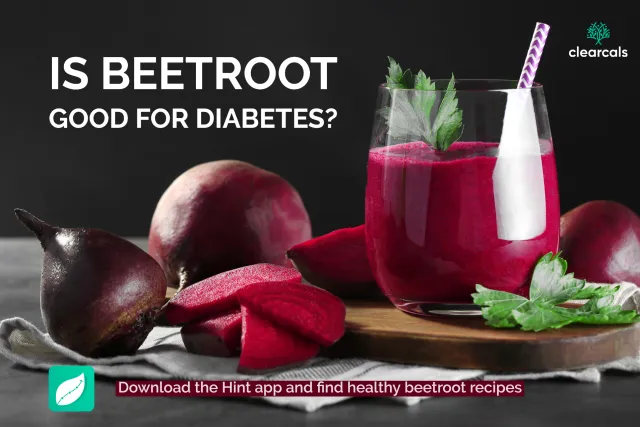
By Asfia Fatima, Chief Dietitian at Clearcals | Medically Reviewed | Updated May 2025
TLDR
- Beetroot (chukandar) has a glycemic index (GI) of 61–64, but a glycemic load (GL) of just 6 per 100g, which is low.
- Raw beetroot is better for diabetics than cooked or juiced beetroot — cooking raises the GI.
- The carrot and beetroot combination is safe for diabetes in moderate portions and has additional nutritional benefits.
- Beetroot juice should be limited to 100ml portions, as removing the fibre concentrates the natural sugars.
Is Beetroot (Chukandar) Safe for Diabetics?
Yes — in moderate portions, beetroot is safe and can be beneficial for people with diabetes.
Here is why many people get confused about it, and why the full picture is more reassuring than a single GI number suggests.
Beetroot has a glycemic index of 61–64, which falls in the medium GI range. On that basis alone, some sources advise diabetics to avoid it. But GI only describes how fast a food raises blood sugar — not how much.
At a 100g serving, beetroot contains only 6.2 g of carbohydrates and 3.3 g of dietary fibre. The resulting glycemic load is just 4 — firmly in the low category. This means a 100g portion of beetroot causes a modest, gradual blood sugar rise comparable to a low-GI food like lentils or chickpeas.
The form matters: raw beetroot has a lower effective GI than cooked beetroot (cooking breaks down cell walls and makes starches more rapidly available), and whole beetroot has a lower GI than beetroot juice.
Beetroot Nutrition Facts
| Nutrient | Per 100g |
|---|---|
| Calories | 34 kcal |
| Carbohydrates | 6.2 g |
| Sugar (natural) | 4.3 g |
| Protein | 1.9 g |
| Fat | 0.1 g |
| Dietary Fibre | 3.3 g |
| Potassium | 306 mg |
| Folate | 109 mcg |
| Vitamin C | 5 mg |
| Nitrates | ~250 mg |
| Betalain pigments | Present |
Beetroot is one of the richest dietary sources of nitrates and betalain antioxidants — both of which have specific benefits for the cardiovascular health complications that accompany diabetes.
Glycemic Index and Glycemic Load of Beetroot
| Form | GI | Carbs per Serving | Glycemic Load |
|---|---|---|---|
| Raw beetroot (100g) | 61 | 6.2 g | 4 (Low) ✅ |
| Cooked/boiled beetroot (100g) | 64 | 6.2 g | 4 (Low) ✅ |
| Carrot + beetroot juice (240ml) | ~65 | 11 g | 7 (Low) ✅ |
| Beetroot juice only (100ml) | 64 | 4.5 g | 3 (Low) ✅ |
| Beetroot juice (200ml glass) | 64 | 9 g | 6 (Low) ✅ |
| Canned beetroot (in syrup, 100g) | 75+ | 15+ g | 11+ (Medium) ❌ |
Both raw and cooked whole beetroot are safe in 100g portions. Beetroot juice is safe in small amounts (100–150ml). Canned beetroot in syrup should be avoided.
Are Carrots and Beetroot Good For Diabetes?
This is the most-searched question about beetroot and diabetes — and the answer is yes, the combination is safe.
Carrots have a GI of around 47 and a glycemic load of ~5 per 100g. When combined with beetroot in a juice or salad, the resulting glycemic load of the combination remains low (approximately 6–7 per glass of juice, or 5–6 for a mixed salad).
The carrot + beetroot combination also provides:
- Alpha-carotene and beta-carotene from carrots — antioxidants that support immune function and reduce oxidative stress
- Betalains from beetroot — potent anti-inflammatory pigments
- Folate from both vegetables is important for cardiovascular protection
- Potassium from both supports blood pressure management
Carrot and beetroot can be safely eaten together as:
- A mixed raw salad (best option)
- A freshly prepared juice (100–150ml — without added sugar)
- A cooked sabzi or curry (moderate portion)
One important note on carrot and beetroot juice: juicing removes most of the fibre from both vegetables. For diabetics, whole vegetables or lightly cooked versions are always preferable to juice.
Raw vs Cooked vs Juiced: Which Is Best for Diabetics?
| Form | Fibre Preserved? | Recommended for Diabetics? |
|---|---|---|
| Raw beetroot (grated in salad) | ✅ Yes | Best option |
| Lightly cooked/steamed beetroot | ✅ Mostly | Good option |
| Boiled beetroot | ⚠️ Partly | Acceptable in 100g portions |
| Beetroot + carrot juice (100–150ml) | ❌ Mostly removed | Acceptable — limit quantity |
| Beetroot juice alone (100ml) | ❌ Mostly removed | Acceptable in small quantities |
| Canned beetroot in syrup | ❌ No | Avoid |
What Does the Research Say?
Raw beetroot and blood glucose: A 2021 study with type 2 diabetes patients found that consuming raw red beetroot for 8 weeks resulted in significant decreases in fasting blood glucose, HbA1c, systolic blood pressure, and diastolic blood pressure, alongside improved antioxidant capacity and cognitive function.
Beetroot juice and insulin response: A study published in the Journal of Nutritional Science found that the betalains, polyphenols, and dietary nitrates in beetroot juice significantly lowered the postprandial insulin response and suppressed post-meal glucose levels.
Beetroot and blood pressure: A systematic review and meta-analysis in the Journal of Nutrition found that dietary nitrate from beetroot juice produced a sustained reduction in blood pressure in hypertensive adults — highly relevant for diabetics, who have significantly elevated cardiovascular risk.
Beetroot and exercise: Studies have shown that dietary nitrates in beetroot increase nitric oxide production, which improves blood flow and muscle performance — beneficial for the regular physical activity that is a cornerstone of diabetes management.
How Much Beetroot Can a Diabetic Eat Per Day?
| Form | Recommended Portion | Frequency |
|---|---|---|
| Raw beetroot (salad/grated) | 80–100g | Daily |
| Cooked/steamed beetroot | 80–100g | Daily |
| Carrot + beetroot juice | 100–150ml | 3–4 times per week |
| Beetroot juice (solo) | 100ml | 3–4 times per week |
Track your beetroot meals and carbohydrate intake with the Hint app. Download on the App Store | Get it on Google Play
Beetroot Recipes for Diabetics: Calories and Guidance
Salads and Light Dishes (per 100g)
| Recipe | Calories | Notes |
|---|---|---|
| Beetroot salad | 34 kcal | Excellent — raw, full fibre |
| Mixed sprouts beetroot salad | 40 kcal | High protein + fibre — ideal |
| Beetroot cucumber tomato raita | 44 kcal | Low GL, probiotic benefit |
| Beetroot cabbage raita | 46 kcal | Very good for diabetics |
| Beetroot and green apple soup | 56 kcal | Moderate — watch the apple quantity |
Curries and Cooked Dishes (per 100g)
| Recipe | Calories | Notes |
|---|---|---|
| Beetroot rasam | 69 kcal | Good — low calorie |
| Beetroot curry | 107 kcal | Good — include regularly |
| Beetroot leaves dal | 110 kcal | Excellent — high protein + fibre |
| Beetroot coconut curry | 123 kcal | Moderate — limit the coconut quantity |
| Beetroot aloo curry | 137 kcal | Moderate — potato adds carbs; small portion |
| Beetroot halwa | 183 kcal | Avoid — high sugar and saturated fat |
Idli and Breads (per 30g piece)
| Recipe | Calories | Notes |
|---|---|---|
| Beetroot idli | 54 kcal | Good — fermented, lower GI |
| Oats beetroot idli | 58 kcal | Better — oats add soluble fibre |
| Beetroot sesame roti | 80 kcal | Good — sesame adds healthy fats |
| Beetroot poori | 85 kcal | Avoid — deep fried |
Juices and Drinks (per 240ml)
| Recipe | Calories | Notes |
|---|---|---|
| Beetroot juice | 27 kcal | Limit to 100–150ml |
| Beetroot carrot cucumber juice | 41 kcal | Good — cucumber dilutes carbs |
| Beetroot carrot juice | 43 kcal | Good — limit to 150ml |
| Beetroot buttermilk | 44 kcal | Excellent — probiotic + very low GL |
| Beetroot lassi | 178 kcal | Avoid if sweetened |
What to Avoid
- Canned beetroot in syrup — added sugar significantly raises the GL
- Beetroot halwa — high in sugar and saturated fat; not recommended for diabetics
- Large portions of beetroot juice (more than 200ml) — removes fibre and concentrates sugars
- Beetroot pickle — very high in sodium and often contains sugar
Note on beeturia: If you notice pink or red-coloured urine after eating beetroot, this is a harmless condition called beeturia. It affects some people (especially those with low stomach acid) and is not a sign of anything harmful.
For a complete overview of diabetic-friendly foods, read our Diabetes Diet Guide.
Frequently Asked Questions
1. Does beetroot (chukandar) increase blood sugar? Not significantly at normal serving sizes. Beetroot has a glycemic load of just 6 per 100g — despite a medium GI of 61–64 — because its carbohydrate content per serving is low. A 100g portion will cause only a modest, gradual blood sugar rise.
2. Are carrots and beetroot good for diabetes patients? Yes. Both carrot and beetroot have low glycemic loads at realistic serving sizes. As a combined salad or a small glass of juice (100–150ml without added sugar), the combination is safe for diabetics and provides additional antioxidant benefits.
3. Can a diabetic patient eat beetroot and carrots together? Yes. The glycemic load of a carrot + beetroot combination (salad or juice) remains in the low range. The combination also provides beta-carotene, betalains, folate, and potassium — all beneficial for the cardiovascular complications associated with diabetes.
4. Is beetroot juice good for diabetes? In small quantities (100–150ml of fresh, unsweetened juice), yes. However, whole beetroot — raw or cooked — is always preferable because it retains more fibre, which slows sugar absorption. Do not drink beetroot juice in large quantities.
5. Is Chukandar good for sugar patients? Yes. Chukandar (beetroot) is safe and beneficial for sugar patients when eaten raw or lightly cooked in 80–100g portions. Research specifically shows that raw red beetroot consumption for 8 weeks reduced fasting blood glucose and HbA1c in type 2 diabetes patients.
6. Who should not eat beetroot? People with low blood pressure should limit beetroot consumption, as its high nitrate content further dilates blood vessels and can lower blood pressure. People prone to kidney stones (specifically calcium oxalate stones) should also limit beetroot, as it is high in oxalates.
Download the Hint App
Managing diabetes through diet is most effective with a personalised plan. The Hint app helps you track meals, understand glycemic loads, and get expert dietitian support.
Download on the App Store | Get it on Google Play
Garmin users: Buy a Garmin watch and get Hint Premium free for 1 month (worth ₹1,999) — including unlimited dietitian consultations.
Apple Watch users: Buy an Apple Watch and get Hint Pro free — including personalised meal plans and 300+ guided workouts.
About the Author
Asfia Fatima is the Chief Dietitian at Clearcals, with a Master's Degree in Dietetics and Clinical Nutrition and over a decade of experience in clinical nutrition and lifestyle management.
She specializes in evidence-based diet planning for weight loss, diabetes, and metabolic health.
At Clearcals, she leads the nutrition strategy behind the Hint app, helping users achieve their goals with science-backed guidance.
🔗 Connect with Asfia on LinkedIn
Also Read: Diabetes & Food Guide
- Is Coconut Water Good For Diabetes?
- Is Papaya Good For Diabetes?
- Is Jackfruit Good For Diabetes?
- Is Curd Good For Diabetes?
- Is Pomegranate Good For Diabetes?
- Is Sweet Potato Good For Diabetes?
- Is Orange Good For Diabetes?
- Is Guava Good For Diabetes?
- Complete Diabetes Diet Guide
References
- Aliahmadi M, Amiri F, Bahrami LS, et al. Effects of raw red beetroot consumption on metabolic markers and cognitive function in type 2 diabetes patients. J Diabetes Metab Disord. 2021;20:673–682. ↗
- Wootton-Beard P, Brandt K, Fell D, Warner S, Ryan L. Effects of a beetroot juice with high neobetanin content on the early-phase insulin response in healthy volunteers. J Nutr Sci. 2014;3:E9. ↗
- Siervo M, Lara J, Ogbonmwan I, Mathers JC. Inorganic nitrate and beetroot juice supplementation reduces blood pressure in adults: a systematic review and meta-analysis. J Nutr. 2013;143(6):818–826. ↗
- Chen L, Zhu Y, Hu Z, Wu S, Jin C. Beetroot as a functional food with huge health benefits. Food Sci Nutr. 2021;9:6406–6420. ↗
- Atkinson FS, Brand-Miller JC, Foster-Powell K, Buyken AE, Goletzke J. International tables of glycemic index and glycemic load values 2021. Am J Clin Nutr. 2021;114(5):1625–1632. ↗


