Track your nutrition and health goals

Poha Calories | 1 Plate, Per 100g, Protein & All Varieties

By Asfia Fatima, Chief Dietitian at Clearcals
TL;DR
Poha calories per 100g (cooked): 136 kcal | Protein: 2.7g | Carbs: 21.8g | Fat: 4.2g | Iron: 2.7mg | GI: 43 (Low) 1 plate poha calories (200g): 273 kcal | 5.4g protein | 43.6g carbs | Iron: 5.4mg | Raw poha per 100g: ~347 kcal
- 1 katori poha (~150g): 204 kcal | 1 medium plate (200g): 273 kcal | 1 large plate (300g): 409 kcal
- Aloo poha (200g): 315 kcal | Kanda/onion poha: 334 kcal | Mixed veg poha with peanuts: 327 kcal
- Poha is primarily a carbohydrate food with a low glycemic index (GI 43) — excellent for blood sugar management
- Track your exact poha recipe in the Hint app, including all ingredients and serving size
One medium plate of poha (200g) has 273 kcal, 5.4g protein, and 43.6g carbohydrates. Per 100g, cooked poha has 136 kcal and 2.7g protein. Poha (flattened rice) is a healthy, light, and iron-rich Indian breakfast — one of the best options for weight management and blood sugar control.
This guide covers poha calories for every serving size, all varieties (plain, aloo, kanda, vegetable, roasted), full macronutrient data, regional name equivalents (aval, atukulu, avalakki, chura, chuda), and how poha fits into weight loss, diabetic, and everyday diets.
Poha Calories — Master Table (All Serving Sizes)
Poha calories: 100g = 136 kcal | 150g (1 katori) = 204 kcal | 200g (1 plate) = 273 kcal | 300g = 409 kcal | 500g = 682 kcal Calories in poha: 50g = 68 kcal | 1 small plate (100g) = 136 kcal | 250g = 341 kcal | 2 plates (400g) = 546 kcal
| Serving Size | Weight | Poha Calories | Protein | Carbs |
|---|---|---|---|---|
| 1 Small plate/bowl | 100g | 136 kcal | 2.7g | 21.8g |
| 1 Katori (medium bowl) | 150g | 204 kcal | 4.1g | 32.7g |
| 1 Medium plate/bowl | 200g | 273 kcal | 5.4g | 43.6g |
| 1 Large plate/bowl | 300g | 409 kcal | 8.1g | 65.4g |
| 2 Plates | 400g | 546 kcal | 10.8g | 87.2g |
| 500g | 500g | 682 kcal | 13.5g | 109g |
1 Plate Poha Calories
1 plate poha calories: 273 kcal (200g) | Protein: 5.4g | Carbs: 43.6g | Fat: 8.5g 1 plate poha calories and protein: 273 kcal + 5.4g protein | One plate poha calories: 273 kcal for medium, 409 kcal for large
One medium plate of poha (200g) has 273 calories, 5.4g protein, 43.6g carbohydrates, and 8.5g fat. This is based on a standard recipe with oil, mustard seeds, curry leaves, onion, and turmeric.
| Plate Size | Weight | Calories | Protein | Carbs | Fat |
|---|---|---|---|---|---|
| 1 Small plate | 100g | 136 kcal | 2.7g | 21.8g | 4.2g |
| 1 Medium plate | 200g | 273 kcal | 5.4g | 43.6g | 8.5g |
| 1 Large plate | 300g | 409 kcal | 8.1g | 65.4g | 12.7g |
| 2 Plates | 400g | 546 kcal | 10.8g | 87.2g | 17.0g |
1 plate poha protein: 5.4g for a 200g plate. Boost this to 12–13g by adding 2 tbsp peanuts (+7.3g protein) or serving with curd (+8g protein per 100g).
Ek plate poha mein kitni calorie hoti hai: Ek medium plate poha (200g) mein 273 kcal hoti hain. Ek choti katori (150g) mein 204 kcal hoti hain.
Poha Calories Per 100g
Poha calories per 100g (cooked): 136 kcal | Protein: 2.7g | Carbs: 21.8g | Fat: 4.2g | Fiber: ~0.5g | GI: 43 Poha nutritional value per 100g: 136 kcal | 2.7g protein | 21.8g carbs | Iron 2.7mg | Glycemic Index: 43 (Low)
Per 100g of cooked poha, there are 136 kcal, 2.7g protein, 21.8g carbohydrates, and 4.2g fat.
| Nutrient | Per 100g Cooked Poha |
|---|---|
| Calories | 136 kcal |
| Protein | 2.7g |
| Carbohydrates | 21.8g |
| Fat | 4.2g |
| Dietary Fiber | ~0.5g |
| Iron | ~2.7mg |
| Glycemic Index | 43 (Low) |
Raw/dry poha per 100g: ~347 kcal and ~6–7g protein. The values above are for cooked (soaked/steamed) poha, which absorbs water and significantly reduces calorie density compared to raw flakes.
Cooked Poha Calories Per 100g
Cooked poha calories per 100g: 136 kcal | 100g cooked poha protein: 2.7g | Cooked poha calories vs raw: 136 kcal (cooked) vs 347 kcal (raw) Calories in poha cooked: 136 kcal per 100g | 100g cooked poha calories and protein: 136 kcal + 2.7g protein
Cooked poha (soaked in water and tempered) has 136 kcal per 100g — significantly less than raw/dry poha (347 kcal per 100g) because soaking absorbs water and increases weight without adding calories. When recipes refer to "100g poha," always clarify whether it is raw or cooked, as calorie counts differ by 2.5x.
| Form | Per 100g | Protein | Carbs |
|---|---|---|---|
| Raw/dry poha | ~347 kcal | ~6–7g | ~77g |
| Cooked poha (soaked + tempered) | 136 kcal | 2.7g | 21.8g |
50g raw poha calories: 50g of raw (dry) poha has approximately 174 kcal and 3–3.5g protein. Once soaked and cooked, that 50g of raw poha yields approximately 100–120g of cooked poha (136–163 kcal cooked weight).
Poha Calories by Gram — Complete Reference (50g to 500g)
Poha calories by gram: 50g = 68 kcal | 100g = 136 kcal | 150g = 204 kcal | 200g = 273 kcal | 250g = 341 kcal | 300g = 409 kcal Calorie in poha per gram: ~1.36 kcal per gram (cooked) | 200 gm poha calories: 273 kcal | 300 gm poha calories: 409 kcal
| Weight | Calories | Protein | Carbs |
|---|---|---|---|
| 50g | 68 kcal | 1.4g | 10.9g |
| 100g | 136 kcal | 2.7g | 21.8g |
| 150g | 204 kcal | 4.1g | 32.7g |
| 200g | 273 kcal | 5.4g | 43.6g |
| 250g | 341 kcal | 6.8g | 54.5g |
| 300g | 409 kcal | 8.1g | 65.4g |
| 400g | 546 kcal | 10.8g | 87.2g |
| 500g | 682 kcal | 13.5g | 109g |
Poha Protein Per 100g
Poha protein per 100g (cooked): 2.7g | 1 plate poha protein (200g): 5.4g | Does poha have protein: yes, 2.7g per 100g Protein in poha per 100g: 2.7g — poha is not a high-protein food (8% of calories from protein) | Raw poha protein per 100g: ~6–7g
Protein in Poha per 100g
Per 100g of cooked poha, there is 2.7g of protein — making poha a low-protein food. One medium plate (200g) provides 5.4g protein — approximately 7–10% of daily protein requirements for most adults.
| Question | Answer |
|---|---|
| Does poha have protein? | Yes — 2.7g per 100g (cooked) |
| How much protein in 1 plate of poha (200g)? | 5.4g |
| Is poha a good protein source? | No — primarily a carbohydrate food |
| Poha protein per 100g (raw/dry)? | ~6–7g |
| 100g poha protein cooked? | 2.7g |
Poha mein kitna protein hota hai: 100g cooked poha mein 2.7g protein hota hai. 1 plate (200g) mein 5.4g protein hota hai. Poha akele protein ka achha source nahi hai — protein badhane ke liye peanuts, paneer, ya moong sprouts add karein.
To boost protein in your poha:
Peanuts — +7.3g protein per 28g | 1 tbsp peanuts = +3.7g protein
Boiled egg on the side — +6g protein per egg
Roasted chana or moong sprouts — +4–6g protein per 30g
Curd — +8g protein per 100g
Poha Serving Protein 100g plain poha 2.7g 200g plain poha (1 plate) 5.4g 200g poha + 2 tbsp peanuts ~12.7g 200g poha + 100g curd ~13.4g
Aval protein per 100g: Aval (the Tamil and Malayalam name for poha) has the same protein content as poha — 2.7g protein per 100g cooked. Aval calories per 100g: 136 kcal.
Poha Carbs Per 100g
Poha carbs per 100g: 21.8g | Carbs in 1 plate poha (200g): 43.6g | Is poha high in carbs: moderate (lower than rice's 28g per 100g) Is poha a carb or protein: primarily carbs (64% of calories) | Poha carbs vs rice: poha 21.8g vs rice 28.2g per 100g cooked
Per 100g of cooked poha, there are 21.8g of carbohydrates — making up 64% of poha's total calorie content. Poha has a notably lower carb content than cooked white rice (28.2g per 100g) and a much lower glycemic index (GI 43 vs GI 64–72 for white rice).
| Question | Answer |
|---|---|
| Is poha a carb or protein? | Primarily carbs (64% of calories) |
| Carbs in 1 medium plate of poha (200g) | 43.6g |
| Is poha high in carbs? | Moderate — less than white rice (28.2g/100g) |
| Does poha have carbs? | Yes — 21.8g per 100g cooked |
| Poha carbs per 100g | 21.8g |
Does poha have fiber? Yes — approximately 0.5g fiber per 100g cooked. This is relatively low; adding vegetables (carrots, peas, capsicum) to poha significantly increases fiber per serving. Vegetable poha can reach 2–3g fiber per 200g serving.
Poha Nutrition Facts Per 100g
Poha nutrition facts per 100g: 136 kcal | 2.7g protein | 21.8g carbs | 4.2g fat | 2.7mg iron | GI 43 Poha macros: 64% carbs, 8% protein, 28% fat | Poha is rich in: iron, B vitamins, vitamin C, vitamin E, manganese, magnesium
| Nutrient | Per 100g (Cooked) | Per 200g Plate |
|---|---|---|
| Calories | 136 kcal | 273 kcal |
| Protein | 2.7g | 5.4g |
| Carbohydrates | 21.8g | 43.6g |
| Fat | 4.2g | 8.5g |
| Dietary Fiber | ~0.5g | ~1g |
| Iron | ~2.7mg | ~5.4mg |
| Vitamin C | Present | Present |
| Vitamin D | Present | Present |
| Vitamin E | Present | Present |
| Magnesium | Present | Present |
| Manganese | Present | Present |
| Phosphorus | Present | Present |
Poha Iron Content
Poha iron content: ~2.7mg per 100g cooked | 1 plate poha iron: ~5.4mg | Iron in poha: covers ~30–45% of daily iron RDA per plate Is poha rich in iron: yes — one of the best plant-based iron sources in Indian breakfast cuisine
Poha's most notable micronutrient is iron — approximately 2.7mg per 100g cooked, or 5.4mg per 200g plate. The Indian daily recommended intake for iron is 17–21mg (women) and 17mg (men). A standard plate of poha thus covers approximately 26–32% of daily iron needs.
Pairing poha with vitamin C-rich ingredients (lemon juice, tomatoes, capsicum) significantly enhances iron absorption. This is why the traditional practice of squeezing lemon on poha is not only culinary — it is nutritionally sound.
What Does Poha Contain?
Poha contains: flattened rice + oil + mustard seeds + curry leaves + onion + turmeric | Poha is rich in iron, B vitamins, vitamin C, vitamin E, manganese, and magnesium
Poha (plain recipe) contains: flattened rice (poha flakes), oil, mustard seeds, curry leaves, green chillies, onion, turmeric, salt, and lemon juice. The nutritional highlights are iron (2.7mg/100g), a low glycemic index (43), and moderate B vitamin content from the fortified rice base.
Poha is naturally gluten-free (made from rice), suitable for celiac disease and gluten sensitivity. It is cholesterol-free and low in sodium (natural, unprocessed preparation).
Watch: How to Track Poha Calories on the Hint App
Poha Calories Depend on Ingredients and Preparation
How many calories in poha depends on: oil quantity (+45 kcal per extra tsp) | peanuts (+165 kcal/28g) | potatoes (+77 kcal/100g) | plain poha = 136 kcal/100g | rich aloo poha = 157–200 kcal/100g
The calorie count of poha varies significantly based on:
- Oil or ghee used for tempering — 1 tsp extra oil adds ~45 kcal; canteen-style poha often has 3–4x the oil of home-cooked poha
- Peanuts — +165 kcal per 28g added (most calorie-dense common addition)
- Potatoes (aloo) — +77 kcal per 100g added
- Sugar — some Maharashtrian and Indori recipes add sugar for a mildly sweet flavour (+4 kcal per tsp)
- Type of poha — thin, medium, or thick flakes differ slightly in density and calorie count Calories in poha with onion and peanuts: Standard kanda poha with peanuts (onion poha + 28g peanuts per 200g serving) has approximately 440–450 kcal per medium plate — significantly more than plain poha (273 kcal) because peanuts add ~165 kcal per 28g.
A plain poha with minimal oil is ~136 kcal/100g. A rich aloo poha with peanuts and extra ghee can reach 180–200 kcal/100g. Use the Hint app's "Create Your Recipe" feature to calculate exact calories for your homemade poha.
Poha Varieties — Calorie Comparison
Poha varieties calories: Plain 273 kcal | Aloo 315 kcal | Kanda 334 kcal | Mixed veg + peanuts 327 kcal | Batata ~300 kcal | Poha upma 201 kcal — all per 200g
| Variety | Serving | Calories | Protein |
|---|---|---|---|
| Plain poha | 200g | 273 kcal | 5.4g |
| Batata poha | 200g | ~300 kcal | ~5.5g |
| Aloo poha (methi aloo) | 200g | 315 kcal | 5.8g |
| Mixed veg poha with peanuts | 200g | 327 kcal | 5.8g |
| Kanda / Onion poha | 200g | 334 kcal | 6.0g |
| Indori poha | 100g | ~136–157 kcal | ~3g |
| Masala poha | 100g | ~140–160 kcal | ~3g |
| Poha upma | 200g | 201 kcal | 5.0g |

Aloo Poha Calories
Aloo poha calories: 315 kcal per 200g | 157 kcal per 100g | Batata poha calories: ~300 kcal per 200g (~150 kcal/100g) Aloo poha 1 plate calories: 315 kcal | Methi aloo poha: 315 kcal per 200g | 1 small cup aloo poha: 157 kcal
One medium cup of methi aloo poha (200g) has 315 kcal, 9% protein, 59% carbohydrates, and 32% fat. The extra calories vs. plain poha come from the added potatoes (~77 kcal per 100g potato added).
| Quantity | Weight | Aloo Poha Calories |
|---|---|---|
| 1 Small cup/bowl | 100g | 157 kcal |
| 1 Medium cup/bowl | 200g | 315 kcal |
| 1 Large cup/bowl | 300g | 472 kcal |
Batata poha calories: Batata poha (potato poha, the Maharashtrian name) has approximately 300 kcal per 200g — slightly less than methi aloo poha because it typically uses less fat and no methi leaves.

Kanda Poha Calories (Onion Poha / Kanda Pohe)
Kanda poha calories: 334 kcal per 200g | 167 kcal per 100g | Kanda pohe calories: same — 334 kcal per medium plate Onion poha calories: 334 kcal per 200g | Vegetable poha calories: 273–327 kcal per 200g depending on vegetables
One medium cup of kanda (onion) poha (200g) has 334 kcal, 9% protein, 54% carbohydrates, and 37% fat. The higher calorie count vs. plain poha (273 kcal) comes from the larger oil quantity typically used for the onion tempering and additional ingredients.
| Quantity | Weight | Kanda Poha Calories |
|---|---|---|
| 1 Small cup/bowl | 100g | 167 kcal |
| 1 Medium cup/bowl (1 plate) | 200g | 334 kcal |
| 1 Large cup/bowl | 300g | 501 kcal |
Vegetable poha calories: Mixed vegetable poha (without peanuts) has approximately 273–290 kcal per 200g — similar to plain poha since vegetables add relatively few calories.
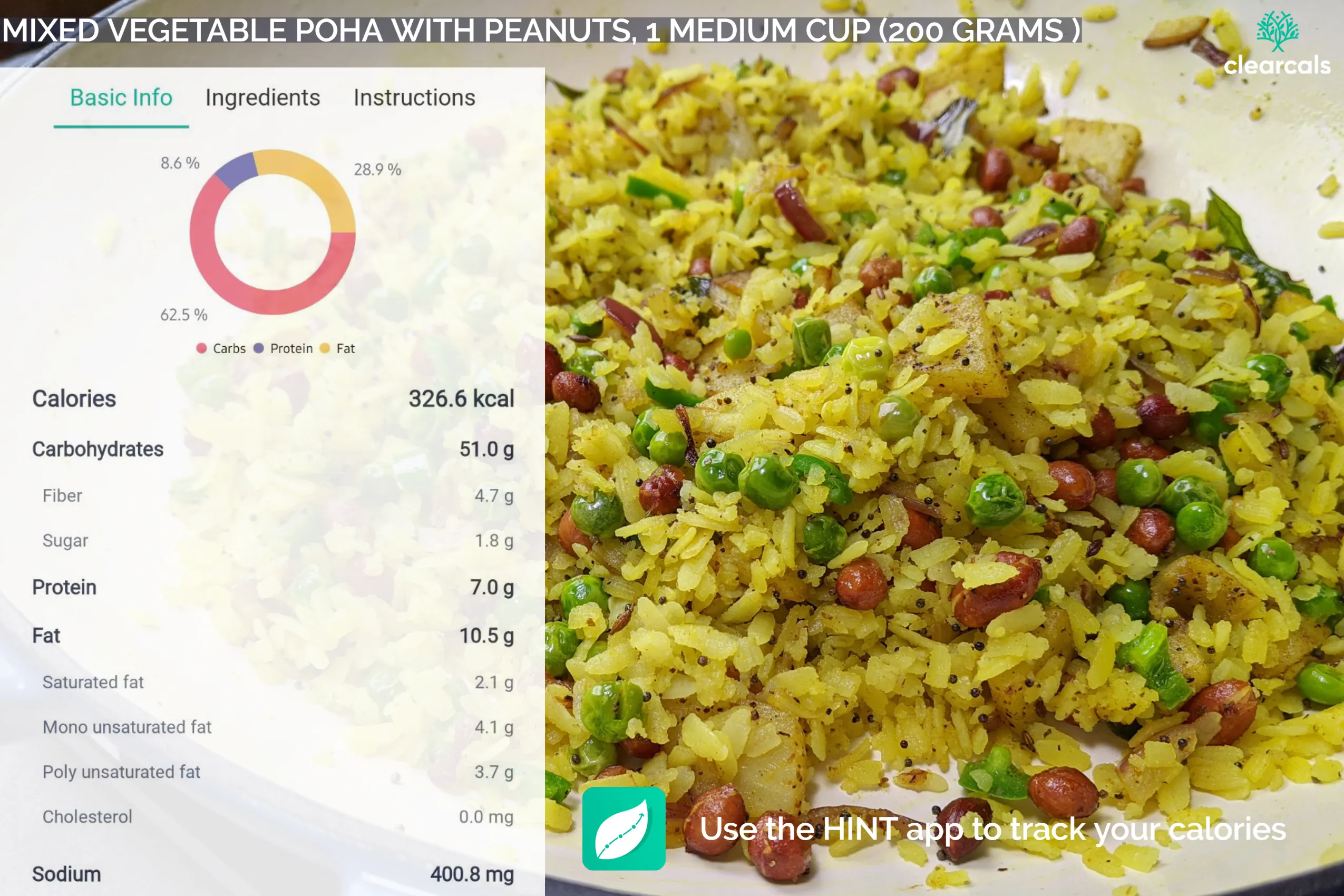
Mixed Vegetable Poha With Peanuts Calories
Mixed vegetable poha with peanuts calories: 327 kcal per 200g | 163 kcal per 100g Poha with peanuts calories: 327 kcal per 200g — peanuts add ~165 kcal per 28g vs. plain poha
One medium cup of mixed vegetable poha with peanuts (200g) has 327 kcal, 9% protein, 62% carbohydrates, and 29% fat. The peanuts contribute the bulk of the additional calories vs. plain poha.
| Quantity | Weight | Mixed Veg Poha Calories |
|---|---|---|
| 1 Small cup/bowl | 100g | 163 kcal |
| 1 Medium cup/bowl | 200g | 327 kcal |
| 1 Large cup/bowl | 300g | 490 kcal |
Roasted Poha Calories
Roasted poha calories: ~140–160 kcal per 100g | Plain roasted poha (dry, no oil): ~347 kcal per 100g dry weight
Roasted poha (chivda-style, dry roasted without oil) has approximately 347 kcal per 100g dry weight — the same as raw poha since no oil is added. Light-roasted poha used in recipes has ~140–160 kcal per 100g cooked weight, similar to masala poha. Deep-fried chivda-style poha with oil and nuts can reach 450–550 kcal per 100g.
Poha Recipes — Calories Comparison
| Recipe | Serving | Calories |
|---|---|---|
| Poha idli | 1 Small piece (30g) | 65 kcal |
| Poha cutlet | 1 Small piece (30g) | 78 kcal |
| Aloo poha tikki | 1 Small piece (30g) | 99 kcal |
| Poha dosa | 1 Medium piece (40g) | 106 kcal |
| Poha and corn upma | 1 Medium cup (200g) | 218 kcal |
| Poha upma | 1 Medium cup (200g) | 230 kcal |

Poha Idli Calories
Poha idli calories: 65 kcal per small idli (30g) | 87 kcal per medium idli (40g) | 4 small idlis: 260 kcal
One small piece of poha idli (30g) has 65 kcal, 14% protein, 83% carbohydrates, and 3% fat.
| Poha Idli Size | 1 Idli | 2 Idli | 3 Idli | 4 Idli |
|---|---|---|---|---|
| Small (30g) | 65 kcal | 130 kcal | 195 kcal | 260 kcal |
| Medium (40g) | 87 kcal | 174 kcal | 261 kcal | 348 kcal |
| Large (50g) | 109 kcal | 217 kcal | 326 kcal | 434 kcal |

Poha Dosa Calories
Poha dosa calories: 106 kcal per medium dosa (40g) | 80 kcal per small dosa (30g)
One medium piece of poha dosa (40g) has 106 kcal, 11% protein, 66% carbohydrates, and 23% fat.
| Poha Dosa Size | 1 Dosa | 2 Dosa | 3 Dosa | 4 Dosa |
|---|---|---|---|---|
| Small (30g) | 80 kcal | 159 kcal | 239 kcal | 318 kcal |
| Medium (40g) | 106 kcal | 212 kcal | 318 kcal | 424 kcal |
| Large (50g) | 133 kcal | 265 kcal | 398 kcal | 531 kcal |

Poha Upma Calories
Poha upma calories: 201 kcal per 200g | 100 kcal per 100g — lower than plain poha (273 kcal/200g) due to different preparation
One medium cup of poha upma (200g) has 201 kcal, 10% protein, 69% carbohydrates, and 21% fat.
| Quantity | Weight | Poha Upma Calories |
|---|---|---|
| 1 Small cup | 100g | 100 kcal |
| 1 Medium cup | 200g | 201 kcal |
| 1 Large cup | 300g | 301 kcal |
Poha Cutlet Calories
One small piece of poha cutlet (30g) has 78 kcal, 9% protein, 37% carbohydrates, and 54% fat. Consume in moderation — the high fat percentage comes from shallow-frying.
| Poha Cutlet Size | 1 Cutlet | 2 Cutlets | 3 Cutlets | 4 Cutlets |
|---|---|---|---|---|
| Small (30g) | 78 kcal | 156 kcal | 234 kcal | 312 kcal |
| Medium (40g) | 104 kcal | 208 kcal | 312 kcal | 416 kcal |
| Large (50g) | 130 kcal | 260 kcal | 390 kcal | 520 kcal |

Poha Aloo Tikki Calories
One small piece of aloo poha tikki (30g) has 99 kcal, 8% protein, 42% carbohydrates, and 50% fat. Eat in moderation — higher in fat due to frying.
| Aloo Tikki Size | 1 Tikki | 2 Tikkis | 3 Tikkis | 4 Tikkis |
|---|---|---|---|---|
| Small (30g) | 99 kcal | 198 kcal | 297 kcal | 396 kcal |
| Medium (40g) | 132 kcal | 264 kcal | 396 kcal | 528 kcal |
| Large (50g) | 165 kcal | 330 kcal | 495 kcal | 660 kcal |
Flattened Rice Calories (Avalakki / Atukulu / Aval / Chuda / Chura)
Flattened rice calories per 100g: 136 kcal (cooked) | Avalakki calories: 136 kcal/100g | Atukulu calories: 136 kcal/100g | Aval calories per 100g: 136 kcal Chura calories / Chuda calories: 136 kcal per 100g cooked | All regional names = same ingredient, same calorie count
Poha is known by many regional names across India — all referring to the same flattened/beaten rice:
| Regional Name | Language/Region | Calories per 100g (Cooked) |
|---|---|---|
| Poha / Pohe | Hindi, Marathi | 136 kcal |
| Avalakki | Kannada | 136 kcal |
| Atukulu | Telugu | 136 kcal |
| Aval | Tamil, Malayalam | 136 kcal |
| Chuda / Chura | Odia, Bengali | 136 kcal |
| Flattened rice | English | 136 kcal |
The calorie content is identical regardless of regional name — it is the same ingredient (parboiled rice that has been flattened).
Aval protein per 100g: Aval has 2.7g protein per 100g cooked — identical to poha. Aval calories per 100g: 136 kcal.
Atukulu protein per 100g: Same as poha — 2.7g protein and 136 kcal per 100g cooked.
Flattened rice nutritional value per 100g: 136 kcal | 2.7g protein | 21.8g carbs | 4.2g fat | ~0.5g fiber | 2.7mg iron | GI 43.
Is Poha a Carb or Protein?
Poha is primarily a carbohydrate food. Made from flattened rice, 64% of its calories come from carbohydrates and only 8% from protein. Per 100g cooked, poha has 21.8g carbs and 2.7g protein.
To improve the protein content of your poha: add peanuts, roasted chana, or sprouts; serve with curd or a boiled egg on the side; or use the Hint app's "Create Your Recipe" feature to check exact macros.
Is Poha Healthy?
Yes. Poha is a healthy breakfast option — it is low in calories (136 kcal/100g), rich in iron and B vitamins, has a low glycemic index (GI 43), is gluten-free, and is cholesterol-free. It is one of the most nutritionally sound traditional Indian breakfasts.
Poha is rich in: Iron (2.7mg/100g), B vitamins (particularly B1 and B3 from the rice base), vitamin C (from lemon juice and vegetables), vitamin E, manganese, and magnesium.
Is poha high in calories? No. At 136 kcal per 100g, poha is one of the lighter cooked breakfast options in Indian cuisine. It becomes higher-calorie only when loaded with peanuts, extra oil, or potatoes.
Is Poha Good for Weight Loss?
Yes. Poha's low calorie density (136 kcal/100g cooked) and low glycemic index (GI 43) make it an excellent option for weight loss when cooked with minimal oil and plenty of vegetables. A 200g plate of poha (273 kcal) with lemon juice and vegetables is a filling, low-calorie breakfast.
Tips for weight-loss poha: use 1 tsp oil instead of 2 tbsp (saves 80 kcal), add vegetables (increases fiber and volume), skip coconut or extra ghee, and track your exact serving in the Hint app.
Poha Glycemic Index
Poha glycemic index: 43 (Low) | GI 43 means poha causes slow, gradual blood sugar rise | Poha GI vs rice: 43 (poha) vs 64–72 (white rice)
Poha has a glycemic index (GI) of 43, which is classified as Low. A low GI means poha causes a slow, gradual rise in blood glucose — making it suitable for diabetics, people with PCOS, and anyone managing blood sugar.
Is Poha Good for Diabetes?
Yes. Poha's low glycemic index (GI 43) means it releases glucose gradually into the bloodstream. This makes it one of the better carbohydrate choices for diabetics among Indian breakfast options. For best glycemic control, pair poha with protein (curd, egg) and avoid adding sugar.
Can I Eat Poha Every Day?
Yes, poha can be eaten daily as part of a balanced diet. It's light, easy to digest, and low in fat when cooked at home with controlled oil. Rotating the poha base or adding different vegetables and proteins ensures nutritional variety.
Does Poha Cause Gas?
Poha is generally easy to digest and does not typically cause gas. Some individuals may experience bloating if they are sensitive to the high-carbohydrate load or eat a large quantity. Soaking the poha thoroughly and cooking with digestive spices (mustard seeds, curry leaves, turmeric) minimises any digestive discomfort.
Does Poha Increase Weight?
Poha does not cause weight gain when eaten in moderation (200g serving = 273 kcal). Weight gain occurs only when total daily calorie intake exceeds expenditure. A single plate of plain poha is a moderate-calorie breakfast. The risk comes from restaurant-style poha with heavy oil and peanuts, which can push a single serving to 500+ kcal.
Poha vs Rice Calories
Poha vs rice calories: Poha 136 kcal/100g vs White Rice 130 kcal/100g — similar calories, but poha has far lower GI (43 vs 64–72)
| Nutrient | Poha (100g cooked) | White Rice (100g cooked) |
|---|---|---|
| Calories | 136 kcal | 130 kcal |
| Protein | 2.7g | 2.7g |
| Carbs | 21.8g | 28.2g |
| Fat | 4.2g | 0.3g |
| Glycemic Index | 43 (Low) | 64–72 (Medium-High) |
| Prep time | 10–15 min | 20–30 min |
Poha has a lower GI and is quicker to prepare than white rice. However, brown rice offers more fiber than both poha and white rice.
Is Poha Good for Blood Pressure?
Yes. Poha is a good source of potassium and is low in sodium, both of which support normal blood pressure levels. Its low-fat and cholesterol-free profile also benefits cardiovascular health.
Is Poha Gluten-Free?
Yes, poha is naturally gluten-free, making it a safe choice for individuals with celiac disease or gluten sensitivity. It is made from rice, which contains no gluten.
Is Poha Good for PCOS?
Poha has a low glycemic index and can be made higher in fiber by adding vegetables. For PCOS management, pair poha with protein sources (curd, sprouts, egg) to slow glucose absorption further and reduce insulin response.
Is Poha Good for the Thyroid?
Poha is low in cholesterol and calories and provides fiber, vitamins, and healthy fats. It is a safe breakfast choice for people with hypothyroid or hyperthyroid conditions. Including selenium-rich seeds (sesame, sunflower) alongside poha supports thyroid function.
Is Poha Good for Immunity?
Yes. Poha provides iron, vitamin C, vitamin D, vitamin E, magnesium, copper, and manganese — all of which play important roles in immune function. The iron in poha is particularly significant for maintaining immune cell production.
Is Poha Good for Muscle Gain?
Poha alone is not a high-protein food (2.7g/100g). For muscle gain, pair poha with protein-rich foods such as eggs, paneer, curd, or a protein shake. Poha provides the carbohydrate energy needed for training and recovery, making it a useful pre-workout meal component.
Disadvantages of Eating Poha
Poha is low in protein (2.7g per 100g) and fiber (~0.5g per 100g), so it should always be paired with protein-rich and fiber-rich accompaniments for a complete meal. Plain poha without vegetables or protein quickly loses satiety and may lead to hunger within 1–2 hours. Restaurant-style poha with heavy oil and peanuts can be much higher in calories than home-cooked poha.
Track Poha Calories with Hint App v2.0
Hint App version 2.0 makes tracking your poha breakfast faster and more accurate:
- Apple Health sync (iOS) — Hint v2.0 automatically pulls your workout, sleep, and step count data from Apple Health. With Hint version 2.0, any workout recorded on your Apple Watch syncs automatically into Hint — no manual logging needed. Your calorie expenditure is factored into your daily budget automatically.
- Google Health Connect sync (Android — coming this month) — the same automatic sync rolls out to Android users.
- Free AI insights — Hint's AI analyses your nutrition data and delivers personalised feedback at no cost. If your poha breakfast is low in protein, Hint will recommend specific additions (peanuts, curd, egg) based on your goals and health conditions — diabetes, PCOS, weight loss, muscle gain.
- Custom recipes — log your exact poha recipe (specific oil quantity, vegetables, peanuts, poha weight) and save it as a custom item for one-tap logging every morning. All 15+ poha varieties are pre-loaded in Hint's database.
- Trend charts (Pro & Premium) — view your weekly calorie and macronutrient trends to see how your poha breakfasts fit into your overall nutrition targets.
- 300+ strength training workouts with guided videos — now free for all users in v2.0. Hint Pro: Personalised diet plans, detailed iron, fiber, and micronutrient tracking, and weekly progress reports — ideal for pairing poha breakfasts with a structured weight-loss or condition-specific nutrition plan.
Hint Premium: All Pro features plus unlimited dietitian consultations for diabetes, PCOS, thyroid, and weight management.
Frequently Asked Questions
How many calories in poha? Cooked poha has 136 kcal per 100g. A standard 200g plate has 273 kcal. A small katori (150g) has 204 kcal. A large restaurant portion (300g) has 409 kcal. Calorie count rises with oil, peanuts, and potato additions.
1 plate poha calories and protein? One medium plate (200g): 273 kcal and 5.4g protein. One small plate (100g): 136 kcal and 2.7g protein. Boost protein to ~13g by adding 2 tbsp peanuts and serving with 100g curd.
Does poha have protein? Yes — 2.7g protein per 100g cooked. A 200g plate has 5.4g protein. It is not a high-protein food (only 8% of calories from protein), so pair with eggs, curd, or peanuts for a higher-protein breakfast.
Is poha carbs or protein? Primarily carbs — 64% of poha's calories come from carbohydrates (21.8g per 100g). It has only 2.7g protein per 100g. Despite being high in carbs, its low GI (43) makes it suitable for diabetes and weight management.
Poha mein kitni calories hoti hai? 100g cooked poha mein 136 kcal hoti hain. 1 medium plate (200g) mein 273 kcal hoti hain. 1 katori (150g) mein 204 kcal hoti hain. Aloo ya peanuts add karne se calories badh jaati hain.
Poha mein kitna protein hota hai? 100g cooked poha mein 2.7g protein hota hai. 1 plate (200g) mein 5.4g protein hota hai. Poha akela protein ka achha source nahi hai — protein badhane ke liye peanuts (2 tbsp = +7.3g protein) ya anda ya curd add karein.
Ek plate poha mein kitni calories hoti hain? Ek medium plate poha (200g) mein 273 kcal hoti hain. Ek choti plate (100g) mein 136 kcal, ek badi plate (300g) mein 409 kcal hoti hain.
Aval calories per 100g? Aval (Tamil/Malayalam name for poha) has 136 kcal per 100g cooked and 2.7g protein per 100g — identical to poha, as it is the same flattened rice ingredient.
Is poha good for weight loss? Yes. At 136 kcal per 100g and GI 43, poha is one of the better weight-loss breakfast options. Use minimal oil (1 tsp), add vegetables, and pair with curd for a complete ~350 kcal breakfast.
Poha vs upma — which has more calories? Plain upma: 112 kcal/100g. Plain poha: 136 kcal/100g. Upma has fewer calories per gram because semolina absorbs more water. However, poha has a lower GI (43) compared to rava upma (moderate-high GI).
Scientific References
- Atkinson FS, Foster-Powell K, Brand-Miller JC. International tables of glycemic index and glycemic load values. Diabetes Care. 2008;31(12):2281–2283. PMID: 18835944
- Slavin JL. Fiber and prebiotics: mechanisms and health benefits. Nutrients. 2013;5(4):1417–1435. PMID: 23609775
- Hurrell RF, Egli I. Iron bioavailability and dietary reference values. Am J Clin Nutr. 2010;91(5):1461S–1467S. PMID: 20200263
- Ye EQ, Chacko SA, Chou EL, Kugizaki M, Liu S. Greater whole-grain intake is associated with lower risk of type 2 diabetes, cardiovascular disease, and weight gain. J Nutr. 2012;142(7):1304–1313. PMID: 22649266
- Rolls BJ. The relationship between dietary energy density and energy intake. Physiol Behav. 2009;97(5):609–615. PMID: 19303887
- Aune D, Keum N, Giovannucci E, et al. Whole grain consumption and risk of cardiovascular disease, cancer, and all-cause and cause-specific mortality. BMJ. 2016;353:i2716. PMID: 27301975
- Mohan V, Spiegelman D, Sudha V, et al. Effect of brown rice, white rice, and brown rice with legumes on blood glucose and insulin responses in overweight Asian Indians. Diabetes Technol Ther. 2014;16(5):317–325. PMID: 24456350
- Cook JD, Reddy MB. Effect of ascorbic acid intake on nonheme-iron absorption from a complete diet. Am J Clin Nutr. 2001;73(1):93–98. PMID: 11124756
🎁 Free Hint with Every Watch Purchase
Garmin watches: Purchase any Garmin watch from the Clearcals Store and receive 1 month of Hint Premium (worth ₹1,999) free. With Hint version 2.0, if your Garmin watch syncs to Garmin Connect and Garmin Connect is connected to Apple Health, your workouts flow automatically into Hint — no manual logging needed.
Apple Watch: Purchase any Apple Watch from the Clearcals Store and receive a free Hint Pro subscription — including access to all Pro features for 1 month. With Hint version 2.0, any workout recorded on your Apple Watch syncs automatically into Hint — no manual logging needed.
About the Author
Asfia Fatima is the Chief Dietitian at Clearcals, with a Master's Degree in Dietetics and Clinical Nutrition and over a decade of experience in clinical nutrition and lifestyle management. She specialises in evidence-based diet planning for weight loss, diabetes, and metabolic health, and leads the nutrition strategy behind the Hint app.
Connect with Asfia on LinkedIn
Related Reading
- Upma Calories, Nutrition, and Health Benefits
- Dalia Calories, Nutrition, and Health Benefits
- Puffed Rice Calories, Nutrition, and Health Benefits
- Rice Calories, Nutrition, and Health Benefits
- Calorie Tracking Guide for Indians
- Indian Food Calorie Calculator