Track your nutrition and health goals

Tea Calories: 1 Cup Milk Tea with & Without Sugar | Chai, Green, Black Tea

By Asfia Fatima, Chief Dietitian at Clearcals
Tea calories — quick answer:
- 1 cup (100ml) milk tea with sugar: 77 kcal
- 1 cup (100ml) milk tea without sugar: 62 kcal
- 200ml milk tea with sugar: 154 kcal
- 200ml milk tea without sugar: 123 kcal
- Black tea (any quantity): 0 kcal
- Green tea (100ml): 4 kcal
The calorie difference between tea with and without sugar is 15 kcal per 100ml cup. Over three cups a day, switching to no-sugar tea saves 45 kcal — roughly 1,350 kcal per month.
Track your daily tea intake with the Hint app to stay on top of your calorie goals.
Tea Calories: Quick Reference Table
| Tea Type | 100ml (1 small cup) | 200ml (1 mug) | 300ml (1 large cup) |
|---|---|---|---|
| Milk tea with sugar | 77 kcal | 154 kcal | 231 kcal |
| Milk tea without sugar | 62 kcal | 123 kcal | 185 kcal |
| Black tea | 0 kcal | 0 kcal | 0 kcal |
| Green tea | 4 kcal | 9 kcal | 13 kcal |
| Chamomile tea | 4 kcal | 7 kcal | 11 kcal |
| Cinnamon tea | 10 kcal | 20 kcal | 30 kcal |
| Hibiscus tea | 16 kcal | 32 kcal | 48 kcal |
1 Cup Tea Calories with Milk and Sugar (100ml)
One cup (100ml) of milk tea with sugar has 77 kcal — 48% from carbohydrates, 10% from protein, and 42% from fat. A medium cup (200ml) has 154 kcal and a large cup (300ml) has 231 kcal.
| Serving | Calories (with sugar) |
|---|---|
| 100ml (1 small cup / teacup) | 77 kcal |
| 200ml (1 medium cup / mug) | 154 kcal |
| 300ml (1 large cup) | 231 kcal |
200ml Tea Calories with Milk and Sugar
200ml of milk tea with sugar contains 154 kcal. A standard Indian mug of chai made with full-fat milk and one teaspoon of sugar typically holds 200ml — contributing 154 kcal per serving. Adding extra sugar (each teaspoon adds ~20 kcal) or switching to skimmed milk can significantly change this figure.
Chai Calories (1 Cup with Milk and Sugar)
1 cup (100ml) of chai with milk and sugar has 77 kcal. Chai (Indian spiced milk tea) has the same calorie base as milk tea — the spices (ginger, cardamom, cinnamon) add negligible calories. Calories primarily come from the milk and sugar used.
| Chai Serving | Calories |
|---|---|
| 100ml (1 small cup) | 77 kcal |
| 200ml (1 mug) | 154 kcal |
| 300ml (1 large cup) | 231 kcal |
Chai without sugar: 62 kcal per 100ml (see section below).
Watch: How to Track Tea Calories on the Hint App
Milk Tea Without Sugar Calories — 100ml, 200ml, 1 Cup

One cup (100ml) of milk tea without sugar has 62 kcal — 31% from carbohydrates, 14% from protein, and 55% from fat. Removing sugar saves 15 kcal per 100ml cup.
| Serving | Calories (without sugar) |
|---|---|
| 100ml (1 small cup) | 62 kcal |
| 200ml (1 medium cup) | 123 kcal |
| 300ml (1 large cup) | 185 kcal |
100 ml milk tea without sugar: 62 kcal 200 ml milk tea without sugar: 123 kcal Indian milk tea (100ml, without sugar): 62 kcal
How Much Do You Save by Skipping Sugar in Tea?
| Cups per Day | Daily Saving (kcal) | Monthly Saving (kcal) |
|---|---|---|
| 1 cup/day | 15 kcal | ~450 kcal |
| 2 cups/day | 30 kcal | ~900 kcal |
| 3 cups/day | 45 kcal | ~1,350 kcal |
| 4 cups/day | 60 kcal | ~1,800 kcal |
At 3 cups per day, removing sugar from tea saves approximately 1,350 kcal per month — equivalent to roughly 4–5 plain biscuits per day of extra calories. Over a year, this translates to nearly 2 kg of potential fat reduction with no other dietary changes.
Tea without sugar calories with milk (per 100ml):
| Tea Type | Calories Without Sugar (100ml) |
|---|---|
| Milk tea (without sugar) | 62 kcal |
| Black tea (no milk, no sugar) | 0 kcal |
| Green tea (no milk, no sugar) | 4 kcal |
Milk Tea Nutrition Facts
Milk tea with sugar contains 48% carbohydrates, 10% protein, and 42% fat. It is a good source of antioxidants, calcium, and vitamin D.
| Nutrient | Per 100ml (With Sugar) | Per 100ml (Without Sugar) |
|---|---|---|
| Calories | 77 kcal | 62 kcal |
| Carbohydrates | ~9.2g | ~4.8g |
| Protein | ~1.9g | ~2.2g |
| Fat | ~3.6g | ~3.8g |
| Macros split | 48% carbs, 10% protein, 42% fat | 31% carbs, 14% protein, 55% fat |
Milk Tea Benefits
Milk tea offers several health benefits primarily from its antioxidants, calcium, and vitamin D content:
- Antioxidants: Tea polyphenols combat oxidative stress and are linked to improved heart health
- Calcium: Supports bone health
- Vitamin D: Contributes to bone and immune health
- Caffeine: May improve alertness and cognitive function in moderate amounts
Is Milk Tea Good for Weight Loss?
No — milk tea with sugar is not ideal for weight loss due to added calories from sugar and milk. At 77 kcal per 100ml, drinking 3 cups a day adds 231 kcal to your diet — roughly 7,000 kcal per month from tea alone.
For weight loss:
- Switch to milk tea without sugar (saves 45 kcal/day across 3 cups)
- Reduce milk quantity (use less milk per cup)
- Replace one daily milk tea with black tea or green tea (0–4 kcal per cup)
The Hint app helps you track your tea intake and shows how your daily beverage habits affect your overall calorie balance.
Is Milk Tea Good for Diabetes?
No — adding milk to tea reduces its insulin-sensitising effects. For individuals with diabetes, black tea without milk or sugar is the better choice. Milk adds lactose (a natural sugar) and fat, while added sugar directly raises blood glucose.
The Hint app helps you find diabetes-friendly meal options and track your carbohydrate and sugar intake across the day.
Is Milk Tea Good for Blood Pressure?
No — adding milk to black tea can alter its positive effects on vascular function, potentially increasing blood pressure in sensitive individuals. Research suggests that the casein in milk may bind to tea's beneficial catechins, reducing their vasodilatory effect. Plain black tea without milk has been shown to support healthy blood pressure in multiple studies.
Is Milk Tea Good for PCOS?
Dairy products may worsen PCOS symptoms, including insulin resistance. Opting for dairy-free alternatives such as oat milk or almond milk tea, or switching to black tea, is generally better for PCOS management.
With Hint Premium, you can receive personalized diet plans tailored to manage PCOS effectively.
Is Milk Tea Good for Thyroid Health?
Caffeine and calcium in milk tea can interfere with thyroid medication absorption. Maintain a gap of at least 60 minutes between your thyroid medication and your morning tea to avoid reduced drug bioavailability.
Is Milk Tea Good for Immunity?
Yes — milk tea provides antioxidants, calcium, phosphorus, and vitamin D, all of which support immune function. Tea polyphenols in particular have demonstrated antimicrobial and anti-inflammatory properties in research.
Is Milk Tea Good for Muscle Gain?
Yes — tea polyphenols help reduce inflammation and oxidative stress, which can improve muscle strength and recovery when consumed as part of a balanced, protein-sufficient diet. The milk component also adds small amounts of protein and calcium that support muscle health.
Is Milk Tea Good for Weight Gain?
Yes — the calorie contribution from sugar and milk makes milk tea supportive of healthy weight gain. At 154–231 kcal per 200–300ml serving with sugar, it provides meaningful energy without requiring additional food.
Milk Tea Side Effects
Excessive milk tea consumption can contribute to:
Weight gain: From high sugar intake across multiple daily cups.
Blood sugar elevation: Particularly for people with diabetes or insulin resistance.
Digestive issues: Lactose intolerance symptoms for some — oat milk or lactose-free milk are suitable alternatives.
Sleep disruption: From caffeine if consumed in the evening. Caffeine in tea has a half-life of 5–6 hours; afternoon tea can affect sleep quality even if it doesn't feel stimulating.
Moderation — 2–3 cups per day — is generally well-tolerated for most healthy adults.
Top 5 Popular Tea Recipes

1. Green Tea Calories
Green Tea is packed with antioxidants, polyphenols, and flavonoids. It boosts immunity, protects against cell damage, and is linked to improved metabolic rate. One small cup (100ml) of green tea has 4 kcal.
| Green Tea Serving | Calories |
|---|---|
| 100ml (1 small cup) | 4 kcal |
| 200ml (1 mug) | 9 kcal |
| 300ml (1 large cup) | 13 kcal |

2. Black Tea Calories
Black Tea is plain tea without milk or sugar. It is a low-calorie drink containing antioxidants, polyphenols, and a moderate amount of caffeine. One small cup (100ml) of black tea has 0 kcal.
| Black Tea Serving | Calories |
|---|---|
| 100ml | 0 kcal |
| 200ml | 0 kcal |
| 300ml | 0 kcal |
Black tea with sugar (100ml): approximately 20 kcal (each teaspoon of sugar adds ~20 kcal).
Black tea without sugar (100ml): 0 kcal.

3. Chamomile Tea Calories
Chamomile Tea is rich in phytonutrients and helps in treating insomnia, anxiety, and thyroid disorders. One small cup (100ml) of chamomile tea has 4 kcal.
| Chamomile Tea Serving | Calories |
|---|---|
| 100ml | 4 kcal |
| 200ml | 7 kcal |
| 300ml | 11 kcal |

4. Cinnamon Tea Calories
Cinnamon tea is rich in antioxidants, polyphenols, and flavonoids. It reduces inflammation, helps control blood sugar, and supports heart health. One small cup (100ml) of cinnamon tea has 10 kcal.
| Cinnamon Tea Serving | Calories |
|---|---|
| 100ml | 10 kcal |
| 200ml | 20 kcal |
| 300ml | 30 kcal |
5. Hibiscus Tea Calories
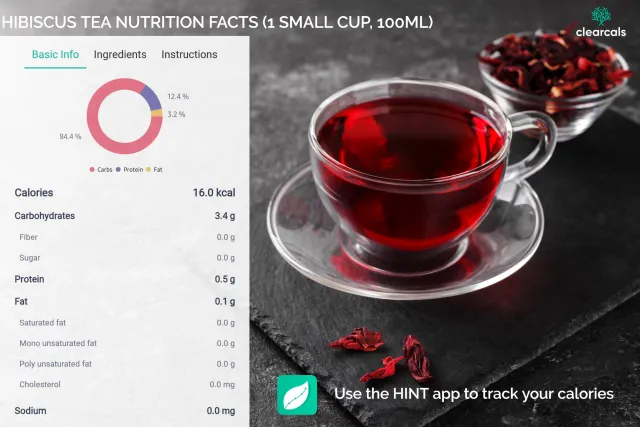
Hibiscus Tea — 85% from carbohydrates, 12% from protein, and 3% from fat. It helps reduce blood sugar, lowers blood pressure, and provides a significant amount of vitamin C. One small cup (100ml) of hibiscus tea has 16 kcal.
| Hibiscus Tea Serving | Calories |
|---|---|
| 100ml | 16 kcal |
| 200ml | 32 kcal |
| 300ml | 48 kcal |
Tea Calories: Complete Variety Reference
| Tea Recipe | Calories per 100ml |
|---|---|
| Black tea | 0 kcal |
| Lemon black tea | 2 kcal |
| Turmeric tea | 3 kcal |
| Chamomile tea | 4 kcal |
| Green tea | 4 kcal |
| Mint tea | 6 kcal |
| Cinnamon tea | 10 kcal |
| Peppermint tea | 10 kcal |
| Tulsi tea | 10 kcal |
| Green tea with cinnamon | 11 kcal |
| Ginger tea | 11 kcal |
| Lemon pepper tea | 11 kcal |
| Turmeric lemon tea | 12 kcal |
| Wheatgrass tea | 16 kcal |
| Hibiscus tea | 16 kcal |
| Immune booster tea | 16 kcal |
| Green tea with honey | 19 kcal |
| Green tea with lemon and honey | 20 kcal |
| Green tea with honey and cinnamon | 25 kcal |
| Milk tea without sugar | 62 kcal |
| Milk tea with sugar | 77 kcal |
Final Thoughts
Milk tea is a beloved beverage with benefits from its antioxidants, calcium, and vitamin D. For calorie-conscious drinkers, the single most impactful change is removing sugar — saving 15 kcal per cup, or 1,350 kcal per month at 3 cups a day.
The Hint app helps you track tea intake and understand how it fits into your overall diet. Hint Pro and Hint Premium offer personalised diet plans and expert consultations.
References
- Anderson RA, Polansky MM. Tea enhances insulin activity. J Agric Food Chem. 2002;50(24):7182-6.
- Ahmad AF et al. Effect of adding milk to black tea on vascular function. Food Funct. 2018;9(12):6307-6314.
- Chon DA et al. Concurrent Milk Ingestion Decreases Absorption of Levothyroxine. Thyroid. 2018;28(4):454-457.
🎁 Free Hint with Every Watch Purchase
Garmin watches: Purchase any Garmin watch from the Clearcals Store and receive 1 month of Hint Premium (worth ₹1,999) free. With Hint version 2.0, if your Garmin watch syncs to Garmin Connect and Garmin Connect is connected to Apple Health, your workouts flow automatically into Hint — no manual logging needed.
Apple Watch: Purchase any Apple Watch from the Clearcals Store and receive a free Hint Pro subscription. With Hint version 2.0, any workout recorded on your Apple Watch syncs automatically into Hint — no manual logging needed.
About the Author
Asfia Fatima is the Chief Dietitian at Clearcals, with a Master's Degree in Dietetics and Clinical Nutrition and over a decade of experience in clinical nutrition and lifestyle management.
She specializes in evidence-based diet planning for weight loss, diabetes, and metabolic health.
At Clearcals, she leads the nutrition strategy behind the Hint app, helping users achieve their goals with science-backed guidance.
🔗 Connect with Asfia on LinkedIn