Track your nutrition and health goals

Unintentional Weight Loss: Causes and When to See a Doctor
By Dr. Sumedha Verma | Medically Reviewed | Updated July 2026
Most weight-loss content, including much of what we publish, is about losing weight on purpose. This article is about the opposite situation: losing weight without trying to, which is a different concern entirely and sometimes a sign that something needs medical attention. This is informational, not a diagnostic tool — persistent unintentional weight loss should always be evaluated by a doctor.
TL;DR
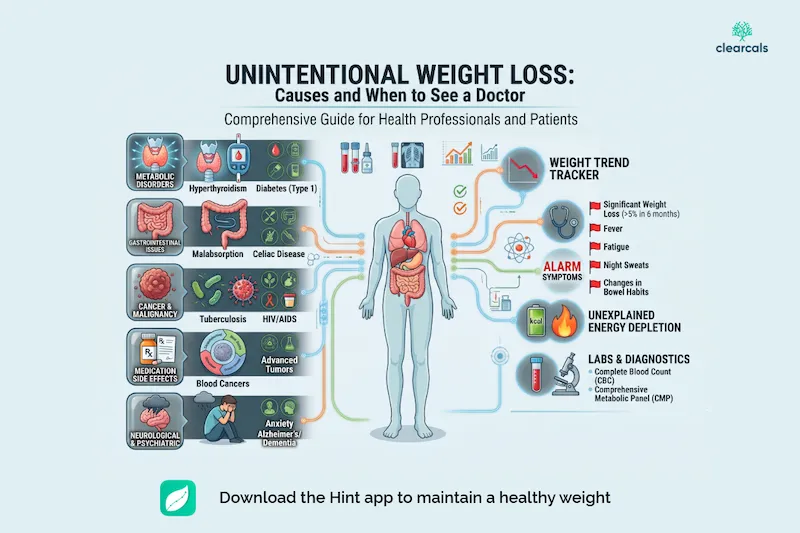
- A general guideline used by clinicians: Losing more than 5% of your body weight over 6-12 months, without trying, is considered clinically significant and worth investigating
- Common, less serious causes: Stress, poor sleep, a recent illness, medication changes, or an unnoticed reduction in appetite/intake
- Causes that need medical evaluation: Thyroid disorders (hyperthyroidism), uncontrolled diabetes, gastrointestinal conditions, infections, depression, and — less commonly but importantly — some cancers
- This article cannot diagnose you — if you've lost weight without trying and don't have a clear explanation, see a doctor rather than searching for reassurance online
- Once any medical cause is addressed, the Hint app can help you track nutrition to support healthy weight stabilisation under your doctor's guidance
What Counts as "Unintentional" Weight Loss
Unintentional weight loss means a measurable drop in body weight without deliberately changing diet or activity to cause it. A widely used clinical threshold is losing more than 5% of body weight over 6-12 months — for a 70kg adult, that's roughly 3.5kg. Smaller, short-term fluctuations (1-2kg) are usually normal and related to hydration, digestion, or minor illness, not a red flag on their own.
Common Causes That Are Often Less Serious
- Increased stress or anxiety: Can suppress appetite and increase metabolic rate slightly, leading to gradual weight loss over weeks
- Poor sleep: Disrupts hunger-regulating hormones and can reduce overall appetite for some people (though it increases appetite in others)
- A recent illness or infection: Short-term appetite loss and increased energy expenditure during recovery
- Medication changes: Several medications (including some antidepressants, diabetes medications, and stimulants) can reduce appetite or alter metabolism as a side effect
- Dental or oral health issues: Pain while eating can unconsciously reduce food intake over time
- Unnoticed dietary changes: A change in routine (new job, travel, social changes) sometimes reduces intake without a person registering it as intentional
Causes That Need Medical Evaluation
- Hyperthyroidism: An overactive thyroid increases metabolic rate, often causing weight loss alongside symptoms like rapid heartbeat, anxiety, heat intolerance, or tremors
- Uncontrolled or undiagnosed diabetes: Particularly type 1 diabetes, where the body can't use glucose for energy and begins breaking down fat and muscle instead, often alongside excessive thirst and urination
- Gastrointestinal conditions: Conditions like inflammatory bowel disease, celiac disease, or chronic infections can impair nutrient absorption even when intake seems normal
- Depression: Can suppress appetite significantly, sometimes accompanied by reduced motivation to eat regularly
- Chronic infections: Including tuberculosis, which remains relevant in the Indian context and classically presents with weight loss, night sweats, and a persistent cough
- Malignancy: Cancer is a less common but important cause of unexplained weight loss, particularly when accompanied by other symptoms like persistent pain, fatigue, or changes in bowel habits — this is precisely why unexplained weight loss warrants medical evaluation rather than assumption in either direction
When to See a Doctor
See a doctor if you notice:
- Weight loss of more than 5% of body weight over 6-12 months without a clear, intentional cause
- Weight loss accompanied by other symptoms: persistent fatigue, fever, night sweats, changes in bowel habits, pain, or unusual thirst/urination
- Weight loss alongside reduced appetite that doesn't improve within a couple of weeks
- Any unexplained weight loss in older adults, which is taken particularly seriously clinically given the broader range of possible causes
A doctor will typically start with a detailed history, physical exam, and basic blood work (thyroid function, blood sugar, complete blood count, inflammatory markers) before deciding if further investigation is needed. Most causes, once identified, are manageable — the value of seeing a doctor early is catching and addressing the cause sooner rather than later.
What Not to Do
- Don't try to "make up for it" by eating in an unstructured way before understanding the cause — this can mask symptoms that help a doctor identify the issue
- Don't assume it's nothing because you feel otherwise fine — several of the causes above can be present with minimal other symptoms in early stages
- Don't rely on online symptom-checking as a substitute for an actual evaluation — the same symptom (unexplained weight loss) can point to a dozen different causes, and only a clinical workup can narrow it down for your specific situation
How the Hint App Can Help, After a Medical Evaluation
The Hint app isn't a diagnostic tool, but once your doctor has identified or ruled out a cause, it can support healthy weight stabilisation or recovery:
- Track actual intake: Useful if your doctor recommends increasing calorie or protein intake to recover lost weight or muscle
- Personalised nutrition plans: Hint Pro can build a plan aimed at weight stabilisation or healthy weight regain, not just weight loss
- Dietitian consultations: Hint Premium connects you with a registered dietitian who can work alongside your doctor's treatment plan
Frequently Asked Questions
How much unintentional weight loss is considered a concern?
A commonly used clinical guideline is more than 5% of body weight lost over 6-12 months without trying. Smaller, short-term fluctuations are usually not a cause for concern on their own.
Can stress alone cause significant weight loss?
Yes, chronic stress can suppress appetite and slightly raise metabolic rate, leading to gradual weight loss over weeks to months. However, if weight loss is significant or persists, it's still worth a medical check rather than assuming stress is the only cause.
Is unintentional weight loss always a sign of cancer?
No — cancer is one of many possible causes and not the most common one. Most cases of unintentional weight loss have other explanations (thyroid issues, gastrointestinal conditions, depression, medication effects), but a doctor's evaluation is the only way to know which applies to you.
What tests will a doctor run for unexplained weight loss?
Typically a detailed history and physical exam, followed by basic blood tests (thyroid function, blood glucose, complete blood count, inflammatory markers) as a starting point, with further investigation guided by those initial results and your specific symptoms.
Can medication cause unintentional weight loss?
Yes — several medications, including some antidepressants, stimulants, and diabetes medications, can reduce appetite or alter metabolism as a side effect. If you've started a new medication around the same time as the weight loss, mention this to your doctor.
Should I try to gain the weight back on my own before seeing a doctor?
No — see a doctor first. Self-treating before a diagnosis can mask symptoms or delay identification of an underlying cause that needs specific treatment, not just more calories.
References
- Gaddey HL, Holder K. Unintentional weight loss in older adults. Am Fam Physician. 2014;89(9):718-22.
- Wong CJ. Involuntary weight loss. Med Clin North Am. 2014;98(3):625-43. DOI: 10.1016/j.mcna.2014.01.012
- Bilbao-Garay J, et al. Assessing clinical probability of organic disease in patients with involuntary weight loss: a simple score. Eur J Intern Med. 2002;13(4):240-245. DOI: 10.1016/S0953-6205(02)00032-3
Explore More
- Weight Loss Diet Plan — India
- Postpartum Weight Loss Diet & Fitness Plan
- Stress and Weight Loss: Techniques to Manage Stress Effectively
- Dietician Near Me for Weight Loss
About the Author
Dr. Sumedha Verma is a Consultant Physician at Clearcals with extensive experience in clinical medicine and healthcare services.
She has significant expertise in managing metabolic conditions such as fatty liver, diabetes, thyroid disorders, PCOS, infertility, and other gynecological health concerns.
Known for her patient-centered approach, Dr. Verma focuses on improving patient compliance and helping individuals achieve better health outcomes through personalized medical guidance and long-term care.
🔗 Connect with Dr. Sumedha on LinkedIn