Track your nutrition and health goals

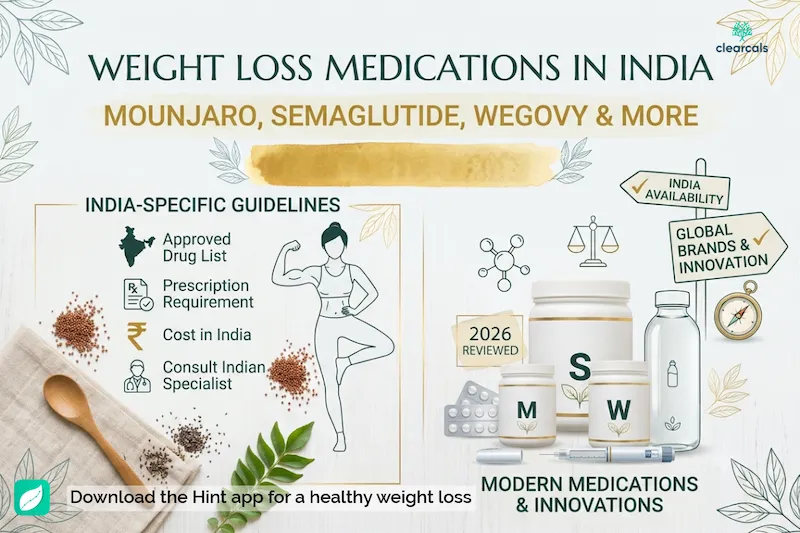
Weight Loss Medications in India: Mounjaro, Semaglutide, Wegovy & More
By Dr. Sumedha Verma | Medically Reviewed | Updated July 2026
Weight-loss medications — particularly the GLP-1 receptor agonist class — have become a major topic of search and conversation in India. This guide is a comparison hub: how the major drugs work, what's genuinely available and approved in India versus imported/off-label use, and how they relate to the specific drugs we've already covered in depth.
We've published dedicated, in-depth guides on Ozempic, Rybelsus, Victoza, Farxiga, and peptides for weight loss — this page focuses on Mounjaro and semaglutide/Wegovy, and shows where each drug fits in the bigger picture.
TL;DR
- GLP-1/GIP medications work by reducing appetite and slowing digestion, not by directly "burning fat"
- Mounjaro (tirzepatide) is a dual GLP-1/GIP agonist, generally showing greater average weight loss in trials than single-mechanism GLP-1 drugs
- Semaglutide is the active ingredient in both Ozempic (injection, primarily diabetes-labelled) and Wegovy (injection, weight-loss labelled) — Rybelsus is the oral semaglutide tablet
- These are prescription medications requiring medical supervision — not over-the-counter weight-loss products
- Diet and habit changes remain necessary alongside medication for sustainable results and to manage weight after stopping
- Track your nutrition alongside any medically supervised weight-loss treatment with the Hint app
How GLP-1 / GIP Medications Work
These drugs mimic gut hormones (GLP-1, and in Mounjaro's case, also GIP) that are released naturally after eating. The effects include:
- Slowed gastric emptying — food stays in the stomach longer, extending fullness
- Reduced appetite signalling in the brain — less hunger between meals
- Improved insulin response — originally developed for type 2 diabetes management
- Some direct effect on food reward/craving pathways, an active area of ongoing research
This is fundamentally different from older stimulant-based weight-loss drugs — the mechanism is appetite and digestion regulation, not increased calorie burning.
Comparing the Major Drugs
| Drug | Active Ingredient | Mechanism | Primary Label | Form |
|---|---|---|---|---|
| Mounjaro | Tirzepatide | Dual GLP-1 + GIP agonist | Type 2 diabetes / weight management | Weekly injection |
| Wegovy | Semaglutide | GLP-1 agonist | Weight management | Weekly injection |
| Ozempic | Semaglutide | GLP-1 agonist | Type 2 diabetes | Weekly injection |
| Rybelsus | Semaglutide | GLP-1 agonist | Type 2 diabetes | Daily oral tablet |
| Victoza | Liraglutide | GLP-1 agonist | Type 2 diabetes | Daily injection |
| Farxiga | Dapagliflozin | SGLT2 inhibitor (different class) | Type 2 diabetes/heart failure | Daily oral tablet |
Several of these drugs share the same active ingredient (semaglutide) across different brand names and approved uses — the distinction between "diabetes" and "weight management" labelling often comes down to dose and the specific trials each brand ran, not a fundamentally different drug.
Mounjaro for Weight Loss
Mounjaro (tirzepatide) targets both the GLP-1 and GIP receptors, a dual mechanism that has shown greater average weight loss in clinical trials compared to GLP-1-only drugs like semaglutide, in head-to-head and indirect comparisons. It is administered as a once-weekly injection with a gradual dose titration to manage side effects.
Common side effects: nausea, diarrhoea, constipation, and reduced appetite — typically most pronounced during dose increases and easing over time.
Important: Mounjaro is a prescription medication requiring a doctor's evaluation of your health history, current medications, and suitability — it is not appropriate for casual or unsupervised use, and availability/approved indications in India should be confirmed with a licensed physician.
Semaglutide and Wegovy
Semaglutide is the active ingredient behind multiple brand-name products. Wegovy is the brand specifically developed and trialled for weight management at a higher dose than the diabetes-focused Ozempic, though both use the same drug. Oral semaglutide (Rybelsus) is also discussed for weight effects, generally with a more modest impact than the injectable forms at typically prescribed doses.
Effectiveness: Clinical trials (the STEP trial series) showed an average of roughly 12-15% body weight reduction over about 68 weeks at the highest studied doses, alongside structured lifestyle intervention — meaning diet and activity changes were part of the trial protocol, not optional extras.
Who These Medications Are (and Aren't) For
These medications are generally considered for people with a BMI in the obesity range, or overweight with associated conditions like type 2 diabetes or cardiovascular risk factors, under medical supervision. They are not intended for modest, cosmetic weight loss in people without a clinical indication, and self-sourcing or using them without medical guidance carries real risks — including incorrect dosing, lack of monitoring for side effects, and counterfeit product risk given high demand.
Diet Still Matters With Medication
GLP-1/GIP medications reduce appetite, but the food choices made during a reduced-appetite period still determine nutritional adequacy. Common issues reported by patients include inadequate protein intake (risking muscle loss alongside fat loss) and reduced intake of key micronutrients simply because total food volume drops. A dietitian-guided plan alongside medication is widely recommended, not just the prescription itself.
How the Hint App Supports a Medically Supervised Weight-Loss Plan
The Hint app is useful as a complement to — never a replacement for — medical treatment:
- Track nutrition during appetite changes: Make sure reduced food intake still hits protein and micronutrient targets
- Personalised diet plans: Hint Pro can adjust your plan if your appetite or eating pattern changes during treatment
- Dietitian consultations: Hint Premium connects you with a registered dietitian who can work alongside your physician's treatment plan
- This app does not prescribe, recommend, or supply any medication — always consult a licensed physician for prescription weight-loss treatment
Frequently Asked Questions
Is Mounjaro available in India?
Availability and approved indications change over time and vary by country; this article is informational, not a sourcing guide. Confirm current availability, approval status, and appropriateness for your situation with a licensed physician.
What's the difference between Ozempic and Wegovy?
Both contain semaglutide. Ozempic is primarily approved and dosed for type 2 diabetes management; Wegovy uses a higher dose specifically studied and approved for weight management. They are not interchangeable without medical guidance.
Do I need a prescription for these medications?
Yes — all of the medications discussed here are prescription-only and require medical evaluation, monitoring, and supervision. They should never be self-administered without a doctor's involvement.
Will I regain weight after stopping a GLP-1 medication?
Studies generally show some weight regain after stopping, particularly without continued lifestyle changes, since appetite-suppressing effects fade once the medication is discontinued. This is why a sustainable diet and exercise routine alongside or after treatment matters.
Are these medications safe?
Like all prescription medications, they carry potential side effects and contraindications (for example, personal/family history of certain thyroid cancers). Safety depends on individual health history — a decision to be made with a licensed physician, not based on online information alone.
Can I lose weight without medication using diet alone?
Yes — a structured calorie deficit, adequate protein, and consistent habits produce meaningful weight loss for most people without medication. Medication is generally considered for specific clinical situations, not as a first-line approach for everyone.
References
- Jastreboff AM, et al. Tirzepatide Once Weekly for the Treatment of Obesity. N Engl J Med. 2022;387(3):205-216. DOI: 10.1056/NEJMoa2206038
- Wilding JPH, et al. Once-Weekly Semaglutide in Adults with Overweight or Obesity (STEP 1). N Engl J Med. 2021;384(11):989-1002. DOI: 10.1056/NEJMoa2032183
- Wadden TA, et al. Weight Loss Maintenance and Need for Continued Therapy with Semaglutide (STEP 4). JAMA. 2021;325(14):1403-1413. DOI: 10.1001/jama.2021.1831
Explore More
- Ozempic for Weight Loss
- Rybelsus Weight Loss
- Weight Loss Supplements in India
- Weight Loss Diet Plan — India
About the Author
Dr. Sumedha Verma is a Consultant Physician at Clearcals with extensive experience in clinical medicine and healthcare services.
She has significant expertise in managing metabolic conditions such as fatty liver, diabetes, thyroid disorders, PCOS, infertility, and other gynecological health concerns.
Known for her patient-centered approach, Dr. Verma focuses on improving patient compliance and helping individuals achieve better health outcomes through personalized medical guidance and long-term care.
🔗 Connect with Dr. Sumedha on LinkedIn