Track your nutrition and health goals

Dry Fruits for Weight Gain - Complete Guide to Nuts, Seeds, and Dried Fruits
By Asfia Fatima, Chief Dietitian at Clearcals
Dry fruits are nature's calorie powerhouses—small, portable, nutrient-dense, and incredibly effective for healthy weight gain.
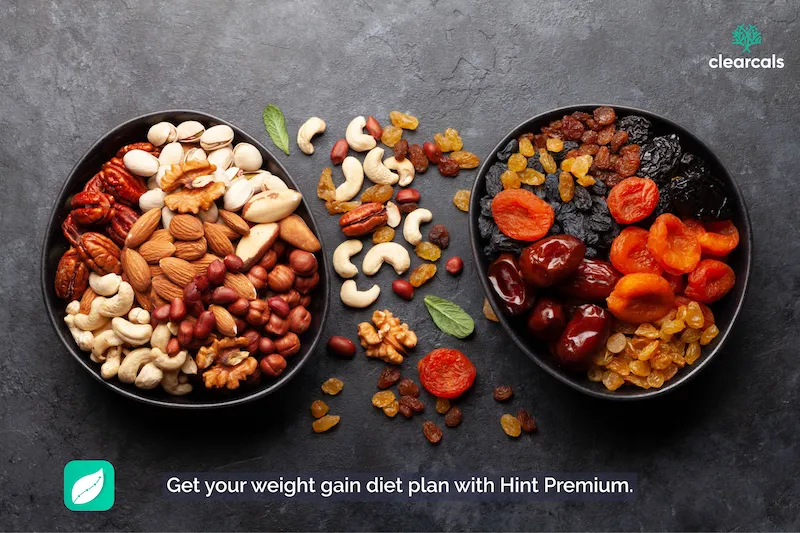
Whether you call them dry fruits, nuts, seeds, or dried fruits, these concentrated sources of healthy fats, proteins, and natural sugars can help you gain weight without feeling uncomfortably full.
This comprehensive guide covers everything you need to know about using dry fruits for weight gain: detailed nutrition facts for 25+ varieties, health benefits, optimal serving sizes, preparation methods, delicious recipes, and practical tips for incorporating them into your daily routine.
If you're underweight, have a fast metabolism, are an athlete bulking up, or simply want to add healthy calories to your diet, dry fruits are your secret weapon.
Track your dry fruit intake easily with the Hint app, Hint Pro, and Hint Premium for personalized meal planning and expert guidance.
TL;DR
- Dry fruits are extremely calorie-dense (5-7 cal/g for nuts, 2-3 cal/g for dried fruits)
- Just a handful of mixed dry fruits adds 200-300 calories
- Rich in healthy fats, protein, fiber, vitamins, and minerals
- Best dry fruits for weight gain: almonds, walnuts, cashews, peanuts, dates, figs, raisins
- Soak nuts overnight for better digestion and nutrient absorption
- Eat 50-100g dry fruits daily (250-600 calories) for steady weight gain
- Combine with milk, smoothies, or oatmeal for maximum calories
- Use the Hint app to track your daily dry fruit intake
Understanding Dry Fruits: Categories and Basics
What Are Dry Fruits?
Dry fruits are a general term that includes three categories:
1. Tree Nuts:
- almonds, walnuts, cashews, pistachios, hazelnuts
- High in healthy fats and protein
- Most calorie-dense (5-7 cal/g)
2. Seeds:
- Pumpkin seeds, sunflower seeds, flaxseeds, chia seeds, sesame seeds
- Rich in minerals and healthy fats
- Calorie-dense (5-6 cal/g)
3. Dried Fruits:
- dates, raisins, dried figs, dried apricots, prunes
- Dehydrated fresh fruits (concentrated sugars)
- Moderately calorie-dense (2.5-3 cal/g)
Why Dry Fruits Are Perfect for Weight Gain
Advantages:
- Extremely calorie-dense: 30g nuts = 170-200 calories (vs. 30g banana = 27 calories)
- Nutrient-rich: Vitamins, minerals, antioxidants, fiber
- Healthy fats: Support hormone production, brain health, and heart health
- Portable: No refrigeration needed, easy to carry
- Long shelf life: Can be stored for months
- Versatile: Eat alone or add to meals, smoothies, desserts
- Satiety-friendly: Protein and fat keep you satisfied without excessive bloating
Research-backed: Studies show that regular nut consumption is associated with higher body weight in a healthy way, increased muscle mass, and better metabolic health.

Complete Guide to Nuts for Weight Gain
1. Almonds (Badaam)
Serving size: 30g (23 almonds)
Calories: 170
Protein: 6g | Carbs: 6g | Fats: 15g (mostly monounsaturated)
Calorie density: 5.7 cal/g
Key nutrients:
- Vitamin E: 37% DV (powerful antioxidant)
- Magnesium: 19% DV (muscle function, energy)
- Fiber: 3.5g (digestive health)
- Calcium: 8% DV (bone health)
Health benefits:
- Supports heart health (lowers LDL cholesterol)
- Improves skin health (vitamin E)
- Regulates blood sugar (fiber + healthy fats)
- Reduces inflammation
How to prepare:
- Soaked almonds: Soak overnight (8-12 hours) in water, peel skin in the morning
- Why soak? Removes phytic acid (enzyme inhibitor), improves digestion and nutrient absorption
- Roasted almonds: Dry roast without oil for 5-7 minutes, enhancing flavor
Daily serving for weight gain: 30-50g (23-40 almonds) = 170-290 calories
Recipe ideas:
- Almond milk shake (blend soaked almonds with milk, dates, and banana)
- almond butter (blend 2 cups almonds until creamy)
- Add to oatmeal or yogurt
- Trail mix with other dry fruits
2. Walnuts (Akhrot)
Serving size: 30g (14 halves)
Calories: 185
Protein: 4g | Carbs: 4g | Fats: 18g (mostly polyunsaturated)
Calorie density: 6.2 cal/g
Key nutrients:
- Omega-3 ALA: 2.5g (highest of all nuts—brain health)
- Copper: 50% DV (iron absorption)
- Manganese: 42% DV (bone health)
- Antioxidants: Exceptionally high
Health benefits:
- Brain health (omega-3, often called "brain food")
- Anti-inflammatory properties
- Improves gut microbiome
- May improve sleep quality (contains melatonin)
How to prepare:
- Soaked walnuts: Soak overnight, removes bitterness, easier to digest
- Roasted walnuts: Light roast enhances nutty flavor
- Chopped walnuts: Easier to add to dishes
Daily serving for weight gain: 30-50g (14-23 halves) = 185-310 calories
Recipe ideas:
- Walnut-date energy balls
- Add to Banana Smoothies
- Sprinkle on salads
- Walnut chutney (traditional Indian recipe)
3. Cashews (Kaju)
Serving size: 30g (18 cashews)
Calories: 165
Protein: 5g | Carbs: 9g | Fats: 13g
Calorie density: 5.5 cal/g
Key nutrients:
- Copper: 67% DV (supports immunity)
- Magnesium: 20% DV (muscle and nerve function)
- Zinc: 15% DV (immune system, wound healing)
- Iron: 11% DV (oxygen transport)
Health benefits:
- Supports the immune system (zinc, copper)
- Heart health (unsaturated fats)
- Bone health (magnesium, phosphorus)
- Creamy texture makes it versatile
How to prepare:
- Raw cashews: Soft, creamy texture
- Roasted cashews: Crunchier, nuttier flavor
- Cashew paste: Blend soaked cashews for a creamy base in curries
Daily serving for weight gain: 30-50g (18-30 cashews) = 165-275 calories
Recipe ideas:
- Cashew milk (blend soaked cashews with water and dates)
- Cashew butter
- Garnish for sweets (kheer, halwa)
- Cashew cream for curries
4. Peanuts (Moongfali)
Serving size: 30g (about 40 peanuts)
Calories: 170
Protein: 7g | Carbs: 5g | Fats: 14g
Calorie density: 5.7 cal/g
Key nutrients:
- Niacin (B3): 35% DV (energy metabolism)
- Folate: 17% DV (cell growth)
- Biotin: 24% DV (hair and skin health)
- Resveratrol: Antioxidant (same as red wine)
Health benefits:
- Budget-friendly protein source
- Supports energy levels (B vitamins)
- Heart-healthy (studies show regular peanut consumption reduces heart disease risk)
- May support weight management (satiety)
How to prepare:
- Roasted peanuts: Dry roast with salt (most popular)
- Boiled peanuts: Soft, fewer calories than roasted
- peanut butter: Blend 2 cups roasted peanuts until creamy
Daily serving for weight gain: 50-75g = 285-430 calories
Recipe ideas:
- Peanut chikki (jaggery and peanut brittle)
- peanut butter smoothie
- Add to poha or upma
- Peanut sauce for salads
5. Pistachios (Pista)
Serving size: 30g (49 kernels)
Calories: 160
Protein: 6g | Carbs: 8g | Fats: 13g
Calorie density: 5.3 cal/g
Key nutrients:
- Vitamin B6: 28% DV (brain development)
- Thiamine (B1): 21% DV (energy)
- Potassium: 8% DV (heart, muscle function)
- Lutein & zeaxanthin: Eye health antioxidants
Health benefits:
- Highest protein among tree nuts
- Supports eye health (antioxidants)
- May improve blood sugar control
- Rich in fiber (aids digestion)
How to prepare:
- Shelled pistachios: Remove shells (time-consuming but slows eating)
- Roasted pistachios: Enhanced flavor
- Pistachio powder: Grind for use in desserts
Daily serving for weight gain: 30-50g = 160-270 calories
Recipe ideas:
- Pistachio kulfi (Indian ice cream)
- Add to kheer
- Pistachio-date energy balls
- Garnish for biryanis
6. Brazil Nuts
Serving size: 30g (6-7 nuts)
Calories: 185
Protein: 4g | Carbs: 3g | Fats: 19g
Calorie density: 6.2 cal/g
Key nutrients:
- Selenium: 988% DV (!) (antioxidant, thyroid function)
- Magnesium: 25% DV
- Copper: 55% DV
Health benefits:
- Supports thyroid function (selenium)
- Powerful antioxidant
- May improve cholesterol levels
Caution: Very high in selenium—limit to 2-3 nuts per day (excessive selenium is toxic)
Daily serving for weight gain: 20g (3-4 nuts) = 125 calories
7. Hazelnuts
Serving size: 30g (21 hazelnuts)
Calories: 180
Protein: 4g | Carbs: 5g | Fats: 17g
Calorie density: 6 cal/g
Key nutrients:
- Vitamin E: 28% DV (antioxidant)
- Manganese: 87% DV (bone health)
- Copper: 45% DV
Health benefits:
- Heart health (monounsaturated fats)
- Anti-inflammatory
- Supports brain health
Daily serving for weight gain: 30g = 180 calories
Recipe ideas:
- Hazelnut spread (like Nutella but healthier)
- Add to chocolate desserts
- Roasted hazelnuts as a snack
8. Macadamia Nuts
Serving size: 30g (10-12 nuts)
Calories: 200
Protein: 2g | Carbs: 4g | Fats: 21g
Calorie density: 6.7 cal/g (HIGHEST among common nuts)
Key nutrients:
- Thiamine (B1): 22% DV
- Manganese: 58% DV
- Copper: 47% DV
Health benefits:
- Highest in monounsaturated fats (heart health)
- Rich, buttery flavor
- May reduce inflammation
Daily serving for weight gain: 30g = 200 calories
Recipe ideas:
- Macadamia nut butter
- Baking (cookies, cakes)
- Chocolate-covered macadamias
9. Pine Nuts (Chilgoza)
Serving size: 30g
Calories: 190
Protein: 4g | Carbs: 4g | Fats: 19g
Calorie density: 6.3 cal/g
Key nutrients:
- Vitamin E: 18% DV
- Magnesium: 20% DV
- Zinc: 11% DV
Health benefits:
- Appetite suppression (pinolenic acid—ironic for weight gain, but nutrient-rich)
- Heart health
- Energy boost
Daily serving for weight gain: 30g = 190 calories
Complete Guide to Seeds for Weight Gain
10. Flaxseeds (Alsi)
Serving size: 2 tablespoons (20g)
Calories: 110
Protein: 4g | Carbs: 6g | Fats: 9g (mostly omega-3)
Calorie density: 5.5 cal/g
Key nutrients:
- Omega-3 ALA: 4.3g (highest plant source)
- Fiber: 5.6g (digestive health)
- Lignans: Antioxidant phytoestrogens
Health benefits:
- Heart health (omega-3)
- Digestive health (fiber)
- May reduce inflammation
- Hormonal balance
IMPORTANT: Must grind before eating (whole flaxseeds pass through undigested)
Daily serving for weight gain: 2-3 tablespoons (20-30g) = 110-165 calories
How to use:
- Grind fresh daily (or store ground flaxseeds in fridge)
- Add to smoothies
- Mix into yogurt or oatmeal
- Add to roti dough
11. Chia Seeds
Serving size: 2 tablespoons (24g)
Calories: 140
Protein: 5g | Carbs: 12g | Fats: 9g
Calorie density: 5.8 cal/g
Key nutrients:
- Fiber: 11g (46% DV—highest among common foods)
- Omega-3 ALA: 5g
- Calcium: 18% DV
- Complete protein (all 9 essential amino acids)
Health benefits:
- Digestive health (fiber)
- Sustained energy (slow-digesting carbs)
- Bone health (calcium)
- Hydration (absorbs 10x its weight in water)
Daily serving for weight gain: 2-3 tablespoons (24-36g) = 140-210 calories
How to use:
- Soak in milk overnight (chia pudding)
- Add to smoothies (no grinding needed)
- Make chia seed pudding with honey and fruits
- Sprinkle on salads
12. Pumpkin Seeds (Kaddu ke Beej)
Serving size: 30g
Calories: 150
Protein: 7g | Carbs: 4g | Fats: 13g
Calorie density: 5.0 cal/g
Key nutrients:
- Zinc: 23% DV (immune function, testosterone)
- Magnesium: 37% DV (muscle, nerve function)
- Iron: 13% DV
- Phosphorus: 33% DV (bone health)
Health benefits:
- Prostate health (zinc, especially for men)
- Sleep quality (magnesium, tryptophan)
- Immune support
Daily serving for weight gain: 30-50g = 150-250 calories
How to use:
- Roasted with salt as a snack
- Add to trail mix
- Sprinkle on soups and salads
- Blend into smoothies
13. Sunflower Seeds
Serving size: 30g
Calories: 165
Protein: 6g | Carbs: 7g | Fats: 14g
Calorie density: 5.5 cal/g
Key nutrients:
- Vitamin E: 82% DV (antioxidant)
- Selenium: 32% DV (thyroid, immunity)
- Copper: 44% DV
Health benefits:
- Powerful antioxidant (vitamin E)
- Heart health
- May reduce inflammation
Daily serving for weight gain: 30-50g = 165-275 calories
How to use:
- Roasted as a snack
- Add to granola
- Sunflower seed butter (alternative for nut allergies)
- Top salads
14. Sesame Seeds (Til)
Serving size: 2 tablespoons (18g)
Calories: 100
Protein: 3g | Carbs: 4g | Fats: 9g
Calorie density: 5.6 cal/g
Key nutrients:
- Calcium: 18% DV (especially important for vegetarians)
- Copper: 82% DV
- Manganese: 57% DV
Health benefits:
- Bone health (calcium)
- May lower blood pressure
- Antioxidant properties
Daily serving for weight gain: 2-3 tablespoons (18-27g) = 100-150 calories
How to use:
- Til laddu (sesame jaggery sweet)
- Tahini (sesame seed paste—blend 1 cup seeds)
- Toast and sprinkle on dishes
- Add to smoothies
Complete Guide to Dried Fruits for Weight Gain
15. Dates (Khajoor)
Serving size: 3 pieces (24g)
Calories: 66
Protein: 0.4g | Carbs: 18g | Fats: 0g
Calorie density: 2.75 cal/g
Key nutrients:
- Fiber: 1.6g
- Potassium: 5% DV (heart, muscle function)
- Magnesium: 3% DV
- Natural sugars: Glucose, fructose, sucrose
Health benefits:
- Quick energy (natural sugars)
- Digestive health (fiber)
- May improve bone health
- Natural sweetener (no added sugar needed)
Best varieties:
- Medjool dates (larger, softer, sweeter)
- Ajwa dates (from Saudi Arabia, medicinal properties)
- Deglet Noor (semi-dry, less sweet)
Daily serving for weight gain: 8-12 dates (64-96g) = 176-264 calories
How to use:
- Soak overnight, eat in the morning (easier to digest)
- Add to smoothies (natural sweetness)
- Date-nut energy balls
- Stuffed dates (fill with almonds or peanut butter)
16. Dried Figs (Anjeer)
Serving size: 3 pieces (30g)
Calories: 75
Protein: 1g | Carbs: 19g | Fats: 0.3g
Calorie density: 2.5 cal/g
Key nutrients:
- Fiber: 3g (digestive health)
- Calcium: 5% DV (bone health)
- Iron: 4% DV
- Potassium: 7% DV
Health benefits:
- Digestive health (fiber, natural laxative)
- Bone health (calcium)
- May improve blood sugar control (moderate GI)
- Heart health
Daily serving for weight gain: 5-8 pieces (50-80g) = 125-200 calories
How to use:
- Soak overnight (softens, easier to digest)
- Add to oatmeal or yogurt
- Blend into smoothies
- Fig-almond energy bars
17. Raisins (Kishmish)
Serving size: 40g (1/4 cup, about 60 raisins)
Calories: 120
Protein: 1g | Carbs: 32g | Fats: 0.2g
Calorie density: 3 cal/g
Key nutrients:
- Iron: 6% DV (especially black raisins—higher iron)
- Potassium: 8% DV
- Boron: Supports bone health
- Natural sugars
Health benefits:
- Quick energy
- Iron supplementation (especially for anemia)
- Digestive health
- May improve oral health (kills bacteria)
Types:
- Golden raisins: Sweeter, treated with sulfur dioxide
- Black raisins: Higher antioxidant content, more iron
- Green raisins: From green grapes
Daily serving for weight gain: 50-75g = 150-225 calories
How to use:
- Soak overnight (easier to digest)
- Add to oatmeal, cereals
- Mix into a trail mix
- Use in biryani, pulao
- Raisin water (soak overnight, drink water in the morning)
18. Dried Apricots (Khumani)
Serving size: 40g (8 halves)
Calories: 96
Protein: 1.4g | Carbs: 25g | Fats: 0.2g
Calorie density: 2.4 cal/g
Key nutrients:
- Vitamin A: 38% DV (eye health)
- Potassium: 16% DV
- Iron: 7% DV
- Fiber: 2.8g
Health benefits:
- Eye health (vitamin A, beta-carotene)
- Digestive health (fiber)
- Iron supplementation
- May improve skin health
Daily serving for weight gain: 60-80g (12-16 halves) = 144-192 calories
How to use:
- Soak overnight
- Blend into smoothies
- Add to trail mix
- Chop and add to salads
19. Prunes (Dried Plums)
Serving size: 40g (4 prunes)
Calories: 96
Protein: 1g | Carbs: 25g | Fats: 0.2g
Calorie density: 2.4 cal/g
Key nutrients:
- Fiber: 3g (digestive health)
- Vitamin K: 28% DV (bone health, blood clotting)
- Potassium: 10% DV
- Sorbitol: Natural laxative
Health benefits:
- Digestive health (well-known natural laxative)
- Bone health (vitamin K, boron)
- May improve cholesterol levels
- Antioxidant-rich
Daily serving for weight gain: 6-8 prunes (60-80g) = 144-192 calories
How to use:
- Eat as a snack (excellent for constipation)
- Prune juice (blend of soaked prunes)
- Add to oatmeal
- Make prune energy bars
20. Dried Cranberries
Serving size: 40g (1/4 cup)
Calories: 130
Protein: 0g | Carbs: 33g | Fats: 0.2g
Calorie density: 3.25 cal/g
Key nutrients:
- Vitamin C: 2% DV (lower than fresh)
- Fiber: 2g
- Antioxidants: Proanthocyanidins
Health benefits:
- Urinary tract health (prevents UTIs)
- Antioxidant-rich
- Heart health
Caution: Often contains added sugar (check labels)
Daily serving for weight gain: 40-60g = 130-195 calories
How to use:
- Trail mix
- Add to salads
- Mix into granola
- Baking (cookies, muffins)
21. Dried Mango (Aam Papad)
Serving size: 40g
Calories: 120
Protein: 0.6g | Carbs: 31g | Fats: 0.2g
Calorie density: 3 cal/g
Key nutrients:
- Vitamin A: 10% DV
- Vitamin C: 25% DV (lower than fresh)
- Natural sugars
Health benefits:
- Digestive health
- Eye health (vitamin A)
- Traditional Indian dried fruit
Caution: Aam papad often contains added sugar and preservatives
Daily serving for weight gain: 40-60g = 120-180 calories
Optimal Daily Dry Fruit Intake for Weight Gain
Recommended Daily Portions
| Goal | Total Dry Fruits | Calories from Dry Fruits | Sample Mix |
|---|---|---|---|
| Moderate weight gain (+0.25 kg/week) | 50-75g | 250-350 cal | 15 almonds, 7 walnuts, 10 cashews, 4 dates |
| Faster weight gain (+0.5 kg/week) | 75-100g | 350-550 cal | 23 almonds, 14 walnuts, 18 cashews, 8 dates |
| Aggressive weight gain (+0.75 kg/week) | 100-150g | 550-750 cal | 30 almonds, 20 walnuts, 25 cashews, 12 dates, 2 tbsp seeds |
Sample Daily Dry Fruit Plans
Plan A: Budget-Friendly (₹50-70/day)
- 50g peanuts (285 cal)
- 8 dates (176 cal)
- 30g raisins (90 cal)
- Total: 130g | 551 calories
Plan B: Balanced Nutrition (₹100-150/day)
- 23 almonds (170 cal)
- 14 walnut halves (185 cal)
- 18 cashews (165 cal)
- 5 dates (110 cal)
- 2 tbsp flaxseeds (110 cal)
- Total: 90g + 2 tbsp | 740 calories
Plan C: Premium Mix (₹200-250/day)
- 23 almonds (170 cal)
- 14 walnuts (185 cal)
- 49 pistachios (160 cal)
- 3 Brazil nuts (125 cal)
- 8 dried figs (200 cal)
- 2 tbsp chia seeds (140 cal)
- Total: 110g + 2 tbsp | 980 calories
Best Ways to Consume Dry Fruits for Weight Gain
Method 1: Traditional Soaking
Why soak?
- Removes enzyme inhibitors (phytic acid, tannins)
- Improves digestibility
- Enhances nutrient absorption
- Makes nuts softer, easier to chew
- Activates enzymes (increases bioavailability)
How to soak:
- Place dry fruits in a bowl
- Cover with water (1-2 inches above)
- Leave overnight (8-12 hours)
- Drain, peel almonds (optional)
- Consume immediately or refrigerate (up to 2 days)
What to soak:
- Must soak: almonds (easier to peel skin), flaxseeds (gel formation)
- Good to soak: walnuts, cashews, dates, figs, raisins, apricots
- No need to soak: Pistachios, pumpkin seeds, sunflower seeds (though you can)
Soaking times:
- almonds, cashews, walnuts: 8-12 hours
- dates, figs, raisins: 4-8 hours
- Flaxseeds, chia seeds: 2-4 hours
Method 2: Dry Fruit Smoothies and Shakes
High-Calorie Dry Fruit Smoothie (800 calories)
- 2 cups full-fat milk (300 cal)
- 2 bananas (210 cal)
- 10 soaked almonds (70 cal)
- 5 soaked walnuts (65 cal)
- 5 dates (110 cal)
- 1 tbsp peanut butter (95 cal)
- Pinch of cinnamon
- Total: ~850 calories
Blend until smooth, drink as a meal replacement or post-workout
Method 3: Trail Mix
Create your own weight-gain trail mix:
Basic Mix (per 100g = ~550 calories):
- 30g almonds (170 cal)
- 20g cashews (110 cal)
- 20g walnuts (125 cal)
- 20g raisins (60 cal)
- 10g dark chocolate chips (50 cal)
Store in an airtight container, carry everywhere, snack throughout the day
Method 4: Dry Fruit milk
Traditional Indian Recipe:
- Heat 2 cups of milk
- Add 10 chopped almonds, 5 chopped cashews, 5 chopped dates
- Add a pinch of saffron, cardamom powder
- Simmer 10 minutes
- Drink before bed
Calories: ~500
Method 5: Energy Balls/Ladoos
Date-Nut Energy Balls (makes 15 balls, each ~100 calories)
- 1 cup pitted dates
- 1/2 cup almonds
- 1/2 cup cashews
- 2 tbsp cocoa powder (optional)
- Pinch of salt
Method:
- Blend all in a food processor until sticky
- Roll into 15 balls
- Store in refrigerator
- Eat 2-3 balls daily = 200-300 calories
Method 6: Add to Meals
Breakfast:
- Sprinkle chopped dry fruits on oatmeal, cereal, and yogurt
- Add ground flaxseeds to smoothies
Lunch:
- Garnish biryani with fried cashews, raisins
- Add pine nuts to pasta
- Sesame seeds on salads
Dinner:
- Crushed nuts in paneer dishes
- Cashew paste for creamy curries
- Almond garnish for desserts
Snacks:
- Eat a handful between meals
- Nut butter on bread/banana
- Dry fruit chikki (with jaggery)
Dry Fruit Recipes for Maximum Weight Gain
Recipe 1: Dry Fruit Milkshake (600 calories)
Ingredients:
- 2 cups full-fat milk (300 cal)
- 10 soaked almonds (70 cal)
- 5 soaked cashews (55 cal)
- 4 dates (88 cal)
- 2 tbsp flaxseeds (110 cal)
- Pinch of saffron, cardamom
Method:
- Blend all ingredients until smooth
- Chill and serve
Drink daily as a mid-morning or evening snack
Recipe 2: Dry Fruit Chikki (Brittle)
Makes 10 pieces, each ~150 calories
Ingredients:
- 1 cup mixed nuts (almonds, cashews, peanuts)
- 1 cup jaggery (gur)
- 2 tbsp ghee
- 1/4 tsp cardamom powder
Method:
- Roast nuts lightly, chop roughly
- Melt jaggery with 2 tbsp water and ghee
- When jaggery becomes sticky, add nuts
- Mix well, spread on a greased plate
- Cut into pieces before it hardens
Eat 1-2 pieces daily = 150-300 calories
Recipe 3: Dry Fruit Ladoo
Makes 20 ladoos, each ~120 calories
Ingredients:
- 1 cup dates (pitted)
- 1/2 cup almonds
- 1/2 cup cashews
- 1/4 cup desiccated coconut
- 2 tbsp ghee
- Pinch of cardamom
Method:
- Dry roast nuts lightly, grind coarsely
- Blend dates to paste
- Mix all ingredients
- Roll into 20 balls
- Store in refrigerator
Eat 2 ladoos daily = 240 calories
Recipe 4: Dry Fruit Kheer (Rice Pudding)
Serves 4, each serving ~350 calories
Ingredients:
- 1/2 cup rice
- 4 cups full-fat milk
- 1/2 cup sugar
- 10 chopped almonds
- 10 chopped cashews
- 10 chopped pistachios
- 10 raisins
- Pinch of saffron, cardamom
Method:
- Cook rice in milk until soft (30 minutes)
- Add sugar, dry fruits, spices
- Simmer until thick
- Serve hot or cold
Have as dessert = 350 calories
Recipe 5: Dry Fruit Butter (Nut Butter)
Makes 1 cup, serving size 2 tbsp = 190 calories
Ingredients:
- 2 cups roasted almonds (or mixed nuts)
- Pinch of salt
- 1 tbsp honey (optional)
Method:
- Blend roasted nuts in a food processor
- Blend for 10-15 minutes (scrape sides periodically)
- Nuts will go from powder → clumpy → smooth butter
- Add salt and honey if desired
- Store in an airtight jar (room temp, lasts 2-3 months)
Use it like peanut butter on everything!
Tracking Dry Fruit Intake with the Hint App
The Hint app makes tracking your dry fruit consumption effortless:
With Hint (Free)
- Log all 20+ dry fruits with accurate calories and macros
- Track daily intake (ensure you're hitting 50-100g target)
- See nutrient breakdowns (fats, protein, vitamins)
- Monitor total calories from dry fruits
With Hint Pro
- Get personalized dry fruit recommendations based on your goals
- Access recipes using dry fruits
- Track micronutrients (vitamin E, magnesium, omega-3 from nuts)
- Meal planning with dry fruit suggestions
With Hint Premium
- Unlimited dietitian consultations for personalized dry fruit plans
- Learn which dry fruits work best for YOUR body
- Get customized smoothie and snack recipes
- Adjust for allergies or preferences
- Expert guidance on optimal timing and portions
Common Mistakes to Avoid
Mistake 1: Not Soaking Nuts
Problem: Harder to digest, phytic acid blocks nutrient absorption
Solution: Soak overnight whenever possible
Mistake 2: Eating Too Few
Problem: 10-15 nuts daily won't cause significant weight gain
Solution: Aim for 50-100g daily (2-4 handfuls)
Mistake 3: Choosing Salted and Fried Varieties
Problem: Excess sodium, unhealthy oils
Solution: Choose raw or dry roasted, lightly salted
Mistake 4: Discarding Nut Skins
Problem: Almond skin contains antioxidants
Solution: If digestibility isn't an issue, keep the skin
Mistake 5: Storing Improperly
Problem: Nuts can go rancid (oxidation of fats)
Solution: Store in an airtight container and a cool, dry place, or refrigerate (lasts longer)
Mistake 6: Relying Only on Dried Fruits
Problem: High in natural sugars, low in protein and fats
Solution: Combine dried fruits with nuts and seeds for balanced macros
Mistake 7: Buying Pre-Mixed Trail Mixes
Problem: Often contains added sugar, salt, and cheap fillers
Solution: Make your own trail mix with quality dry fruits
Who Should Be Cautious?
People with Nut Allergies
Alternatives:
- Seeds (sunflower, pumpkin, sesame, flax, chia)
- Dried fruits (dates, figs, raisins, apricots)
- Seed butters (sunflower seed butter, tahini)
People with Diabetes
Caution with dried fruits: High natural sugars can spike blood sugar
Better choices:
- Nuts and seeds (low glycemic, high fiber, and fats)
- Limit dried fruits or pair with protein/fat
- Consult Hint Premium dietitians for personalized guidance
People with Kidney Stones
Caution: Some nuts (almonds, cashews) are high in oxalates
Solution: Moderate portions, stay hydrated, consult a doctor
Conclusion
Dry fruits are a weight-gain powerhouse—small, portable, nutrient-dense, and incredibly calorie-rich.
By incorporating 50-100g of mixed dry fruits daily (almonds, walnuts, cashews, peanuts, dates, figs, raisins), you can easily add 250-600 calories to your diet without feeling overly full.
Combine them with milk, smoothies, or oatmeal, or eat them as snacks throughout the day. Soak them overnight for better digestion.
Use the Hint app to track your daily intake and ensure consistency.
Your weight gain journey just got a delicious, nutritious boost.
Start today. Your healthier, stronger body is waiting.
Frequently Asked Questions
1. How many dry fruits should I eat daily for weight gain?
Aim for 50-100g daily (combined nuts, seeds, dried fruits) = 250-600 calories. Start with 50g and gradually increase. Example: 23 almonds + 14 walnuts + 18 cashews + 5 dates = ~75g, ~600 calories.
2. Should I soak dry fruits before eating?
Yes, soaking is recommended (especially for almonds, walnuts, cashews, dates). Soaking overnight removes enzyme inhibitors, improves digestion, and enhances nutrient absorption. However, unsoaked is fine too if you digest well.
3. Can I gain weight by eating only dry fruits?
Technically, yes, but not recommended. Dry fruits lack sufficient protein for muscle building and don't provide complete nutrition. Use dry fruits as a calorie supplement (20-30% of daily calories) alongside balanced meals with protein, vegetables, and grains.
4. Which is the best dry fruit for weight gain?
Macadamia nuts (highest calories: 6.7 cal/g) followed by walnuts and almonds (6+ cal/g). For budget-friendly, peanuts are excellent (5.7 cal/g, high protein). For natural sweetness, dates (2.75 cal/g).
5. Are roasted or raw dry fruits better?
Both are good. Raw retains more nutrients. Roasting enhances flavor and may be easier to digest. Avoid deep-fried or heavily salted varieties. Best: Dry roasted without oil.
6. Can eating too many dry fruits be harmful?
Yes, moderation is key. Excessive intake can cause:
- Weight gain beyond target (if not tracked)
- Digestive issues (if not soaked, high fiber)
- Selenium toxicity (Brazil nuts—limit to 2-3 daily)
- High oxalates (kidney stone risk in susceptible people)
Stick to 50-100g daily unless advised otherwise.
7. When is the best time to eat dry fruits?
Multiple times work:
- Morning (empty stomach): soaked almonds/dates—traditional Ayurvedic practice
- Pre-workout: Quick energy from dates
- Post-workout: With a protein shake for recovery
- Snacks: Throughout the day
- Before bed: Handful with warm milk
There's no single "best" time—spread throughout the day.
8. Can diabetics eat dry fruits for weight gain?
Yes, with caution:
- Choose nuts and seeds (low glycemic, high fat/protein)
- Limit dried fruits (high natural sugars)—small portions with meals
- Monitor blood sugar levels
- Consult a dietitian via Hint Premium
Best for diabetics: almonds, walnuts, chia seeds, flaxseeds, pumpkin seeds
9. Are dry fruits expensive? How can I afford them?
Budget tips:
- Buy in bulk (cheaper per kg)
- Focus on affordable options: Peanuts, raisins, dates, flaxseeds, sesame seeds
- Mix expensive and cheap: 50% peanuts + 25% almonds + 25% dates
- Shop during sales or online discounts
- ₹500-1000/month is enough for 50-75g daily if you choose wisely
10. Can I eat dry fruits if I have a nut allergy?
Yes! Focus on:
- Seeds: Sunflower, pumpkin, flax, chia, sesame (not nuts, safe for most)
- Dried fruits: dates, figs, raisins, apricots, prunes
- Seed butters: Sunflower seed butter, tahini
Always check labels and consult an allergist if unsure.
Exclusive Offer for Clearcals Store Customers 🎉
Upgrade your health tracking and nutrition journey with a free Hint subscription when you purchase a smartwatch from the Clearcals Store.
What you get:
- Buy select Garmin watches → Get 1 Month FREE Hint Premium (worth ₹1,999)
- Buy Apple Watch models → Get *FREE Hint Pro access
Your free Hint access includes:
✅ Unlimited dietitian consultations *(Hint Premium)*
✅ Personalized diet and workout plans
✅ Advanced calorie & nutrition tracking
✅ Smart insights synced with your smartwatch
🚀 Visit the Clearcals Store and make your smartwatch work smarter for your health.
About the Author
Asfia Fatima is the Chief Dietitian at Clearcals, with a Master's Degree in Dietetics and Clinical Nutrition and over a decade of experience in clinical nutrition and lifestyle management.
She specializes in evidence-based diet planning for weight management, sports nutrition, and metabolic health.
At Clearcals, she leads the nutrition strategy behind the Hint app, helping users achieve their goals with science-backed guidance.
🔗 Connect with Asfia on LinkedIn