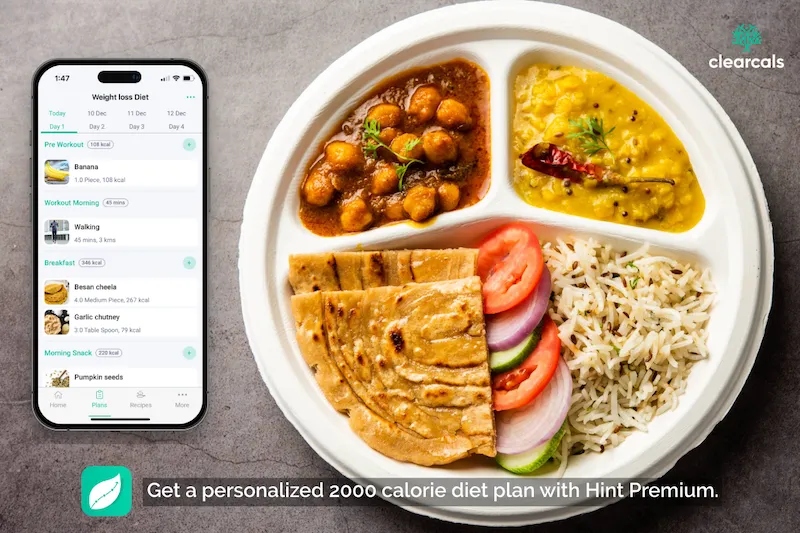
Track your nutrition and health goals

Is Corn Good for Weight Loss? Calories, Protein, Fat & When to Eat It

By Asfia Fatima, Chief Dietitian at Clearcals
Corn is one of India's most popular street foods — and one of the most misunderstood when it comes to weight loss. Is it fattening? Is it too high in calories? Is boiled corn better than roasted?
Short answer: yes, corn is good for weight loss — when eaten in the right form and right portions. This guide covers the exact calorie, protein, and fat numbers, compares boiled vs roasted vs fried corn, and explains how to eat corn without derailing your diet.
How Many Calories in Corn?
| Form | Serving | Calories | Protein | Fat | Carbs |
|---|---|---|---|---|---|
| Raw corn (kernels) | 100g | 86 kcal | 3.2g | 1.3g | 19g |
| Boiled sweet corn | 1 small cup (100g) | 116 kcal | 3.2g | 4.4g | 15.8g |
| Roasted corn | 1 piece (100g) | 96 kcal | 3.1g | 1.3g | 18g |
| Masala corn | 1 small cup | 139 kcal | 3.2g | 7.3g | 15g |
| Corn flakes | 1 small cup | 246 kcal | 5g | 4g | 48g |
| 1 whole corn on cob (~150g edible) | 1 cob | ~130–145 kcal | ~4.5g | ~2g | ~27g |
Key takeaway: Plain boiled or roasted corn is around 86–116 kcal per 100g — lower than rice, comparable to a medium potato. The problem isn't corn itself; it's added butter, oil, cheese, and masala that drive calories up.
Track your corn preparation exactly in the Hint app — the recipe builder lets you log each ingredient separately.
Is Corn High in Calories?
No — corn is moderate-to-low in calories for a carbohydrate food.
At 86 kcal per 100g (raw), corn is significantly lower in calories than most staple carbohydrates:
| Food | Calories per 100g (cooked) |
|---|---|
| White rice | ~130 kcal |
| Chapati/roti | ~300 kcal per 100g dry |
| Potato (boiled) | ~87 kcal |
| Corn (raw/boiled) | ~86–116 kcal |
| Bread (white) | ~265 kcal |
| Pasta (cooked) | ~131 kcal |
Corn is not a low-calorie vegetable like cucumber or lettuce — but it is not a high-calorie food by any stretch. The confusion arises because corn is often eaten with butter, cheese, or fried, which can push a single serving to 300+ kcal.
Does Corn Have Protein?
Yes. 100g of corn contains approximately 3.2g protein. One whole corn on the cob (150g edible kernels) provides roughly 4.5–5g protein.
This is modest compared to dal or eggs, but meaningful. Corn is not a protein food — it is primarily a carbohydrate — but it contributes to total daily protein intake, particularly for vegetarians.
Sweet corn protein per 100g: ~3.2g (raw), ~3.2g (boiled).
Does Corn Have Fat?
Very little. Raw and roasted corn contains only 1.3g fat per 100g — negligible. Boiled sweet corn has slightly more (4.4g per cup) because of the natural fat in sweet corn kernels.
Corn is naturally low in fat. Any high-fat corn dish (masala corn, buttered corn, corn chips) gets its fat from added ingredients — not the corn itself.
Corn Nutrition Facts Per 100g
| Nutrient | Raw Corn (100g) | Boiled Sweet Corn (100g) |
|---|---|---|
| Calories | 86 kcal | 116 kcal |
| Protein | 3.2g | 3.2g |
| Carbohydrates | 19g | 15.8g |
| Fat | 1.3g | 4.4g |
| Sugar | 6g | — |
| Dietary Fibre | 2g | — |
| Sodium | 150mg | — |
| Potassium | 270mg | — |
| Vitamin C | 7mg | — |
Corn is a good source of thiamin (B1), niacin (B3), folate, vitamin C, lutein, and zeaxanthin. It provides antioxidants associated with eye health.
Is Corn Good for Weight Loss?
Yes, with the right cooking method and portion size.
Corn supports weight loss through three mechanisms:
1. Fibre for satiety. At 2g dietary fibre per 100g, corn helps you stay full longer. Fibre slows gastric emptying, reducing hunger signals between meals.
2. Resistant starch. Corn — especially when cooled after cooking — contains resistant starch, which behaves more like fibre than digestible carbohydrate. Research shows resistant starch reduces fat storage and improves insulin sensitivity.
3. Moderate calorie density. At 86–116 kcal per 100g (boiled/roasted), corn gives more food volume per calorie than most carbohydrate alternatives. This helps with portion satisfaction.
The caveat: Corn is not a low-calorie vegetable. A full cup of boiled sweet corn is ~116 kcal. If you eat 2–3 cups plus butter and masala, the calorie count climbs to 400–500 kcal — not ideal for a calorie deficit.
Hint Pro users can set calorie and nutrient goals based on their weight loss targets and track how each corn serving fits into their daily budget.
Is Sweet Corn Good for Weight Loss?
Yes. Sweet corn is boiled corn with its natural sugars intact — slightly higher in sugar than regular corn but still a moderate-calorie food at 116 kcal per cup.
Sweet corn's higher water content makes it more filling per calorie than many other carbohydrates. It also retains lutein and zeaxanthin after boiling — antioxidants not found in most grains.
For weight loss: Eat sweet corn without added butter or cheese. 1 cup (100g) boiled sweet corn as a snack or side dish is a nutritious, filling, 116-kcal option.
Sweet corn nutrition per 100g:
- Calories: 116 kcal
- Protein: 3.2g
- Fat: 4.4g
- Carbs: 15.8g
- Good source of: dietary fibre, thiamin, niacin, folate, vitamin C, lutein, zeaxanthin
Is Boiled Corn Good for Weight Loss?
Yes — boiled corn is the best form for weight loss.
Boiling corn adds no fat or extra calories. It retains the fibre, vitamins, and resistant starch. At ~116 kcal per cup, it is filling, nutritious, and very low in fat.
Boiled corn benefits:
- Retains water-soluble vitamins (vitamin C, folate, B vitamins)
- No added fat from cooking
- High water content makes it more filling
- Resistant starch (especially when cooled after boiling) supports fat metabolism
Boiled corn calories for weight loss:
- 1 small cup (100g) = 116 kcal
- 200g = ~232 kcal
- 1 whole cob (~150g edible) = ~130–145 kcal
Is Roasted Corn Good for Weight Loss?
Yes — roasted corn is also a good weight-loss option, provided you don't add butter or oil.
Dry roasting corn actually reduces water content slightly, concentrating nutrients. At 96 kcal per 100g (without additions), roasted corn is slightly lower in calories than boiled sweet corn.
| Prep Method | Calories per 100g | Fat | Best For |
|---|---|---|---|
| Boiled sweet corn | 116 kcal | 4.4g | Filling snack, highest nutrients |
| Roasted corn (dry) | 96 kcal | 1.3g | Lower calorie, portable snack |
| Masala corn | 139 kcal | 7.3g | Flavour, not ideal for strict deficit |
| Fried corn | ~180–220 kcal | 10–15g | Avoid for weight loss |
1 roasted corn calories (1 full piece, ~100g edible): ~96 kcal.
Roasted corn benefits: Good source of thiamin, niacin, folate, and vitamin C. Helps manage blood sugar and supports weight loss when eaten without butter.
Is Maize Good for Weight Loss?
Maize and corn are the same plant — the terms are used interchangeably. In India, "maize" often refers to the harder, drier variety used for bhutta (roadside corn on the cob) and corn flour, while "sweet corn" refers to the sweeter, more tender kernels.
Nutritionally, roasted maize (bhutta) is comparable to roasted corn: ~96 kcal per 100g, low in fat, moderate in fibre. Yes, maize is good for weight loss in roasted or boiled form.
Roasted maize calories: ~96–100 kcal per 100g (same as roasted corn).
Corn vs Rice for Weight Loss
| Factor | Corn (boiled, 100g) | White Rice (cooked, 100g) |
|---|---|---|
| Calories | ~116 kcal | ~130 kcal |
| Protein | ~3.2g | ~2.7g |
| Fat | ~4.4g | ~0.3g |
| Carbohydrates | ~15.8g | ~28g |
| Fibre | ~2g | ~0.4g |
| Glycaemic index | ~52 | ~64–72 |
Verdict: Corn has fewer calories, more fibre, and a lower glycaemic index than white rice. For weight loss, replacing white rice with corn (or mixing corn into rice dishes) can reduce overall calorie intake and improve satiety.
However, corn is not a complete swap for rice in Indian cooking. Practically, including corn as a side or snack alongside a reduced rice portion is an effective strategy.
Sweet Corn Benefits
Beyond weight loss, sweet corn has broad nutritional benefits:
- Eye health: Rich in lutein and zeaxanthin — carotenoids that protect against macular degeneration and cataracts
- Digestive health: Dietary fibre supports regular bowel movement and gut bacteria diversity
- Energy: Good source of thiamin and B vitamins, important for energy metabolism
- Immunity: Vitamin C and antioxidants support immune function
- Heart health: Fibre and potassium (270mg/100g) support healthy blood pressure
- Pregnancy: Good source of folate, critical for neural tube development in early pregnancy. Sweet corn is safe to eat during pregnancy in normal amounts.
Sweet corn benefits and disadvantages:
| Benefit | Potential Downside |
|---|---|
| High in fibre — satiety | Moderate in sugar — portion control needed |
| Lutein/zeaxanthin for eye health | High glycaemic if overcooked or processed |
| Folate for pregnancy | Not suitable in large amounts for diabetics |
| Low fat | Adds up in calories if eaten with butter/oil |
Boiled Corn Benefits
Boiling preserves most of corn's nutritional profile:
- Retains all water-soluble vitamins (C, B vitamins, folate)
- Retains fibre — 2g per 100g
- No added fat or calories from cooking
- Lutein and zeaxanthin remain bioavailable (actually slightly more bioavailable after light cooking)
- Resistant starch content increases when boiled and then cooled — better for blood sugar management
Is Corn Good for Diabetes?
Yes, in moderation — particularly in roasted or boiled form.
Corn has a glycaemic index of ~52 (boiled) — lower than white rice (~64–72) and white bread (~70). The fibre and resistant starch in corn slow glucose absorption, preventing sharp blood sugar spikes.
Practical guidance for diabetics:
- Stick to 1 small cup (100g) per serving
- Choose boiled or roasted corn over processed forms (corn flakes, corn chips)
- Avoid masala corn with added sugar in the masala
- Pair with a protein source to further blunt the glycaemic response
Corn flakes, despite the name, are a processed, high-GI product — not suitable for diabetics.
Best Time to Eat Corn for Weight Loss
Morning or afternoon is best. Corn is a moderate-calorie carbohydrate — eating it earlier in the day gives your body time to use the carbohydrates as energy.
| Time | Suitability | Notes |
|---|---|---|
| Breakfast (with protein) | ✅ Good | Boiled sweet corn + egg or curd = balanced meal |
| Lunch (as side) | ✅ Best | Replace portion of rice with corn |
| Evening snack | ✅ Fine | 1 roasted corn = 96 kcal snack |
| Dinner (late) | ⚠️ Use caution | Keep portions small if eating after 8 pm |
| Post-workout | ✅ Good | Quick carbohydrates for glycogen replenishment |
Is corn good for weight loss at night? One small cup of boiled corn at night is not harmful, but if you're in a calorie deficit, a lower-calorie option (vegetable salad, curd) is more strategic for the last meal of the day.
Corn Varieties and Their Impact on Weight Loss
1. Boiled Sweet Corn

One small cup of boiled sweet corn has 116 kcal, 15.8g carbohydrates, 3.2g protein, and 4.4g fat. Good source of dietary fibre, thiamin, niacin, folate, vitamin C, lutein, and zeaxanthin. Helps boost immunity and aids in weight loss.
2. Roasted Corn

1 piece (100 grams) of roasted corn has 96 calories, 18g carbohydrates, 3.1g protein, and 1.3g fat. Good source of thiamin, niacin, folate, and vitamin C. Helps manage diabetes and aids in weight loss. Avoid adding excessive butter or oil.
3. Corn Flakes

Corn flakes are heavily processed and high in sugar and refined carbohydrates — not ideal for weight loss. At 246 kcal per small cup with minimal fibre and protein, they cause rapid blood sugar spikes and leave you hungry quickly. Choose boiled or roasted corn over corn flakes.
4. Corn Flour
Corn flour is made by grinding whole corn kernels. It contains fibre, magnesium, phosphorus, and B vitamins, and is gluten-free.
Is corn flour good for weight loss? Corn flour can be part of a weight loss plan, especially as a substitute for refined wheat flour. It is a complex carbohydrate with more fibre, which supports sustained energy and satiety. Use in moderation — portion control matters.
Is corn flour good for health? Yes, when made from whole kernels. It provides fibre, vitamins, and minerals that support overall health.
5. Frozen Corn
Frozen corn kernels are nutritionally comparable to fresh corn — freezing preserves most vitamins and minerals. A good weight-loss option used in corn upma, corn poha, or salads. Choose plain frozen corn without added salt or sauce.
6. Masala Corn

Masala corn has 139 kcal per small cup — significantly more than plain boiled corn because of added butter and masala. Occasional use is fine, but not ideal for daily weight-loss eating.
7. Fried Corn
Fried corn has 180–220 kcal per 100g due to oil absorption. Deep or shallow frying adds significant fat while reducing some water-soluble vitamins. Not recommended for weight loss. Opt for boiled or roasted instead.
8. Baby Corn
Baby corn is very low in calories (~26 kcal per 100g) and fat, with moderate fibre. An excellent addition to stir-fries, salads, and soups for weight loss.
Baby corn benefits: Low calorie, low glycaemic, high in fibre and chromium (supports insulin sensitivity). Good for diabetes management and weight control.
Corn Recipes and Their Calories
| Corn Recipe | Calories |
|---|---|
| Moong sprouts corn salad (1 small cup) | 35 kcal |
| Corn tomato spinach soup (1 small cup) | 43 kcal |
| Lettuce corn tomato salad (1 small cup) | 48 kcal |
| Grilled corn salad (1 small cup) | 74 kcal |
| Dalia corn dhokla (1 small piece) | 79 kcal |
| Tomato corn soup (1 medium cup) | 80 kcal |
| Corn palak tikki (1 small piece) | 81 kcal |
| Sweet corn vegetable soup (1 medium cup) | 84 kcal |
| Sooji corn cutlet (1 small piece) | 84 kcal |
| Cucumber tomato corn peanut salad (1 small cup) | 87 kcal |
| Corn cutlet (1 medium piece) | 88 kcal |
| Corn dosa (1 medium piece) | 88 kcal |
| Potato corn balls (1 small piece) | 89 kcal |
| Palak corn (1 small cup) | 94 kcal |
| Roasted corn (1 piece) | 96 kcal |
| Poha and corn upma (1 small cup) | 109 kcal |
| Sauteed broccoli corn salad (1 small cup) | 109 kcal |
| Boiled sweet corn (1 small cup) | 116 kcal |
| Corn vada (1 large piece) | 135 kcal |
| Masala corn (1 small cup) | 139 kcal |
| Corn spinach paratha (1 large piece) | 151 kcal |
| Corn fried rice (1 medium cup) | 191 kcal |
| Mushroom corn fried rice (1 medium cup) | 201 kcal |
| Sweet corn chicken soup (1 medium cup) | 202 kcal |
| Corn upma (1 medium cup) | 202 kcal |
| Corn peas upma (1 medium cup) | 207 kcal |
| Corn methi pulao (1 medium cup) | 213 kcal |
| Corn palak pulao (1 medium cup) | 214 kcal |
| Corn pulao (1 medium cup) | 221 kcal |
| Corn capsicum khichdi (1 medium cup) | 233 kcal |
| Mushroom and corn pizza (150g) | 312 kcal |
Track any of these recipes in the Hint app to see exactly how they fit into your daily calorie and protein targets.
Is Corn Good for Losing Belly Fat?
Corn alone does not specifically target belly fat — no food does. Belly fat is reduced through an overall calorie deficit.
However, corn supports a calorie deficit by providing high fibre and volume at moderate calories. Its resistant starch also improves insulin sensitivity, which is directly linked to reduced accumulation of abdominal fat over time.
Best corn choices for fat loss: Boiled sweet corn or roasted corn (no butter). Avoid corn chips, corn flakes, and buttered corn.
Frequently Asked Questions
Can a diabetic patient have corn? Yes, in moderation. Corn's glycaemic index (~52 boiled) is lower than rice or bread. Stick to 1 small cup (100g) of roasted or boiled corn and monitor blood sugar response. Avoid processed corn products (chips, corn flakes).
Can a high blood pressure patient have corn? Yes. Corn is low in sodium (150mg/100g) and a good source of potassium (270mg/100g) — a favorable ratio for blood pressure management. Avoid adding extra salt when preparing.
Is corn good for PCOS? Corn on the cob and popcorn (plain) are moderate-GI, high-fibre options that are generally suitable for PCOS. Avoid processed corn products (chips, corn flakes, cornbread with sugar) which can spike insulin.
Does corn increase weight? Corn itself does not cause weight gain at normal portions. Like any carbohydrate, excess consumption beyond your calorie needs will contribute to weight gain. 1–2 cups of plain boiled or roasted corn per day is unlikely to cause weight gain in an otherwise balanced diet.
Is corn good for thyroid (hypothyroidism)? Yes, in limited amounts — roasted or boiled corn is safe. Avoid large quantities as corn is a goitrogenic food in very high amounts, though normal serving sizes are not a concern.
Does corn help in muscle building? Corn is not a muscle-building food — it's a carbohydrate, not a protein source. However, its carbohydrate content fuels workouts and glycogen replenishment. Combine corn with a protein source (dal, chicken, paneer) for a balanced post-workout meal.
Does corn help increase immunity? Yes. Corn contains vitamin A, vitamin C, vitamin E, zinc, selenium, and antioxidants that support immune function.
Is it okay to eat corn during pregnancy? Yes. Sweet corn is a good source of folate (critical in first trimester), thiamin, and fibre — all beneficial during pregnancy. Eat in moderation as part of a balanced diet. Avoid processed corn products.
What is the best way to eat corn for weight loss? Boiled or dry roasted, without added butter, oil, or heavy masala. 1–2 cups per day as a snack or meal component fits comfortably into a 1,400–1,600 kcal weight-loss diet.
Final Thoughts
Corn is a versatile, nutrient-rich food that fits well into a weight-loss diet — particularly in boiled or roasted form. At 86–116 kcal per 100g, it provides meaningful fibre, moderate protein, and very little fat. The key is preparation: plain corn is a good weight-loss food; buttered, fried, or processed corn is not.
The Hint app makes it easy to track exactly how much corn you're eating and how it fits into your daily calorie target. Whether you're targeting weight loss, managing diabetes, or building healthier habits, Hint Pro and Hint Premium provide personalised guidance to support your goals.
References
- Siyuan, S., Tong, L., & Liu, R. (2018). Corn phytochemicals and their health benefits. Food Science and Human Wellness, 7(3), 185–195.
- Resistant Starch and Its Impact on Human Gut Microbiome, Fecal Output and Postprandial Glycemia — PMC, 2022
- Dietary Fibre and Satiety: The Effects of Oats on Satiety — PMC, 2019
- National Institute of Nutrition (NIN-ICMR): Nutritive Value of Indian Foods — NIN, 2020
🎁 Free Hint with Every Watch Purchase
Garmin watches: Purchase any Garmin watch from the Clearcals Store and receive 1 month of Hint Premium (worth ₹1,999) free.
Apple Watch: Purchase any Apple Watch from the Clearcals Store and receive a free Hint Pro subscription.
About the Author
Asfia Fatima is the Chief Dietitian at Clearcals, with a Master's Degree in Dietetics and Clinical Nutrition and over a decade of experience in clinical nutrition and lifestyle management.
🔗 Connect with Asfia on LinkedIn