Track your nutrition and health goals

Is Mango Good for Weight Loss? Calories, Shake Facts & Diet Tips

By Asfia Fatima, Chief Dietitian at Clearcals
Is Mango Good for Weight Loss?
Yes — mango can be part of a healthy weight-loss diet when consumed in moderation. Mangoes are low in calories (42–55 kcal per 100g), contain dietary fiber that promotes satiety, and have virtually no fat. Studies suggest mango consumption may lower BMI, waist circumference, and body weight in certain populations.
However, their natural sugar content (7–9g per 100g) means portion control is essential. Limit intake to 1–2 mangoes per day and pair them with a calorie-controlled diet.
Mango Calories Per 100g
100g of fresh mango contains 42–55 kcal depending on the variety. Banganapalli mango (the most common variety) has 42 kcal per 100g. Kesar mango has 55 kcal per 100g. Dried mango has 319 kcal per 100g — avoid it for weight loss.
| Mango Variety | Calories (per 100g) | Sugar (per 100 g) | Fiber (per 100 g) |
|---|---|---|---|
| Banganapalli (ripe) | 42 kcal | 7.7g | 1.88g |
| Neelam (ripe) | 43 kcal | 7.9g | 1.77g |
| Himsagar (ripe) | 45 kcal | 8.0g | 1.55g |
| Paheri (ripe) | 45 kcal | 8.5g | 1.97g |
| Green mango (raw) | 49 kcal | 2.4g | 3.0g |
| Gulabkhas (ripe) | 50 kcal | 8.0g | 1.67g |
| Kesar (ripe) | 55 kcal | 9.0g | 2.02g |
| Totapari (ripe) | 59 kcal | 9.0g | 1.73g |
| Mango (canned) | 60 kcal | 14g | 1.6g |
| Mango (frozen) | 60 kcal | 14g | 1.6g |
| Mango (dried) | 319 kcal | 66g | 2.4g |
Takeaway: Fresh mangoes are the best choice for weight loss. Processed forms — especially dried mango — are significantly higher in sugar and calories.
Does Mango Increase Belly Fat?
No, mango does not directly increase belly fat. Mango is low in fat (~0.6g per 100g) and its fiber content supports digestion and satiety. However, eating mango in excess — beyond your daily calorie budget — can contribute to fat storage over time, including abdominal fat.
At 42 kcal per 100g, a small mango fits easily into most calorie-controlled diets. The key is moderation: 1–2 servings (100–200g) per day is safe for most people, including those trying to lose belly fat.
Does Mango Increase Weight?
Mango does not directly cause weight gain. Overconsumption — eating more than your daily calorie needs — is what leads to weight gain, not any single food. One small mango (~100g) has only 42–55 kcal. Two mangoes per day = 84–110 kcal, which is manageable within any weight-loss diet.
Weight gain from mango is most likely when:
- Consumed with added sugar, cream, or ice cream
- Eaten in very large quantities
- Part of a consistently calorie-surplus diet
Is Mango Shake Good for Weight Loss?
No — mango shake made with full-fat milk and sugar is not recommended for weight loss. One glass (240ml) of mango milkshake contains 207 kcal — compared to just 40 kcal for 100g of fresh mango. The liquid form also provides less satiety than a whole mango.
However, a mango shake without sugar and with low-fat milk is a more moderate option:
- Mango shake without sugar (240ml): ~130–150 kcal
- Mango shake without sugar and with skimmed milk: ~100–120 kcal
Best approach: Eat a whole mango instead of drinking a mango shake during weight loss. If you enjoy shakes, make them with no added sugar, low-fat milk, and control the portion to 150–200ml.
Does Mango Shake Increase Weight?
Yes — a standard mango shake (with sugar and full-fat milk) can contribute to weight gain if consumed regularly. At 207 kcal per 240ml glass, a daily mango shake adds 1,449 kcal per week — equivalent to gaining ~0.2 kg of fat per week if calories aren't otherwise managed.
A mango shake without sugar is better, but still calorie-dense. Track your shake with the Hint app to stay within your daily targets.
Mango Shake Calories
| Mango Shake Type | Calories (240ml) |
|---|---|
| With sugar, full-fat milk | 207 kcal |
| Without sugar, full-fat milk | ~150 kcal |
| Without sugar, low-fat milk | ~120 kcal |
| Without sugar, skimmed milk | ~100 kcal |
What Makes Mango Special for Nutrition?
Mangoes are more than just a sweet fruit. They are loaded with:
- Antioxidants: Xanthones, beta-carotene, vitamins A, C, and D
- Digestive benefits: Promote regularity and reduce constipation risk
- Heart health: Support cardiovascular health through polyphenols
- Immunity: Strengthen immune function via vitamin C and antioxidants
- Fiber: ~2g per 100g — supports satiety and blood sugar management
Best Time to Eat Mango for Weight Loss
The best times to enjoy mango are:
- Afternoon snack (between meals) — uses natural sugars for energy
- Pre- or post-workout — the sugars replenish glycogen efficiently
Avoid eating mango at night or immediately after large meals, as excess calories are more likely to be stored rather than burned.
Mango and Weight-Loss Diet Plans
The Hint app's weight-loss tracking features help you incorporate mango in a balanced way. Log your mango serving and see exactly how it fits into your daily calorie and sugar budget. Hint Pro and Hint Premium offer personalized diet plans that include seasonal fruits like mango without derailing your goals.
Is Mango Juice Good for Weight Loss?
No. Mango juice — including homemade versions — significantly increases calorie, carbohydrate, and sugar intake compared to eating a whole mango.
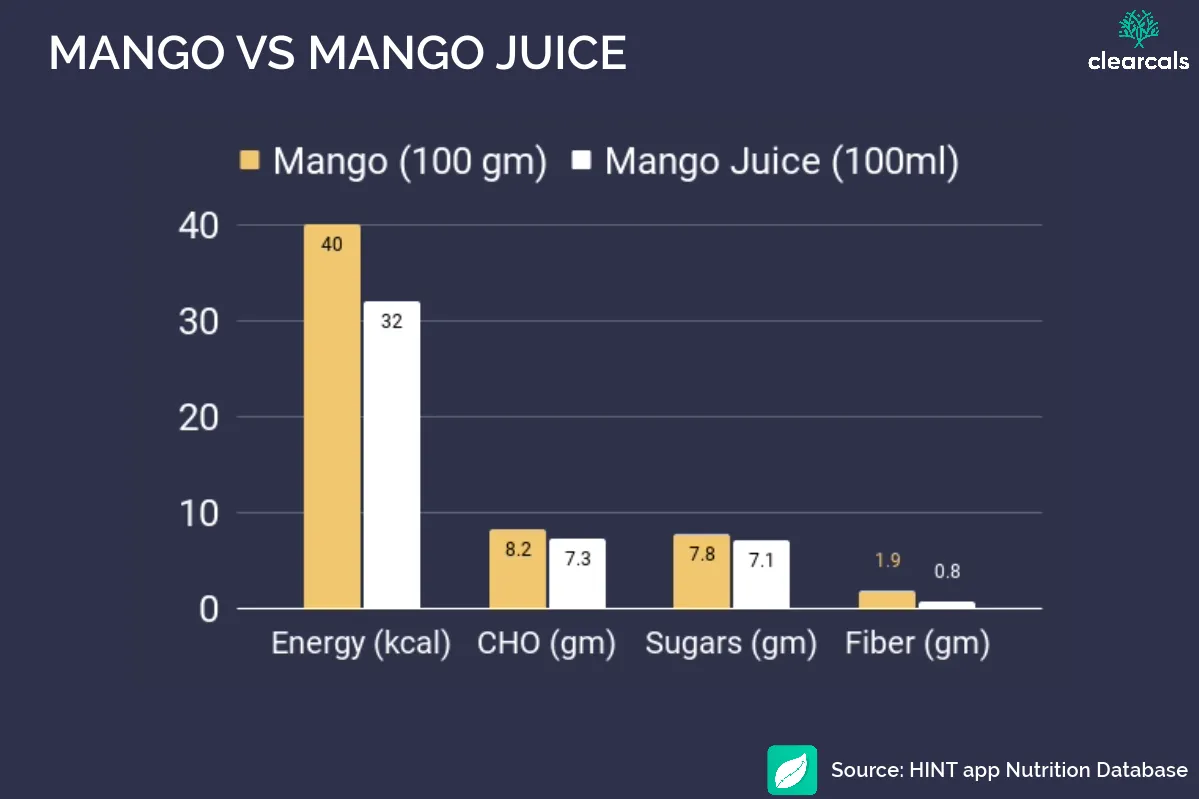
| Nutritional Information | 100g of Mango | 1 Glass (240ml) Mango Juice |
|---|---|---|
| Calories | 40 kcal | 77 kcal |
| Carbohydrates | 8.2g | 17.5g |
| Protein | 0.5g | 0.5g |
| Fat | 0.6g | 0.5g |
| Sugar | 7.8g | 17g |
| Fiber | 1.9g | 1.8g |
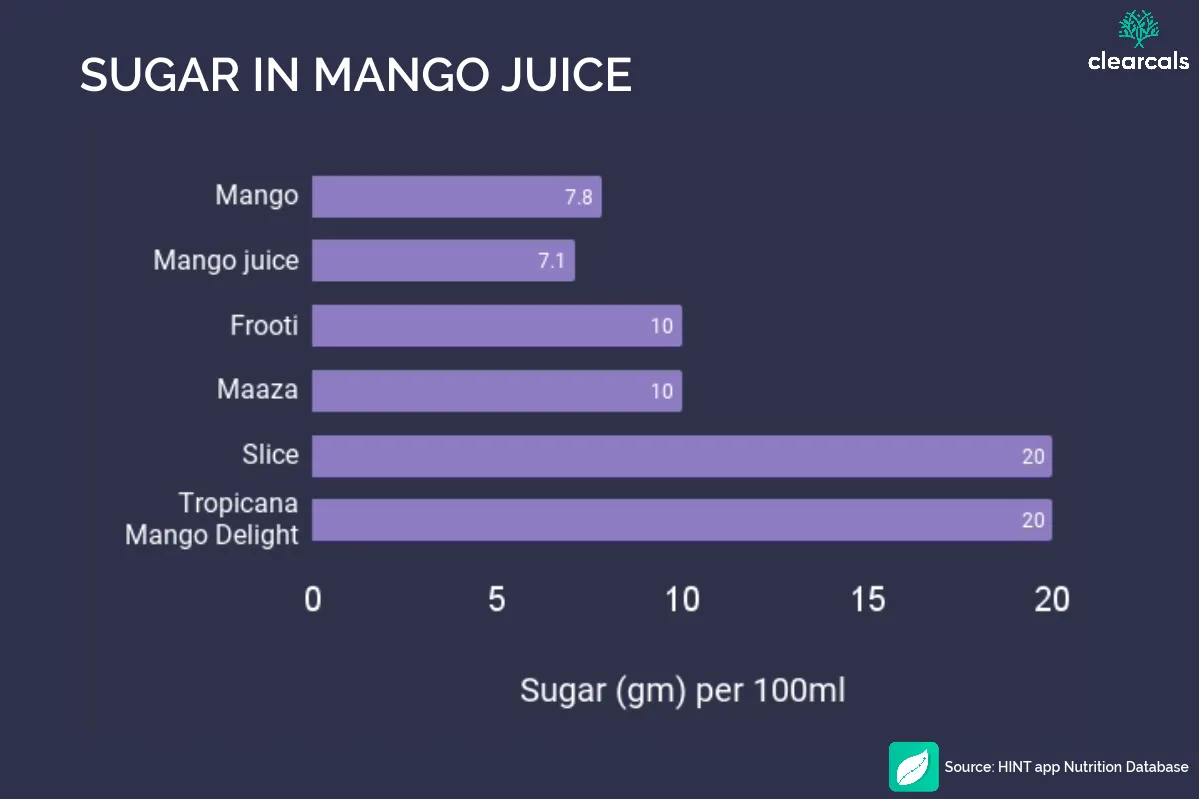
One glass of mango juice has nearly double the calories and sugar of 100g of whole mango — and provides less satiety. Commercially branded mango juices (Frooti, Maaza, Slice, Tropicana) are even worse, adding preservatives and significantly more sugar.
Are Mango Milkshakes, Smoothies, Lassi, and Ice Cream Good for Weight Loss?
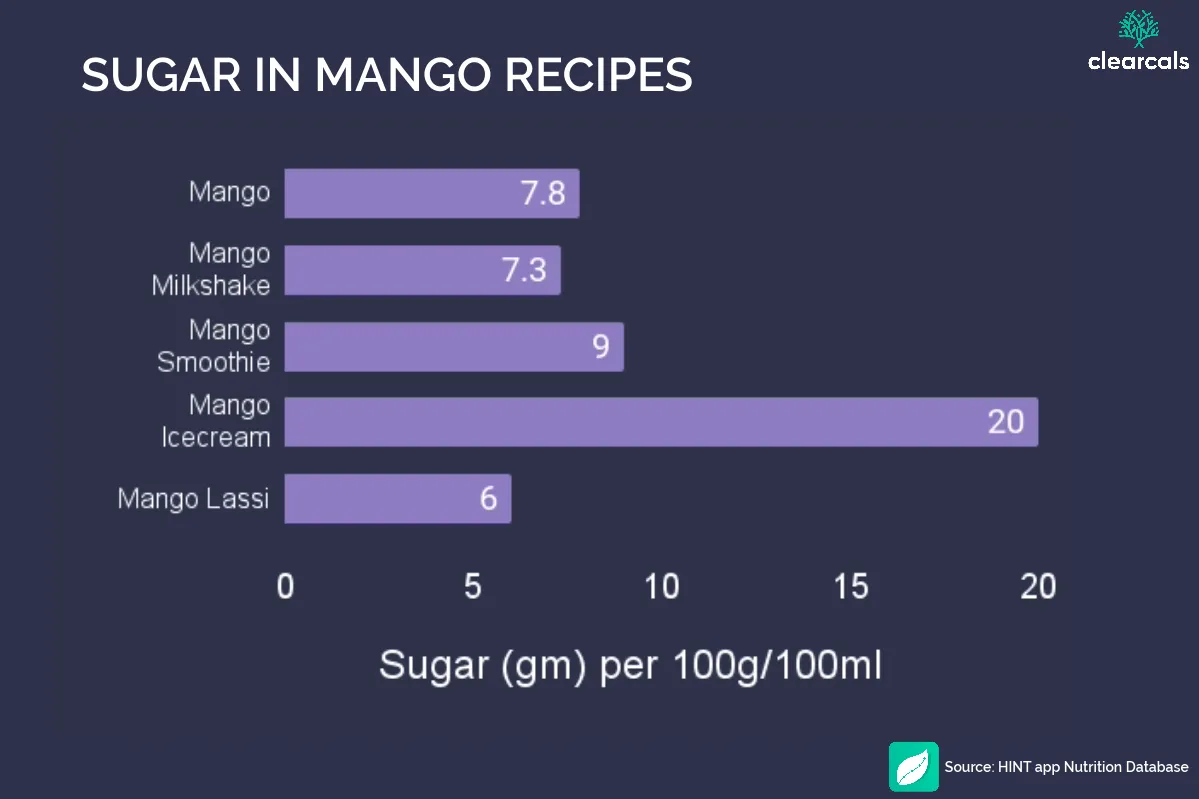
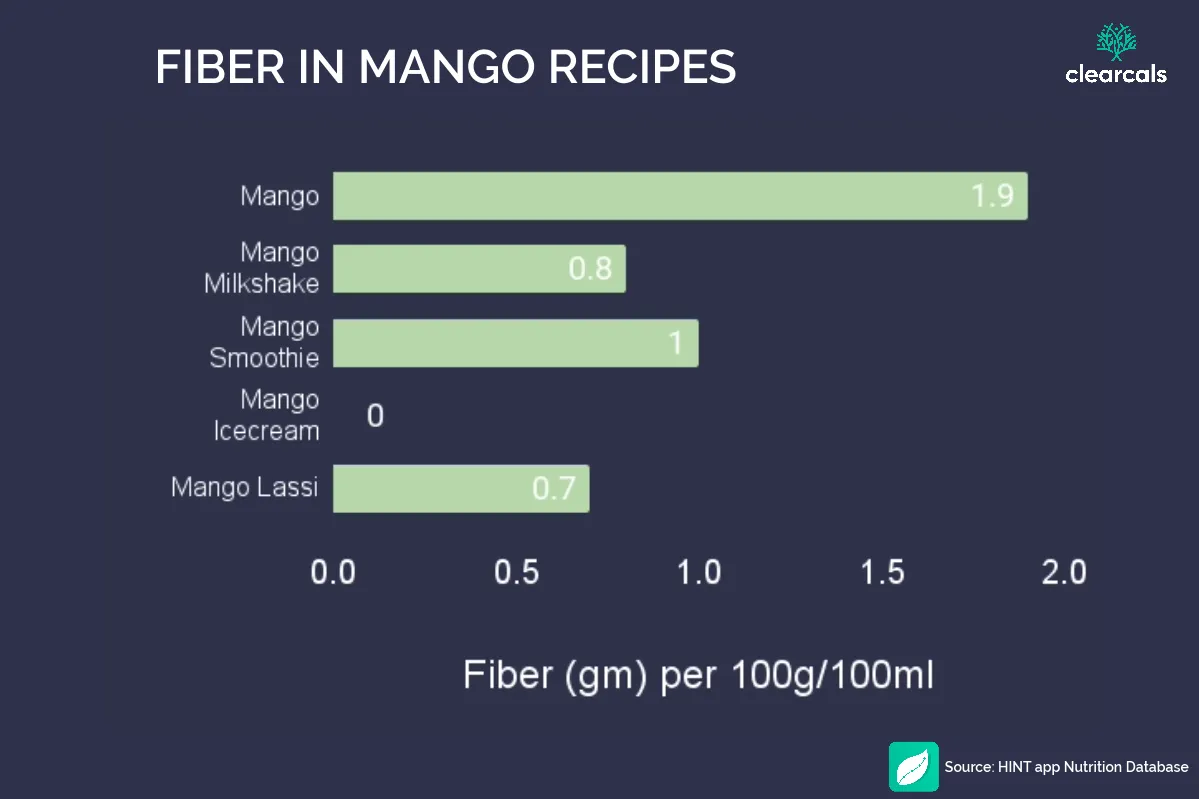
No — mango-based beverages are generally higher in calories, carbs, and sugar than eating whole mango, and provide less satiety due to their liquid form.
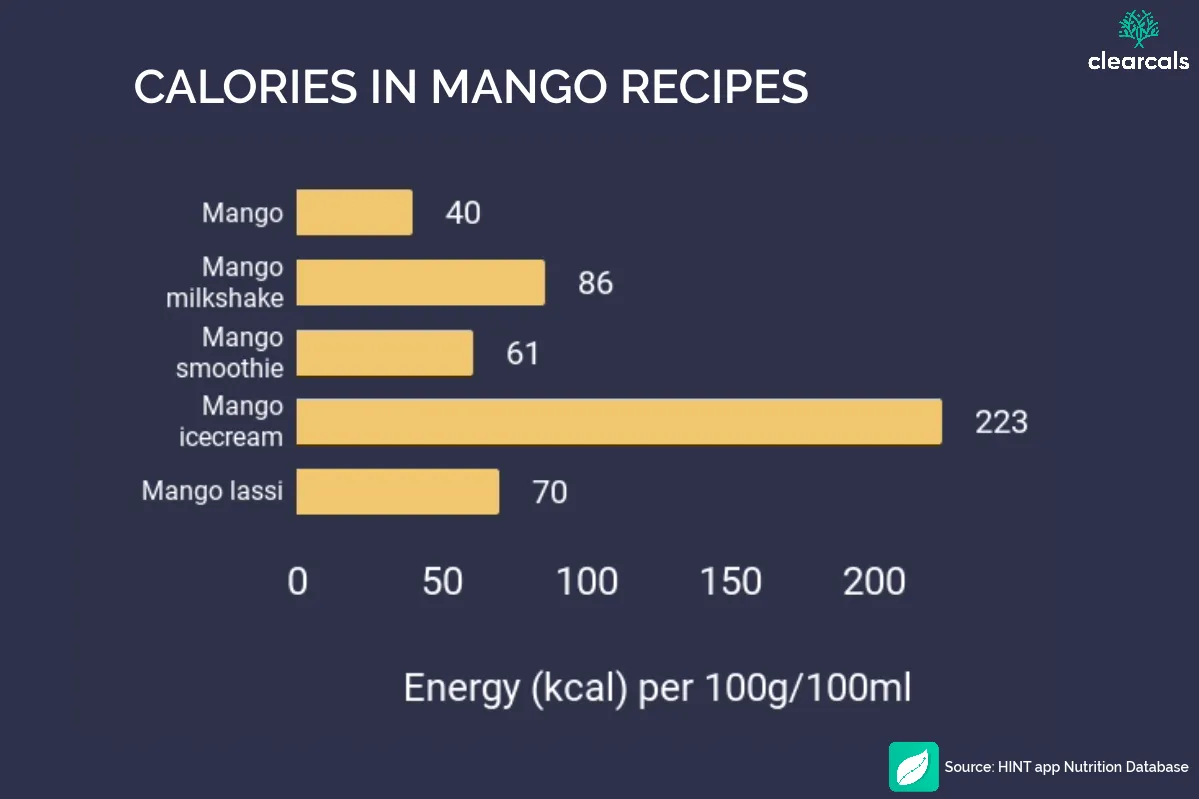
1. Mango Milkshake: 207 kcal per 240ml (with sugar and full-fat milk). Not recommended for weight loss unless made without sugar using low-fat milk.
2. Mango Smoothie: A healthier option if made with fresh mango, low-fat yogurt, and no added sugar. Commercially available smoothies often have added sugars and are calorie-dense.
3. Mango Lassi: Yogurt provides probiotics, but added sugar makes it unsuitable for regular weight-loss consumption.
4. Mango Ice Cream: High in calories, added sugar, and saturated fat. Not suitable for weight loss.
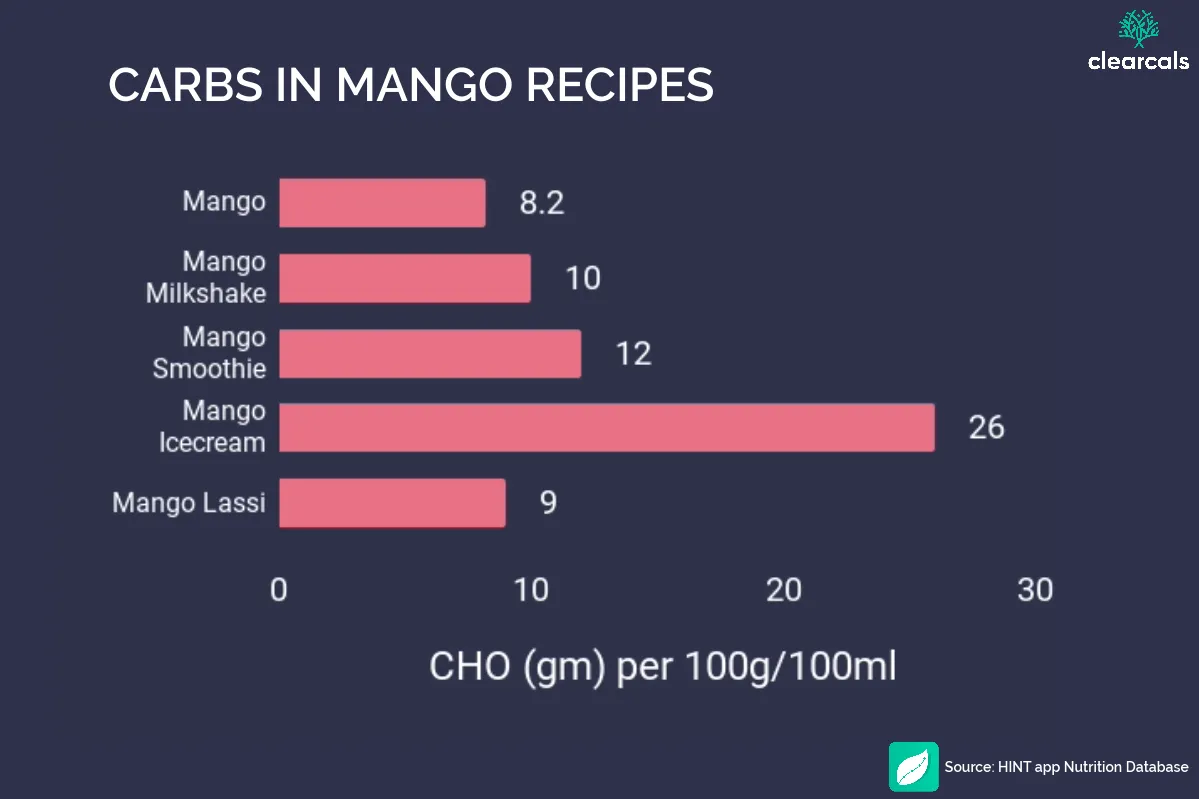
Liquid calories from mango smoothies or milkshakes don't provide the same feeling of fullness as solid food, which can lead to eating more throughout the day.
FAQs
1. Is mango good for weight loss? Yes — in moderation. One mango per day (100–150g, 42–65 kcal) fits within most weight-loss diets and provides fiber, vitamins, and antioxidants.
2. Does mango increase belly fat? No, mango does not directly cause belly fat. Excess calories from any source cause fat gain. Mango at 42 kcal/100g is low-calorie and safe in moderate portions.
3. Are mango leaves good for weight loss? Yes — studies indicate mango leaf extracts act as an anti-obesity agent due to bioactive compounds including phenolics, flavonoids, and xanthones.
4. Is mango pickle good for weight loss? No — mango pickle is high in saturated fat and sodium, making it unsuitable for weight-loss or daily consumption.
5. Is dried mango good for weight loss? No — dried mango has 319 kcal per 100g and 66g of sugar, far more than fresh mango.
6. Is raw mango good for weight loss? Yes — raw mango has more fiber (3g/100g) and less sugar (2.4g/100g) than ripe mango, promoting satiety and metabolism.
7. What is the best time to eat mango for weight loss? As an afternoon snack or pre-/post-workout meal.
8. Does a mango shake increase weight? Yes, if made with added sugar and full-fat milk. A sugar-free version with low-fat milk is a better option.
9. Is Frooti good for health? No — Frooti and other branded mango drinks are high in added sugars and preservatives with minimal nutritional value.
10. Does mango make you fat? Not inherently — only if consumed in calorie surplus. One mango per day is safe for weight management.
11. Can I eat mango during weight loss? Yes — 1 medium mango (150–200g) per day is fine during weight loss. Track it with the Hint app to stay within your calorie budget.
Conclusion
Mangoes are a nutrient-rich fruit that can be part of a weight-loss diet when consumed in moderation — 1–2 per day as fresh fruit. Their fiber content, low calorie count (42–55 kcal/100g), and rich antioxidant profile make them a far better choice than mango juice, shakes, lassi, or ice cream.
For those tracking their weight loss, the Hint app offers free calorie tracking, macronutrient monitoring, and personalised plans through Hint Pro and Hint Premium.
🎁 Free Hint with Every Watch Purchase
Garmin watches: Purchase any Garmin watch from the Clearcals Store and receive 1 month of Hint Premium (worth ₹1,999) free — including unlimited dietitian consultations, personalised diet and workout plans, and advanced nutrition tracking. 👉 Browse Garmin watches →
Apple Watch: Purchase any Apple Watch from the Clearcals Store and receive a free Hint Pro subscription — including personalised Indian diet plans, 300+ workouts, weekly insights, and more. 👉 Browse Apple Watches →
About the Author
Asfia Fatima is the Chief Dietitian at Clearcals, with a Master's Degree in Dietetics and Clinical Nutrition and over a decade of experience in clinical nutrition and lifestyle management.
She specializes in evidence-based diet planning for weight loss, diabetes, and metabolic health.
At Clearcals, she leads the nutrition strategy behind the Hint app, helping users achieve their goals with science-backed guidance.
🔗 Connect with Asfia on LinkedIn