Track your nutrition and health goals

Omelette Calories: 1, 2, 3, 4, 5 Egg | With & Without Oil | Protein Table

By Asfia Fatima, Chief Dietitian at Clearcals
Whether you eat one egg or five, with oil or without, plain or with bread, the calorie count changes significantly.
This guide gives you the exact numbers for every common omelette variation: per egg count, with and without oil, egg white, cheese, masala, bread omelette, and a full protein breakdown.
Omelette Calories — Master Table (1 to 6 Eggs)
| Eggs | Weight | Calories | Protein | Carbs | Fat |
|---|---|---|---|---|---|
| 1 egg omelette | 57g | 113 kcal | 7g | 0g | 10g |
| 2 egg omelette | 107g | 180 kcal | 13g | 0g | 14g |
| 3 egg omelette | 160g | 272 kcal | 20g | 0g | 22g |
| 4 egg omelette | 212g | 361 kcal | 26g | 0g | 29g |
| 5 egg omelette | 262g | 429 kcal | 33g | 0g | 33g |
| 6 egg omelette | ~312g | ~517 kcal | ~39g | 0g | ~40g |
Values are for plain whole-egg omelettes cooked with approximately 1 teaspoon of oil.
1 Egg Omelette Calories
1 egg omelette (57g) = 113 kcal, 7g protein.
| Preparation | Calories | Protein |
|---|---|---|
| 1 egg omelette (with 1 tsp oil) | 113 kcal | 7g |
| 1 egg omelette (without oil) | 68 kcal | 7g |
| 1 egg omelette (with 2 tsp oil) | 158 kcal | 7g |
1 egg omelette calories and protein: 113 kcal · 7g protein (with oil) | 68 kcal · 7g protein (without oil)
A 1 egg omelette is 24% protein and 76% fat by macronutrient ratio — making it a quick, low-carb protein source. Without oil, it drops to around 68 kcal.
2 Egg Omelette Calories
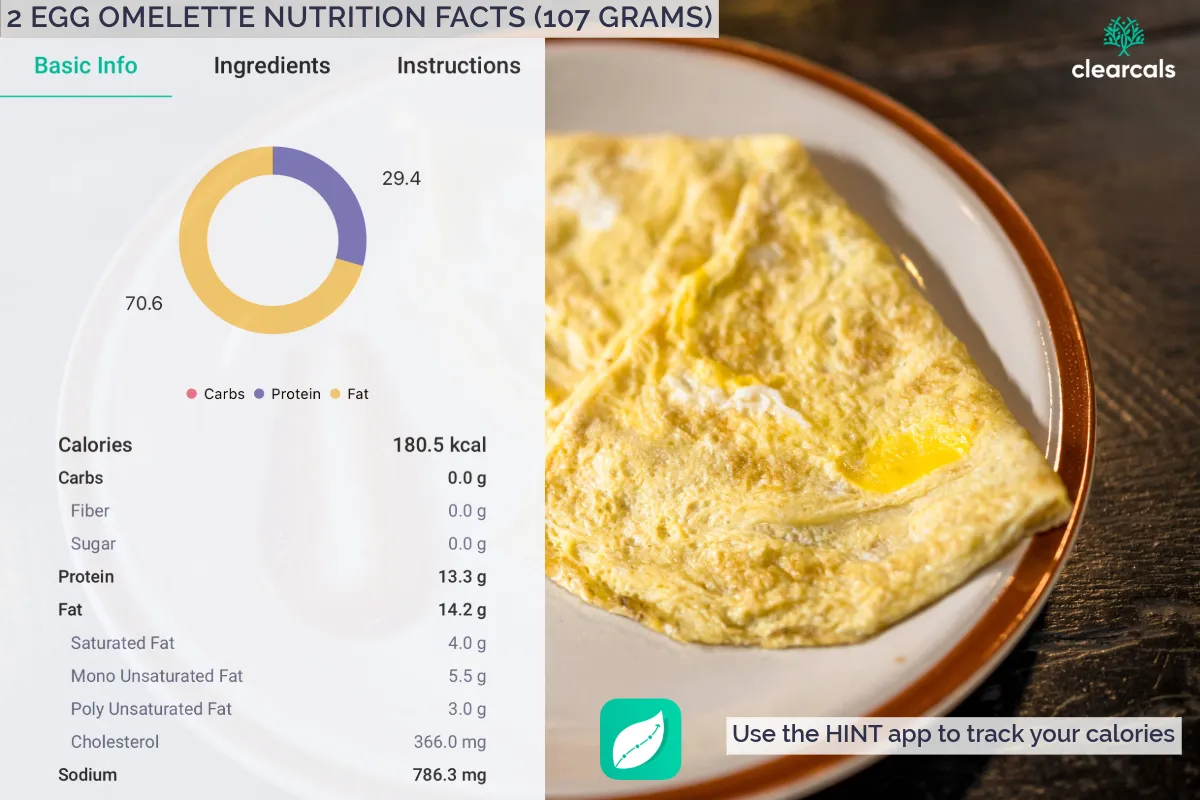
2 egg omelette (107g) = 180 kcal, 13g protein.
| Preparation | Calories | Protein |
|---|---|---|
| 2 egg omelette (with 1 tsp oil) | 180 kcal | 13g |
| 2 egg omelette (without oil) | 135 kcal | 13g |
| 2 egg omelette (with 2 tsp oil) | 225 kcal | 13g |
| 2 egg omelette with onions | ~190 kcal | 13g |
2 egg omelette calories and protein: 180 kcal · 13g protein (with oil) | 135 kcal · 13g protein (without oil)
The 2-egg omelette is the most-searched omelette serving size in India, and for good reason — it delivers 13g protein in under 200 kcal with oil, or just 135 kcal without oil. The macronutrient split is 29% protein, 71% fat.
3 Egg Omelette Calories
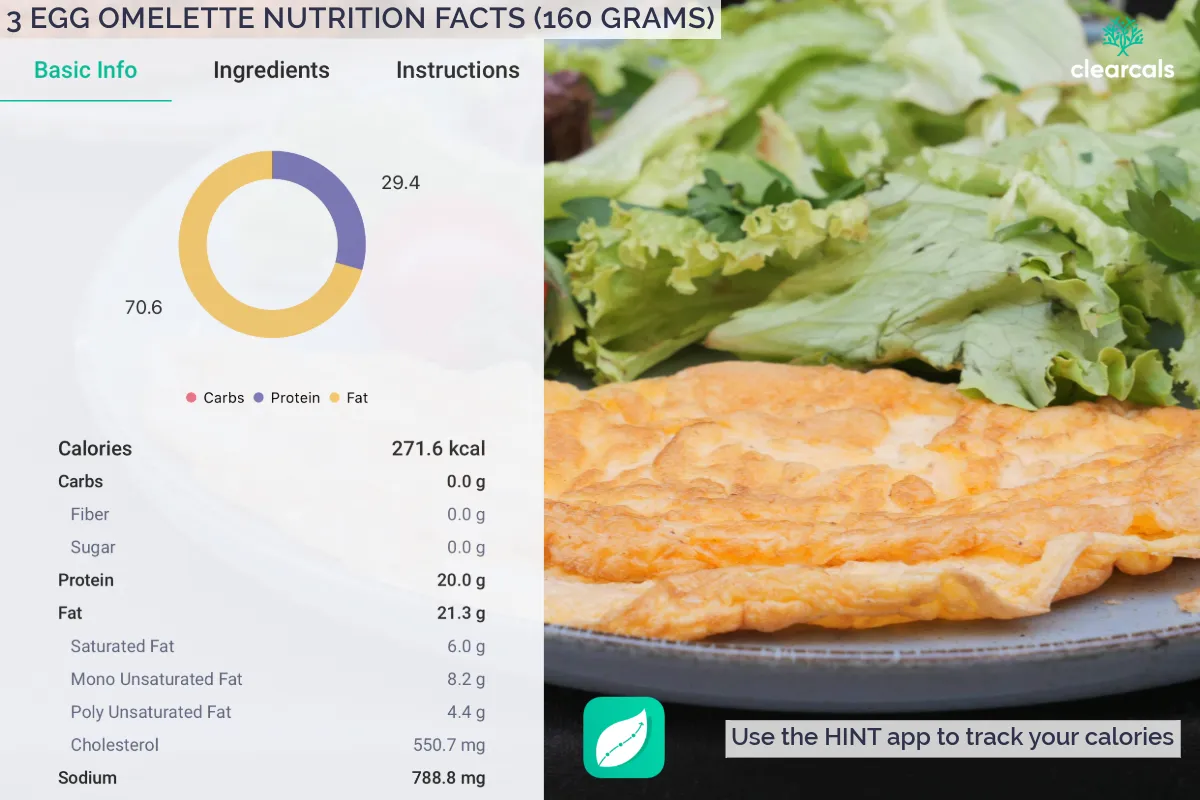
3 egg omelette (160g) = 272 kcal, 20g protein.
| Preparation | Calories | Protein |
|---|---|---|
| 3 egg omelette (with 1 tsp oil) | 272 kcal | 20g |
| 3 egg omelette (without oil) | 227 kcal | 20g |
| 3 egg omelette (with 2 tsp oil) | 317 kcal | 20g |
| 3 egg omelette with onions | ~285 kcal | 20g |
3 egg omelette calories and protein: 272 kcal · 20g protein (with oil) | 227 kcal · 20g protein (without oil)
A 3 egg omelette provides 20g of protein — enough to meet roughly 40% of the daily protein requirement for an average adult. It is a popular post-workout breakfast option.
4 Egg Omelette Calories
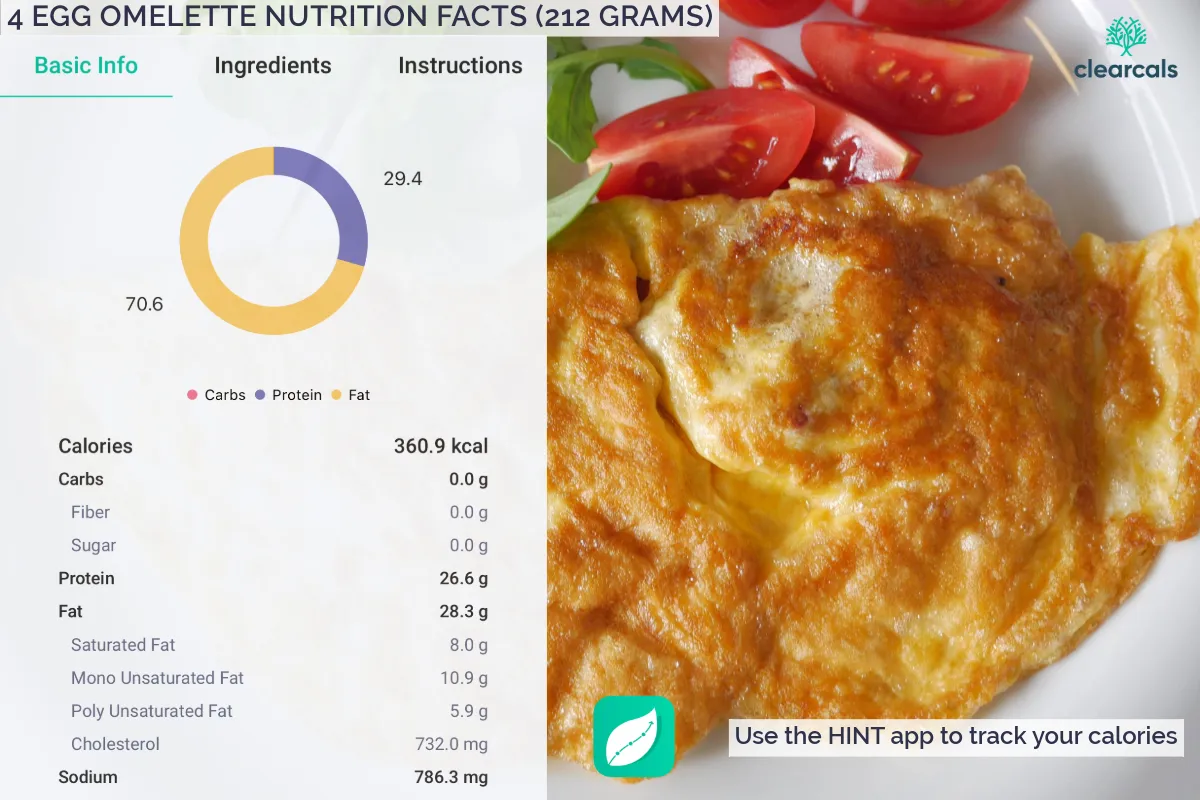
4 egg omelette (212g) = 361 kcal, 26g protein.
| Preparation | Calories | Protein |
|---|---|---|
| 4 egg omelette (with 1 tsp oil) | 361 kcal | 26g |
| 4 egg omelette (without oil) | 316 kcal | 26g |
| 4 egg omelette (with 2 tsp oil) | 406 kcal | 26g |
4 egg omelette calories and protein: 361 kcal · 26g protein (with oil) | 316 kcal · 26g protein (without oil)
At 361 kcal and 26g protein, a 4 egg omelette is a high-protein meal suited to athletes, gym-goers, and those in a muscle-building phase. The macronutrient split is 29% protein, 71% fat.
5 Egg Omelette Calories
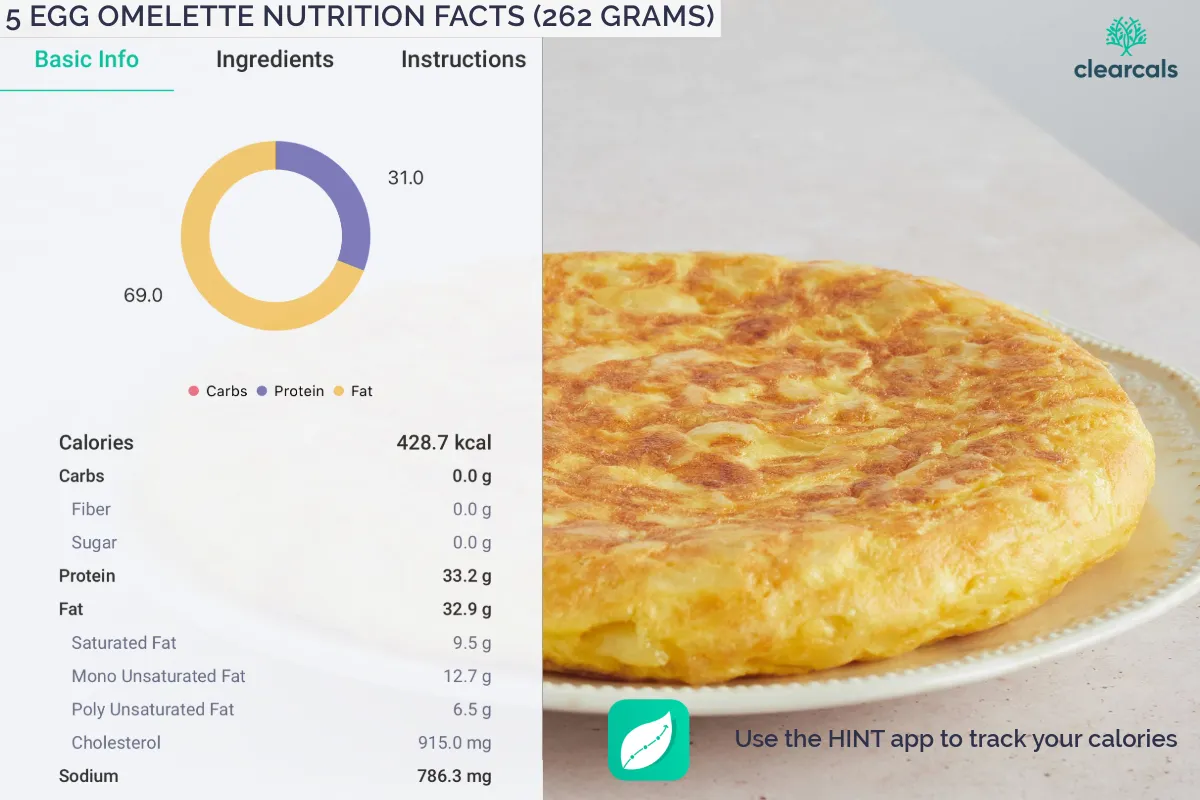
5 egg omelette (262g) = 429 kcal, 33g protein.
| Preparation | Calories | Protein |
|---|---|---|
| 5 egg omelette (with 1 tsp oil) | 429 kcal | 33g |
| 5 egg omelette (without oil) | 384 kcal | 33g |
| 5 egg omelette (with 2 tsp oil) | 474 kcal | 33g |
5 egg omelette calories and protein: 429 kcal · 33g protein (with oil) | 384 kcal · 33g protein (without oil)
A 5 egg omelette is primarily eaten by bodybuilders or people on high-protein diets. At 31% protein by calorie ratio, it is one of the most protein-dense single-food breakfast options available.
Omelette Protein Per Egg Count
| Omelette | Protein | % of Daily Protein (50g target) |
|---|---|---|
| 1 egg omelette | 7g | 14% |
| 2 egg omelette | 13g | 26% |
| 3 egg omelette | 20g | 40% |
| 4 egg omelette | 26g | 52% |
| 5 egg omelette | 33g | 66% |
| 6 egg omelette | ~39g | 78% |
Protein content does not change with or without oil — only calories change when oil is added or removed.
Omelette Calories With Oil vs Without Oil
Adding or removing oil from an omelette changes only the fat and calorie content — not the protein. One teaspoon of cooking oil (5ml) adds approximately 45 kcal.
| Omelette | With 1 tsp Oil | Without Oil | Difference |
|---|---|---|---|
| 1 egg omelette | 113 kcal | 68 kcal | −45 kcal |
| 2 egg omelette | 180 kcal | 135 kcal | −45 kcal |
| 3 egg omelette | 272 kcal | 227 kcal | −45 kcal |
| 4 egg omelette | 361 kcal | 316 kcal | −45 kcal |
| 5 egg omelette | 429 kcal | 384 kcal | −45 kcal |
For weight loss, cooking the omelette without oil (using a non-stick pan) or with a light spray of oil is an easy way to reduce daily calorie intake by 45–90 kcal without losing any protein.
Egg White Omelette Calories
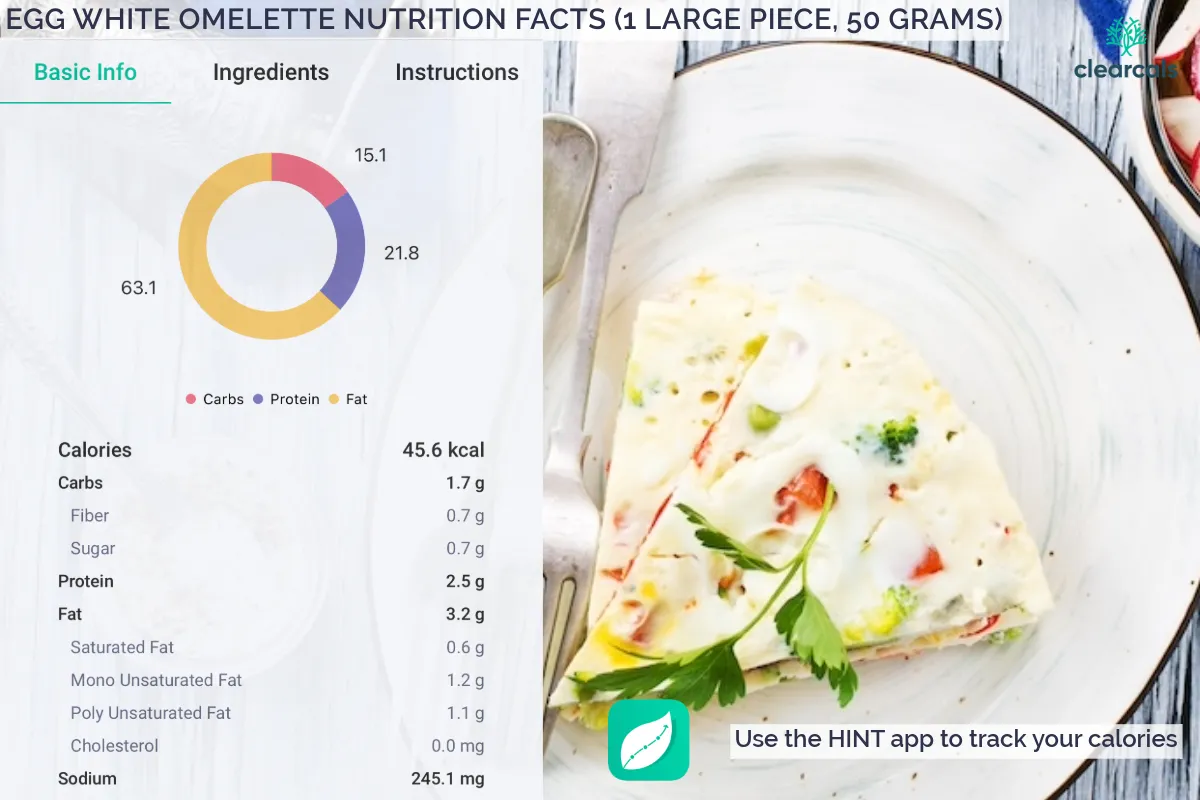
Egg white omelette (50g, 2 egg whites) = 46 kcal, ~3g protein.
| Egg White Omelette | Calories | Protein |
|---|---|---|
| 1 egg white omelette (50g) | 46 kcal | 3g |
| 2 egg white omelette | ~92 kcal | 6g |
| 3 egg white omelette | ~138 kcal | 9g |
| 4 egg white omelette | ~184 kcal | 12g |
| 5 egg white omelette | ~230 kcal | 15g |
Egg white omelettes are significantly lower in calories than whole egg omelettes because the yolk — which contains nearly all the fat — is removed. However, the protein per egg white (~3g) is also lower than a whole egg (~6–7g), so more egg whites are needed to achieve the same protein intake.
Cheese Omelette Calories
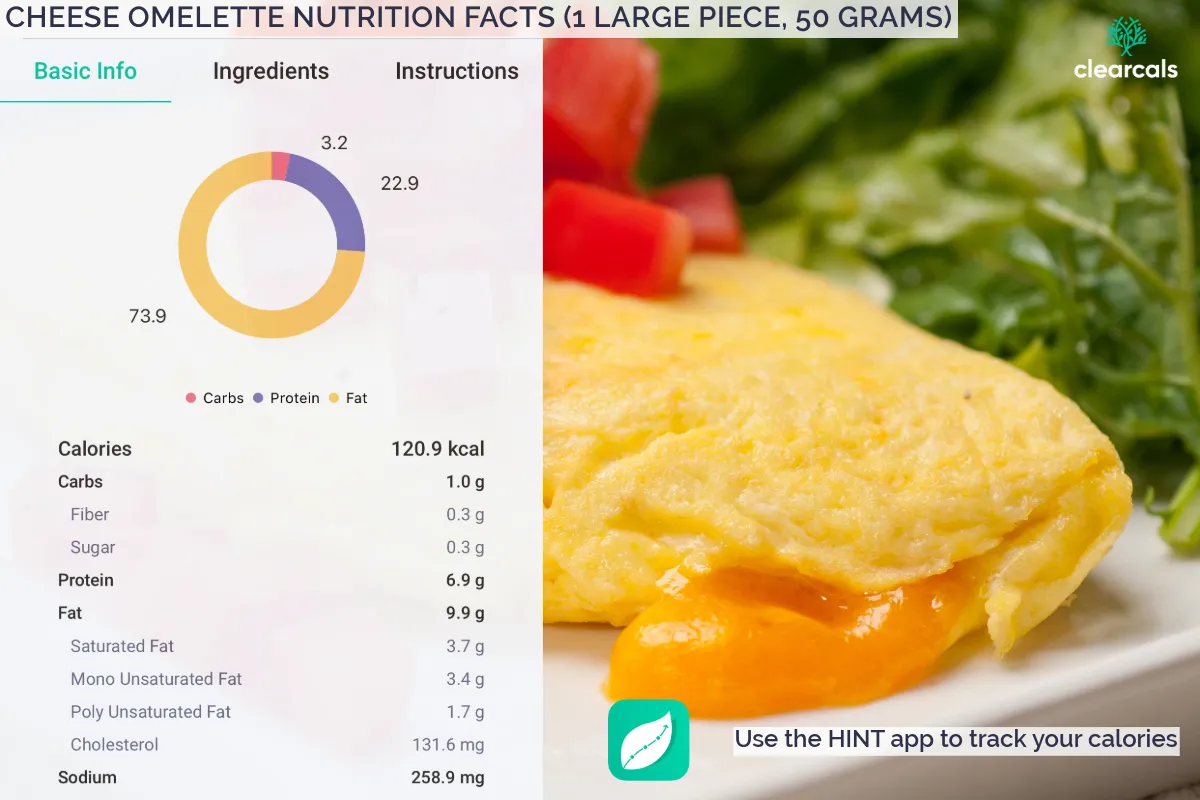
Cheese omelette (50g serving) = 121 kcal, ~7g protein.
Adding cheese to a 2-egg omelette increases calories by approximately 80–100 kcal depending on the cheese quantity and type.
| Cheese Omelette | Calories | Protein |
|---|---|---|
| 50g cheese omelette | 121 kcal | 7g |
| 2 egg omelette + cheese (approx) | ~260 kcal | 20g |
| 4 egg omelette + cheese (approx) | ~440 kcal | 33g |
The cheese omelette macronutrient split is 23% protein, 3% carbohydrates, 74% fat — notably higher in fat than a plain omelette due to the cheese content.
Masala Omelette Calories
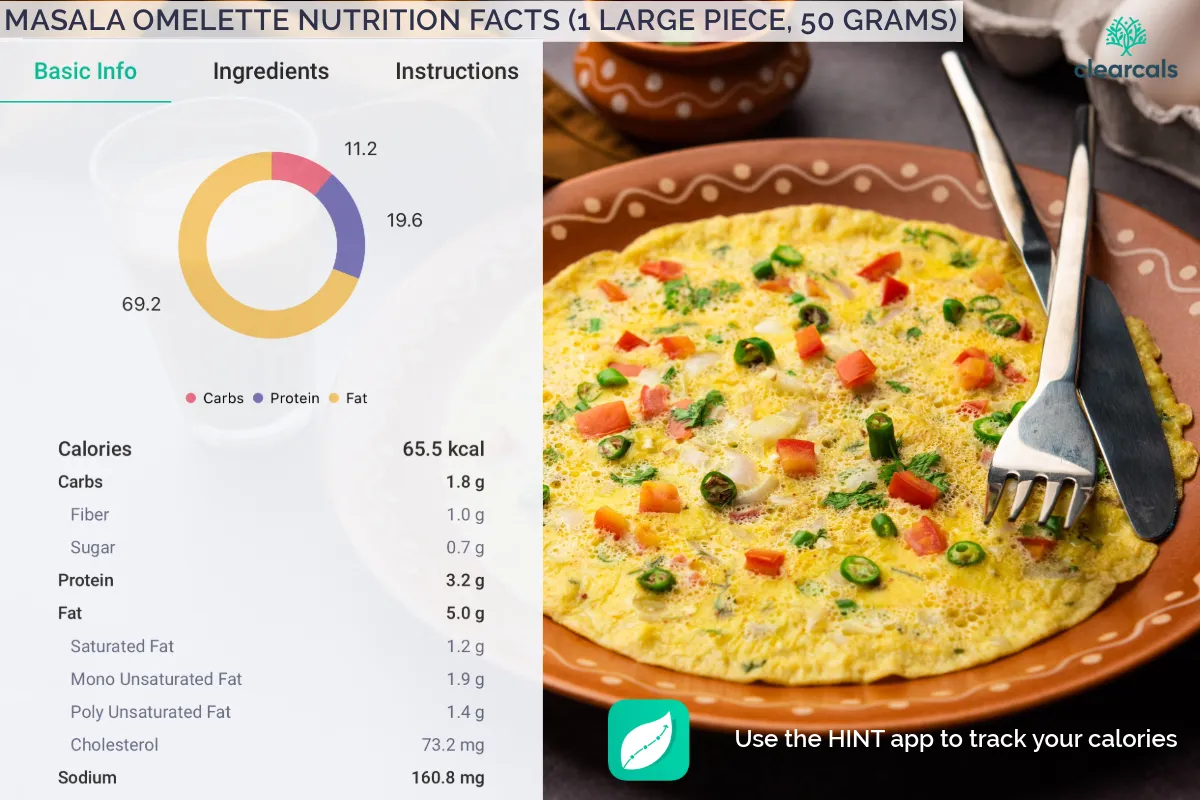
Masala omelette (50g serving) = 66 kcal, ~3g protein.
A masala omelette is an Indian-style omelette made with onions, tomatoes, green chillies, and spices. The vegetables add minimal calories but increase volume and micronutrient content.
| Masala Omelette | Calories | Notes |
|---|---|---|
| 50g masala omelette | 66 kcal | Per 50g serving (partial omelette) |
| 1 egg masala omelette (~80g) | ~105 kcal | Onion, tomato, chilli added |
| 2 egg masala omelette (~150g) | ~200 kcal | Standard street-food serving |
The masala omelette macronutrient split is 20% protein, 11% carbohydrates (from vegetables), 69% fat. It is one of the more nutritious omelette options because the vegetables add fibre and vitamins.
Bread Omelette Calories
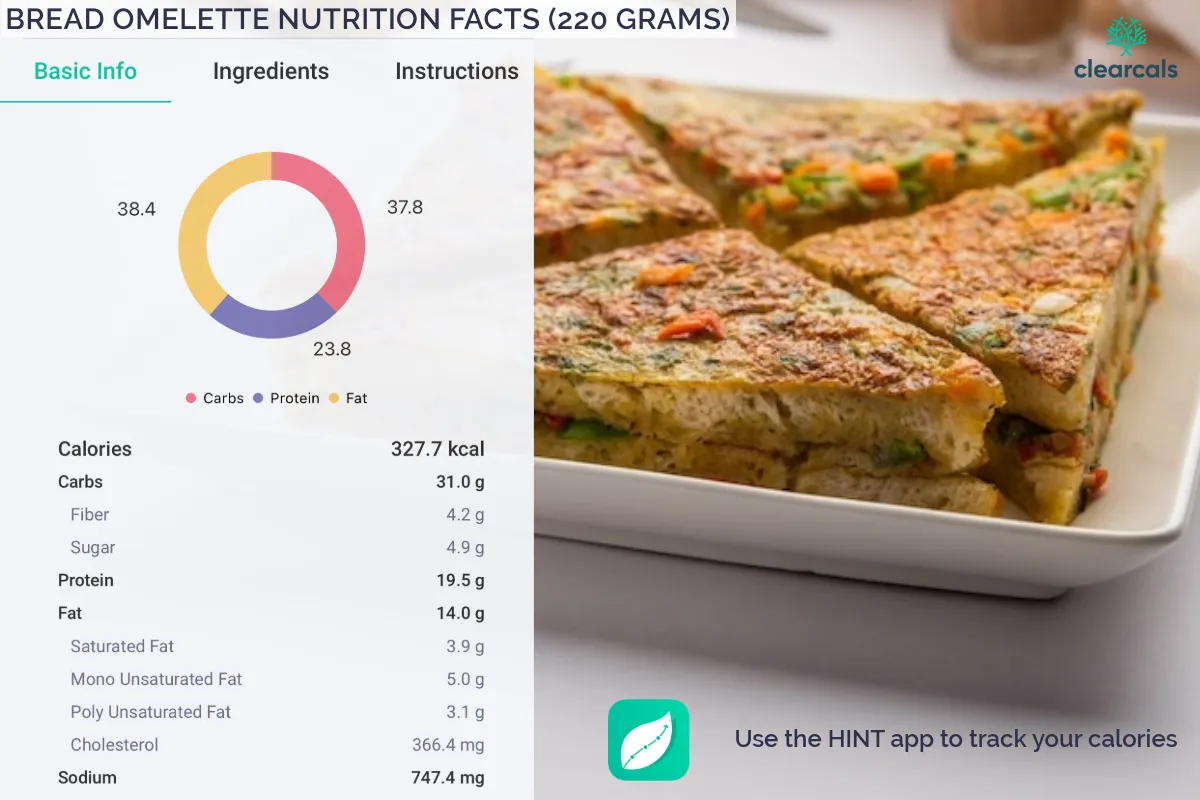
2 egg bread omelette (220g — 2 bread slices + 2 egg omelette) = 328 kcal, 20g protein.
| Bread Omelette | Calories | Protein |
|---|---|---|
| 1 bread + 2 egg omelette | ~248 kcal | 20g |
| 2 bread + 2 egg omelette | 328 kcal | 20g |
| 2 bread + 3 egg omelette | ~418 kcal | 26g |
| 2 bread + 4 egg omelette | ~508 kcal | 33g |
| 3 bread + 2 egg omelette | ~408 kcal | 22g |
| 4 bread + 2 egg omelette | ~488 kcal | 24g |
Bread omelette is a popular Indian street-food breakfast. The bread adds significant carbohydrates — a 2-slice bread omelette has 38% of its calories from carbs, 24% from protein, and 38% from fat, making it a balanced macronutrient meal compared to a plain omelette.
For weight loss, switching from white bread to whole wheat bread adds fibre and lowers the glycaemic impact, without a large calorie difference (~10–15 kcal per slice).
Benefits of Eating an Omelette
Omelettes are one of the most nutrient-dense single-food breakfast options.
High protein: Even a 1 egg omelette provides 7g of protein. A 3-egg omelette delivers 20g — enough to meaningfully support muscle repair and satiety after a workout.
Zero carbohydrates: A plain omelette contains no carbohydrates, making it naturally compatible with low-carb, keto, and diabetic-friendly diets.
Rich in micronutrients: Eggs contain vitamin D, vitamin B12, choline, selenium, and lutein — all of which are commonly under-consumed in Indian diets. Choline supports brain function; lutein supports eye health.
Versatile and filling: The high protein and fat content keeps you full significantly longer than an equivalent-calorie serving of carbohydrate-based foods like toast or poha.
Customisable: Adding vegetables (spinach, mushrooms, capsicum) increases fibre and micronutrient content with minimal added calories. Adding cheese increases protein and satiety. Adding masala spices has antioxidant benefits.
Omelette Nutrition Facts — Full Table
Macronutrients Per Egg Count
| Nutrient | 1 Egg Omelette | 2 Egg Omelette | 3 Egg Omelette | 4 Egg Omelette |
|---|---|---|---|---|
| Weight | 57g | 107g | 160g | 212g |
| Calories | 113 kcal | 180 kcal | 272 kcal | 361 kcal |
| Protein | 7g | 13g | 20g | 26g |
| Fat | 10g | 14g | 22g | 29g |
| Carbohydrates | 0g | 0g | 0g | 0g |
| Cholesterol | ~186mg | ~372mg | ~558mg | ~744mg |
| Sodium | ~140mg | ~280mg | ~420mg | ~560mg |
Omelette Nutritional Value — Micronutrients (per 2-egg omelette)
A 2-egg omelette provides meaningful amounts of several vitamins and minerals that are frequently under-consumed in Indian vegetarian and omnivore diets:
| Micronutrient | Per 2-Egg Omelette | % Indian RDA |
|---|---|---|
| Vitamin B12 | ~1.6 mcg | ~67% |
| Vitamin D | ~82 IU | ~16% |
| Choline | ~294mg | ~57% |
| Selenium | ~30 mcg | ~55% |
| Riboflavin (B2) | ~0.5mg | ~38% |
| Phosphorus | ~200mg | ~29% |
| Iron | ~1.8mg | ~10–15% |
| Folate | ~47 mcg | ~12% |
| Zinc | ~1.1mg | ~10% |
| Vitamin A | ~270 IU | ~9% |
Choline is particularly notable — eggs are one of the few foods that provide a significant amount of choline in a single serving, and choline deficiency is associated with liver disease and cognitive decline. Most Indians get less than 50% of their daily choline requirement.
Vitamin D is another critical nutrient. India has one of the highest rates of vitamin D deficiency globally, and a 2-egg omelette contributes approximately 16% of the daily requirement without any supplementation.
The egg yolk is the source of most of these micronutrients. Egg white-only omelettes provide protein but lose the majority of these vitamins and minerals.
Is Omelette Good for Weight Loss?
Yes — an omelette is one of the best breakfasts for weight loss. At 135 kcal for a 2-egg omelette without oil, it is very low in calories for the amount of satiety it provides.
The protein-fat combination in eggs suppresses ghrelin (the hunger hormone) more effectively than a carbohydrate-based breakfast of similar calories. Studies show that people who eat eggs for breakfast consume fewer calories over the rest of the day compared to those who eat toast or cereal.
Practical tips for weight loss:
- Cook without oil in a non-stick pan (saves 45 kcal per omelette)
- Add spinach, mushrooms, or capsicum for fibre without meaningful calories
- Avoid cheese or butter additions if in a strict calorie deficit
- Use 2–3 eggs rather than just 1 — the higher protein means longer satiety and fewer mid-morning snacks
Is Omelette Good for Muscle Gain?
Yes — eggs are one of the highest-quality protein sources available. Egg protein has a biological value (BV) of 100 and a PDCAAS of 1.0 — meaning the body absorbs and uses it nearly completely.
For muscle gain, a 3–4 egg omelette post-workout delivers 20–26g of high-quality protein, including all essential amino acids. The leucine content in eggs (~0.5g per egg) is sufficient to trigger muscle protein synthesis effectively.
For athletes or those in a bulking phase, combining a 3-egg omelette with a glass of whole milk provides ~30g of complete protein — a practical and cost-effective post-workout meal.
Is Omelette Good for Diabetes?
Yes — a plain omelette has zero carbohydrates and therefore does not raise blood glucose. Its low glycaemic index makes it an ideal breakfast for people with Type 2 diabetes or insulin resistance.
The protein and fat in eggs slow gastric emptying, which also blunts post-meal blood sugar rises from any carbohydrates eaten alongside the omelette (such as whole wheat toast).
The one consideration for people with diabetes is cholesterol: each egg yolk contains ~186 mg of cholesterol. Most people can consume 1–2 whole eggs daily without adverse effects on LDL, but individuals with familial hypercholesterolaemia should consult a physician.
🎁 Free Hint with Every Watch Purchase
Garmin watches: Purchase any Garmin watch from the Clearcals Store and receive 1 month of Hint Premium (worth ₹1,999) free. With Hint version 2.0, if your Garmin watch syncs to Garmin Connect and Garmin Connect is connected to Apple Health, your workouts flow automatically into Hint — no manual logging needed.
Apple Watch: Purchase any Apple Watch from the Clearcals Store and receive a free Hint Pro subscription. With Hint version 2.0, any workout recorded on your Apple Watch syncs automatically into Hint — no manual logging needed.
About the Author: Asfia Fatima is the Chief Dietitian at Clearcals, with a Master's Degree in Dietetics and Clinical Nutrition and over a decade of experience in clinical nutrition and lifestyle management. Connect with Asfia on LinkedIn