Track your nutrition and health goals

Rice Hack for Weight Loss: Resistant Starch Method Explained
By Asfia Fatima, Chief Dietitian at Clearcals
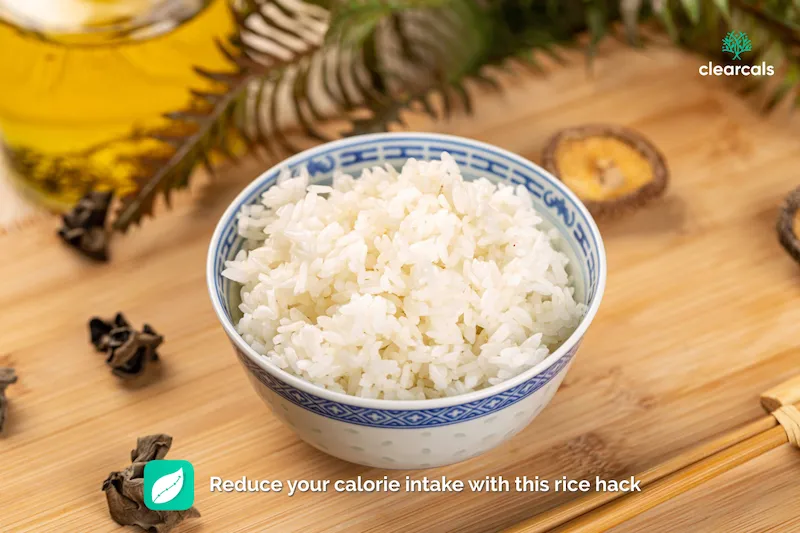
Rice is the foundation of the Indian diet — and one of the most common foods people worry about when trying to lose weight. The rice hack is a simple two-step method that changes the starch structure of rice during cooking, reducing the calories your body actually absorbs by an estimated 10–15%.
This guide covers exactly how it works, what the science says, step-by-step instructions, and how much rice you should eat for weight loss.
TL;DR
- The rice hack works by adding coconut oil during cooking, then refrigerating rice for 12 hours
- This converts digestible starch into resistant starch — a form the body cannot fully break down
- Research suggests this can reduce absorbable calories by 10–15% per serving
- Resistant starch also improves gut health, lowers glycaemic index, and increases satiety
- The hack works with any rice variety — white, basmati, or brown
- For weight loss: 1–2 katoris (100–200g cooked) per meal, with protein and vegetables
- For full calorie counts by serving size, see: Rice Calories — Per Bowl, Plate & 100g
What Is the Rice Hack?
The rice hack for weight loss is a cooking method based on food science, not marketing. It involves two modifications to standard rice cooking:
- Adding a small amount of coconut oil to the water before cooking
- Refrigerating the cooked rice for at least 12 hours before eating
These steps trigger a structural change in the rice's starch — specifically, the conversion of digestible starch into resistant starch (RS3). Because resistant starch is not fully broken down in the small intestine, your body absorbs fewer calories from the same quantity of rice.
The method was brought to wider attention by a 2015 study from the College of Chemical Sciences in Sri Lanka, presented at the American Chemical Society, which found that this cooking technique could reduce caloric intake from rice significantly.
The Science: Resistant Starch and Why It Matters
What Is Starch in Rice?
Rice contains two main types of starch:
- Amylopectin — highly branched, rapidly digested, quickly raises blood sugar (high GI)
- Amylose — less branched, more slowly digested, lower GI
When rice is cooked, these starches gelatinise — they absorb water and swell, making them easy for digestive enzymes to break down into glucose. This is why freshly cooked white rice has a high glycaemic index.
What Happens When You Cool Rice?
Cooling cooked rice triggers a process called retrogradation — the gelatinised starch molecules rearrange themselves into a tighter, more crystalline structure. This form is called RS3 (retrograded resistant starch).
Resistant starch is different from regular starch in three important ways:
| Property | Digestible Starch | Resistant Starch (RS3) |
|---|---|---|
| Digestion site | Small intestine | Fermented in large intestine |
| Calories absorbed | Full calories | Significantly reduced |
| Blood sugar impact | Rapid spike | Slow, blunted response |
| Gut microbiome effect | Minimal | Acts as prebiotic (feeds good bacteria) |
| Satiety effect | Moderate | Higher — resists rapid digestion |
Crucially, reheating the rice does not reverse this change. Once the starch has retrograded during cooling, the resistant starch structure is largely preserved even after reheating.
Where Does Coconut Oil Fit In?
The coconut oil addition is not simply about flavour. The lipids in coconut oil interact with starch molecules during cooking, forming lipid-starch complexes that are more resistant to digestion than uncomplexed starch. This effect compounds with the retrogradation from cooling, producing a greater resistant starch conversion than cooling alone.
The key compound involved is lauric acid — a medium-chain fatty acid present in high concentrations in coconut oil — which forms particularly stable complexes with amylose chains.
How Much Calorie Reduction?
The Sri Lankan research (Pushparajah Thavarajah, 2015) found that the most effective combination of variety, oil, and cooling could reduce absorbable calories by up to 50–60% in high-amylose varieties in laboratory conditions. In practical terms, with standard Indian rice varieties, the realistic reduction is estimated at 10–15% of calories from starch.
For a 200g serving of plain cooked white rice (175 kcal), a 12% reduction = approximately 21 kcal saved per serving. Across three meals per day over a week, this adds up — but the more significant benefit is the sustained improvement in satiety and glycaemic response, which has a compounding effect on total daily intake.
Rice Hack Step-by-Step
What You Need
- White rice (or basmati, brown — any variety works)
- 1 teaspoon of coconut oil per ½ cup of uncooked rice
- Water
- A refrigerator
Method
Step 1 — Add coconut oil to the cooking water Before cooking, add 1 teaspoon of coconut oil to the water for every half cup of dry (uncooked) rice. The oil should be added before the water boils so it integrates into the cooking process.
Step 2 — Cook rice normally Cook rice using your standard method — pressure cooker, open pot, or rice cooker. The coconut oil will coat the starch granules as they gelatinise.
Step 3 — Cool in the refrigerator for 12 hours Once cooked, allow rice to cool to room temperature (15–20 minutes), then refrigerate for a minimum of 12 hours. Overnight is ideal. This is when retrogradation occurs and resistant starch forms.
Step 4 — Reheat and eat Reheat the rice in a microwave or on the stovetop. The resistant starch structure is preserved after reheating. Eat as normal.
Tips for Best Results
- Batch cook: Prepare 2–3 days' worth of rice in one go, refrigerate, and reheat portions as needed
- 12-hour minimum: Less than 12 hours in the refrigerator produces minimal resistant starch conversion — the full overnight period is important
- Any rice variety works: Brown rice and red rice start with more resistant starch already, so the hack amplifies their existing advantage
- Don't skip the coconut oil: The lipid-starch complexes formed with coconut oil meaningfully add to the resistant starch yield beyond cooling alone
How Much Rice Should You Eat to Lose Weight?
The rice hack reduces the calories absorbed per gram of rice — but portion size still matters. Here are practical guidelines:
Recommended Portions for Weight Loss
| Meal | Cooked Rice Quantity | Rationale |
|---|---|---|
| Lunch (primary rice meal) | 150–200g (1–1.5 katoris) | Sufficient carbs for energy without excess |
| Dinner (if eating rice) | 100–150g (1 katori) | Smaller portion in the evening |
| Maximum per day | 300–400g cooked total | Above this, overall calorie budget becomes difficult to manage on a deficit |
The Key Principle: Pair Rice with Protein and Fibre
Rice alone — even hack rice — is predominantly carbohydrate. Its weight loss value comes when paired correctly:
- Protein: Dal, curd, paneer, chicken, or eggs slow gastric emptying, reduce the glycaemic spike from rice, and promote satiety
- Vegetables: Add volume and fibre at minimal calorie cost — sabzi alongside rice dramatically increases the meal's satiety per calorie
- Avoid: Large quantities of ghee or oil-heavy curries alongside rice — these, not the rice itself, are usually the calorie culprit in Indian meals
Is Rice Actually the Problem in Weight Gain?
Plain cooked rice is 87 kcal per 100g — a moderate calorie density. The weight gain associated with rice in Indian diets typically comes from:
- Portion size: 3–4 large plates daily rather than 1–2 moderate servings
- Accompaniments: Ghee, oil-heavy curries, and fried sides consumed alongside
- Lack of protein: Rice-heavy meals without sufficient protein drive hunger and overeating within hours
Eliminating rice is rarely necessary for weight loss. Controlling portion size, pairing with protein, and using the hack to reduce glycaemic impact is a more sustainable approach.
For detailed calorie counts by bowl, plate, katori, and serving size across all rice varieties, see: Rice Calories — Per Bowl, Plate & 100g
Benefits of Resistant Starch Beyond Calorie Reduction
The rice hack provides benefits that go beyond the direct calorie reduction:
1. Improved Gut Health
Resistant starch ferments in the large intestine, producing short-chain fatty acids (SCFAs) — particularly butyrate — that feed beneficial gut bacteria. A healthier gut microbiome is associated with better metabolic health, reduced inflammation, and improved insulin sensitivity.
2. Lower Glycaemic Response
Resistant starch significantly lowers the glycaemic index of rice. This means a slower, more gradual rise in blood sugar after eating — important for sustained energy, reduced hunger between meals, and better long-term metabolic health.
3. Increased Satiety
Because resistant starch is not rapidly broken down, it promotes a greater feeling of fullness and delays the return of hunger compared to the same quantity of freshly cooked rice.
4. Better for Diabetes Management
The lower GI and improved insulin response from resistant starch rice makes the hack particularly beneficial for people with type 2 diabetes or prediabetes, or those managing weight related to insulin resistance or PCOS.
Weight Loss Rice Recipes Using the Hack
Hack Rice with Dal and Sabzi (Basic Template)
- 1 katori (100g) hack rice — cooked with coconut oil, refrigerated overnight, reheated
- 1 katori dal (moong, masoor, or toor) — protein, fibre
- 1 katori vegetable sabzi (any seasonal vegetable)
- 1 small bowl curd — probiotics, additional protein
Approximate total: ~350–400 kcal, ~18–22g protein
Hack Curd Rice
- 150g hack rice (cooled and reheated)
- 100g low-fat curd
- Temper with mustard seeds, curry leaves, green chilli, minimal oil
- Add pomegranate or cucumber for texture
Note: The fermented curd and resistant starch in hack rice make this a particularly gut-friendly and lower-GI option compared to standard curd rice.
Hack Rice Salad Bowl
- 100g hack rice (served cold or room temperature — the resistant starch is highest before reheating)
- Mixed vegetables: cucumber, tomato, onion, capsicum
- Protein: boiled egg, grilled paneer, or chickpeas
- Dressing: lemon juice, salt, cumin, coriander
Note: Eating hack rice cold (after the 12-hour refrigeration, without reheating) maximises the resistant starch content, as reheating slightly reduces it — though most of the benefit is preserved.
Frequently Asked Questions
Does the rice hack actually work?
The science is real — resistant starch formation through cooling is well-established food chemistry. The calorie reduction is meaningful but modest (10–15% in practical conditions), and the satiety and glycaemic benefits are likely more impactful for weight management than the direct calorie saving alone.
Which rice is best for the hack?
High-amylose varieties form more resistant starch. In India, parboiled rice has naturally higher amylose content than regular white rice. Brown rice already has more fibre and resistant starch than white rice, and the hack further increases both. Any rice variety benefits from the hack, though the magnitude varies.
Does reheating destroy the resistant starch?
Partially, but not fully. Studies show that reheating causes some loss of resistant starch (retrograded starch partially re-gelatinises), but a significant portion remains. Repeated cooling-reheating cycles maintain some resistant starch. Eating the rice cold after refrigeration maximises resistant starch content.
Can I use any oil instead of coconut oil?
Coconut oil works best due to its high lauric acid content, which forms particularly stable lipid-starch complexes. Other oils with high saturated fat content (such as ghee in small amounts) have a similar but less pronounced effect. Vegetable oils high in polyunsaturated fats are less effective for starch complexing.
How much coconut oil should I use?
1 teaspoon per half cup (approximately 90g) of uncooked rice. More oil does not proportionally increase resistant starch formation and adds unnecessary calories.
Is the rice hack suitable for diabetics?
Yes — the lower GI and improved insulin response from resistant starch rice makes it a better option for people managing diabetes compared to standard freshly cooked white rice. Always consult your dietitian or doctor for personalised guidance.
Can I use the hack with brown rice?
Yes, and brown rice is an excellent choice for the hack. It already has more fibre and a lower GI than white rice; the coconut oil + cooling technique increases its resistant starch further.
References
- Thavarajah P, et al. (2015). A Simple Method to Reduce the Glycemic Impact of Rice. American Chemical Society National Meeting & Exposition. Presented by S.A. Jayasinghe and P. Thavarajah.
- Sharma A, et al. (2021). Resistant Starch: A Review of the Physical Properties and Biological Impact of RS3. Starch - Stärke, 73(1-2). DOI: 10.1002/star.202000090
- Barrientos-Riosalido A, et al. (2023). Effect of Cooking, Cooling, and Reheating Methods on Resistant Starch Content and Glycaemic Index of Rice. Foods, 12(3):614. DOI: 10.3390/foods12030614
- Birt DF, et al. (2013). Resistant Starch: Promise for Improving Human Health. Advances in Nutrition, 4(6):587–601. DOI: 10.3945/an.113.004325
🎁 Exclusive Offer for Clearcals Store Customers
- Buy select Garmin watches → Get 1 Month FREE Hint Premium (worth ₹1,999)
- Buy Apple Watch models → Get FREE Hint Pro access
Explore More
- Rice Calories — Per Bowl, Plate & 100g | White, Brown & Basmati
- Calorie Deficit Diet — Indian Guide
- Indian Diet for Weight Loss
- Rice Water for Weight Loss
About the Author
Asfia Fatima is the Chief Dietitian at Clearcals, with a Master's Degree in Dietetics and Clinical Nutrition and over a decade of experience in clinical nutrition and lifestyle management.
She specialises in evidence-based diet planning for weight loss, diabetes, and metabolic health. At Clearcals, she leads the nutrition strategy behind the Hint app, helping users achieve their goals with science-backed guidance.
🔗 Connect with Asfia on LinkedIn