Track your nutrition and health goals

Squats Calories Burned: 10, 20, 50, 100, 200 Reps + By Body Weight
By Dr. Krishna Athmakuri, Co-Founder & CEO of Clearcals
TL;DR
Squats calories burned (70 kg): 10 squats = 3 kcal | 20 squats = 6.5 kcal | 50 squats = 16 kcal | 100 squats = 32 kcal | 200 squats = 64 kcal | 500 squats = 160 kcal 100 squats calories: 22 kcal (50 kg) | 27 kcal (60 kg) | 32 kcal (70 kg) | 37 kcal (80 kg) | 42 kcal (90 kg) | 47 kcal (100 kg)
- 1 squat burns: 0.22 kcal (50 kg) | 0.27 kcal (60 kg) | 0.32 kcal (70 kg) | 0.37 kcal (80 kg) | 0.47 kcal (100 kg)
- How many squats to burn 100 calories: ~315 squats (70 kg) | ~450 squats (50 kg) | ~215 squats (100 kg)
- How many squats to burn 500 calories: ~1,563 squats (70 kg) | ~2,273 squats (50 kg) | ~1,064 squats (100 kg)
- Weighted squats (barbell or goblet) burn 10–30% more calories per rep than bodyweight squats
- Track every squat session with the Hint app — log sets, reps, body weight, and exercise type for accurate calorie burn
Squats are among the most effective exercises for building lower-body strength and burning calories. They engage the quadriceps, hamstrings, glutes, and core simultaneously — making them one of the most calorie-efficient bodyweight movements available.
This guide gives you exact calorie figures for every rep count, broken down by body weight.
Squats Calories Burned: Complete Reference Table
Squats calories burned (70 kg): 1 = 0.32 kcal | 10 = 3 kcal | 50 = 16 kcal | 100 = 32 kcal | 200 = 64 kcal | 500 = 160 kcal | 1,000 = 320 kcal
One bodyweight squat burns approximately 0.32 calories for a 70 kg person. Here is the full calorie reference across all rep counts:
| Squats | Calories Burned (~70 kg) |
|---|---|
| 1 | 0.32 kcal |
| 5 | 1.6 kcal |
| 10 | 3 kcal |
| 15 | 5 kcal |
| 20 | 6.5 kcal |
| 25 | 8 kcal |
| 30 | 10 kcal |
| 40 | 13 kcal |
| 50 | 16 kcal |
| 60 | 19 kcal |
| 80 | 26 kcal |
| 100 | 32 kcal |
| 120 | 38 kcal |
| 150 | 48 kcal |
| 200 | 64 kcal |
| 300 | 96 kcal |
| 500 | 160 kcal |
| 1,000 | 320 kcal |
All values are for bodyweight squats at a moderate pace. Weighted squats, jump squats, and faster tempos increase calorie burn by 10–30% per rep.
How Many Calories Does 1 Squat Burn?
1 squat burn how many calories: 0.22 kcal (50 kg) | 0.27 kcal (60 kg) | 0.32 kcal (70 kg) | 0.37 kcal (80 kg) | 0.42 kcal (90 kg) | 0.47 kcal (100 kg)
1 bodyweight squat burns approximately 0.3–0.32 calories for a 70 kg person. Heavier individuals burn slightly more per rep; lighter individuals burn slightly less.
| Body Weight | Calories Per Squat |
|---|---|
| 50 kg | ~0.22 kcal |
| 60 kg | ~0.27 kcal |
| 70 kg | ~0.32 kcal |
| 80 kg | ~0.37 kcal |
| 90 kg | ~0.42 kcal |
| 100 kg | ~0.47 kcal |
This per-rep figure is the foundation for calculating calorie burn at any rep count. It scales linearly: 50 squats = 50 × 0.32 = 16 kcal for a 70 kg person.
How Many Calories Does 10 Squats Burn?
10 squats calories burned: 2.2 kcal (50 kg) | 2.7 kcal (60 kg) | 3 kcal (70 kg) | 3.7 kcal (80 kg) | 4.7 kcal (100 kg)
10 squats burn approximately 3 calories for a 70 kg person. At a moderate pace, 10 squats takes under a minute.
| Body Weight | 10 Squats Calories |
|---|---|
| 50 kg | ~2.2 kcal |
| 60 kg | ~2.7 kcal |
| 70 kg | ~3 kcal |
| 80 kg | ~3.7 kcal |
| 90 kg | ~4.2 kcal |
| 100 kg | ~4.7 kcal |
While 3 kcal per 10 squats seems modest, frequent short bursts throughout the day accumulate meaningfully. 10 squats every hour over a 10-hour workday = 100 squats = 32 kcal burned without a dedicated workout session.
How Many Calories Does 20 Squats Burn?
20 squats calories burned: 4.4 kcal (50 kg) | 5.4 kcal (60 kg) | 6.5 kcal (70 kg) | 7.4 kcal (80 kg) | 8.4 kcal (90 kg) | 9.4 kcal (100 kg) 20 squats calories: 6.5 kcal (70 kg) | 20 squats burn how many calories = 4.4–9.4 kcal depending on body weight
20 squats burn approximately 6–7 calories for a 70 kg person. This is a popular beginner daily goal and takes about 60–90 seconds to complete.
| Body Weight | 20 Squats Calories |
|---|---|
| 50 kg | ~4.4 kcal |
| 60 kg | ~5.4 kcal |
| 70 kg | ~6.5 kcal |
| 80 kg | ~7.4 kcal |
| 90 kg | ~8.4 kcal |
| 100 kg | ~9.4 kcal |
20 squats daily over a month = approximately 195 kcal burned (70 kg). While modest as a standalone calorie-burning strategy, 20 squats daily is an excellent entry point for building the squat movement pattern consistently before progressing to higher volumes.
How Many Calories Does 30 Squats Burn?
30 squats calories burned: 6.6 kcal (50 kg) | 8 kcal (60 kg) | 10 kcal (70 kg) | 11 kcal (80 kg) | 12.5 kcal (90 kg) | 14 kcal (100 kg) 30 squats burn how many calories: ~10 kcal for 70 kg | 30 squats daily = ~300 kcal/month (70 kg)
30 squats burn approximately 9–10 calories for a 70 kg person.
| Body Weight | 30 Squats Calories |
|---|---|
| 50 kg | ~6.6 kcal |
| 60 kg | ~8 kcal |
| 70 kg | ~10 kcal |
| 80 kg | ~11 kcal |
| 90 kg | ~12.5 kcal |
| 100 kg | ~14 kcal |
30 squats is a common warm-up or daily maintenance target. At a slow, controlled tempo (3 seconds down, 1 second up), 30 squats takes approximately 2 minutes and provides meaningful quadriceps and glute activation.
How Many Calories Does 50 Squats Burn?
50 squats calories burned: 11 kcal (50 kg) | 13.5 kcal (60 kg) | 16 kcal (70 kg) | 18.5 kcal (80 kg) | 21 kcal (90 kg) | 23.5 kcal (100 kg) How many calories do 50 squats burn: 16 kcal (70 kg) | 50 squats burn how many calories = 11–23.5 kcal by body weight | 50 squats daily = ~480 kcal/month (70 kg)
50 squats burn approximately 15–16 calories for a 70 kg person. Done without rest, this takes 2–3 minutes and provides a meaningful lower-body stimulus.
| Body Weight | 50 Squats Calories |
|---|---|
| 50 kg | ~11 kcal |
| 60 kg | ~13.5 kcal |
| 70 kg | ~16 kcal |
| 80 kg | ~18.5 kcal |
| 90 kg | ~21 kcal |
| 100 kg | ~23.5 kcal |
50 squats a day results: At 16 kcal per session (70 kg), 50 daily squats burn approximately 480 kcal per month — equivalent to roughly 60g of body fat, assuming a consistent calorie deficit. The primary benefit of 50 daily squats is muscle strength and endurance rather than calorie expenditure alone.
How much weight will I lose doing 50 squats a day? 50 squats alone burns only 16 kcal per day. To lose 1 kg of fat (~7,700 kcal), you would need approximately 481 days of 50 daily squats in isolation. However, combined with calorie tracking, 50 daily squats contribute to a sustainable deficit, support muscle maintenance (which increases resting metabolism), and build the consistency that drives long-term results.
How Many Calories Does 100 Squats Burn?
100 squats calories burned: 22 kcal (50 kg) | 27 kcal (60 kg) | 32 kcal (70 kg) | 37 kcal (80 kg) | 42 kcal (90 kg) | 47 kcal (100 kg) How many calories does 100 squats burn: 32 kcal (70 kg) | How many calories burn in 100 squats = 22–47 kcal depending on body weight
100 squats burn approximately 30–40 calories for a 70 kg person, depending on pace, rest intervals, and intensity. Continuous sets burn more than sets broken up with rest.
| Body Weight | 100 Squats Calories |
|---|---|
| 50 kg | ~22 kcal |
| 60 kg | ~27 kcal |
| 70 kg | ~32 kcal |
| 80 kg | ~37 kcal |
| 90 kg | ~42 kcal |
| 100 kg | ~47 kcal |
100 squats a day is a popular milestone goal for lower-body conditioning. Completing 100 bodyweight squats daily — broken into 4 sets of 25 — provides significant quadriceps, hamstring, and glute stimulus while burning 32 kcal at 70 kg. Over a month: approximately 960 kcal burned.
100 squats calories for different body weights: The range is 22 kcal (50 kg) to 47 kcal (100 kg). If doing weighted squats (10–20 kg barbell), add approximately 15–25% to these figures.
How Many Calories Does 200 Squats Burn?
200 squats calories burned: 44 kcal (50 kg) | 54 kcal (60 kg) | 64 kcal (70 kg) | 74 kcal (80 kg) | 84 kcal (90 kg) | 94 kcal (100 kg) 200 squats burn how many calories: 64 kcal (70 kg) | 200 squats daily = ~1,920 kcal/month (70 kg)
200 squats burn approximately 60–70 calories for a 70 kg person. This is an advanced daily volume that typically takes 15–25 minutes including rest intervals.
| Body Weight | 200 Squats Calories |
|---|---|
| 50 kg | ~44 kcal |
| 60 kg | ~54 kcal |
| 70 kg | ~64 kcal |
| 80 kg | ~74 kcal |
| 90 kg | ~84 kcal |
| 100 kg | ~94 kcal |
At 64 kcal per session, 200 daily squats over a month burns approximately 1,920 kcal — equivalent to roughly 250g of body fat. At this volume, the anabolic (muscle-building) effect of squats becomes as significant as the caloric expenditure.
How Many Squats to Burn 100 Calories?
How many squats to burn 100 calories: ~315 squats (70 kg) | ~450 squats (50 kg) | ~270 squats (80 kg) | ~215 squats (100 kg) Squats to burn 100 calories: 70 kg needs ~315 bodyweight squats | Weighted squats reduce this by 10–25%
A 70 kg person needs approximately 300–320 squats to burn 100 calories doing bodyweight squats.
| Body Weight | Squats to Burn 100 kcal |
|---|---|
| 50 kg | ~450 squats |
| 60 kg | ~370 squats |
| 70 kg | ~315 squats |
| 80 kg | ~270 squats |
| 90 kg | ~240 squats |
| 100 kg | ~215 squats |
Weighted squats (barbell, goblet, or dumbbell) burn more calories per rep and will reduce the total reps needed. Adding 20 kg of resistance increases calorie burn per squat by approximately 20–25%, reducing the squats needed to 100 calories to approximately 250 squats for a 70 kg person.
How Many Squats to Burn 500 Calories?
How many squats to burn 500 calories: ~1,563 squats (70 kg) | ~2,273 squats (50 kg) | ~1,351 squats (80 kg) | ~1,064 squats (100 kg) Squats to burn 500 calories: 70 kg needs approximately 1,500–1,600 bodyweight squats | Weighted squats reduce requirement to ~1,200 squats
A 70 kg person needs approximately 1,500–1,600 bodyweight squats to burn 500 calories. This is an advanced high-volume target typically completed over multiple sessions.
| Body Weight | Squats to Burn 500 kcal |
|---|---|
| 50 kg | ~2,273 squats |
| 60 kg | ~1,852 squats |
| 70 kg | ~1,563 squats |
| 80 kg | ~1,351 squats |
| 90 kg | ~1,190 squats |
| 100 kg | ~1,064 squats |
Practical approach: 500 calories from squats alone in a single session is extremely demanding. A more realistic approach is to combine squats with other compound movements (lunges, deadlifts, step-ups) to reach 500 kcal total burn in a 45–60 minute lower-body session. Alternatively, spread the volume across 5 sessions of ~300 squats each over a week, burning ~100 kcal per session.
Calories Burned Per Squat by Body Weight
Calories per squat: 0.22 kcal (50 kg) | 0.27 kcal (60 kg) | 0.32 kcal (70 kg) | 0.37 kcal (80 kg) | 0.42 kcal (90 kg) | 0.47 kcal (100 kg)
Calorie burn scales directly with body weight. Here is the per-rep and per-100-rep breakdown:
| Body Weight | Calories Per Squat | 100 Squats | 200 Squats | 500 Squats |
|---|---|---|---|---|
| 50 kg | ~0.22 kcal | ~22 kcal | ~44 kcal | ~110 kcal |
| 60 kg | ~0.27 kcal | ~27 kcal | ~54 kcal | ~135 kcal |
| 70 kg | ~0.32 kcal | ~32 kcal | ~64 kcal | ~160 kcal |
| 80 kg | ~0.37 kcal | ~37 kcal | ~74 kcal | ~185 kcal |
| 90 kg | ~0.42 kcal | ~42 kcal | ~84 kcal | ~210 kcal |
| 100 kg | ~0.47 kcal | ~47 kcal | ~94 kcal | ~235 kcal |
Note: These values are for bodyweight squats at a moderate pace (approximately 1 squat per 2–3 seconds). Jump squats and fast-tempo squats increase calorie burn by approximately 20–35% per rep. Weighted squats (goblet, barbell) increase burn by 10–30% depending on load.
Squats for Weight Loss
Squats for weight loss are effective because they engage large muscle groups simultaneously — quadriceps, hamstrings, glutes, and core — producing a significant metabolic demand. However, the calorie burn from squats alone is modest compared to cardiovascular exercise. The real weight-loss advantage of squats is their muscle-building effect, which increases resting metabolic rate.
50 squats daily: ~480 kcal/month (70 kg) = ~60g fat | 100 squats daily: ~960 kcal/month = ~120g fat | 200 squats daily: ~1,920 kcal/month = ~250g fat
Squat frequency for weight loss: The most effective approach combines daily squats with calorie tracking. By logging your food intake and squat sessions, you create a measurable calorie deficit rather than relying on exercise alone.
Squats and metabolism: A significant benefit of squats for weight loss is the EPOC effect (Excess Post-exercise Oxygen Consumption) — elevated calorie burn for 24–48 hours after heavy squat sessions as muscles repair. This means the actual calorie impact of a squat session is 10–15% higher than the in-session burn alone.
How much weight will I lose doing 50 squats a day?
50 squats a day weight loss: 16 kcal/day (70 kg) → 480 kcal/month → ~60g fat/month from squats alone
In isolation, 50 daily squats contributes approximately 60g of fat loss per month at 70 kg. Combined with a 300–500 kcal daily dietary deficit, this pushes total monthly loss to 1.5–2.5 kg. The muscle strengthening from daily squats also improves functional fitness and supports adherence to a broader exercise routine.
How Many Squats Per Day?
How many squats you should do per day depends on your fitness goals:
- Beginners: 50–100 squats per day — builds endurance and movement quality (burns 16–32 kcal at 70 kg)
- Intermediate: 100–200 squats per day — continued strength and hypertrophy gains (32–64 kcal)
- Advanced: 200–500 squats per day — high-volume conditioning and significant lower-body development (64–160 kcal) Progressive overload matters more than volume alone. 50 weighted squats (goblet squats with 16 kg) produce more strength adaptation and calorie burn than 200 bodyweight squats for trained individuals.
Benefits of Squats
Squats are a compound movement engaging multiple muscle groups at once. Key benefits include:
Builds leg strength: Targets quadriceps, hamstrings, and calves for stronger, more toned legs. Squats are the most effective single exercise for lower-body development.
Activates glutes: Proper squat depth (thighs parallel or below) maximally activates the gluteus maximus — the largest muscle in the body — driving significant calorie burn per rep.
Improves core stability: Engages core muscles, improving overall balance and stability. Barbell and goblet squat variations require particularly strong bracing.
Boosts metabolism: Activating large muscle groups increases metabolic rate both during and after exercise (EPOC effect), aiding fat burning beyond the session itself.
Functional fitness: Squats mimic everyday movements like sitting, standing, and lifting — building practical, real-life strength that reduces injury risk in daily activities.
Hormonal benefits: Heavy compound squats trigger significant testosterone and growth hormone release — supporting muscle growth and fat metabolism throughout the body, not just the legs.
Popular Squat Variations
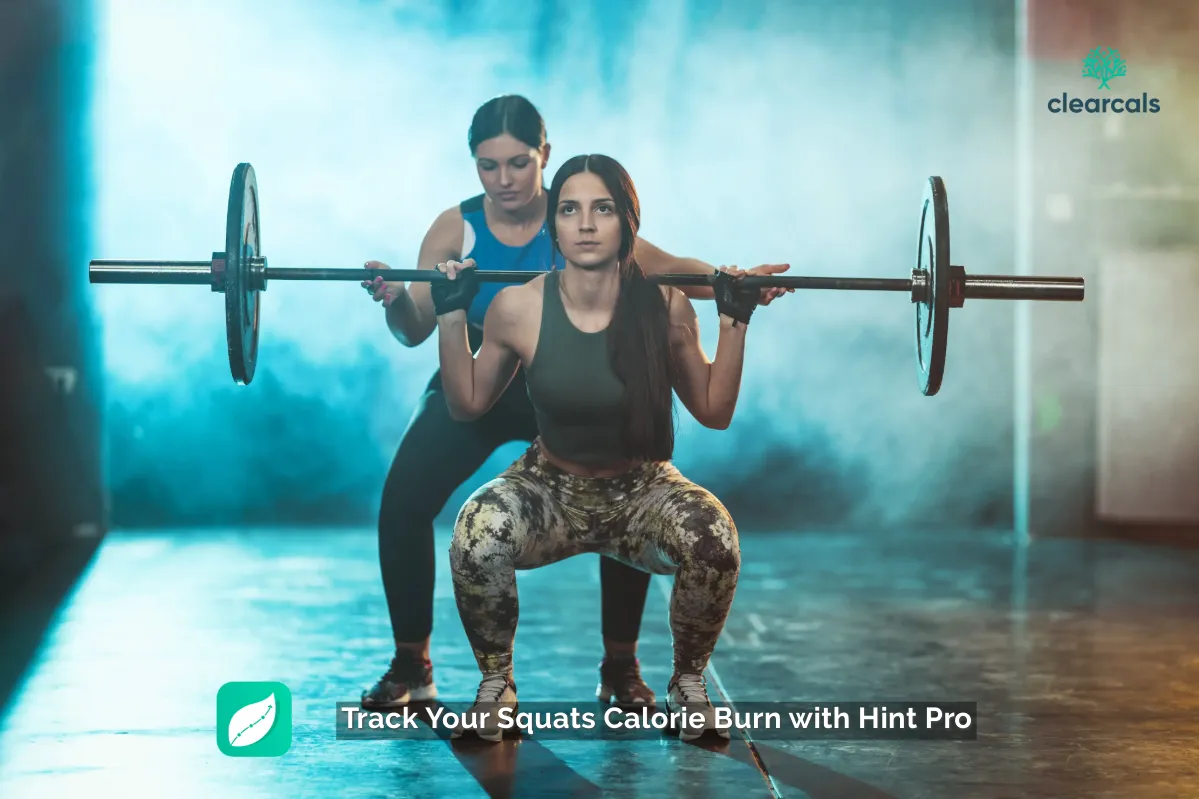
Barbell Squats
A classic squat variation — place a weighted barbell across your shoulders, adding resistance and increasing calorie burn by 15–30% over bodyweight squats. Best for maximum strength and hypertrophy.
Sumo Squats
Stand with feet wider than shoulder-width and toes pointing outward, targeting the inner thighs, glutes, and quadriceps. Sumo squats burn similar calories to standard squats but shift emphasis toward the adductors and glutes. Sumo squats calories burned: approximately the same as standard squats at the same body weight.
Goblet Squats: Hold a dumbbell or kettlebell at chest height during the squat. This adds resistance (increasing calorie burn 10–20%) while naturally promoting better depth and upright torso position — ideal for beginners learning the movement.
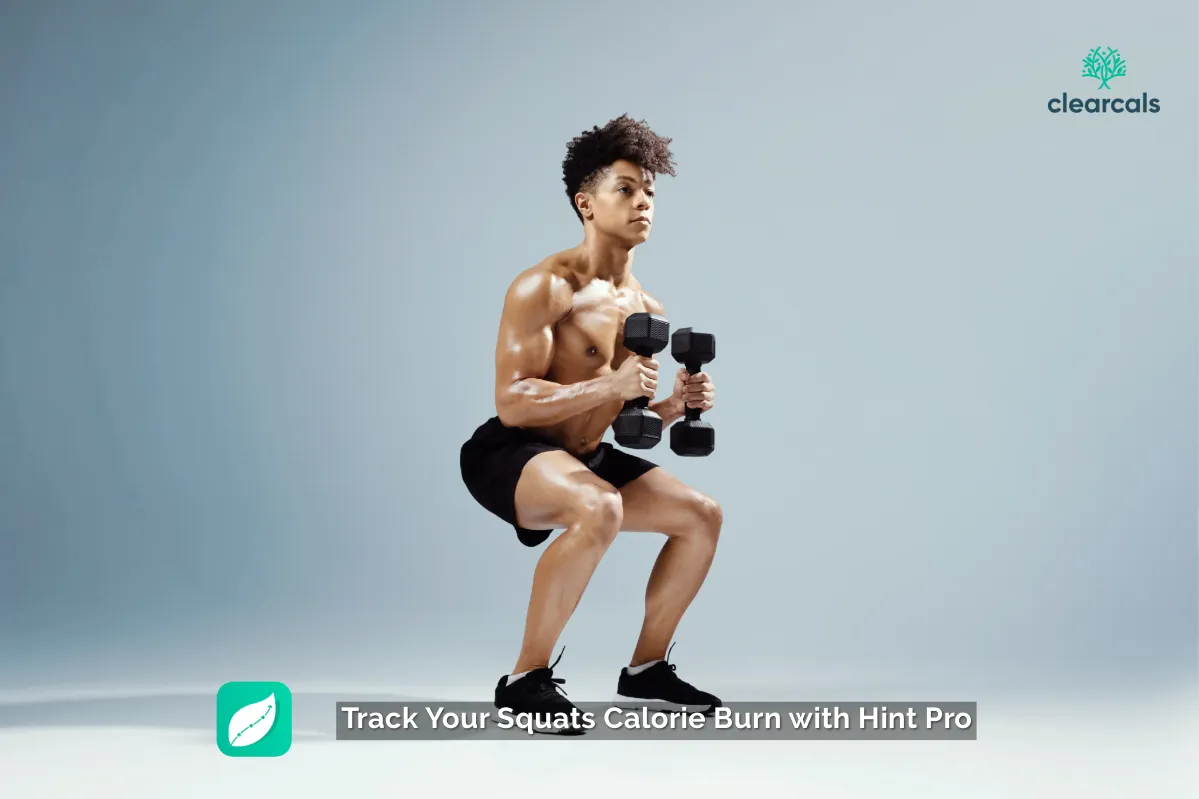
Dumbbell Squats
A beginner-friendly variation that adds resistance without the need for a barbell or spotter. Hold one dumbbell in each hand at your sides during the squat.
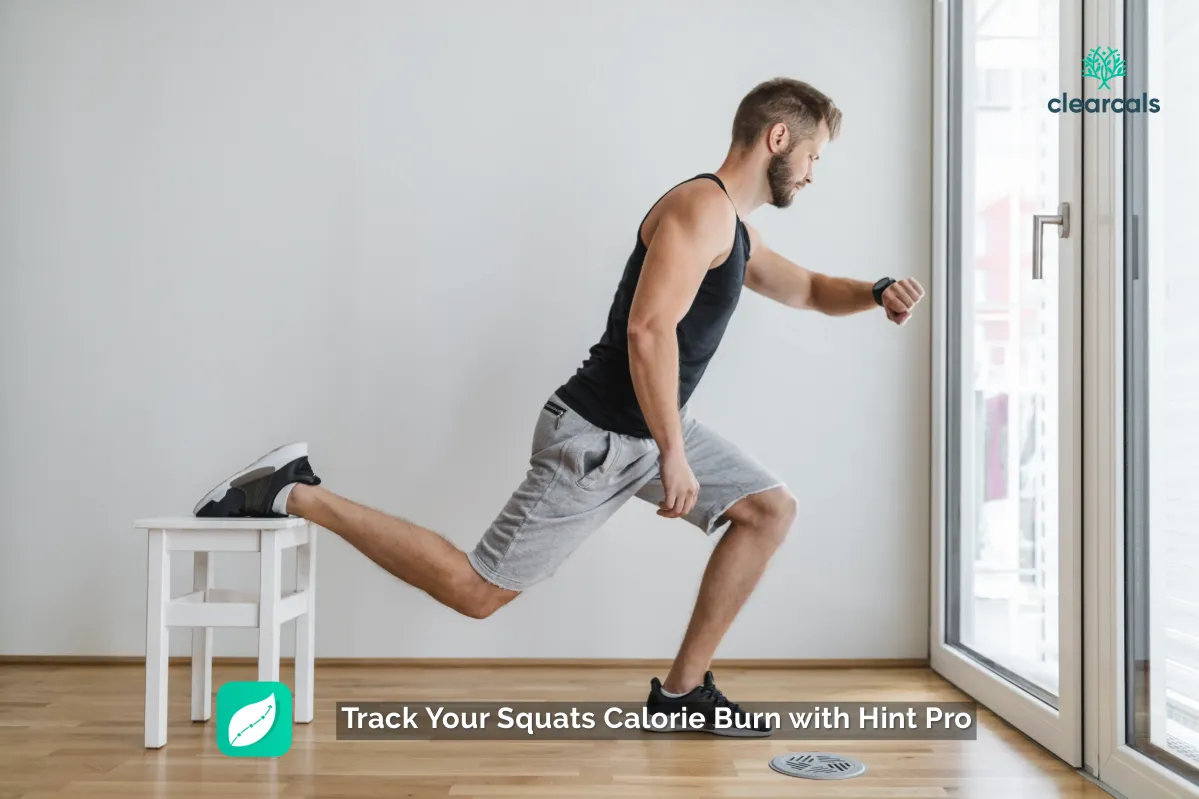
Split Squats (Bulgarian Split Squats)
Position one leg behind you on an elevated surface, isolating each leg for focused quadriceps and glute development. Bulgarian split squats calories burned: approximately 10–15% more than standard squats due to single-leg instability demand.
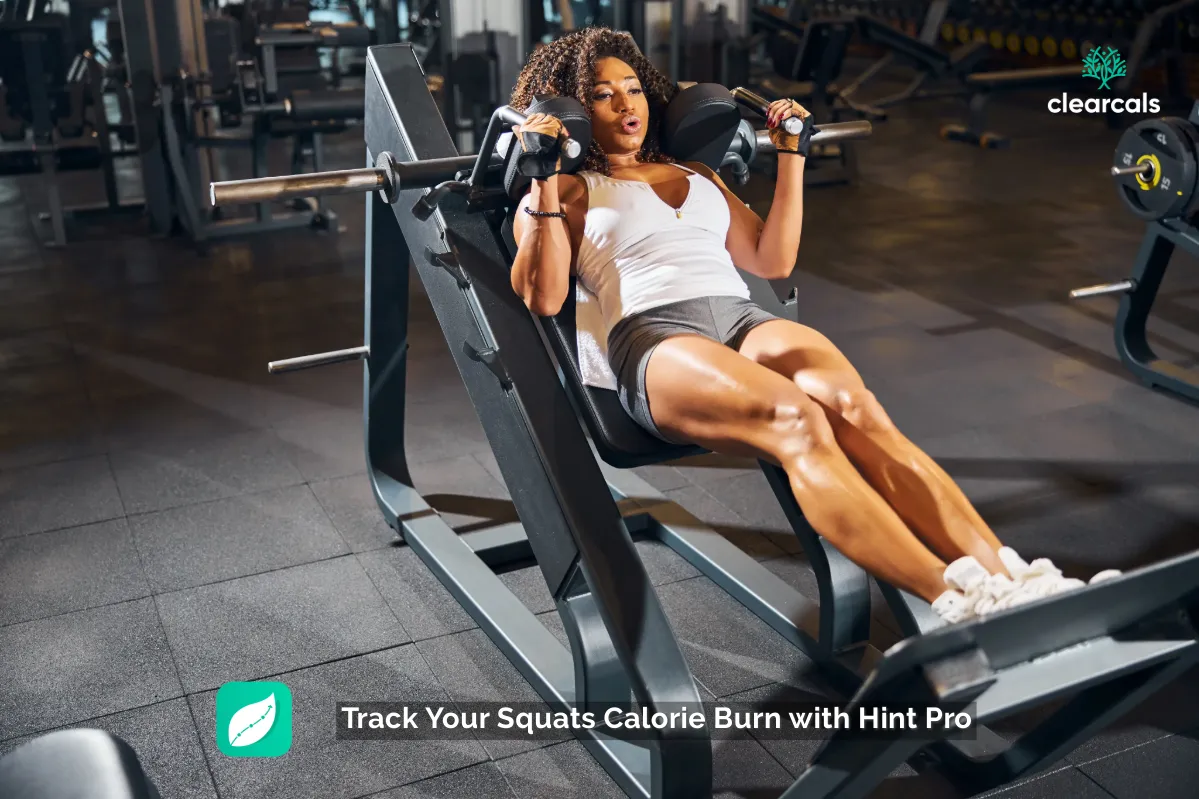
Hack Squats
A machine-based variation that takes pressure off the lower back, focusing load more on the quadriceps. Calorie burn is similar to barbell squats but with reduced core and stabiliser demand.
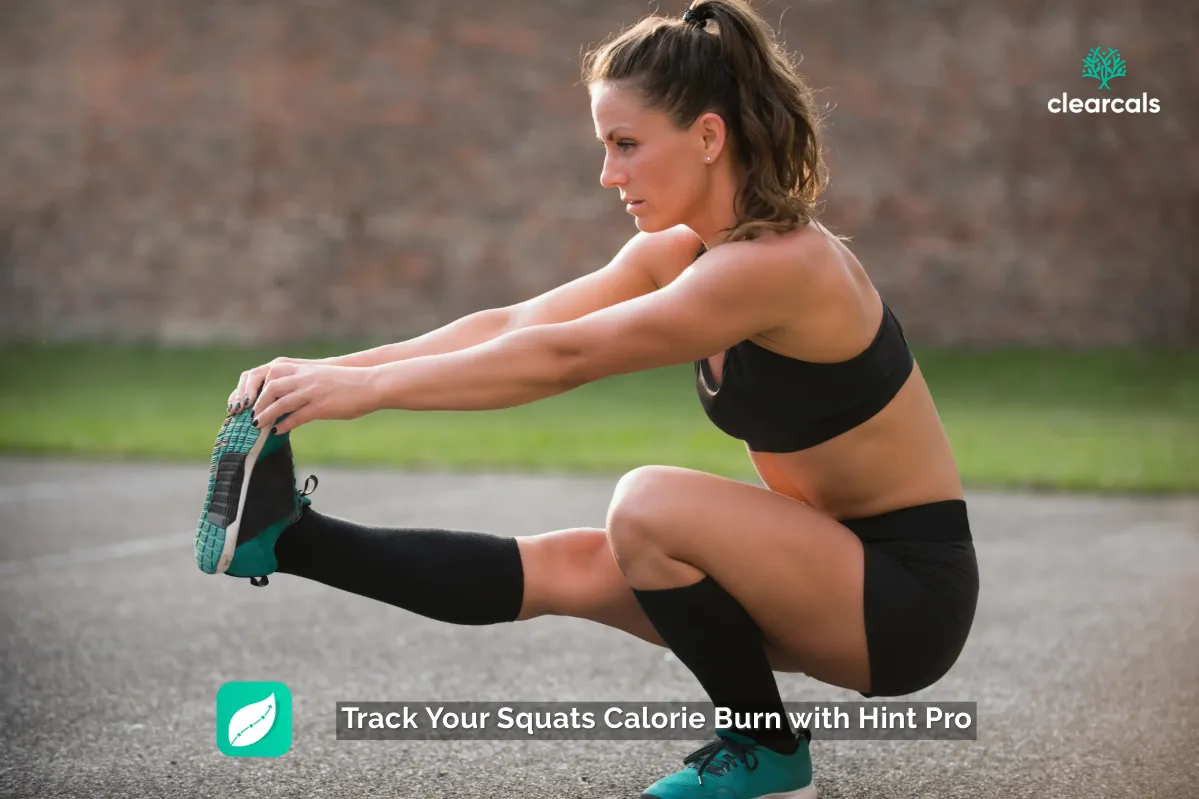
Pistol Squats
A challenging single-leg squat variation testing strength, balance, and flexibility simultaneously. Pistol squats calories burned: approximately 20–30% more than standard squats due to the stabilisation requirement.
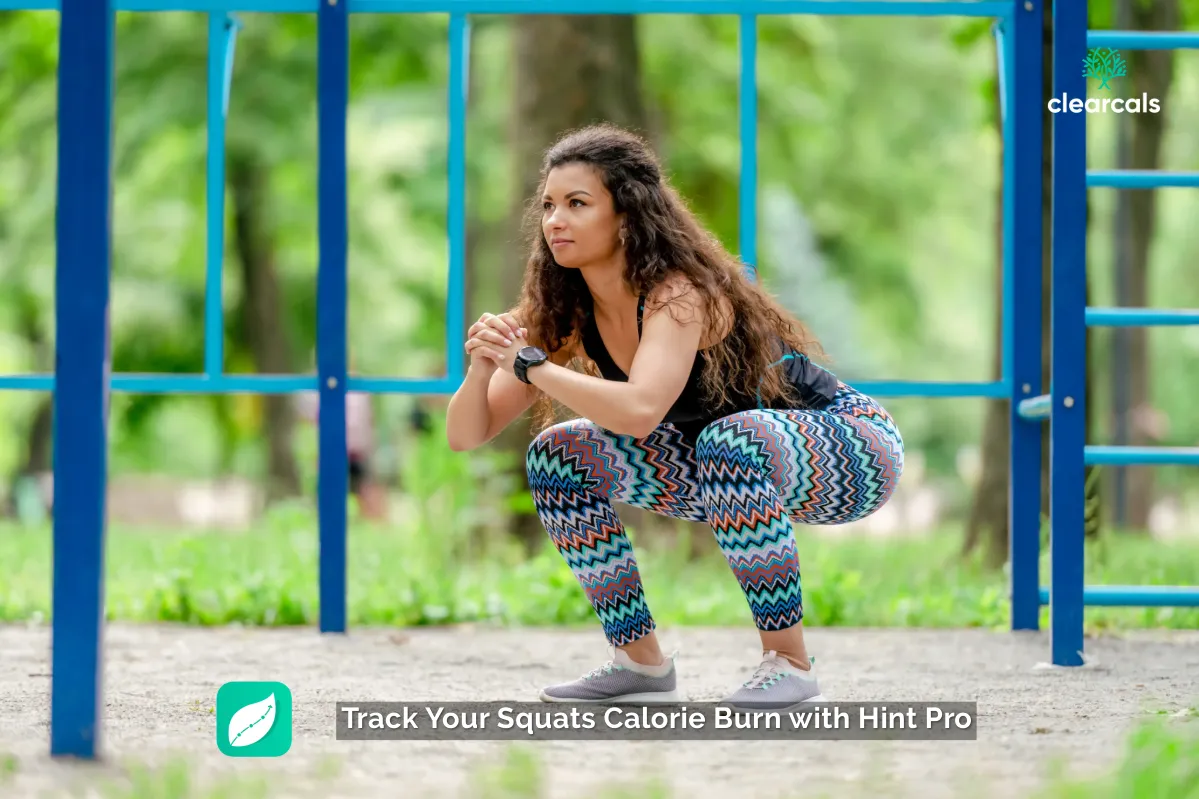
Sissy Squats
Sissy squats isolate the quadriceps while requiring less hip and glute engagement, making them great for targeted quad strength. They burn slightly fewer calories per rep than standard squats due to the reduced muscle mass engaged.
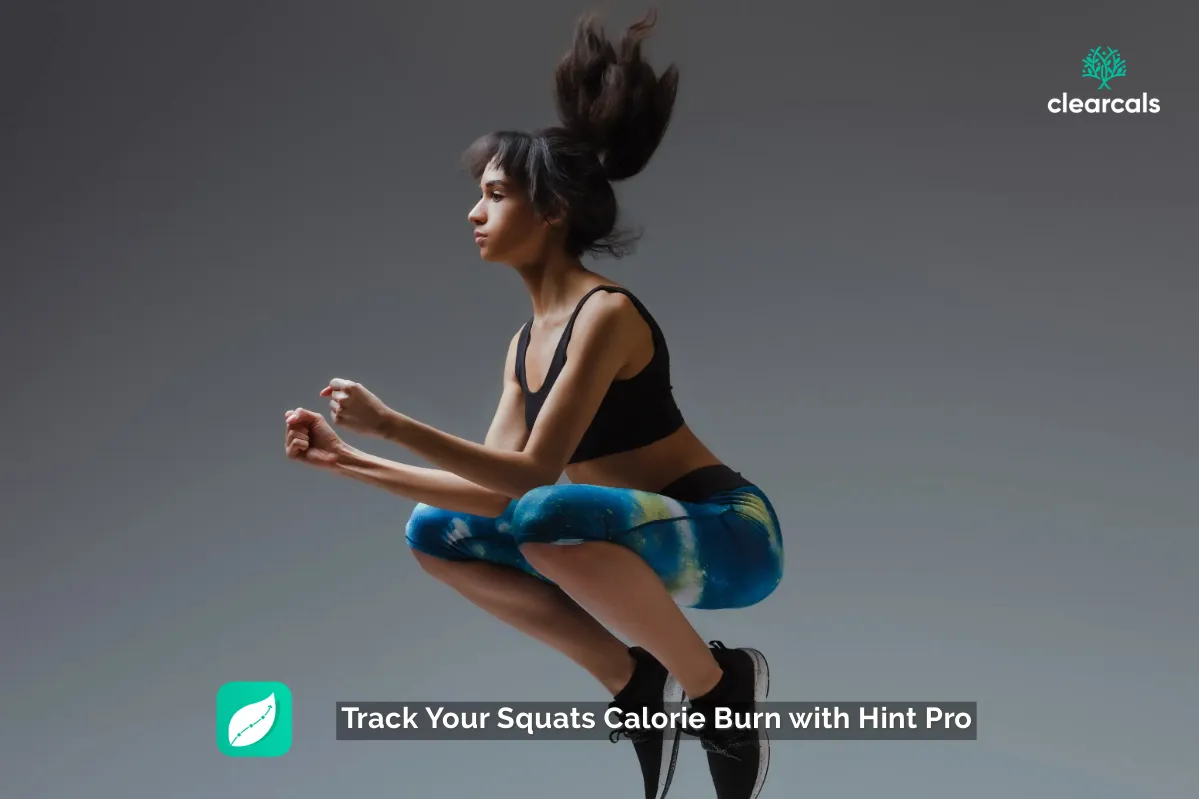
Jump Squats
Jump squats improve explosive power and cardiovascular fitness while building leg strength. Jump squats calories burned are higher than bodyweight squats — approximately 0.5–0.7 kcal per rep for a 70 kg person — because of the explosive effort and elevated heart rate.
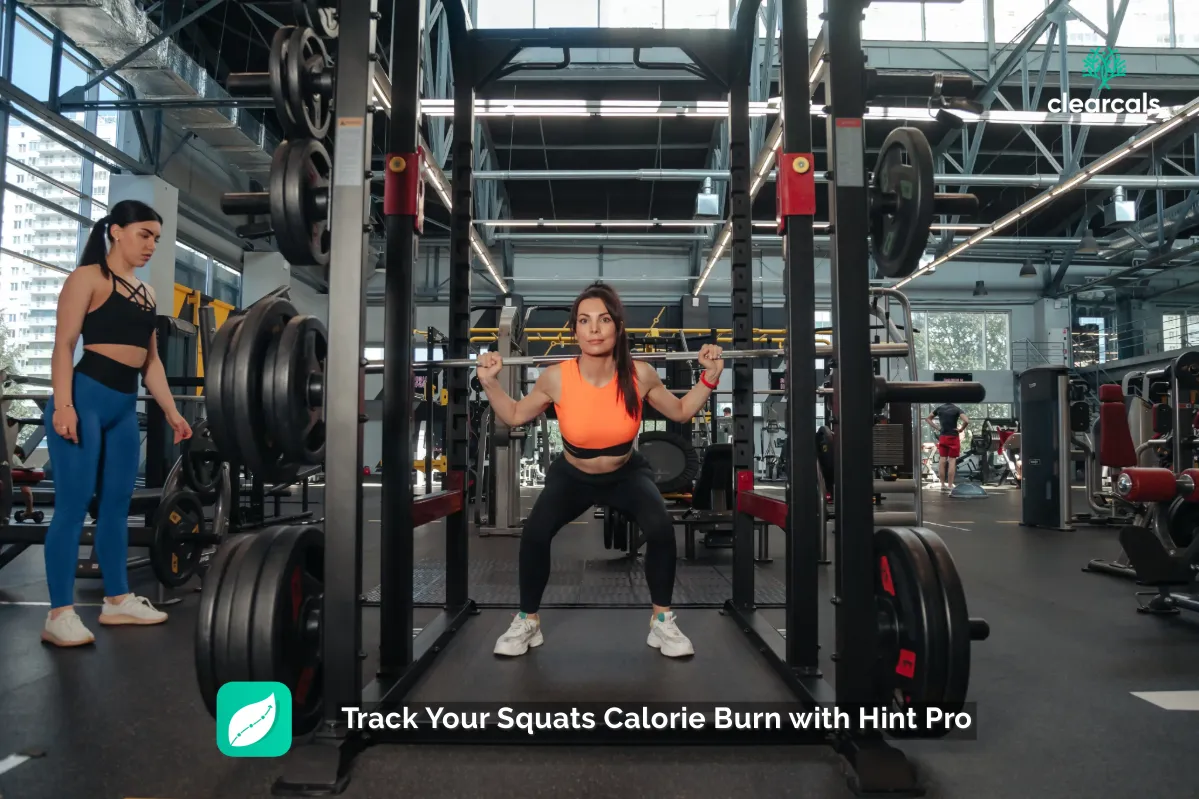
Smith Machine Squats
Smith machine squats guide your movement with added stability, making it easier to focus on form. Calorie burn is similar to barbell squats at the same weight.
Explosive Squats: A plyometric variation that improves power and leg strength.
Wide Squats: Target more of the inner thighs and glutes, improving flexibility and range of motion.
Each variation can be logged in the Hint app, allowing you to track progress and explore new challenges.
Squats vs Lunges
Both squats and lunges build leg strength but target muscles differently. Squats load both legs simultaneously and allow for greater total weight, producing more overall lower-body strength. Lunges isolate one leg at a time, building unilateral strength, improving imbalances, and challenging balance more directly.
| Exercise | Primary Muscles | Calorie Burn (100 reps, 70 kg) | Best For |
|---|---|---|---|
| Squats | Quads, glutes, hamstrings, core | ~32 kcal | Strength, volume, load |
| Lunges | Quads, glutes, hamstrings | ~40 kcal | Unilateral strength, balance |
Combining both exercises — alternating squat days with lunge days — provides comprehensive lower-body development and higher weekly calorie burn.
Common Squat Injuries and How to Avoid Them
Improper form can lead to knee, thigh, or lower back pain after squats. To avoid these:
Warm up properly: Include hip flexor stretches, leg swings, and bodyweight lunges before loaded squats. Cold muscles are far more prone to injury than warmed-up ones.
Focus on form: Keep knees aligned with toes (not caving inward), maintain a neutral spine, keep your chest up, and avoid letting your heels rise. If your heels lift, work on ankle mobility first.
Start light: Gradually increase weight as your form becomes consistent and automatic. Adding load before mastering technique is the most common cause of squat injuries.
Depth progression: Beginners should squat to a comfortable depth and gradually work toward parallel (thighs horizontal). Forcing excessive depth early causes more harm than benefit.
Frequently Asked Questions
How many calories do 100 squats burn? 100 squats burn approximately 22–47 kcal depending on body weight. For a 70 kg person: ~32 kcal. At 90 kg: ~42 kcal. At 60 kg: ~27 kcal. Weighted squats burn 15–25% more per rep.
How many calories do 50 squats burn? 50 squats burn approximately 11–24 kcal depending on body weight. For a 70 kg person: ~16 kcal. At 80 kg: ~18.5 kcal. At 60 kg: ~13.5 kcal.
How many calories does 1 squat burn? One bodyweight squat burns approximately 0.3–0.32 kcal for a 70 kg person. For a 100 kg person: ~0.47 kcal per squat. For a 50 kg person: ~0.22 kcal per squat.
How many calories does 20 squats burn? 20 squats burn approximately 4.4–9.4 kcal depending on body weight. For a 70 kg person: ~6.5 kcal. At 80 kg: ~7.4 kcal. At 60 kg: ~5.4 kcal.
How many squats to burn 100 calories? A 70 kg person needs approximately 300–320 bodyweight squats to burn 100 calories. At 80 kg: ~270 squats. At 60 kg: ~370 squats. At 50 kg: ~450 squats. Weighted squats reduce these numbers by 15–25%.
How many squats to burn 500 calories? A 70 kg person needs approximately 1,500–1,600 bodyweight squats to burn 500 calories. At 80 kg: ~1,351 squats. At 60 kg: ~1,852 squats. This is typically spread across multiple sessions rather than a single workout.
Do squats burn belly fat? Squats do not directly burn belly fat — spot reduction is not physiologically possible. However, squats burn calories, build muscle (increasing resting metabolic rate), and trigger hormonal responses that support overall fat loss. Combined with a calorie deficit, regular squats contribute significantly to total body fat reduction, including abdominal fat.
How many squats per day for weight loss? 50–100 squats per day is a practical starting point. At 70 kg, 100 daily squats burns ~960 kcal/month — meaningful when combined with dietary awareness. Progressive increase to 200+ squats as strength improves provides more significant calorie burn and metabolic benefit.
How much weight will I lose doing 50 squats a day? 50 squats daily burns ~16 kcal/day (70 kg) = ~480 kcal/month. This translates to approximately 60g of fat loss per month from squats alone. Combined with a 300–500 kcal daily dietary deficit, total monthly fat loss is 1.5–2.5 kg.
Is 1,000 squats a day too much? For most people, yes. 1,000 daily squats (320 kcal burn at 70 kg) produces excessive volume and injury risk without proportional benefit. Professional athletes and military personnel occasionally use high-volume squat challenges, but sustainable strength and body composition results come from 100–300 squats daily with progressive overload and adequate recovery.
Scientific References
- Ainsworth BE, Haskell WL, Herrmann SD, et al. 2011 Compendium of Physical Activities: a second update of codes and MET values. Med Sci Sports Exerc. 2011;43(8):1575–1581. PMID: 21681120
- Calatayud J, Borreani S, Colado JC, et al. Muscle activation during push-ups with different suspension training systems. J Hum Kinet. 2015;45:189–198. PMID: 25964804
- Kraemer WJ, Ratamess NA. Fundamentals of resistance training: progression and exercise prescription. Med Sci Sports Exerc. 2004;36(4):674–688. PMID: 15064592
- Garber CE, Blissmer B, Deschenes MR, et al. American College of Sports Medicine position stand. Quantity and quality of exercise for developing and maintaining cardiorespiratory, musculoskeletal, and neuromotor fitness in apparently healthy adults. Med Sci Sports Exerc. 2011;43(7):1334–1359. PMID: 21694556
- Donnelly JE, Blair SN, Jakicic JM, et al. American College of Sports Medicine position stand. Appropriate physical activity intervention strategies for weight loss and prevention of weight regain for adults. Med Sci Sports Exerc. 2009;41(2):459–471. PMID: 19127177
- Hall KD, Guo J. Obesity energetics: body weight regulation and the effects of diet composition. Gastroenterology. 2017;152(7):1718–1727. PMID: 27765649
- Swift DL, Johannsen NM, Lavie CJ, Earnest CP, Church TS. The role of exercise and physical activity in weight loss and maintenance. Prog Cardiovasc Dis. 2014;56(4):441–447. PMID: 24438729
- Warburton DE, Nicol CW, Bredin SS. Health benefits of physical activity: the evidence. CMAJ. 2006;174(6):801–809. PMID: 16534088
🎁 Free Hint with Every Watch Purchase
Garmin watches: Purchase any Garmin watch from the Clearcals Store and receive 1 month of Hint Premium (worth ₹1,999) free. With Hint version 2.0, if your Garmin watch syncs to Garmin Connect and Garmin Connect is connected to Apple Health, your workouts flow automatically into Hint — no manual logging needed.
Apple Watch: Purchase any Apple Watch from the Clearcals Store and receive a free Hint Pro subscription — including access to all Pro features for 1 month. With Hint version 2.0, any workout recorded on your Apple Watch syncs automatically into Hint — no manual logging needed.
About the Author
Dr. Krishna Athmakuri is the Co-Founder and CEO of Clearcals, where he leads the development of data-driven health technology through the Hint app. With a background from Rensselaer Polytechnic Institute, New York, in analytics, protein chemistry, and biotechnology, he previously developed biotherapeutics for diabetes and metabolic diseases at Aurobindo Pharma and Dr. Reddy's Laboratories.
Connect with Krishna on LinkedIn
Related Reading
- Calorie Tracking Guide for Indians
- Indian Food Calorie Calculator
- Push-Ups Calories Burned: 10, 50, 100, 200 Reps
- Jumping Jacks Calories Burned
- How to Burn 500 Calories a Day