Track your nutrition and health goals

Selenium Rich Foods for Thyroid | Indian Sources of Selenium and Zinc
By Asfia Fatima, Chief Dietitian at Clearcals
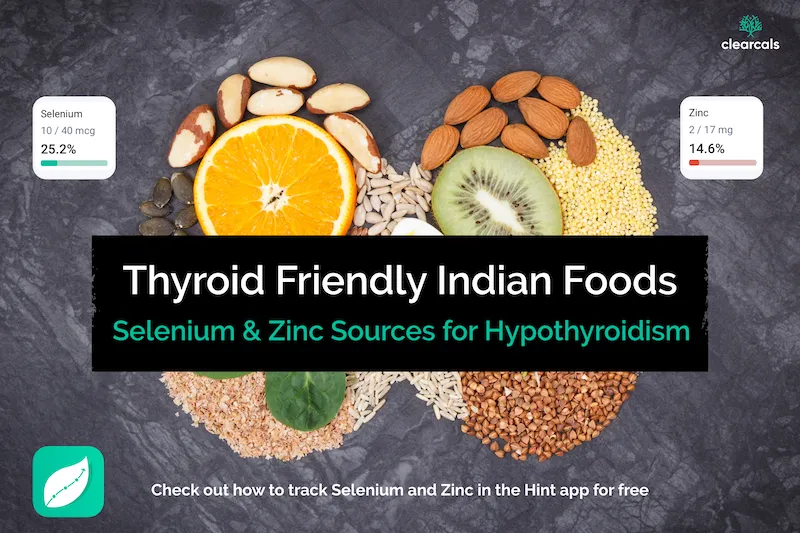
If you have hypothyroidism, your thyroid gland doesn't produce enough hormones, slowing metabolism and causing fatigue, weight gain, and hair loss. Micronutrients like selenium and zinc are essential for thyroid function and hormone conversion — but even a small deficiency can make a significant difference.
Selenium Rich Foods: Complete Reference Table
Selenium is the mineral that converts inactive T4 into active T3 thyroid hormone. The recommended daily intake (RDA) is 55 µg per day for adults. Here are the best food sources:
| Food | Serving | Selenium (approx.) |
|---|---|---|
| Brazil nuts | 1 nut (5g) | 70–95 µg |
| Tuna (canned) | 85g | 63 µg |
| Sardines | 85g | 45 µg |
| Whole boiled egg | 40g | 20 µg |
| 1 Egg omelette | 57g | 20 µg |
| Roti (wheat) | 1 medium piece | 16 µg |
| Moong dal chilla | 1 medium piece | 14 µg |
| Wheat dosa | 1 medium piece | 13 µg |
| Paneer bhurji | 1 small cup | 12 µg |
| Wheat bread | 1 medium piece | 10 µg |
| Sunflower seeds | 30g | 19 µg |
| Brown rice (cooked) | 1 cup | 19 µg |
| Chicken breast | 100g | 27 µg |
Daily target: 55 µg/day. One whole boiled egg (20 µg) + one roti (16 µg) + one moong dal chilla (14 µg) = 50 µg — close to the full daily requirement.
Selenium Rich Foods in India
The best Indian selenium-rich foods for thyroid health are: wheat roti, eggs, moong dal chilla, wheat dosa, paneer bhurji, and fish like tuna and sardines. These are everyday Indian foods that naturally support thyroid hormone conversion.
| Indian Selenium Source | Serving | Selenium | Best For |
|---|---|---|---|
| Roti (wheat) | 1 medium | 16 µg | Daily selenium baseline |
| Whole boiled egg | 1 egg (40g) | 20 µg | High-efficiency source |
| Moong dal chilla | 1 medium | 14 µg | Vegetarian thyroid support |
| Wheat dosa | 1 medium | 13 µg | South Indian option |
| Paneer bhurji | 1 small cup | 12 µg | Vegetarian + protein |
| Fish (tuna/sardines) | 85g | 45–63 µg | Highest non-Brazil nut source |
The Hint app aligns with the ICMR–NIN Food Composition Database to calculate selenium content for Indian foods accurately when you log your meals.
Brazil Nuts and Selenium
Brazil nuts are the single richest dietary source of selenium — one Brazil nut contains approximately 70–95 µg of selenium, which is the full recommended daily intake in a single nut. Eating 1–2 Brazil nuts per day provides adequate selenium without risk of toxicity.
Important: Eating more than 3–4 Brazil nuts per day consistently can lead to selenium toxicity (selenosis), causing symptoms like hair loss, nail brittleness, and nausea. The tolerable upper intake level is 400 µg/day.
Brazil nuts are not a commonly available Indian food, but they are available at specialty stores and online. For those who cannot access them, the combination of Indian foods in the table above provides adequate selenium from everyday ingredients.
Selenium Rich Foods for Vegetarians
Vegetarians can get sufficient selenium from: eggs, moong dal, wheat-based foods, paneer, sunflower seeds, and mushrooms.
| Vegetarian Selenium Source | Serving | Selenium (approx.) |
|---|---|---|
| Brazil nuts | 1 nut (5g) | 70–95 µg |
| Sunflower seeds | 30g | 19 µg |
| Whole boiled egg | 1 egg | 20 µg |
| Brown rice (cooked) | 1 cup | 19 µg |
| Roti (wheat) | 1 medium | 16 µg |
| Moong dal chilla | 1 medium | 14 µg |
| Wheat dosa | 1 medium | 13 µg |
| Paneer bhurji | 1 small cup | 12 µg |
| Wheat bread | 1 slice | 10 µg |
| Mushrooms (cooked) | 100g | 8–12 µg |
A purely vegetarian Indian diet can easily meet the 55 µg/day selenium requirement without supplements, by including wheat-based staples, eggs (for ovo-vegetarians), and seeds.
How Much Selenium Per Day?
The recommended daily intake of selenium is 55 µg for adults. The tolerable upper limit is 400 µg/day — well above what is achievable from a normal diet (excluding excessive Brazil nut consumption).
| Group | RDA (Selenium) |
|---|---|
| Adults (men & women) | 55 µg/day |
| Pregnant women | 60 µg/day |
| Breastfeeding women | 70 µg/day |
| Upper limit (all adults) | 400 µg/day |
The Thyroid–Nutrient Connection
Your thyroid depends on a delicate balance of minerals. Two of the most vital are selenium and zinc:
| Nutrient | Role in Thyroid Health | Deficiency Effects |
|---|---|---|
| Selenium | Converts inactive T4 to active T3; protects thyroid from oxidative stress | Fatigue, brain fog, poor hormone conversion |
| Zinc | Supports thyroid hormone production and metabolism | Hair loss, slow metabolism, low immunity |
Selenium: The Converter Nutrient
Selenium helps the body convert the inactive hormone T4 into the active form T3, which drives metabolism and energy. It is also crucial for protecting thyroid tissue from oxidative damage — especially in autoimmune thyroiditis (Hashimoto's disease).
Include at least one selenium-rich food daily — it is especially beneficial if you have autoimmune hypothyroidism.
When you log foods like roti, moong dal, paneer, or boiled eggs in the Hint app, the app automatically calculates selenium content and shows your daily progress toward your nutrient goal.
Zinc Rich Foods for Thyroid Health
Zinc plays a role in both thyroid hormone production and immune regulation. Low zinc levels can slow metabolism, weaken immunity, and worsen hypothyroid symptoms.
| Zinc-Rich Food | Serving | Zinc (approx.) |
|---|---|---|
| Sesame seeds | 2 tbsp | 3 mg |
| Pumpkin seeds | 2 tbsp | 2 mg |
| Chicken or egg | 100g | 2–3 mg |
| Cashews or peanuts | 30g | 1–2 mg |
| Paneer or curd | 1 cup | 1.5 mg |
| Lentils, chickpeas | 1 cup cooked | 1 mg |
RDA for zinc: 8–11 mg/day for adults. Pair zinc-rich foods with vitamin C sources (lemon, amla, tomatoes) to improve absorption.
About Iodine in the Indian Context
Iodine is essential for producing thyroid hormones T3 and T4, but its levels vary widely depending on salt use.
Important: The ICMR–NIN Food Composition Tables — the scientific source used by the Hint app — do not currently list iodine values for Indian foods. Therefore, Hint does not track iodine intake directly, to maintain scientific accuracy.
However, the app helps you track selenium and zinc (which influence thyroid hormone conversion), and Hint Premium dietitians can assess iodine adequacy manually during consultations.
Sample One-Day Thyroid-Friendly Indian Meal Plan
| Meal | Food | Key Nutrients |
|---|---|---|
| Breakfast | Moong dal chilla + chutney | Selenium + Zinc |
| Mid-morning | Coconut water + handful of pumpkin seeds | Zinc |
| Lunch | Brown rice + dal + fish curry or paneer | Selenium |
| Evening snack | Curd with sunflower seeds | Selenium + Zinc |
| Dinner | Roti + sautéed garlic vegetables + egg curry | Selenium + Zinc |
Log this plan on the Hint app to see your selenium and zinc coverage for the day.
Balance Matters: Food First, Supplements Second
While selenium and zinc are essential, excess supplementation can be harmful. Stick to whole foods as your primary source. Consult a dietitian before taking supplements — especially if you're on thyroid medication like levothyroxine or thyronorm.
Hint Premium members can work with expert dietitians who personalise nutrient goals for conditions like hypothyroidism, PCOS, and cholesterol.
FAQs
1. Which Indian foods are richest in selenium? Wheat roti (16 µg/piece), whole boiled egg (20 µg), moong dal chilla (14 µg), wheat dosa (13 µg), and fish like tuna (63 µg/85g) are the best Indian selenium sources.
2. How many Brazil nuts should I eat per day for selenium? 1–2 Brazil nuts per day provides your full daily selenium requirement (70–95 µg per nut). Avoid eating more than 3–4 per day to prevent selenium toxicity.
3. What are the best vegetarian Indian sources of selenium? Wheat-based foods (roti, dosa, bread), eggs, moong dal chilla, paneer, sunflower seeds, and brown rice.
4. What are the best Indian sources of zinc? Sesame seeds, pumpkin seeds, cashews, peanuts, lentils, chickpeas, paneer, curd, and eggs.
5. Does the Hint app track selenium and zinc? Yes — Hint tracks selenium and zinc using verified ICMR–NIN Indian food data. Iodine is not tracked due to the absence of iodine values in the ICMR–NIN database.
6. Can I take selenium supplements for hypothyroidism? Focus on whole food sources first. Excess selenium (above 400 µg/day) causes toxicity. Consult a certified dietitian before supplementing.
7. Is paneer good for thyroid patients? Yes — paneer provides selenium (~12 µg per small cup), zinc (~1.5 mg), and protein, all of which support thyroid health.
8. Is moong dal good for the thyroid? Yes — moong dal chilla provides 14 µg of selenium and 1 mg of zinc per medium piece, making it a thyroid-supportive food.
Conclusion
Thyroid health depends on micronutrient balance, not just calories. By incorporating selenium- and zinc-rich Indian foods — wheat roti, eggs, moong dal, paneer, fish, and seeds — into your daily meals and tracking them accurately through the Hint app, you can support thyroid function in a scientifically proven way.
Track your thyroid-supporting nutrients today — download the Hint app and get a personalised diet plan reviewed by expert dietitians.
🎁 Free Hint with Every Watch Purchase
Garmin watches: Purchase any Garmin watch from the Clearcals Store and receive 1 month of Hint Premium (worth ₹1,999) free — including unlimited dietitian consultations, personalised diet and workout plans, and advanced nutrition tracking. 👉 Browse Garmin watches →
Apple Watch: Purchase any Apple Watch from the Clearcals Store and receive a free Hint Pro subscription — including personalised Indian diet plans, 300+ workouts, weekly insights, and more. 👉 Browse Apple Watches →
About the Author
Asfia Fatima is the Chief Dietitian at Clearcals, with a Master's Degree in Dietetics and Clinical Nutrition and over a decade of experience in clinical nutrition and lifestyle management.
She specializes in evidence-based diet planning for weight loss, diabetes, and metabolic health.
At Clearcals, she leads the nutrition strategy behind the Hint app, helping users achieve their goals with science-backed guidance.
🔗 Connect with Asfia on LinkedIn