Track your nutrition and health goals

Cholesterol Levels by Age: Normal Range for Men and Women (Chart)
By Dr. Sumedha Verma | Medically Reviewed | Updated May 2026
Cholesterol levels change across the lifespan — what's normal at 25 is not the same target as what's appropriate at 55, especially when other risk factors are present.
Understanding normal cholesterol ranges by age and gender, and knowing what to do when they're outside the healthy range, is essential for long-term heart health management.
This guide provides a complete cholesterol normal range reference by age and gender, explains what each number means, and covers what to do when levels are elevated.
Cholesterol Normal Range: The Key Parameters
A complete cholesterol assessment (lipid profile) includes four main parameters. Here are the universal normal ranges used as a starting reference:
| Parameter | Optimal | Borderline | High Risk |
|---|---|---|---|
| Total Cholesterol | Below 200 mg/dL | 200–239 mg/dL | ≥240 mg/dL |
| LDL (bad cholesterol) | Below 100 mg/dL | 130–159 mg/dL | ≥160 mg/dL |
| HDL (good cholesterol — men) | ≥60 mg/dL | 40–59 mg/dL | Below 40 mg/dL |
| HDL (good cholesterol — women) | ≥60 mg/dL | 50–59 mg/dL | Below 50 mg/dL |
| Triglycerides | Below 150 mg/dL | 150–199 mg/dL | ≥200 mg/dL |
These are population-level reference ranges. Individual targets depend on cardiovascular risk factors — a person with diabetes, hypertension, or a family history of early heart disease has stricter targets than a healthy 25-year-old with no risk factors.
Cholesterol Normal Range by Age — Men
| Age Group | Total Cholesterol | LDL | HDL | Triglycerides |
|---|---|---|---|---|
| 20–29 years | 100–180 mg/dL | 60–130 mg/dL | 40–70 mg/dL | 50–100 mg/dL |
| 30–39 years | 140–205 mg/dL | 80–155 mg/dL | 38–70 mg/dL | 60–150 mg/dL |
| 40–49 years | 150–215 mg/dL | 90–165 mg/dL | 37–70 mg/dL | 70–160 mg/dL |
| 50–59 years | 155–220 mg/dL | 95–175 mg/dL | 35–70 mg/dL | 75–175 mg/dL |
| 60+ years | 160–225 mg/dL | 100–180 mg/dL | 35–70 mg/dL | 75–175 mg/dL |
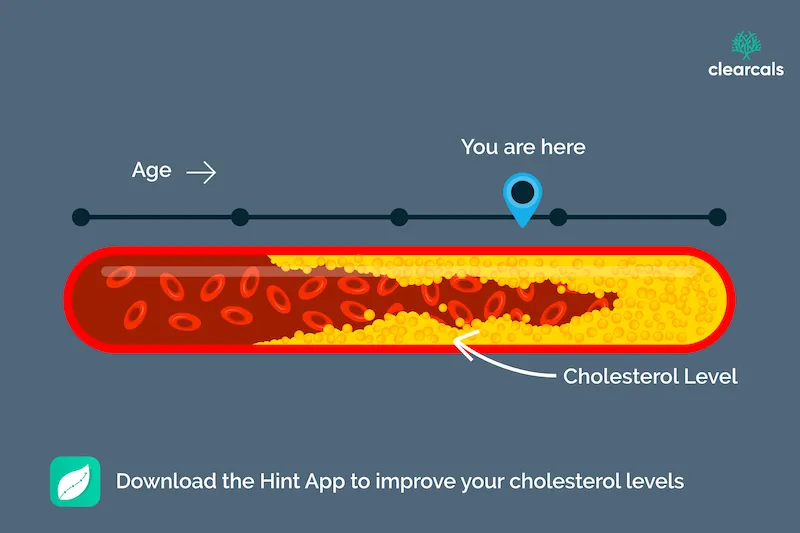
Cholesterol naturally rises with age in both men and women. LDL in particular tends to increase through the 30s and 40s. Total cholesterol above 200 mg/dL at any age warrants attention regardless of where the individual falls in the age-specific range.
Cholesterol Normal Range by Age — Women
| Age Group | Total Cholesterol | LDL | HDL | Triglycerides |
|---|---|---|---|---|
| 20–29 years | 100–175 mg/dL | 60–128 mg/dL | 50–75 mg/dL | 50–100 mg/dL |
| 30–39 years | 140–195 mg/dL | 70–150 mg/dL | 50–80 mg/dL | 60–130 mg/dL |
| 40–49 years | 150–210 mg/dL | 80–160 mg/dL | 50–80 mg/dL | 65–150 mg/dL |
| 50–59 years | 160–235 mg/dL | 90–175 mg/dL | 45–80 mg/dL | 70–175 mg/dL |
| 60+ years | 165–240 mg/dL | 100–185 mg/dL | 43–75 mg/dL | 75–175 mg/dL |
Women typically have higher HDL than men throughout their reproductive years due to oestrogen's effect on lipid metabolism. This protective advantage decreases significantly after menopause (typically after age 50), when LDL often rises sharply, and HDL may decline. Post-menopausal women have a substantially increased cardiovascular risk compared to pre-menopausal women with similar cholesterol levels.
Cholesterol in Children and Young Adults
Cholesterol levels are also screened in children, particularly those with a family history of familial hypercholesterolaemia (FH) or early cardiovascular disease. The National Heart, Lung, and Blood Institute (NHLBI) recommends cholesterol screening for all children between 9–11 years and again at 17–21 years.
| Age Group | Total Cholesterol (acceptable) | LDL (acceptable) | HDL (acceptable) |
|---|---|---|---|
| 2–19 years | Below 170 mg/dL | Below 110 mg/dL | Above 45 mg/dL |
Total cholesterol above 200 mg/dL in a child or adolescent is considered high and warrants further evaluation — often including genetic testing for familial hypercholesterolaemia if LDL is above 160 mg/dL.
LDL Target Ranges by Cardiovascular Risk Level
Age-based ranges are starting points. Clinical LDL targets depend on your overall cardiovascular risk profile. The more risk factors you have, the lower your LDL target:
| Risk Category | Examples | LDL Target |
|---|---|---|
| Low risk | Young, no risk factors, no family history | Below 130 mg/dL |
| Moderate risk | 1–2 risk factors (mild hypertension, borderline diabetes) | Below 100 mg/dL |
| High risk | Diabetes, established hypertension, strong family history, smoker | Below 70 mg/dL |
| Very high risk | Established heart disease, previous heart attack or stroke | Below 55 mg/dL |
Risk factors that push you to a stricter LDL target include: type 2 diabetes, hypertension, smoking, family history of premature cardiovascular disease (heart attack in a first-degree male relative before 55, or female relative before 65), chronic kidney disease, and obesity.
Why Women's Cholesterol Changes After Menopause
The lipid shift at menopause is one of the most significant and under-appreciated cardiovascular risk changes in women's health:
Before menopause: Oestrogen increases LDL receptor activity (LDL is cleared more efficiently), raises HDL, and lowers triglycerides. Women in their reproductive years consistently have higher HDL than men of similar age.
After menopause: Oestrogen levels fall. LDL clearance slows, and LDL rises by 10–20 mg/dL on average. HDL may fall slightly. Triglycerides often rise. Total cardiovascular risk increases significantly.
Women over 50 whose cholesterol was previously normal should have a fasting lipid profile tested more frequently — every 1–2 years — particularly if there are other risk factors like hypertension, diabetes, or family history.
What Happens When Cholesterol Is Too Low?
The focus on cholesterol management is almost always about reducing elevated levels. But very low cholesterol also carries risks:
Very low total cholesterol (below 130 mg/dL in adults) is associated with increased risk of haemorrhagic stroke, depression, and impaired hormone synthesis. This level is uncommon in the general population and is more often a marker of underlying illness (malnutrition, cancer, liver disease) than a cause of harm.
Very low LDL from aggressive statin therapy or genetic conditions is generally considered safe. No meaningful lower threshold for LDL has been established for cardiovascular benefit — lower is better for cardiovascular risk. However, LDL is needed for cell membrane function and hormone production; the very low levels achieved with aggressive therapy (below 25 mg/dL) are monitored carefully.
Very low HDL (below 25–30 mg/dL) is associated with significantly increased cardiovascular risk and often indicates a genetic HDL disorder or severe metabolic disease.
How Cholesterol Is Measured
Cholesterol is measured through a standard fasting blood test — a lipid profile. The test requires 9–12 hours of fasting (water only). A venous blood sample is taken and analysed by the laboratory. Results typically include total cholesterol, LDL, HDL, triglycerides, and VLDL.
Most doctors recommend a first lipid profile test at age 20 for healthy adults, with retesting every 4–6 years if results are normal. Testing frequency increases with age and risk factors.
What to Do If Your Cholesterol Is High for Your Age
The approach depends on which parameter is elevated:
High LDL: First-line is dietary modification — reduce saturated fat (vanaspati, butter, full-fat dairy, processed meats), increase soluble fibre (oats, dal, legumes, flaxseeds), switch to heart-healthy oils (mustard, olive, rice bran). If LDL remains high after 3–6 months, statins are typically recommended. The threshold for medication depends on age and overall risk — a 35-year-old with LDL of 160 and no other risk factors may be managed with diet alone; a 55-year-old with diabetes and LDL of 140 typically needs medication.
Low HDL: Regular aerobic exercise, smoking cessation, reducing refined carbohydrates, and including omega-3-rich foods (fatty fish, flaxseeds, mustard oil) are the primary interventions. HDL responds slowly to dietary changes — expect 8–12 weeks of consistent effort for measurable improvement.
High triglycerides: Reduce refined carbohydrates (white rice, sugar, maida, packaged snacks) and alcohol. Add omega-3-rich foods. Increase aerobic exercise. Triglycerides are the most rapidly diet-responsive lipid parameter — a meaningful reduction is typically seen within 4–8 weeks.
High total cholesterol with high HDL: This pattern (often seen in athletic individuals) is generally not concerning — high total cholesterol driven by high HDL is associated with low, not high, cardiovascular risk. The LDL/HDL ratio and Non-HDL are more useful in this situation.
Get Your Cholesterol Assessed with Personalised Guidance
A fasting lipid profile once a year, combined with a dietary plan tailored to your results, is the most effective cholesterol management strategy. The Hint app provides condition-specific diet plans for all forms of dyslipidemia through Hint Pro and Hint Premium, with unlimited dietitian consultations available via Hint Premium.
Frequently Asked Questions
What is the normal cholesterol level by age? Cholesterol naturally rises with age. For adults under 40, total cholesterol below 180–190 mg/dL is typical. For adults over 40, a level below 200 mg/dL is desirable at any age. LDL below 100 mg/dL is optimal for most adults. HDL should be above 60 mg/dL for men and women. Triglycerides below 150 mg/dL. Individual targets depend on cardiovascular risk factors.
What is a normal LDL cholesterol level? Optimal LDL is below 100 mg/dL. Near optimal is 100–129 mg/dL. Borderline high is 130–159 mg/dL. High is 160–189 mg/dL. Very high is 190 mg/dL and above. For people with diabetes or heart disease, the target is below 70 mg/dL. For people who have had a heart attack, the target may be below 55 mg/dL.
What is a normal HDL cholesterol level? HDL above 60 mg/dL is considered optimal and cardioprotective for both men and women. The minimum acceptable is 40 mg/dL for men and 50 mg/dL for women — below these levels, HDL is classified as low and represents an independent cardiovascular risk factor.
At what age does cholesterol become a concern? Cholesterol screening should begin at age 20 for all adults. While cholesterol-related cardiovascular disease typically manifests in middle age and beyond, the plaque buildup process (atherosclerosis) begins in the 20s and 30s. High LDL in young adults — even without symptoms — warrants dietary management to slow the progression of cardiovascular disease. Family history of familial hypercholesterolaemia warrants screening even in childhood (9–11 years).
What is the normal cholesterol level for women after menopause? After menopause, LDL typically rises by 10–20 mg/dL, and cardiovascular risk increases significantly. The same total cholesterol and LDL targets apply (below 200 mg/dL total; below 100 mg/dL LDL optimal), but post-menopausal women are managed more aggressively because their overall risk profile has changed. Annual lipid profile testing is recommended for post-menopausal women, especially those with other risk factors.
Is a total cholesterol of 200 mg/dL good or bad? Total cholesterol of exactly 200 mg/dL is on the boundary between desirable (below 200) and borderline high (200–239). Its significance depends on the full lipid profile: if HDL is high (60+ mg/dL), LDL is below 100, and triglycerides are normal, 200 mg/dL total cholesterol is not concerning. If HDL is low (below 40–50 mg/dL) and LDL is elevated, it indicates meaningful cardiovascular risk.
Do cholesterol levels change with age? Yes. LDL and total cholesterol naturally rise through the 30s and 40s in both men and women. The increase is particularly pronounced in women after menopause. Regular testing (every 4–6 years for healthy adults under 40; every 1–2 years for those over 40 or with risk factors) is important to detect and manage these age-related changes.
About the Author
Dr. Sumedha Verma is a Consultant Physician at Clearcals with extensive experience in clinical medicine and healthcare services.
She has significant expertise in managing metabolic conditions such as fatty liver, diabetes, thyroid disorders, PCOS, infertility, and other gynecological health concerns.
Known for her patient-centered approach, Dr. Verma focuses on improving patient compliance and helping individuals achieve better health outcomes through personalized medical guidance and long-term care.
🔗 Connect with Dr. Sumedha on LinkedIn
Also Read
- Lipid Profile Test: Normal Range, What It Measures & How to Read Your Report
- Non-HDL Cholesterol: What It Is, Normal Range & Why It Matters
- How to Increase HDL Cholesterol with Indian Food
- How to Reduce Triglycerides Naturally: Foods, 7-Day Indian Diet Plan & Lifestyle Tips
- Dyslipidemia Diet Plan: 7-Day Indian Meal Plan to Lower Cholesterol & Triglycerides
- Managing Dyslipidemia: Improve Your Cholesterol and Triglycerides