
Track your nutrition and health goals

Dosa Calories: 1 Dosa = 78–104 kcal | Masala, Ragi, Rava & Per 100g Table

Written by Asfia Fatima, Chief Dietitian at Clearcals
The calorie count of a dosa varies significantly by size, variety, and how much oil or ghee is used. A plain dosa is one of the lightest South Indian breakfasts; a ghee masala dosa can have three times the calories. This guide covers every common variety — plain, masala, ragi, rava, egg, neer, ghee, and benne — with complete per-piece and per-100g tables.
Dosa Calories — Master Table (Plain Dosa)
| Size | Weight | 1 Dosa | 2 Dosa | 3 Dosa | 4 Dosa | 5 Dosa |
|---|---|---|---|---|---|---|
| Small | 30g | 78 kcal | 156 kcal | 234 kcal | 312 kcal | 390 kcal |
| Medium | 40g | 104 kcal | 208 kcal | 312 kcal | 416 kcal | 520 kcal |
| Large | 50g | 130 kcal | 260 kcal | 390 kcal | 520 kcal | 650 kcal |
All values are for plain dosa cooked with minimal oil. Dosa made at home with 1–2 tsp oil per piece adds approximately 42–84 kcal to the above values.
1 Dosa Calories
1 medium plain dosa (40g) = 104 kcal, 3.1g protein, 17g carbs, 2.6g fat.
| 1 Plain Dosa | Weight | Calories | Protein | Carbs | Fat |
|---|---|---|---|---|---|
| Small dosa | 30g | 78 kcal | 2.4g | 13g | 2g |
| Medium dosa | 40g | 104 kcal | 3.1g | 17g | 2.6g |
| Large dosa | 50g | 130 kcal | 3.9g | 21g | 3.3g |
Plain dosa's macronutrient split is 65% carbohydrates, 12% protein, and 23% fat — a carbohydrate-dominant food, as expected from a rice-and-lentil batter crepe.
2 Dosa Calories
2 medium plain dosas (80g) = 208 kcal, 6.3g protein.
3 Dosa Calories
3 medium plain dosas (120g) = 312 kcal, 9.4g protein.
4 Dosa Calories
4 medium plain dosas (160g) = 416 kcal, 12.6g protein.
| Count | Medium Dosas | Calories | Protein |
|---|---|---|---|
| 1 dosa | 40g | 104 kcal | 3.1g |
| 2 dosa | 80g | 208 kcal | 6.3g |
| 3 dosa | 120g | 312 kcal | 9.4g |
| 4 dosa | 160g | 416 kcal | 12.6g |
| 5 dosa | 200g | 520 kcal | 15.5g |
Dosa Calories Per 100g
Per 100g, plain dosa contains 260 kcal, 7.8g protein, 42g carbohydrates, and 6.5g fat.
| Nutrient | Per 100g (plain dosa) | Per medium piece (40g) |
|---|---|---|
| Calories | 260 kcal | 104 kcal |
| Protein | 7.8g | 3.1g |
| Carbohydrates | 42g | 17g |
| Fat | 6.5g | 2.6g |
| Fibre | ~1.5g | ~0.6g |
Dosa Protein Per Piece
1 medium plain dosa (40g) = 3.1g protein. Dosa is a moderate-protein food — its protein comes primarily from the urad dal in the batter. Moong dal dosa and egg dosa are meaningfully higher in protein per piece.
| Dosa Type | Per Medium Piece (40g) | Protein |
|---|---|---|
| Plain dosa | 104 kcal | 3.1g |
| Masala dosa | 106 kcal | 2.9g |
| Egg dosa | 92 kcal | 3.7g |
| Moong dal dosa | 102 kcal | 4.6g |
| Paneer dosa | 96 kcal | 3.2g |
| Ragi dosa | 101 kcal | 2.5g |
| Count | Protein (plain dosa) |
|---|---|
| 1 dosa | 3.1g |
| 2 dosa | 6.3g |
| 3 dosa | 9.4g |
| 4 dosa | 12.6g |

Masala Dosa Calories
1 medium masala dosa (40g) = 106 kcal, approximately 2.9g protein.
| Masala Dosa | Weight | Calories | Protein |
|---|---|---|---|
| Small | 30g | 79 kcal | 2.2g |
| Medium | 40g | 106 kcal | 2.9g |
| Large | 50g | 132 kcal | 3.7g |
| 2 medium | 80g | 212 kcal | 5.8g |
| 3 medium | 120g | 318 kcal | 8.7g |
Masala dosa has a spiced potato filling, which raises the calorie count slightly above plain dosa (106 vs 104 kcal per 40g). Its macronutrient split is 55% carbohydrates, 11% protein, and 34% fat — higher in fat than plain dosa because the potato masala filling is prepared with oil and seasonings. Masala dosa is a good source of vitamin E.

Rava Dosa Calories (Sooji Dosa)
1 medium rava dosa (40g) = 94 kcal, approximately 2.5g protein.
Rava dosa (also called sooji dosa or semolina dosa) is one of the lighter dosa varieties — its 94 kcal per medium piece is 10 kcal less than plain dosa. Macros: 64% carbs, 10% protein, 26% fat.
| Rava Dosa | Weight | Calories |
|---|---|---|
| Small | 30g | 71 kcal |
| Medium | 40g | 94 kcal |
| Large | 50g | 118 kcal |
| 2 medium | 80g | 188 kcal |
| 3 medium | 120g | 282 kcal |

Ragi Dosa Calories
1 medium ragi dosa (40g) = 101 kcal, approximately 2.5g protein.
Ragi (finger millet) dosa is a popular diabetic-friendly alternative to plain rice dosa. It is an excellent source of vitamin D, selenium, and manganese, and is particularly beneficial for bone health and blood sugar control due to ragi's lower glycaemic index compared to white rice.
| Ragi Dosa | Weight | Calories |
|---|---|---|
| Small | 30g | 76 kcal |
| Medium | 40g | 101 kcal |
| Large | 50g | 127 kcal |
| 2 medium | 80g | 203 kcal |
| 3 medium | 120g | 305 kcal |

Wheat Dosa Calories
1 medium wheat dosa (40g) = 89 kcal, approximately 2g protein — the lowest-calorie dosa in this comparison.
| Wheat Dosa | Weight | Calories |
|---|---|---|
| Small | 30g | 66 kcal |
| Medium | 40g | 89 kcal |
| Large | 50g | 111 kcal |
| 2 medium | 80g | 177 kcal |
| 3 medium | 120g | 266 kcal |
Wheat dosa is made from whole wheat flour and has a slightly higher fibre content than plain rice dosa. At 89 kcal per medium piece, it is a good lower-calorie option for those watching intake. Macros: 53% carbs, 9% protein, 38% fat.
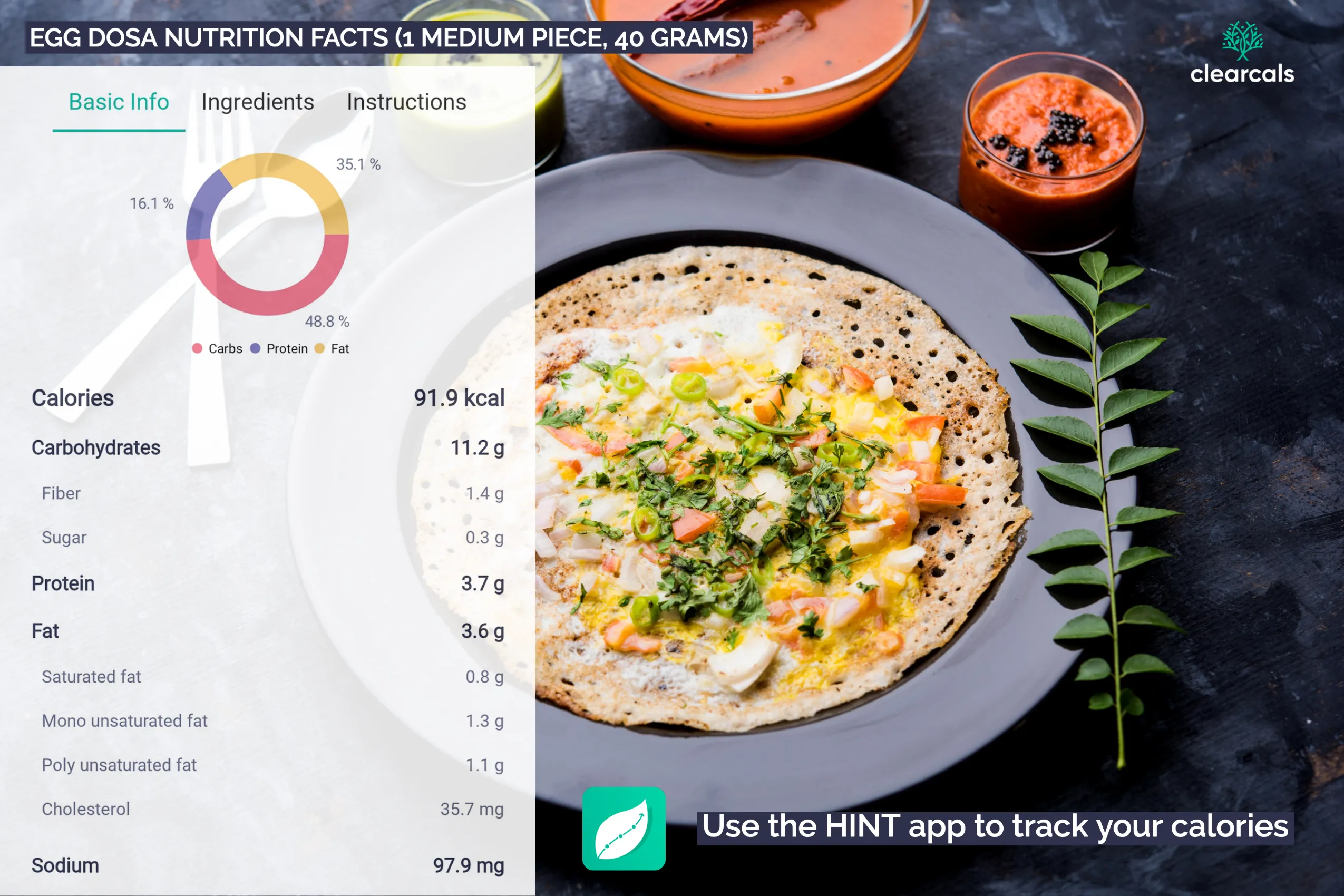
Egg Dosa Calories
1 medium egg dosa (40g) = 92 kcal, approximately 3.7g protein.
Egg dosa is the highest-protein dosa variety among the standard options. The egg filling raises the protein percentage to 16% of calories, compared to 12% for plain dosa. At 92 kcal per medium piece, it is also lower in calories than plain dosa, making it the best calorie-to-protein ratio in the dosa family.
| Egg Dosa | Weight | Calories | Protein |
|---|---|---|---|
| Small | 30g | 69 kcal | 2.8g |
| Medium | 40g | 92 kcal | 3.7g |
| Large | 50g | 115 kcal | 4.6g |
| 2 medium | 80g | 184 kcal | 7.3g |
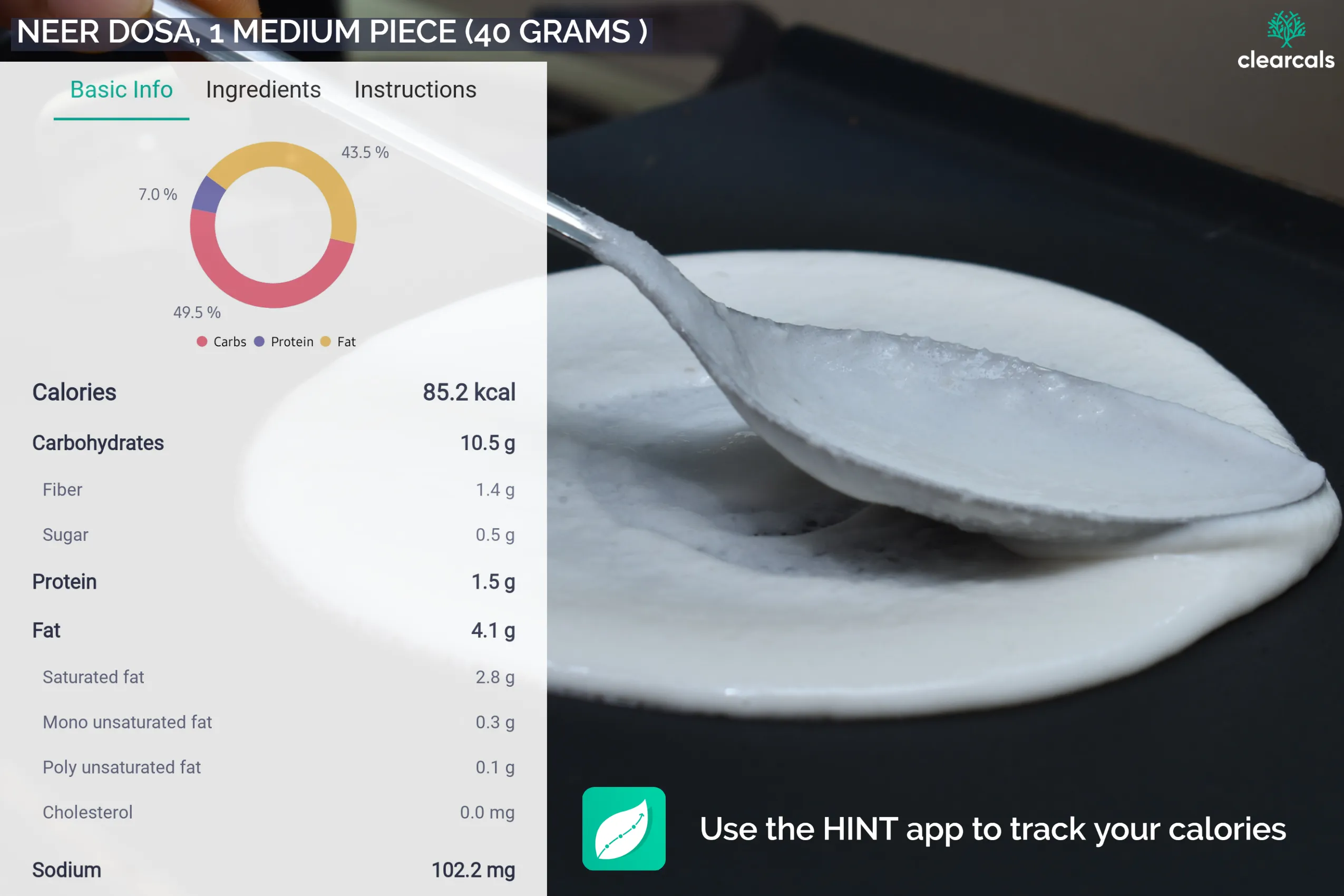
Neer Dosa Calories
1 medium neer dosa (40g) = 85 kcal, approximately 1.5g protein.
Neer dosa is a thin, soft rice crepe from coastal Karnataka, made with a very watery batter (neer = water in Kannada). At 85 kcal per medium piece, it is the lightest dosa by calorie count but also the lowest in protein.
| Neer Dosa | Weight | Calories |
|---|---|---|
| Small | 30g | 64 kcal |
| Medium | 40g | 85 kcal |
| Large | 50g | 107 kcal |
| 2 medium | 80g | 170 kcal |
| 3 medium | 120g | 256 kcal |
Ghee Dosa / Benne Dosa / Ghee Roast Dosa Calories
1 medium ghee dosa (40g + 1 tsp ghee) = approximately 146 kcal. 1 medium benne dosa (butter dosa, 40g) = 117 kcal.
Ghee dosa, benne dosa (Bangalore Kannada for butter dosa), and ghee roast dosa all involve adding ghee or butter to the dosa during or after cooking. One teaspoon of ghee (5g) adds 42 kcal; butter adds approximately 37 kcal per 5g.
| Ghee/Butter Dosa Variant | Base | Added Fat | Total (medium, 40g) |
|---|---|---|---|
| Plain dosa | 104 kcal | — | 104 kcal |
| Benne dosa (butter dosa) | 104 kcal | 13 kcal (butter) | 117 kcal |
| Ghee dosa (1 tsp ghee) | 104 kcal | 42 kcal | ~146 kcal |
| Ghee masala dosa | 106 kcal | 42 kcal | ~148 kcal |
| Ghee roast dosa (2 tsp ghee) | 104 kcal | 84 kcal | ~188 kcal |
| Benne masala dosa | 106 kcal | 42 kcal | ~148 kcal |
Ghee roast dosa, a Mangaluru speciality, typically uses 2–3 teaspoons of ghee and can reach 188–230 kcal per piece. Benne masala dosa, popular in Bengaluru's darshinis, typically uses a smaller amount of butter and comes to approximately 148 kcal per medium piece.
Dosa With Sambar and Chutney Calories
2 medium plain dosas + 1 bowl sambar (150ml) + coconut chutney (30g) = approximately 318 kcal.
| Meal Combination | Calories |
|---|---|
| 2 plain dosa only | 208 kcal |
| 2 plain dosa + sambar | ~273 kcal |
| 2 plain dosa + sambar + chutney | ~318 kcal |
| 2 masala dosa + sambar + chutney | ~322 kcal |
| 3 plain dosa + sambar + chutney | ~422 kcal |
Sambar (150ml) adds approximately 65 kcal and contributes protein and fibre from the lentils and vegetables. Coconut chutney (30g) adds approximately 45 kcal from coconut fat. Pairing dosa with sambar is nutritionally better than eating dosa plain — the sambar adds protein, fibre, and micronutrients that improve the meal's overall quality.
Dosa Varieties — Full Calorie Comparison Table
| Dosa Variety | Per Medium Piece (40g) | Protein | Key Benefit |
|---|---|---|---|
| Neer dosa | 85 kcal | 1.5g | Lightest option |
| Wheat dosa | 89 kcal | 2g | Higher fibre |
| Egg dosa | 92 kcal | 3.7g | Best protein ratio |
| Rava dosa (sooji dosa) | 94 kcal | 2.5g | Quick to prepare |
| Paneer dosa | 96 kcal | 3.2g | Bone health |
| Ragi dosa | 101 kcal | 2.5g | Low GI, calcium |
| Moong dal dosa | 102 kcal | 4.6g | Highest protein |
| Plain dosa | 104 kcal | 3.1g | Classic, fermented |
| Masala dosa | 106 kcal | 2.9g | Vitamin E |
| Oats dosa | 111 kcal | 3.5g | Cholesterol control |
| Butter dosa (benne) | 117 kcal | 3g | Rich flavour |
Is Dosa Healthy?
Yes, plain dosa is a healthy breakfast choice for most people when eaten in moderation. It is made from fermented rice and urad dal batter — the fermentation process produces probiotics that support gut health and make the nutrients more bioavailable. Dosa is low in saturated fat, relatively easy to digest, and versatile enough to be made with ragi, oats, or millets to increase fibre and micronutrient content.
| Factor | Plain Dosa Assessment |
|---|---|
| Calorie density | Moderate (260 kcal/100g) |
| Protein | Low-moderate (3.1g per piece) |
| Fibre | Low (~0.6g per piece) |
| Glycaemic index | Moderate-high (~70) |
| Suitable for weight loss | Yes, with portion control and minimal oil |
| Suitable for diabetes | Caution — moderate-high GI; pair with healthy fats |
| Gut health | Positive — fermented, probiotic |
For weight loss, plain dosa with minimal oil and sambar is one of the best South Indian breakfast options — at 273 kcal for 2 dosas with sambar, it is lighter than most paratha or poori-based breakfasts. For diabetes, pairing dosa with coconut or peanut chutney (which contains healthy fats) slows glucose absorption and lowers the glycaemic impact.
Dosa Benefits
The fermentation of dosa batter is its most significant health advantage. Fermentation produces lactic acid bacteria, which function as probiotics supporting a healthy gut microbiome. A healthy gut microbiome is linked to improved immunity, better digestion, reduced bloating, and improved mood. Fermentation also breaks down phytic acid in the grains, increasing the absorption of iron and zinc.
Ragi dosa provides calcium (for bone health), iron, and vitamin D. Moong dal dosa offers significantly more protein than plain dosa and adds dietary fibre from the lentils. Oats dosa provides beta-glucan, a soluble fibre linked to cholesterol reduction. Choosing millet-based or lentil-based dosa over plain rice dosa meaningfully improves the nutritional profile with minimal change in taste or preparation effort.
Track Dosa Calories with the Hint App
The calorie count of dosa varies significantly depending on the batter recipe, oil quantity, size, and filling. Two dosas from the same restaurant can differ by 60–80 kcal depending on how much oil the cook uses. The Hint app lets you log dosa by variety, size, and preparation style — and has a "Create Your Recipe" feature so you can enter your exact batter ingredients and get a personalised calorie count.
Hint Pro includes South Indian meal plans that incorporate dosa into structured calorie targets for weight loss and diabetes management. Hint Premium gives you access to unlimited consultations with registered dietitians who can advise on dosa frequency and pairing based on your specific health goals.
🎁 Free Hint with Every Watch Purchase
Garmin watches: Purchase any Garmin watch from the Clearcals Store and receive 1 month of Hint Premium (worth ₹1,999) free — including unlimited dietitian consultations, personalised diet and workout plans, and advanced nutrition tracking. 👉 Browse Garmin watches →
Apple Watch: Purchase any Apple Watch from the Clearcals Store and receive a free Hint Pro subscription — including personalised Indian diet plans, 300+ workouts, weekly insights, and more. 👉 Browse Apple Watches →
About the Author: Asfia Fatima is the Chief Dietitian at Clearcals, with a Master's Degree in Dietetics and Clinical Nutrition and over a decade of experience in clinical nutrition and lifestyle management. Connect with Asfia on LinkedIn


