Track your nutrition and health goals

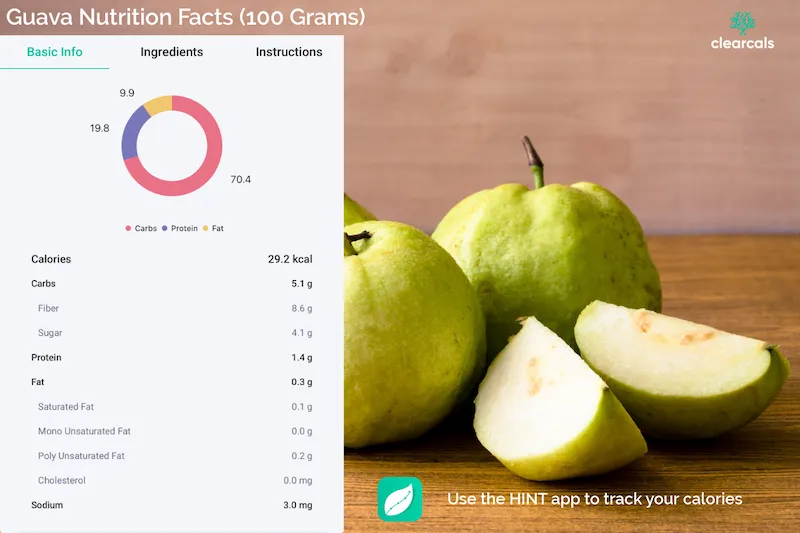
Guava Calories: 29 kcal per 100g | 1 Guava Nutrition, Protein & Benefits
By Asfia Fatima, Chief Dietitian at Clearcals
Guava, known as amrood (अमरूद) in Hindi and jama in Telugu, is one of India's most beloved tropical fruits — and for good reason.
Bursting with flavour and packed with nutrients, this humble fruit is a nutritional powerhouse that deserves a place in your daily diet. Whether you're tracking calories for weight loss, boosting your immunity, or simply looking for a delicious and healthy snack, guava checks all the boxes.
What makes guava truly exceptional is its extraordinary vitamin C content — a single guava contains more than four times the vitamin C found in an orange. With approximately 29 calories per 100g, 1.4g protein per 100g, and a very low glycemic index, guava is an excellent choice for anyone managing their weight or blood sugar.
India is the world's largest producer of guava, with the fruit readily available year-round — making it both accessible and affordable.
TL;DR
- 1 medium guava (100g) = 29 calories — one of the lowest-calorie fruits available
- 1 large guava (~200g) = 58 calories; 1 small guava (~50g) = 15 calories
- Guava protein per 100g = 1.4g — higher protein than most fruits
- Vitamin C: 214 mg per 100g — over 500% of your daily requirement
- Dietary fibre: 8.6g per 100g — one of the highest-fibre fruits
- Glycemic index: 12–24 — very low, safe for diabetics
- Guava leaves contain quercetin and tannins — used for blood sugar control, digestion, and skin
How Many Calories Are in Guava? (Amrood Calories)
Guava is remarkably low in calories while being incredibly nutrient-dense — making it one of the best fruits for weight management.
| Quantity | Weight | Calories |
|---|---|---|
| 1 small guava | ~50g | 15 kcal |
| 1 medium guava | ~100g | 29 kcal |
| 1 large guava | ~200g | 58 kcal |
| 1 extra-large guava | ~300g | 87 kcal |
| 2 medium guavas | ~200g | 58 kcal |
| 2 large guavas | ~400g | 116 kcal |
| 200g guava | 200g | 58 kcal |
| 250g guava | 250g | 73 kcal |
| 300g guava | 300g | 87 kcal |
| 500g guava | 500g | 146 kcal |
| 1 kg guava | 1,000g | 291 kcal |
1 amrood mein kitni calorie hoti hai? Ek medium amrood (100g) mein sirf 29 calories hoti hain. Ek bada amrood (200g) mein 58 calories hoti hain.
Even eating two large guavas provides only 116 calories — fewer than many packaged snacks, while delivering substantially more vitamins, fibre, and protein.
If you're counting your calories as part of a weight management plan, guava allows you to eat satisfying portions without breaking your calorie budget.
Guava Protein Per 100g
Guava is one of the few fruits with meaningful protein content:
| Serving | Protein |
|---|---|
| 100g guava (1 medium) | 1.4g |
| 1 large guava (~200g) | 2.8g |
| 250g guava | 3.5g |
| 1 cup guava chunks (~165g) | 2.3g |
Guava protein per 100g = 1.4g — higher than apples (0.3g), bananas (1.1g), and most other common fruits. While guava is not a high-protein food, its protein content is notable for a fruit and adds to its nutritional value.
For a complete protein and nutrition picture:
| Nutrient | Per 100g guava |
|---|---|
| Calories | 29 kcal |
| Protein | 1.4g |
| Carbohydrates | 5.1g |
| Sugar | 4.1g |
| Dietary Fibre | 8.6g |
| Fat | 0.3g |
| Vitamin C | 214 mg (530% DV) |
| Vitamin A | 25 mcg |
| Potassium | 283 mg (6% DV) |
| Magnesium | 15 mg (4% DV) |
| Calcium | 19 mg (2% DV) |
| Folate | 49 mcg (12% DV) |
Guava's standout nutrients: Vitamin C (530% DV), dietary fibre (8.6g — exceptionally high for a fruit), and folate (12% DV). It also provides more protein per 100g than most fruits.
Health Benefits of Guava
With such an impressive nutritional profile, guava offers wide-ranging health benefits:
1. Powerful Immunity Booster
Guava's 214 mg of vitamin C per 100g makes it one of the best immunity-boosting foods available — far surpassing oranges (53 mg/100g). Vitamin C supports white blood cell production, helping your body fight infections more effectively.
2. Supports Digestive Health
At 8.6g fibre per 100g, guava is among the highest-fibre fruits. This promotes regular bowel movements, supports beneficial gut bacteria, and reduces constipation. Eating guava with the skin provides maximum fibre benefit.
3. Heart Health and Blood Pressure
- Potassium (283 mg/100g) helps regulate blood pressure
- Dietary fibre lowers LDL (bad) cholesterol
- Antioxidants (lycopene, quercetin) protect against arterial inflammation
- Low sodium — heart-friendly for people managing hypertension
4. Skin Health and Anti-Aging
Vitamin C is essential for collagen synthesis — keeping skin firm, smooth, and youthful. The lycopene in pink guava provides additional UV protection. Regular guava consumption may improve skin texture and reduce wrinkles.
5. May Support Cancer Prevention
Guava contains vitamin C, lycopene, and quercetin — antioxidants shown in preliminary studies to have anti-cancer properties, particularly against breast and prostate cancer. More research is ongoing.
Is Guava Good for Weight Loss?
Yes — guava is one of the best fruits for weight loss. Here's why:
- Only 29 kcal/100g: You can eat a large, satisfying serving for very few calories
- 8.6g fibre/100g: Slows digestion and keeps you full longer, reducing total calorie intake
- High water content (~81%): Adds bulk and satiety without calories
- Low GI (12–24): No blood sugar spikes or crashes that trigger cravings
- Nutrient-dense: Provides vitamins and minerals that are often lacking in calorie deficit diets
A 200g serving of guava (2 medium guavas) = just 58 calories with 17.2g fibre — an extremely filling snack for the calorie cost.
Is Guava Good for Diabetes?
Yes — guava is one of the most diabetes-friendly fruits available.
Guava Glycemic Index
| Measure | Value |
|---|---|
| Glycemic Index (GI) | 12–24 (very low) |
| Glycemic Load (1 medium guava, 100g) | ~1.2 (very low) |
| GI classification | Low GI (<55) |
A GI of 12–24 places guava among the lowest-GI fruits available — lower than apples (36), oranges (43), and most other common fruits. The high fibre content (8.6g/100g) further slows glucose absorption, preventing blood sugar spikes.
For diabetics:
- 1–2 medium guavas (100–200g) per serving is generally safe
- Prefer whole guava over guava juice (juice removes fibre and raises GI)
- Eat with meals rather than alone to minimise glycaemic impact
- Monitor your individual blood sugar response — responses vary
Studies on guava leaf extract have shown additional glucose-lowering effects (see Guava Leaves section below). The fruit itself is well-supported for inclusion in diabetic diets per ICMR dietary guidelines.
Guava in Pregnancy — Is It Safe?
Yes — guava is highly beneficial during pregnancy when consumed as part of a balanced diet.
| Nutrient in Guava | Pregnancy Benefit |
|---|---|
| Folate (49 mcg/100g) | Essential for fetal neural tube development — reduces risk of neural tube defects |
| Vitamin C (214 mg/100g) | Immune support for mother and fetus; enhances iron absorption |
| Dietary Fibre (8.6g/100g) | Relieves pregnancy-related constipation |
| Potassium (283 mg/100g) | Helps manage pregnancy-related blood pressure changes |
| Vitamin A (25 mcg/100g) | Supports fetal eye and skin development |
During pregnancy:
- 1–2 medium guavas per day is a safe, beneficial amount
- Always wash thoroughly — avoid fruit from unknown sources due to pesticide risk
- Prefer ripe guava over very unripe (hard green) guava — unripe guava is harder to digest
- Consult your doctor about portion sizes if you have gestational diabetes
Can We Eat Guava at Night?
Yes — guava can be eaten at night. There is no scientific evidence that eating guava at night is harmful or leads to weight gain.
Guava is actually a good evening snack because:
- Very low calories (29 kcal/100g) — won't disrupt a calorie deficit
- High fibre — promotes overnight digestive regularity
- Low GI — no blood sugar spike before sleep
- Natural melatonin precursors — some evidence suggests fruit consumption supports sleep quality
One consideration: Guava's high fibre content can cause mild bloating or gas in some people with sensitive digestion when eaten in large amounts on an empty stomach. If this affects you, have guava with a small amount of food rather than alone.
The idea that fruits "should not be eaten at night" is a popular belief in India but is not supported by nutrition science. Total daily calorie intake — not meal timing — is the primary driver of weight.
Guava Leaves Benefits
Guava leaves (amrood ke patte) are used extensively in traditional medicine and have a growing body of scientific research supporting their health benefits:
1. Blood Sugar Control
Guava leaf extract has been shown to inhibit alpha-glucosidase (an enzyme that breaks down carbohydrates), reducing postprandial (post-meal) blood glucose spikes. A 2010 study published in Nutrition & Metabolism found that guava leaf tea significantly reduced blood glucose in Type 2 diabetics.
2. Anti-Diarrhoeal Properties
Guava leaves contain tannins and quercetin, which have antimicrobial activity against bacteria like E. coli and Staphylococcus aureus — common causes of diarrhoea. Guava leaf tea is a traditional remedy for diarrhoea and stomach infections across Asia.
3. Weight Management Support
Compounds in guava leaves may inhibit the conversion of complex carbohydrates into sugar and starch into maltose, potentially reducing calorie absorption from carbohydrate-heavy meals.
4. Cholesterol Reduction
Regular consumption of guava leaf tea has been associated with reduced LDL (bad) cholesterol and triglycerides in several clinical studies, without affecting HDL (good) cholesterol.
5. Anti-Inflammatory and Antimicrobial
Quercetin in guava leaves has significant anti-inflammatory effects. Applied topically (guava leaf paste or wash), it may help with acne, wound healing, and minor skin infections.
6. Benefits for Hair
Guava leaves boiled in water and applied to the scalp are a traditional remedy for hair loss — the quercetin and antioxidants are believed to strengthen hair follicles. Limited clinical evidence, but widely practised.
How to use guava leaves: Boil 5–6 fresh or dried guava leaves in 1 litre of water for 10–15 minutes. Strain and drink as tea, especially before meals for blood sugar management. Available as guava leaf tea bags in health stores.
Note: Guava leaf supplements and extracts are more potent than tea. Consult a doctor before using supplements, especially if on diabetes medication, as they may enhance glucose-lowering effects.
Guava in Hindi — Amrood ke Fayde
Guava meaning in Hindi: अमरूद (Amrood)
Amrood khane ke fayde (अमरूद खाने के फायदे):
- रोग प्रतिरोधक क्षमता बढ़ाता है: अमरूद में vitamin C बहुत अधिक मात्रा में होता है (214 mg/100g) — यह संक्रमण से लड़ने में मदद करता है
- पाचन सुधारता है: 8.6g fiber प्रति 100g — कब्ज़ दूर करता है और पेट साफ रखता है
- वजन घटाने में मददगार: सिर्फ 29 calories प्रति 100g — भूख कम करता है और वजन नियंत्रण में रखता है
- डायबिटीज में फायदेमंद: बहुत कम glycemic index (12–24) — blood sugar नहीं बढ़ाता
- त्वचा के लिए अच्छा: Vitamin C collagen बनाता है, जिससे skin tight और glowing रहती है
- दिल के लिए अच्छा: Potassium blood pressure नियंत्रित रखता है
Amrood ke patte ke fayde: अमरूद के पत्तों की चाय blood sugar कम करने, दस्त रोकने, और cholesterol घटाने में मदद करती है। 5–6 पत्तियों को 1 लीटर पानी में 15 मिनट उबालें और छानकर पियें।
Different Varieties of Guava
White-Fleshed Guava
The most common variety in India. Pale yellow-green skin, creamy white flesh. Sweeter and milder in flavour. Equally nutritious in vitamin C and fibre content.
Pink/Red-Fleshed Guava
Same exterior but vibrant pink or red flesh. Higher lycopene content — the same antioxidant found in tomatoes and watermelon. Enhanced antioxidant properties and a slightly tangier flavour. Excellent for smoothies.
Thai Guava and Taiwan Pink Guava
Larger, crisper varieties increasingly available in Indian markets. Similar nutritional profile to common varieties with mild flavour differences.
Regional Indian Varieties
- Allahabad Safeda: White-fleshed, extremely popular in North India — large and sweet
- Lucknow-49: Large fruits with excellent flavour
- Sardar: Pink-fleshed variety from Maharashtra
All guava varieties have similar nutritional profiles — choose based on availability and taste preference.
How the Hint App Helps You Track Guava Nutrition
The Hint app makes tracking guava and all your other foods simple and accurate:
- Comprehensive Indian Food Database: Includes raw amrood, guava juice, guava and strawberry lassi, and guava-infused coconut water
- Accurate Calorie Tracking: Log by size (small/medium/large) or weight in grams
- Macro and Micronutrient Breakdown: Track vitamin C, fibre, protein, and potassium alongside calories
- Personalized Goals: Whether managing diabetes, losing weight, or gaining muscle, Hint sets the right targets for your specific situation
- Expert Dietitian Consultations: Hint Premium users get unlimited access to registered dietitians for personalised meal planning
Frequently Asked Questions
How many calories in 1 guava?
1 medium guava (100g) = 29 calories. 1 large guava (~200g) = 58 calories. 1 small guava (~50g) = 15 calories. Guava is one of the lowest-calorie fruits available.
How many calories in 2 guavas?
2 medium guavas (200g combined) = 58 calories. 2 large guavas (400g) = 116 calories.
What is guava protein per 100g?
Guava contains 1.4g protein per 100g — higher than most fruits, including apples (0.3g) and bananas (1.1g). A large guava (200g) provides ~2.8g protein.
Is guava good for diabetes?
Yes — guava has a very low glycemic index of 12–24, and its high fibre content slows glucose absorption. It is one of the most diabetes-friendly fruits. Guava leaves tea may provide additional blood sugar benefits. Stick to 1–2 medium guavas per serving.
Can I eat guava at night?
Yes — guava can be eaten at any time, including at night. It is low in calories (29 kcal/100g), low GI, and high in fibre. The belief that fruit should not be eaten at night is not supported by nutrition science.
What are guava leaves benefits?
Guava leaves (amrood ke patte) contain quercetin and tannins with proven benefits: blood sugar reduction, anti-diarrhoeal effects, cholesterol lowering, and anti-inflammatory properties. Guava leaf tea is the most common way to use them.
Can I eat guava during pregnancy?
Yes — guava is excellent during pregnancy. It provides folate (essential for fetal development), vitamin C, fibre (for constipation relief), and potassium (blood pressure support). Always wash thoroughly before eating.
How many guavas can I eat per day?
For most people, 1–2 medium guavas (100–200g) per day is ideal. This delivers substantial vitamin C and fibre without excessive sugar. Diabetics can include 1 medium guava per serving with meals.
Is it better to eat guava with or without the skin?
Eating with the skin (after washing) is nutritionally superior — the skin contains additional fibre and antioxidants. If you have digestive sensitivity, peeled guava is still highly nutritious.
What is guava called in Hindi?
Guava is called अमरूद (Amrood) in Hindi. In Telugu it is jama, in Tamil koyya, in Marathi peru.
References
- USDA FoodData Central. Guava, raw. https://fdc.nal.usda.gov/
- Díaz-de-Cerio E, et al. (2017). Health Effects of Psidium guajava L. Leaves. Int J Mol Sci, 18(4):897. PMID: 28441786
- Deguchi Y, Miyazaki K. (2010). Anti-hyperglycemic and anti-hyperlipidemic effects of guava leaf extract. Nutrition & Metabolism, 7:9. DOI: 10.1186/1743-7075-7-9
- Rai PK, Mehta S, Watal G. (2010). Hypolipidaemic & hepatoprotective effects of Psidium guajava raw fruit peel. Indian J Med Res, 131:820–824. PMID: 20571173
- Gutiérrez RM, Mitchell S, Solis RV. (2008). Psidium guajava: a review of traditional uses, phytochemistry and pharmacology. J Ethnopharmacol, 117(1):1–27. PMID: 18353572
🎁 Exclusive Offer for Clearcals Store Customers
- Buy select Garmin watches → Get 1 Month FREE Hint Premium (worth ₹1,999)
- Buy Apple Watch models → Get FREE Hint Pro access
Explore More
- Apple Calories, Nutrition and Health Benefits
- Banana Calories, Nutrition and Health Benefits
- Papaya Calories, Nutrition and Health Benefits
- Is Watermelon Good for Diabetes?
About the Author
Asfia Fatima is the Chief Dietitian at Clearcals, with a Master's Degree in Dietetics and Clinical Nutrition and over a decade of experience in clinical nutrition and lifestyle management.
She specialises in evidence-based diet planning for weight loss, diabetes, and metabolic health. At Clearcals, she leads the nutrition strategy behind the Hint app, helping users achieve their goals with science-backed guidance.
🔗 Connect with Asfia on LinkedIn