Track your nutrition and health goals

Grade 1 Fatty Liver: Symptoms, Risks & How to Reverse It
By Dr. Sumedha Verma | Medically Reviewed | Updated April 2025
You went for a routine ultrasound or health check-up, and the report came back with three words that stopped you cold: grade 1 fatty liver. If your first reaction was panic, take a breath.
Grade 1 fatty liver is the mildest, earliest stage of fatty liver disease, and it is the stage at which the condition is most easily and completely reversible.
In this guide, we explain exactly what grade 1 fatty liver means, whether it is dangerous, what symptoms to watch for, what causes it, and most importantly, the specific diet and lifestyle changes that can reverse it completely, often within 3–6 months.
What Is Grade 1 Fatty Liver?
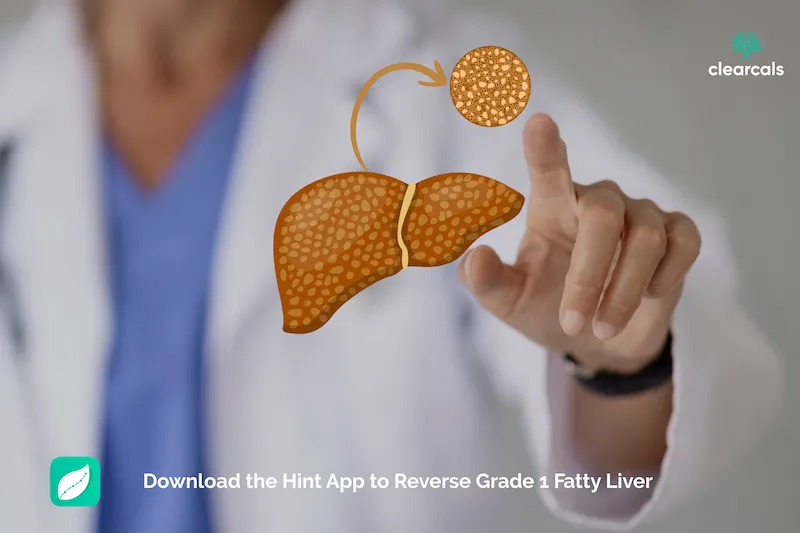
Fatty liver disease, medically known as hepatic steatosis, occurs when fat accumulates in the liver cells (hepatocytes).
A small amount of fat in the liver is normal, but when fat makes up more than 5% of the liver's weight, it is classified as fatty liver disease.
Doctors use a grading system based on ultrasound findings to describe the severity:
| Grade | Fat in Liver | What It Means |
|---|---|---|
| Grade 1 (Mild) | 5–33% fat | Mildly increased echogenicity on ultrasound; the liver is still functioning normally |
| Grade 2 (Moderate) | 34–66% fat | Moderate fat deposit; some impairment of liver function |
| Grade 3 (Severe) | >66% fat | Severe fat accumulation; significant risk of progression to cirrhosis |
Grade 1 fatty liver means fat makes up 5–33% of your liver.
On an ultrasound, this appears as mild 'brightness' (echogenicity) of the liver tissue. The liver is still functioning normally at this stage; bile production, protein synthesis, and detoxification are all intact.
How Common Is Grade 1 Fatty Liver in India?
Fatty liver disease is alarmingly common in India.
Studies estimate that 9–32% of the Indian population has non-alcoholic fatty liver disease (NAFLD), with prevalence even higher in urban populations, people with diabetes, and those who are overweight.
Grade 1 is by far the most common presentation; most people diagnosed with fatty liver are at this stage.
The good news: being diagnosed at grade 1 means you have caught it early, before any significant liver damage has occurred.
Is Grade 1 Fatty Liver Dangerous?
Grade 1 fatty liver by itself is not immediately dangerous. At this stage:
- The liver is not inflamed (no hepatitis).
- No scarring (fibrosis) has occurred.
- Liver enzymes (ALT, AST) may be normal or only mildly elevated.
- There are usually no symptoms or only vague ones.
However, it becomes dangerous if ignored.
Without lifestyle changes, grade 1 can progress over months to years through grade 2, grade 3, and eventually to non-alcoholic steatohepatitis (NASH), fibrosis, cirrhosis, and, in some cases, liver failure or liver cancer.
| 💡 The key message: Grade 1 fatty liver is a warning signal, not a diagnosis of serious disease. Caught at this stage, it is almost always fully reversible with diet and lifestyle changes; no medication is typically required. |
|---|
Grade 1 Fatty Liver Symptoms
One of the reasons fatty liver disease is so widespread yet underdiagnosed is that grade 1 is largely asymptomatic, and most people feel completely normal.
The majority of grade 1 diagnoses are made incidentally during an ultrasound done for another reason.
When symptoms do occur, they are typically vague and easy to dismiss:
- Mild fatigue or low energy that does not improve with rest.
- A dull, aching discomfort in the upper right abdomen (where the liver sits).
- Feeling of fullness or bloating after meals, even small ones.
- Slight nausea, particularly after fatty or heavy foods.
- Mild brain fog or difficulty concentrating.
It is important to note that these symptoms, when they occur, are not specific to fatty liver. Many conditions can cause them.
The only reliable way to diagnose fatty liver disease is through an ultrasound and liver function tests.
What Causes Grade 1 Fatty Liver?
In India, the vast majority of fatty liver cases are non-alcoholic fatty liver disease (NAFLD) — caused by diet and metabolic factors, not alcohol. The main causes include:
- Excess calorie intake, especially from refined carbohydrates, sugar, and ultra-processed foods. The liver converts excess glucose and fructose into fat through a process called de novo lipogenesis.
- Insulin resistance, the liver becomes a fat-storage depot when cells stop responding properly to insulin. This is the central mechanism linking diabetes, PCOS, obesity, and fatty liver.
- Overweight and obesity, especially excess abdominal fat, are strongly linked to liver fat accumulation.
- A sedentary lifestyle and physical inactivity slow fat metabolism in the liver.
- High consumption of sugary beverages. Fructose from cold drinks and packaged juices is preferentially processed by the liver and converted to fat.
- Rapid weight loss or crash dieting. Paradoxically, extreme calorie restriction can flood the liver with fat mobilised from adipose tissue.
- Certain medications — including steroids, tamoxifen, and some antiretrovirals.
- Alcohol, even moderate alcohol consumption, can cause or worsen fatty liver in susceptible individuals.
- Genetic variants in the PNPLA3 and TM6SF2 genes are more common among South Asians and increase the risk of fatty liver.
How Is Grade 1 Fatty Liver Diagnosed?
Grade 1 fatty liver is most commonly diagnosed through an abdominal ultrasound, which shows increased echogenicity (brightness) of the liver compared to the kidneys. Other diagnostic tools include:
- Liver function tests (LFTs): ALT, AST, GGT — may be mildly elevated or normal at grade 1.
- Lipid profile: high triglycerides and low HDL are common alongside fatty liver.
- Fasting blood glucose and HbA1c: to check for insulin resistance and prediabetes.
- FibroScan (transient elastography): measures liver stiffness to rule out fibrosis; not always necessary at grade 1.
- A liver biopsy (the gold standard for diagnosis) is rarely needed for grade 1 fatty liver and is reserved for cases where NASH or fibrosis is suspected.
Grade 1 Fatty Liver Treatment: What Actually Works
There is currently no approved medication specifically for grade 1 NAFLD. The evidence strongly supports lifestyle intervention as the primary and highly effective treatment:
1. Weight Loss
Losing 5–10% of body weight reduces liver fat by 30–40%. Losing more than 10% body weight can completely reverse grade 1 fatty liver and resolve associated inflammation.
Aim for a gradual loss of 0.5–1 kg per week; rapid weight loss can worsen liver injury.
2. Diet Changes
Diet is the most powerful tool for reversing grade 1 fatty liver. The key principles:
- Eliminate sugary beverages: cold drinks, packaged juices, sweetened chai — fructose is the primary driver of liver fat.
- Reduce refined carbohydrates: white rice, maida, biscuits, bread. Switch to whole grains, millets, and legumes.
- Eat more fibre: vegetables, dal, rajma, oats, psyllium husk. Fibre reduces fat absorption and feeds gut bacteria that protect the liver.
- Increase protein: adequate protein (1.2–1.5 g/kg body weight) supports liver repair and reduces appetite.
- Include omega-3 rich foods: fatty fish (rawa, sardines), flaxseeds, walnuts. Omega-3 fatty acids directly reduce liver triglycerides.
- Avoid alcohol completely: even small amounts accelerate fatty liver progression.
- Limit ultra-processed foods: packaged snacks, fast food, and ready meals are high in refined fats and sugars that directly feed liver fat.
3. Regular Exercise
Exercise reduces liver fat independently of weight loss. Both aerobic exercise (brisk walking, cycling, swimming — 150 minutes per week) and resistance training are effective.
Resistance training is particularly valuable because muscle acts as a metabolic sink for glucose, reducing the liver's fat-making burden.
4. Manage Underlying Conditions
If you have diabetes, insulin resistance, PCOS, or high cholesterol alongside grade 1 fatty liver, managing these conditions is essential. Improving insulin sensitivity through diet and exercise directly reduces liver fat accumulation.
| ⚠️ Never self-prescribe supplements or herbal remedies for fatty liver without consulting your doctor. Some supplements marketed for 'liver cleansing' can actually cause liver damage. Milk thistle (silymarin) has modest evidence but is generally safe — discuss with your doctor before starting. |
|---|
Can Grade 1 Fatty Liver Be Reversed Completely?
Yes, grade 1 fatty liver is highly reversible. Multiple clinical studies have demonstrated complete normalisation of liver fat in patients with mild fatty liver following sustained dietary and lifestyle changes. Typical timelines:
- 4–8 weeks: measurable reduction in liver enzymes (ALT, AST) with dietary changes.
- 3–6 months: significant reduction in liver fat visible on ultrasound.
- 6–12 months: complete reversal to a normal liver in most patients with grade 1.
The critical factor is consistency — occasional healthy eating does not reverse fatty liver.
The changes need to be sustained and tracked. This is where having a structured nutrition plan and progress tracking makes a significant difference.
Track Your Progress with the Hint App
Reversing grade 1 fatty liver requires consistently tracking what you eat, managing your calorie intake, and monitoring your weight trend over months.
The Hint app by Clearcals is designed for exactly this — it has the largest Indian food database available, tracks your macronutrients (including sugar and fat intake), and helps you build the eating habits that reverse fatty liver.
With Hint Premium, you get 1-on-1 access to certified Indian dietitians who can build a personalised fatty liver reversal diet plan around your food preferences, lab reports, and lifestyle — including strategies to manage insulin resistance, PCOS, or diabetes if they co-exist with your fatty liver diagnosis.
Frequently Asked Questions
Q: How long does it take to reverse grade 1 fatty liver?
A: With consistent dietary changes and regular exercise, most people see a significant reduction in liver fat within 3–6 months, and complete reversal within 6–12 months. The earlier you start, the faster the recovery.
Q: Can I eat rice if I have grade 1 fatty liver?
A: Yes, in moderation. Switch to smaller portions of brown or parboiled rice, pair it with dal and vegetables to lower the glycemic impact, and avoid eating large quantities of white rice at a single meal. Replacing some rice meals with millets (jowar, bajra, ragi) is even better.
Q: Is grade 1 fatty liver seen on ultrasound always accurate?
A: Ultrasound is a reliable screening tool for fatty liver, but has limitations — it may miss fatty liver when fat is below 20–30%. If your symptoms are strong but the ultrasound appears normal, your doctor may order additional tests such as a FibroScan or MRI-PDFF.
Q: Do I need medication for grade 1 fatty liver?
A: Generally, no. There is no approved medication for grade 1 NAFLD. Diet, exercise, and weight loss are the primary treatments and are highly effective at this stage. Medication may be considered for underlying conditions like diabetes or high cholesterol that coexist with fatty liver.
Q: Can children get grade 1 fatty liver?
A: Yes — paediatric NAFLD is increasingly common in India due to rising rates of childhood obesity and high-sugar diets. A paediatric gastroenterologist should evaluate children with suspected fatty liver. Dietary intervention and increased physical activity are the mainstay of treatment in children as well.
The Bottom Line
Grade 1 fatty liver is a wake-up call, not a catastrophe. Your liver is telling you that your current diet and lifestyle are putting it under strain, but it has not been damaged yet. The window for complete, medication-free reversal is wide open.
Cut out sugary drinks. Replace refined grains with whole grains and millets. Eat more dal, vegetables, and lean protein. Walk for 30 minutes a day. Lose 5–10% of your body weight. Repeat for 6 months. Your next ultrasound will likely show a completely different result.
If you want a structured, personalised plan to make this happen — one designed around Indian food and your specific health profile — the Hint app can help you every step of the way.
Disclaimer: This article is for informational and educational purposes only and does not constitute medical advice. Always consult your doctor or a gastroenterologist for diagnosis and treatment guidance specific to your health condition.
About the Author
Dr. Sumedha Verma is a Consultant Physician at Clearcals with extensive experience in clinical medicine and healthcare services.
She has significant expertise in managing chronic conditions such as fatty liver, type 2 diabetes, thyroid disorders, PCOS, infertility, and other gynecological health concerns.
Known for her patient-centered approach, Dr. Verma focuses on improving patient compliance and helping individuals achieve better health outcomes through personalized medical guidance and long-term care.
🔗 Connect with Dr. Sumedha on LinkedIn
Explore More