Track your nutrition and health goals

Soya Chunks Calories, Protein & Nutrition Per 100g | Raw vs Boiled

By Asfia Fatima, Chief Dietitian at Clearcals
Soya chunks are one of the richest plant-based protein sources available. Also known as meal maker, soya badi, or soya nuggets, they are made from defatted soy flour — a byproduct of extracting soybean oil — and are used across Indian cooking in curries, pulao, and stir-fries.
Whether you eat them raw, boiled, in a curry, or as pulao, knowing the exact calories and protein helps you fit them accurately into your daily targets. This guide covers soya chunks calories and protein — raw vs boiled — across every common serving size from 25g to 300g. Not sure what your daily protein target is? Use our Protein Intake Calculator.
Track your soya chunk intake with the Hint app to stay on top of your daily protein and calorie goals.
Soya Chunks Nutritional Value Per 100g
100g of raw soya chunks contain 344 calories, with 60% of calories from protein, 38% from carbohydrates, and 2% from fat — making them one of the best protein-to-calorie foods available. Boiled soya chunks are significantly lighter because they absorb 2–3× their weight in water during cooking.
| Nutrient | Per 100g (Raw) | % Indian RDA | Per 100g (Boiled) | % Indian RDA |
|---|---|---|---|---|
| Calories | 344 kcal | 17% | 138 kcal | 7% |
| Protein | 52g | 87% | 21g | 35% |
| Carbohydrates | 33g | 11% | 13g | 4% |
| Fat | 0.5g | 1% | 0.2g | 0.4% |
| Fibre | 13g | 52% | — | — |
| Iron | ~8mg | 47% | ~3mg | 18% |
| Calcium | ~145mg | 18% | ~58mg | 7% |
| Zinc | ~3.5mg | 35% | ~1.4mg | 14% |
% Indian RDA based on ICMR 2020 reference values (sedentary adult). RDA values used: Calories 2,000 kcal; Protein 60g; Carbs 300g; Fat 55g; Fibre 25g; Iron 17mg; Calcium 800mg; Zinc 10mg.
Soya chunks protein per 100g (raw): 52g | Soya chunks calories per 100g (raw): 344 kcal
Soya chunks protein per 100g (boiled): 21g | Soya chunks calories per 100g (boiled): 138 kcal
Meal Maker Protein Per 100g
Meal maker is the name commonly used in South India — particularly Karnataka, Andhra Pradesh, and Tamil Nadu — for soya chunks. The nutritional values are identical: 52g protein and 344 kcal per 100g raw; 21g protein and 138 kcal per 100g boiled.
Soya Chunks Calories Per 100g
Raw soya chunks contain 344 kcal per 100g. Boiled soya chunks contain 138 kcal per 100g — less than half, because water absorption roughly triples their weight during cooking. The table below covers calories from 25g to 300g for both raw and boiled.
| Quantity | Raw Calories (kcal) | Boiled Calories (kcal) |
|---|---|---|
| 25g | 86 | 34 |
| 30g | 103 | 41 |
| 50g | 172 | 69 |
| 60g | 206 | 83 |
| 80g | 275 | 110 |
| 100g | 344 | 138 |
| 150g | 517 | 207 |
| 200g | 689 | 276 |
| 250g | 861 | 345 |
| 300g | 1,034 | 414 |
Boiled Soya Chunks Calories Per 100g
100g of boiled soya chunks contains 138 kcal — significantly lower than 344 kcal for raw, because the chunks absorb 2–3× their weight in water when soaked or boiled.
Use the Hint app to log soya chunks accurately — it tracks both raw and cooked weights so your calorie count reflects what you actually ate.
50g Soya Chunks: Protein, Calories and Carbs
50g soya chunks protein (raw): 26g | 50g soya chunks calories (raw): 172 kcal
50g soya chunks protein (boiled): 10.5g | 50g soya chunks calories (boiled): 69 kcal
50g of raw soya chunks is one of the most common measuring portions — it works out to a generous single serving that provides 26g of complete protein for just 172 kcal. This is the portion most gym diets and high-protein meal plans refer to.
If you are weighing after boiling: 50g of boiled soya chunks contain only 69 kcal and 10.5g protein — because the cooked weight is much heavier than the dry weight. 50g dry soya chunks become approximately 150–175g once boiled.
| Nutrient | 50g Raw | 50g Boiled |
|---|---|---|
| Calories | 172 kcal | 69 kcal |
| Protein | 26g | 10.5g |
| Carbohydrates | 16.5g | 6.5g |
| Fat | 0.25g | 0.1g |
| Fibre | 6.5g | — |
| % Indian RDA (protein) | 43% | 18% |
When a recipe says "50g soya chunks," it almost always means 50g dry/raw before soaking. Weigh before boiling for the most accurate tracking.
10 Soya Chunks Calories
A single soya chunk weighs approximately 5–8g dry depending on the brand and size. Ten soya chunks therefore weigh roughly 50–80g dry:
| Size | 10 Soya Chunks (dry weight) | Calories (raw) | Protein (raw) |
|---|---|---|---|
| Small/mini chunks | ~30–40g | 103–138 kcal | 15.6–20.8g |
| Standard chunks | ~50g | 172 kcal | 26g |
| Large chunks | ~70–80g | 241–275 kcal | 36.4–41.6g |
Once boiled, 10 standard soya chunks absorb water and expand to approximately 150g, providing about 207 kcal and 31.5g protein.
Soya Chunks Protein Per 100g
100g of raw soya chunks contain 52g of protein — one of the highest protein concentrations of any plant-based food. Boiled soya chunks contain approximately 21g of protein per 100g (lower per-100g due to water absorption, not protein loss).
Soya chunks protein per 100g (raw/dry): 52g
Protein in soya chunks per 100g boiled: 21g
| Quantity | Raw Protein (g) | Boiled Protein (g) |
|---|---|---|
| 25g | 13.0 | 5.3 |
| 30g | 15.6 | 6.3 |
| 50g | 26.0 | 10.5 |
| 60g | 31.2 | 12.6 |
| 80g | 41.6 | 16.8 |
| 100g | 52.0 | 21.0 |
| 150g | 78.0 | 31.5 |
| 200g | 104.0 | 42.0 |
| 250g | 130.0 | 52.5 |
| 300g | 156.0 | 63.0 |
Does Boiling Soya Chunks Reduce Protein?
No — boiling does not reduce the total protein in soya chunks. The per-100g figure drops from 52g (raw) to 21g (boiled) purely because of water absorption: soya chunks absorb approximately 2–3× their dry weight in water during boiling, which increases total weight without adding any protein.
Think of it this way: 100g of raw soya chunks become approximately 280–300g once boiled. That 280–300g of boiled soya chunks still contains roughly 52–58g of protein — the same as the original 100g dry. When you measure 100g of boiled chunks, you are only measuring about one-third of what started as dry.
Practical rule: Always track soya chunks by their dry/raw weight for accuracy. 50g dry = approximately 26g protein, regardless of whether you boil, soak, or cook them. The cooking method (boiling in water vs. soya chunks curry with oil) does not materially affect protein content.
Boiled Soya Chunks Protein Per 100g
100g of boiled soya chunks contains approximately 21g of protein. This is the figure to use when weighing after cooking. The Hint app's database includes both raw and boiled entries so you can log whichever weight is easier to measure.
200g Soya Chunks Protein and Calories
200g of raw soya chunks contain 689 kcal and 104g of protein. If boiled, 200g of boiled soya chunks contain 276 kcal and 42g of protein. A common gym-diet serving of 50–60g dry soya chunks (which becomes 150–180g boiled) provides 26–31g protein for 172–206 kcal — an efficient protein source at any calorie budget.
1 Bowl (1 Katori) Soya Chunks Protein and Calories
1 medium bowl (katori) of cooked soya chunks (approximately 150g boiled) contains around 207 kcal and 31.5g protein. If the bowl is a sabzi or curry with oil and spices added, the total may be 250–320 kcal, depending on the amount of oil used.
| Serving | Weight | Calories | Protein |
|---|---|---|---|
| 1 small bowl (boiled) | ~100g | 138 kcal | 21g |
| 1 medium bowl / katori (boiled) | ~150g | 207 kcal | 31.5g |
| 1 large bowl (boiled) | ~200g | 276 kcal | 42g |
Soya Chunks Macros Per 100g
The full macronutrient profile of raw soya chunks per 100g:
| Macro | Amount | % of Calories |
|---|---|---|
| Calories | 344 kcal | — |
| Protein | 52g | 60% |
| Carbohydrates | 33g | 38% |
| Fat | 0.5g | 2% |
| Fibre | 13g | — |
| Glycemic Index | ~15 (Low) | — |
Soya chunks have one of the best protein-to-calorie ratios of any food — 52g of protein for only 344 kcal, with almost no fat. The low glycemic index (~15) makes them suitable for people managing blood sugar.
Soya Chunks vs Chicken Protein
Both soya chunks and chicken are complete proteins containing all essential amino acids. Here is how they compare per 100g:
| Source | Calories | Protein | Fat | Carbs |
|---|---|---|---|---|
| Soya chunks (raw) | 344 kcal | 52g | 0.5g | 33g |
| Soya chunks (boiled) | 138 kcal | 21g | 0.2g | 13g |
| Chicken breast (cooked) | 165 kcal | 31g | 3.6g | 0g |
| Chicken breast (raw) | 120 kcal | 23g | 2.6g | 0g |
Raw dry soya chunks have significantly more protein per 100g than chicken, but this comparison is misleading — raw soya chunks are a concentrated dry food, not a ready-to-eat portion. A fair comparison is 50g dry soya chunks (26g protein, 172 kcal) versus 100g cooked chicken breast (31g protein, 165 kcal). Both are excellent protein sources; soya chunks are lower in fat and cost significantly less per gram of protein.
Health Benefits of Soya Chunks
1. Are Soya Chunks Good for Health? Yes, soya chunks are highly beneficial due to their high protein and fibre content. They support muscle maintenance, gut health, satiety, and hormonal balance. At 52g protein per 100g dry, they are one of the most protein-dense plant foods available.
2. Soya Chunks Benefits for Females Soya chunks are rich in isoflavones, which are plant-based compounds that mildly mimic oestrogen. These help balance hormonal fluctuations, particularly during perimenopause and menopause. They also provide iron (~8mg per 100g dry) and calcium (~145mg per 100g dry), both of which are critical for women's health.
3. Are Soya Chunks Good for Weight Loss? Yes. Soya chunks have a high protein and fibre content that promotes satiety and reduces overall calorie intake. At just 138 kcal per 100g boiled with 21g protein, they are an excellent high-volume, low-calorie protein source for anyone in a calorie deficit.
4. Are Soya Chunks Good for Weight Gain? When consumed in higher quantities, soya chunks help with weight gain by providing a calorie-dense protein source. 200g dry (689 kcal, 104g protein) added to a day's meals contributes significantly to both calorie surplus and protein targets — important for lean mass gain.
5. Are Soya Chunks Good for Diabetes? Yes. Soya chunks have a low glycaemic index (~15) and high fibre content, making them suitable for people managing blood sugar. Their high protein content also slows gastric emptying, which reduces post-meal glucose spikes.
Soya Chunks and Thyroid Health
While soya chunks are nutritious, excessive soy consumption may interfere with thyroid function, particularly for those with hypothyroidism or who take thyroid medication. Moderate intake — 50–100g dry per day — is generally well-tolerated for most people. If you have a thyroid condition, consult a dietitian before making soya chunks a daily staple. Hint Premium includes unlimited dietitian consultations if you need personalised guidance.
Soya Chunks and Male Health
There is a common myth that soy consumption lowers testosterone in men. However, moderate intake (50–100g dry per day) has not been shown to significantly affect testosterone levels in human clinical studies. The isoflavone content in soya chunks is much lower than the doses used in studies that raised concerns. Most men who eat soya chunks as part of a balanced, high-protein diet will see benefits — not drawbacks — in terms of muscle maintenance and recovery.
Soya Chunks Preparation and Cooking Tips
Soya chunks can be included in various dishes like soya pulao, soya chunks curry, and soya chunks rice to boost protein intake. For best results:
- Soak in hot water for 15–20 minutes, then squeeze out the water before cooking. This removes any raw soy flavour.
- Boil in salted water with a pinch of turmeric for 5–7 minutes if using in dry preparations like stir-fries.
- Marinate after soaking for curries — soya chunks absorb marinades and spices well once hydrated.
- Dry weight before soaking gives the most accurate calorie and protein count for tracking.
Other Soy-Based Products and Their Calories
1. Soy Milk
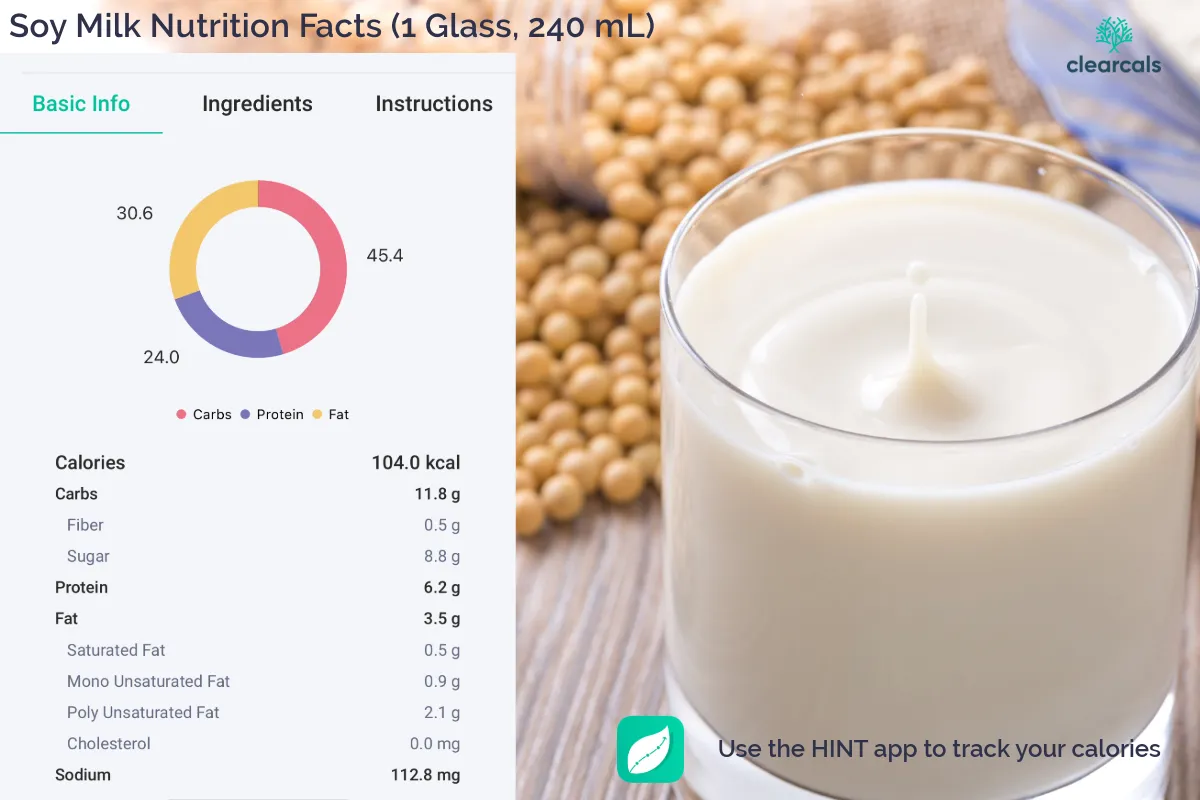
Soy milk is a plant-based milk alternative made from soybeans, rich in high-quality protein and essential amino acids. One glass (240 mL) of soy milk contains 104 calories — 45% from carbs, 24% from protein, and 31% from fat.
It is naturally lactose-free, a good source of calcium (when fortified), vitamin D, and B vitamins. It also contains isoflavones, which may benefit heart health and hormone balance.
2. Soya Chaap
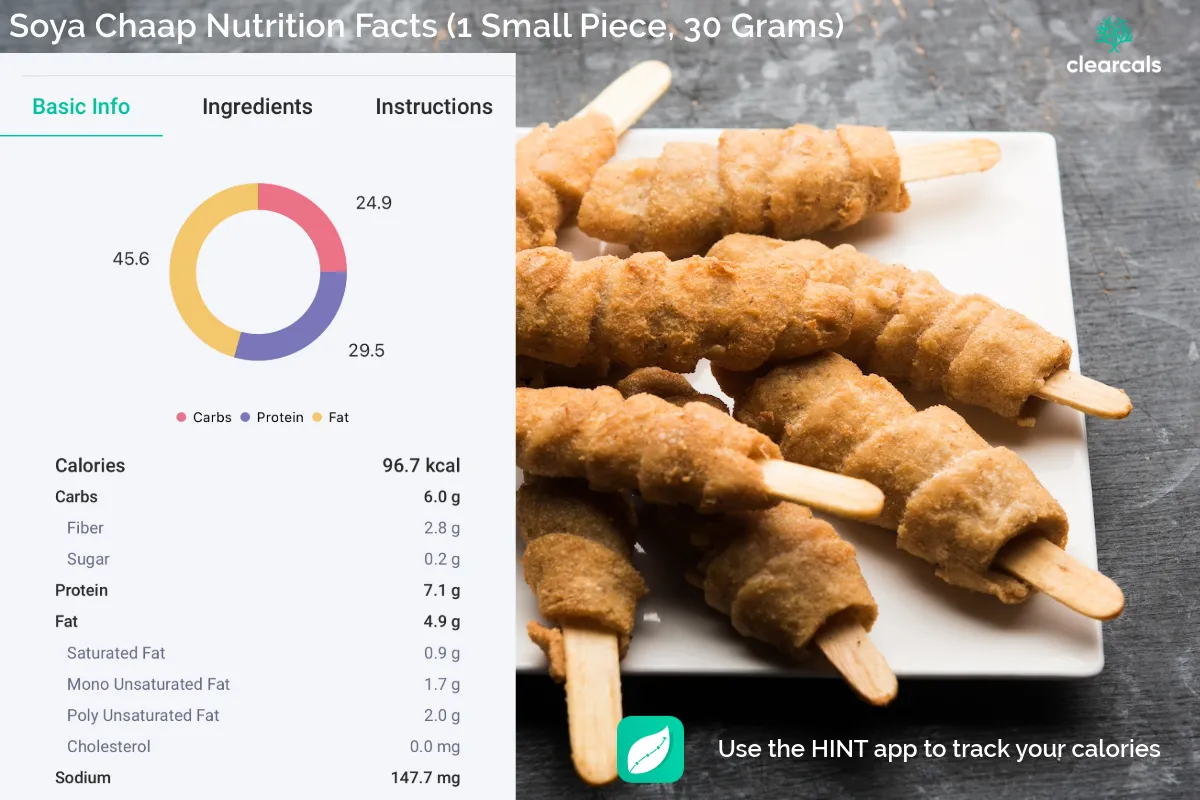
Soya chaap is a popular North Indian dish made from textured soy protein shaped into skewers and marinated with spices before grilling or cooking in gravy. 1 small piece (30g) of soya chaap contains 97 calories — 25% from carbs, 29% from protein, and 46% from fat. Per 100g, soya chaap has approximately 300 kcal.
Soya Chaap vs Soya Chunks: Soya chaap is made from soy protein mixed with refined flour, giving it a meaty, chewy texture. Soya chunks are made from defatted soy flour — higher in protein (~52g/100g dry), lower in fat, and more protein-dense. For maximum protein with minimal processing, soya chunks are the better choice. For taste and versatility, soya chaap is a great meat substitute.
3. Tofu (Soy Paneer)
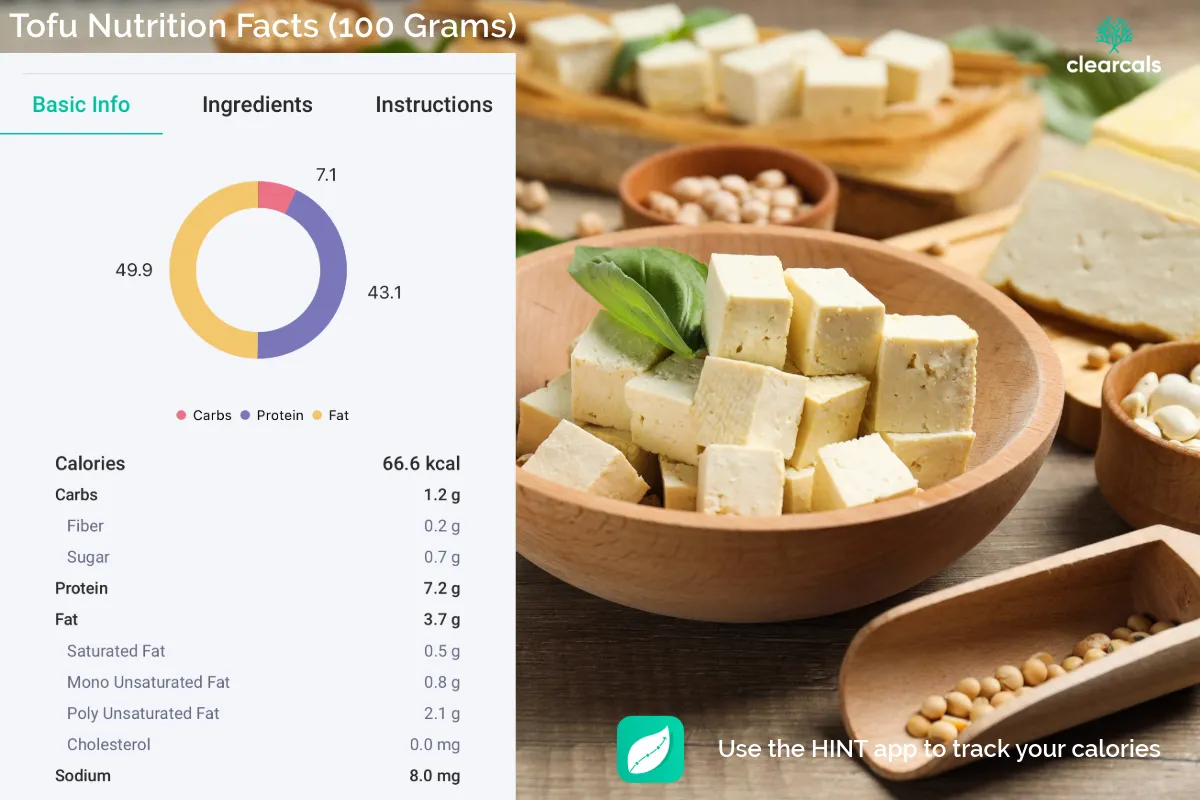
Tofu is made from coagulated soy milk and used widely in stir-fries, curries, and salads. 100g of tofu contains 67 calories — 7% from carbs, 43% from protein, and 50% from fat. It is an excellent source of plant-based protein, calcium, and iron, and contains isoflavones beneficial for heart health and hormone balance.
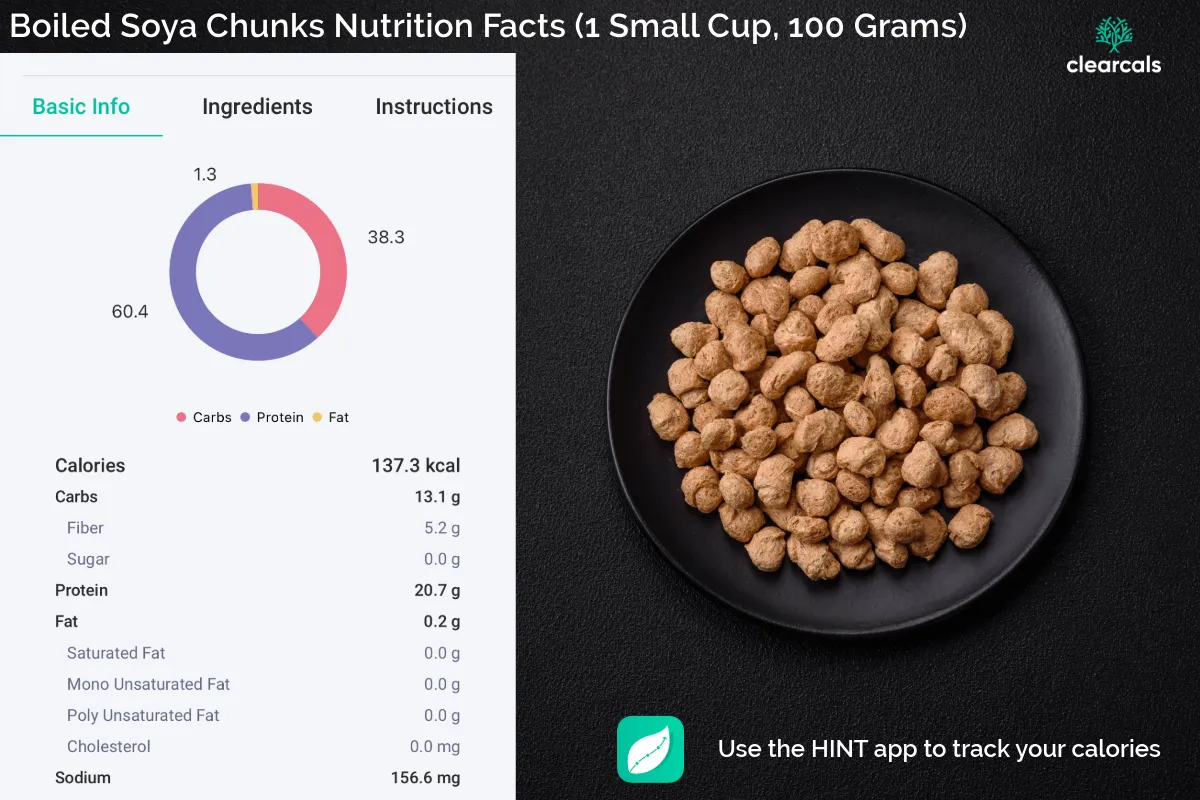
4. Boiled Soya Chunks
Boiled soya chunks are hydrated soy protein pieces that can be added to curries, stir-fries, and salads. 1 small cup (100g) of boiled soya chunks contains 138 calories — 38% from carbs, 60% from protein, and 2% from fat. They are packed with protein and fiber, aiding muscle repair and digestion.
Does Boiling Soya Chunks Reduce Protein? No — boiling rehydrates them and does not significantly reduce protein content. The protein per 100g appears lower when boiled because the weight increases due to water absorption.
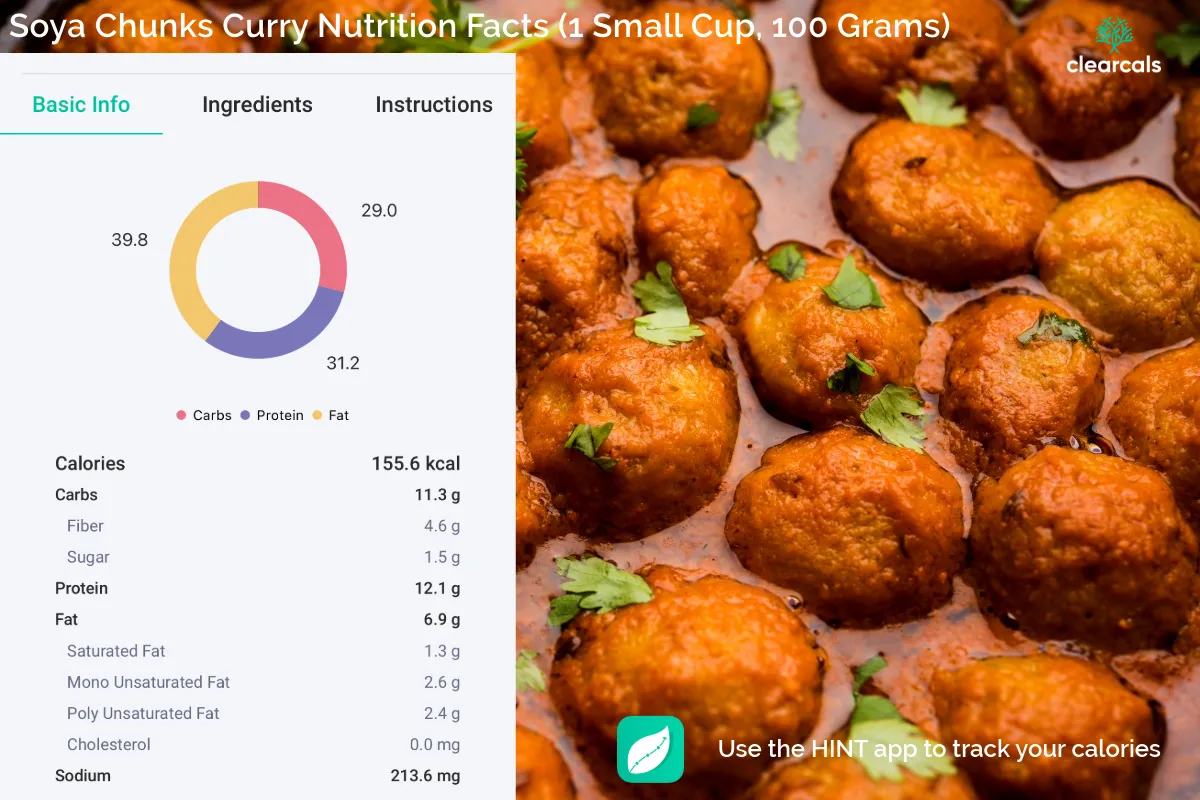
5. Soya Chunks Curry
Soya chunks curry is a flavorful dish cooked in a spiced tomato and onion gravy. 1 small cup (100g) of soya chunks curry contains 157 calories — 29% from carbs, 31% from protein, and 40% from fat. It is protein-rich and provides essential iron and calcium, supporting muscle health and digestion.
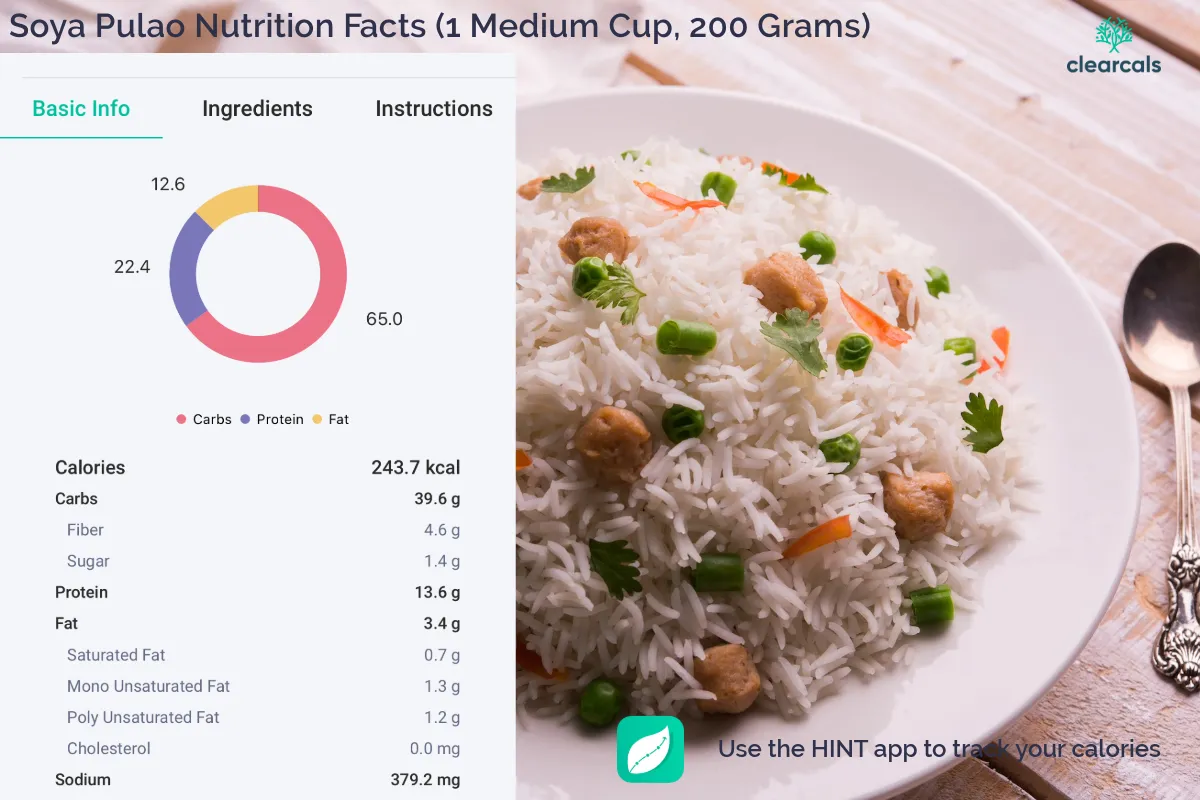
6. Soya Pulao
Soya pulao is a nutritious one-pot dish made with rice, soya chunks, and aromatic spices. 1 medium cup (200g) of soya pulao contains 244 calories — 65% from carbs (rice), 22% from protein (soya chunks), and 13% from fat (cooking oil). The soya chunks add muscle-supporting protein while the rice provides sustained energy.
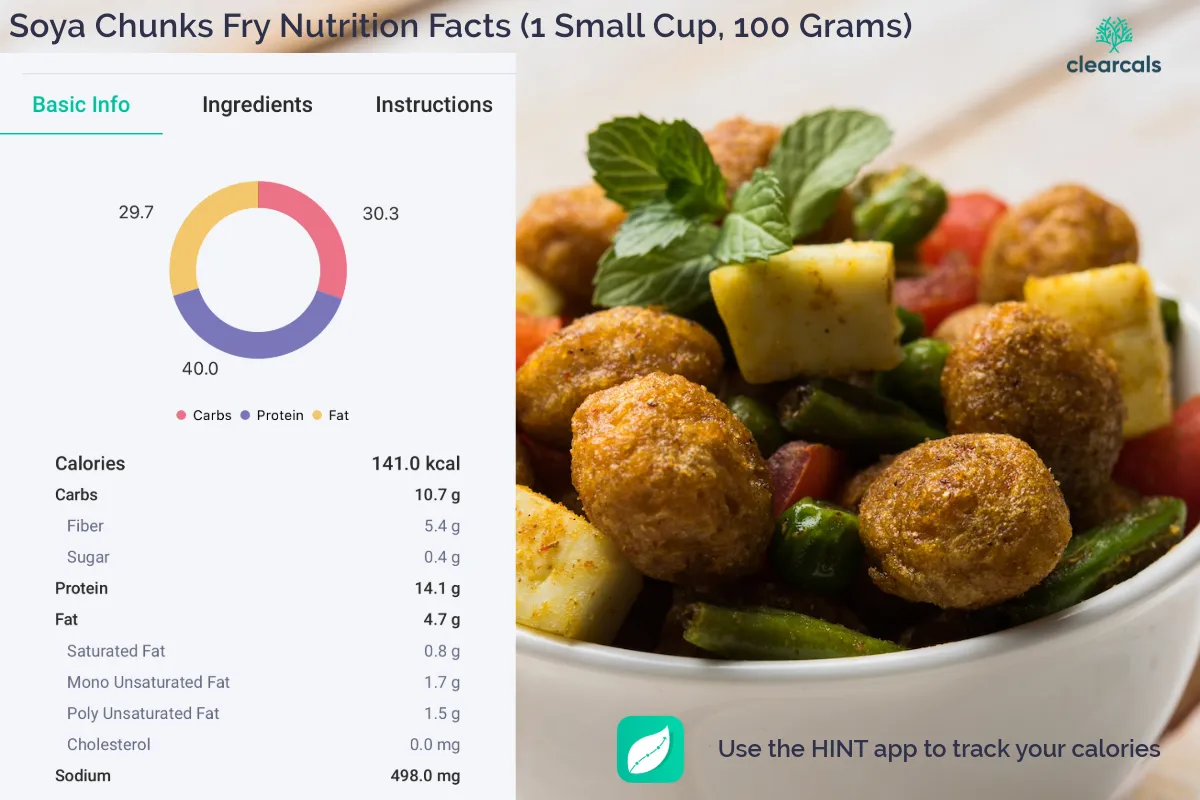
7. Soya Chunks Fry
Soya chunks fry is a crispy dish made by stir-frying or shallow-frying marinated soya chunks with spices. 1 small cup (100g) of soya chunks fry contains 141 calories — 30% from carbs, 40% from protein, and 30% from fat. High in fiber and low in cholesterol, it is a heart-healthy, protein-rich snack or side dish.
FAQs
1. How much protein is in 100g of soya chunks? 52g of protein per 100g raw. Boiled: approximately 21g per 100g. The difference is due to water absorption during cooking — the total protein per serving does not change.
2. How many calories are in 50g of soya chunks? 172 kcal for 50g raw, with 26g protein. For 50g boiled: approximately 69 kcal and 10.5g protein. Most recipes and gym diets refer to 50g dry weight.
3. Soya chunks vs chicken protein — which is higher? Raw dry soya chunks have 52g of protein per 100g vs chicken breast's 23g per 100g raw. However, boiled soya chunks (21g per 100g) are closer to chicken on a cooked-weight basis. A fair comparison is 50g dry soya chunks (26g protein) vs 100g cooked chicken breast (31g protein) — both are excellent high-protein options.
4. Is eating soya chunks daily bad? Moderation is key. 50–100g dry per day is generally safe and beneficial. Excessive consumption may affect thyroid function in sensitive individuals or those on thyroid medication. Most healthy adults eating soya chunks as part of a balanced diet will not experience adverse effects.
5. What are soya chunks' carbs? Approximately 33g of carbohydrates per 100g raw. Boiled: ~13g per 100g. Net carbs (after fibre) are 20g raw and ~13g boiled.
6. Are soya chunks a complete protein? Yes — they contain all essential amino acids, making them a complete protein source comparable to animal protein. This makes soya chunks particularly valuable for vegetarians and vegans.
7. How many calories are in soya chaap per 100g? Around 300 calories per 100g of soya chaap — higher than plain soya chunks due to the refined flour and oil content.
8. How much fat is in soya chunks? 0.5g per 100g raw — one of the lowest fat contents of any protein source. Boiled: 0.2g per 100g.
9. Is soy milk good for weight loss? Yes — 104 kcal per glass, with a good protein-to-calorie ratio, makes it a satisfying low-calorie beverage that helps manage hunger between meals.
10. Does boiling soya chunks reduce protein? No — boiling rehydrates the chunks but does not destroy protein. The protein-per-100g figure drops only because the cooked weight is 2–3× higher than the dry weight. Track by dry weight for accuracy.
11. What is meal maker? Meal maker is the name for soya chunks commonly used in South India (Karnataka, Andhra Pradesh, Tamil Nadu). The nutrition profile is identical: 52g protein and 344 kcal per 100g dry.
References
- Young VR. Soy protein in relation to human protein and amino acid nutrition. J Am Diet Assoc. 1991;91(7):828–835. PubMed
- Tang JE, Moore DR, Kujbida GW, Tarnopolsky MA, Phillips SM. Ingestion of whey hydrolysate, casein, or soy protein isolate: effects on mixed muscle protein synthesis at rest and following resistance exercise in young men. J Appl Physiol. 2009;107(3):987–992. PubMed
- Leidy HJ, Clifton PM, Astrup A, et al. The role of protein in weight loss and maintenance. Am J Clin Nutr. 2015;101(6):1320S–1329S. PubMed
- Messina M. Soy foods, isoflavones, and the health of postmenopausal women. Am J Clin Nutr. 2014;100(Suppl 1):423S–430S. PubMed
- Messina M, Redmond G. Effects of soy protein and soybean isoflavones on thyroid function in healthy adults and hypothyroid patients: a review of the relevant literature. Thyroid. 2006;16(3):249–258. PubMed
- Hamilton-Reeves JM, Vazquez G, Duval SJ, et al. Clinical studies show no effects of soy protein or isoflavones on reproductive hormones in men: results of a meta-analysis. Fertil Steril. 2010;94(3):997–1007. PubMed
- Anderson JW, Johnstone BM, Cook-Newell ME. Meta-analysis of the effects of soy protein intake on serum lipids. N Engl J Med. 1995;333(5):276–282. PubMed
- Jenkins DJ, Kendall CW, Augustin LS, et al. Glycemic index: overview of implications in health and disease. Am J Clin Nutr. 2002;76(1):266S–273S. PubMed
🎁 Free Hint with Every Watch Purchase
Garmin watches: Purchase any Garmin watch from the Clearcals Store and receive 1 month of Hint Premium (worth ₹1,999) free. With Hint version 2.0, if your Garmin watch syncs to Garmin Connect and Garmin Connect is connected to Apple Health, your workouts flow automatically into Hint — no manual logging needed.
Apple Watch: Purchase any Apple Watch from the Clearcals Store and receive a free Hint Pro subscription. With Hint version 2.0, any workout recorded on your Apple Watch syncs automatically into Hint — no manual logging needed.
About the Author
Asfia Fatima is the Chief Dietitian at Clearcals, with a Master's Degree in Dietetics and Clinical Nutrition and over a decade of experience in clinical nutrition and lifestyle management. She specialises in evidence-based diet planning for weight loss, diabetes, and metabolic health. At Clearcals, she leads the nutrition strategy behind the Hint app, helping users achieve their goals through personalised, data-driven guidance.
Related Reading
- Calorie Tracking Guide for Indians
- Indian Food Calorie Calculator
- Tea Calories, Nutrition and Health Benefits
- Understanding Calories: How to Track and Manage Your Intake
- Upma Calories, Nutrition Facts & Health Benefits