Track your nutrition and health goals

High-Protein, Low-Calorie Foods: The Complete List (With Protein-to-Calorie Ratios)
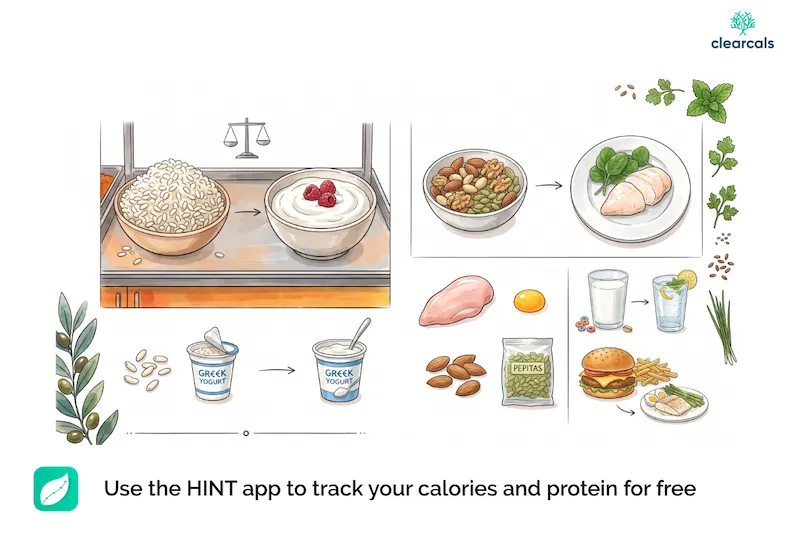
High-Protein, Low-Calorie Foods: The Complete List (With Protein-to-Calorie Ratios)
Why "High-Protein, Low-Calorie" Is the Combination That Matters Most
If you're trying to lose weight without losing muscle — or just trying to feel full on fewer calories — the foods that do the most work are the ones high in protein relative to their calorie count, not just high in protein or low in calories individually.
Protein has a higher satiety effect per calorie than carbs or fat. It also has the highest thermic effect of food (your body burns more calories digesting protein than digesting fat or carbs — roughly 20-30% of protein's calories go to digesting it, versus 5-10% for carbs and 0-3% for fat). Building meals around foods that are both keeps you fuller for longer on a smaller calorie budget. To see how much protein your meals should add up to, use our Protein Intake Calculator.
High-Protein, Low-Calorie Foods (Ranked by Protein-to-Calorie Ratio)
| Food | Calories (per 100g) | Protein (per 100g) | Protein per 100 kcal |
|---|---|---|---|
| Egg whites | ~52 kcal | ~11g | ~21g |
| Chicken breast (skinless, grilled) | ~165 kcal | ~31g | ~19g |
| Greek yogurt (plain, low-fat) | ~60 kcal | ~10g | ~17g |
| Fish (white fish, e.g., tilapia/rohu) | ~90-105 kcal | ~20- 22 g | ~20- 21 g |
| Tofu (firm) | ~145 kcal | ~15 g | ~10g |
| Paneer (low-fat) | ~180-200 kcal | ~18- 20 g | ~10 g |
| Moong dal (cooked) | ~105 kcal | ~7g | ~7g |
| Sprouts (moong, cooked) | ~30 kcal | ~3g | ~10g |
| Cottage cheese (low-fat) | ~72 kcal | ~11g | ~15g |
| Whey protein powder | ~370-400 kcal | ~75- 80 g | ~19- 20 g |
| Shrimp (cooked) | ~99 kcal | ~24g | ~24g |
| Turkey breast (skinless, roasted) | ~135 kcal | ~30g | ~22g |
| Edamame (cooked) | ~121 kcal | ~12g | ~10g |
Values are approximate and vary by brand, preparation, and cooking method — log your actual food in the Hint app for a precise number.
Best Vegetarian High-Protein, Low-Calorie Foods
For a vegetarian diet — the default for a large share of Hint's users — the standouts are egg whites (if you eat eggs), Greek yogurt, low-fat paneer, tofu, moong dal and sprouts, and cottage cheese. None of these need to be "diet food" — they're everyday Indian staples that happen to have an excellent protein-to-calorie ratio. For a deeper dive into plant and vegetarian protein sources, see our guides on high-protein vegetarian foods, vegetarian protein sources, and which dal has the most protein.
Best Vegan High-Protein, Low-Calorie Foods
Vegan (no dairy, no eggs) narrows the list a bit, but there are still strong options: tofu, edamame, moong dal and other lentils, sprouts, and whey-free plant protein powder (pea- or soy-based) all offer a good protein-to-calorie ratio without any animal products. Tofu and edamame in particular are worth building meals around if you're vegan and specifically chasing this combination, since they're close to paneer and Greek yogurt in protein density without the dairy.
High-Fiber, High-Protein Low-Calorie Foods
Protein isn't the only thing that keeps you full — fibre matters just as much, and a handful of foods on this list genuinely deliver both. Moong dal, sprouts, and edamame are all naturally high in fibre as well as protein, which is part of why legume-based meals tend to be more filling per calorie than an equivalent amount of chicken or paneer alone. If fibre specifically is your focus rather than protein, our guide to eating more fibre covers the full list of high-fibre foods and how much you actually need daily.
Low-Carb, High-Protein Low-Calorie Foods
If you're combining a lower-carb approach with your protein and calorie targets, egg whites, chicken breast, fish, shrimp, turkey breast, Greek yogurt, cottage cheese, and paneer are all naturally low in carbohydrates while offering a strong protein-to-calorie ratio. Legume-based options (moong dal, sprouts, edamame, tofu) are higher in carbs than animal proteins, which isn't a problem for most people, but is worth knowing if you're watching carbs specifically rather than just calories.
Low-Calorie Protein Bars and Protein Powder — Worth It?
Protein bars and protein powder can be genuinely useful for hitting a protein target conveniently, but "low calorie" and "high protein" don't automatically mean "healthy" — many protein bars are closer to a candy bar with protein added than a whole food. Check the label for protein-to-calorie ratio the same way as any other food (aim for at least 10g protein per 100 kcal as a rough benchmark), and watch added sugar. See our best protein bars in India guide for specific picks worth buying.
How Much Protein Do You Actually Need?
Protein needs depend on body weight, activity level, and goals (fat loss vs. muscle gain vs. maintenance) — there's no single number that applies to everyone. See our full daily protein requirement guide for how to calculate your target, since eating "high protein" foods only helps if you're actually hitting a meaningful daily total, not just choosing high-protein options occasionally.
Building Meals Around High-Protein, Low-Calorie Foods
Rather than treating this as a separate diet, the simplest approach is to make a protein source the anchor of each meal, then build the rest of the plate around it:
- Breakfast: eggs, Greek yogurt, or a besan/moong dal chilla — see our low-calorie breakfast guide for full ideas
- Lunch/Dinner: dal, paneer, tofu, or grilled chicken/fish as the protein anchor, with vegetables and a controlled grain portion — see our low-calorie lunch and low-calorie dinner guides
- Snacks: roasted chana, sprouts, boiled eggs, or Greek yogurt — see our low-calorie snacks guide
Most of these foods also meal-prep well, which makes hitting a protein target far easier on busy days: boiled eggs keep for up to a week, grilled chicken or tofu keeps for 2-3 days and reheats fine, and dal or sprouts can be batch-cooked once and portioned out across several meals. Prepping even one high-protein anchor ahead of time removes the most common reason people fall back on a lower-protein, more convenient option.
Track Protein and Calories Together With Hint
Most calorie trackers show you calories but make protein an afterthought. The Hint app tracks both side by side against your daily targets, which matters because "in a deficit" and "getting enough protein" are two separate goals that both need tracking — hitting your calorie number while under-eating protein is a common way people lose muscle along with fat.
FAQs
What foods are high in protein but low in calories? Egg whites, chicken breast, Greek yogurt, white fish, tofu, low-fat paneer, moong dal, sprouts, and cottage cheese all offer strong protein-to-calorie ratios, typically 10- 21 g of protein per 100 kcal.
What is a good protein-to-calorie ratio? As a rough benchmark, aim for foods offering at least 10g of protein per 100 kcal — egg whites, chicken breast, and Greek yogurt are among the best at 15- 21 g per 100 kcal.
What are the best vegetarian high-protein, low-calorie foods? Greek yogurt, low-fat paneer, tofu, moong dal, sprouts, and cottage cheese are all strong vegetarian options with a good protein-to-calorie ratio.
Are protein bars actually low calorie? It varies widely by brand — some are genuinely high-protein and reasonably low-calorie, while others are closer to a candy bar with added protein. Check the label's protein-to-calorie ratio rather than assuming "protein bar" means healthy.
How much protein should I eat per day? It depends on your body weight, activity level, and goals — there's no single universal number. See our daily protein requirement guide for how to calculate your target.
Why does protein help with weight loss specifically? Protein has a higher satiety effect and a higher thermic effect (calories burned digesting it) than carbs or fat, and it helps preserve muscle mass while you're in a calorie deficit — both of which make sustained weight loss easier.
What are good vegan high-protein, low-calorie foods? Tofu, edamame, moong dal and other lentils, sprouts, and a plant-based (pea or soy) protein powder are all strong vegan options with a solid protein-to-calorie ratio.
Are there high-protein, low-calorie foods that are also high in fiber? Yes — moong dal, sprouts, and edamame all combine protein and fibre well, which makes them more filling per calorie than protein sources without fibre, like chicken or paneer alone.
What are the best low-carb, high-protein, low-calorie foods? Egg whites, chicken breast, fish, shrimp, turkey breast, Greek yogurt, cottage cheese, and paneer are all naturally low in carbs while offering a strong protein-to-calorie ratio.
About the Author
Asfia Fatima is the Chief Dietitian at Clearcals, with a Master's Degree in Dietetics and Clinical Nutrition and over a decade of experience in clinical nutrition and lifestyle management. She specialises in evidence-based diet planning for weight loss, diabetes, and metabolic health, and leads the nutrition strategy behind the Hint app.
Connect with Asfia on LinkedIn