Track your nutrition and health goals

Low-Calorie Indian Breakfast Ideas for Weight Loss (With Calorie Counts)
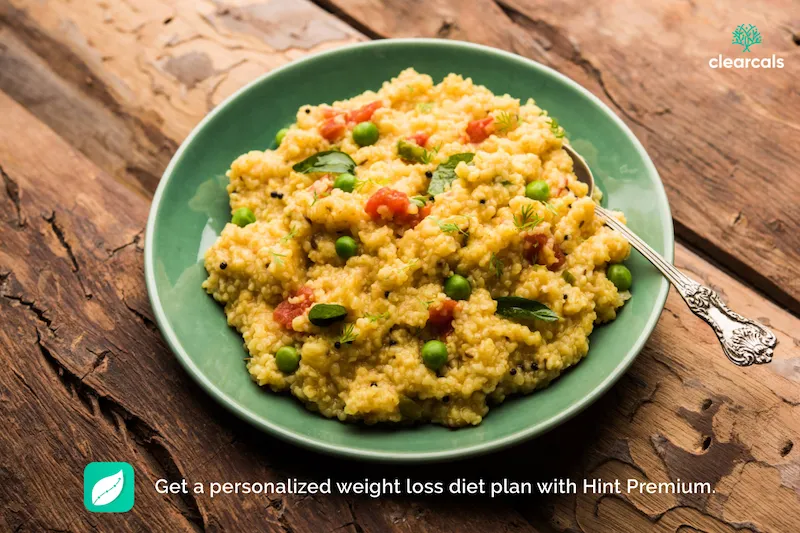
Low-Calorie Indian Breakfast Ideas for Weight Loss (With Calorie Counts)
Why Breakfast Choice Matters for Weight Loss
Breakfast doesn't have to be small to be low-calorie — the goal is picking dishes with a good calorie-to-fullness ratio so you're not reaching for something else by 10 am.
A plate of poha or a couple of idlis with sambhar can be genuinely filling at 200-300 kcal, while a couple of parathas with butter can quietly cross 500-600 kcal for a similarly filling portion. Same hunger satisfied, very different calorie cost. To see how breakfast fits your whole day, find your daily target with our Calorie Deficit Calculator.
Low-Calorie Indian Breakfasts (With Calorie Counts)
| Breakfast | Approx. Calories | Notes |
|---|---|---|
| Poha, 1 bowl | ~180-250 kcal | Light, easy to digest; add peanuts for protein |
| Idli, 2 pieces + sambhar | ~150-200 kcal | Steamed, low-fat, pairs well with protein-rich sambhar |
| Upma, 1 bowl | ~200-250 kcal | Add vegetables to boost volume without many calories |
| Dosa (plain), 1 medium | ~120-150 kcal | Skip excess oil/ghee on the tawa to keep it light |
| Oats with milk and fruit | ~200-280 kcal | High fibre, keeps you full; add a protein source for more staying power |
| Vegetable besan chilla, 2 | ~180-220 kcal | High protein from besan, low oil if cooked on a non-stick pan |
| Moong dal chilla, 2 | ~160-200 kcal | High protein, lighter than wheat-based options |
| Boiled eggs (2) with a slice of toast | ~220-260 kcal | High protein, quick to prepare |
| Greek yogurt with fruit and a few nuts | ~200-250 kcal | High protein, no cooking required |
| Sprouts bhel | ~180-220 kcal | High fibre and protein, very filling for the calorie cost |
| Fruit and yogurt smoothie (banana, curd, a few nuts) | ~180-220 kcal | Quick, no-cook, good for rushed mornings |
| Paneer or protein smoothie (paneer/milk + fruit, or a scoop of protein powder) | ~220-260 kcal | Higher protein than a fruit-only smoothie, still light |
Counts vary by oil used and portion size — log your actual breakfast in the Hint app for an exact number.
High-Protein, Low-Calorie Breakfast Options
Starting the day with protein helps control hunger through the morning, which matters more for weight loss than the breakfast calorie count alone. As a practical target, aim for roughly 20-30g of protein at breakfast if you can — that's enough to meaningfully blunt mid-morning hunger for most people, though any amount is better than none. Besan chilla, moong dal chilla, boiled eggs, Greek yogurt, and a paneer or protein smoothie from the table above are your strongest options here. See our high-protein, low-calorie foods guide for the full ranked list, and our daily protein requirement guide for how much protein to actually aim for across the day.
Breakfast Smoothies for Weight Loss
Smoothies are a genuinely useful low-calorie breakfast option when you're short on time, as long as you watch two things: portion size and added sugar. A fruit-and-yogurt smoothie (banana or mixed fruit, curd or milk, a few soaked nuts) is filling and easy to digest; adding a spoon of peanut butter, a scoop of protein powder, or paneer boosts the protein without much extra volume. The common mistake is treating a smoothie as unlimited because it's "just fruit" — a large glass with multiple fruits, honey, and full-fat milk can easily run 400-500+ kcal, well past what a smoothie should cost as a breakfast.
Low-Carb Breakfast Options
If you're combining a lower-carb approach with your calorie target, a few options from the table above already fit well: boiled eggs, moong dal chilla (lighter on carbs than wheat-based options), Greek yogurt, and a paneer smoothie are all relatively low in carbohydrates while still being filling. Rice- or wheat-heavy options like poha, upma, and dosa are naturally higher in carbs, so keep portions moderate if you're watching carb intake specifically rather than avoiding them altogether.
Meal-Prepping Your Breakfast
Most low-calorie Indian breakfasts prep well in advance, which helps on busy weekday mornings when the alternative is skipping breakfast or grabbing something less controlled. Chilla batter (besan or moong dal) keeps in the fridge for 1-2 days; boiled eggs keep for up to a week; upma and poha's dry roasted ingredients can be pre-measured the night before to cut morning prep to a few minutes; and smoothie ingredients (chopped fruit, measured nuts) can be portioned into the fridge or freezer ahead of time. Batch-prepping even one or two of these once a week removes the most common reason people skip a proper breakfast on weekdays.
Why Breakfast Matters (and Why Skipping It Isn't a Shortcut)
Skipping breakfast doesn't reliably lead to eating fewer calories overall — most people compensate by eating more later, often from less controlled choices. The research on breakfast-skipping and weight loss is genuinely mixed rather than settled either way — some studies find no meaningful difference in weight loss between breakfast-eaters and breakfast-skippers when total daily calories are matched — so the honest takeaway isn't "you must eat breakfast to lose weight," it's that a light, protein-inclusive breakfast tends to make the rest of the day's eating easier to manage for most people than starting on an empty stomach and arriving at lunch overly hungry. If intermittent fasting genuinely works for your routine and you're not compensating later in the day, skipping breakfast isn't inherently counterproductive — the calorie total across the day is what matters most.
Sample Low-Calorie Breakfast Plan
- Standard morning: 2 idlis with sambhar + a small bowl of fruit (~220-280 kcal)
- Quick/no-cook morning: Greek yogurt with fruit and nuts, or a fruit smoothie (~200-250 kcal)
- High-protein morning: 2 boiled eggs + a besan chilla (~350-400 kcal — adjust portion to fit your daily target)
A Simple 5-Day Rotation
If you're looking for a full week's worth of variety rather than repeating the same breakfast daily:
| Day | Breakfast | Approx. Calories |
|---|---|---|
| Day 1 | Poha with peanuts | ~200-250 kcal |
| Day 2 | 2 idlis + sambhar | ~150-200 kcal |
| Day 3 | Besan chilla (2) | ~180-220 kcal |
| Day 4 | Oats with milk and fruit | ~200-280 kcal |
| Day 5 | Boiled eggs (2) + toast | ~220-260 kcal |
Repeat or reorder as you like — the point of rotating is mainly to avoid boredom, not because any strict sequence matters for weight loss.
Track Your Breakfast With Hint
Breakfast is one of the easier meals to log accurately since it's usually eaten at home and repeated often — once you've logged a dish once in the Hint app's Indian food database, repeating it takes seconds.
FAQs
What is a good low-calorie Indian breakfast? Poha, idli with sambhar, upma, plain dosa, and oats are all filling options that typically run 150-280 kcal per serving depending on portion and oil used.
Is skipping breakfast good for weight loss? Not reliably — most people compensate by eating more later in the day. A light, protein-inclusive breakfast generally makes the rest of the day easier to manage.
What's a high-protein, low-calorie Indian breakfast? Besan chilla, moong dal chilla, boiled eggs, and Greek yogurt with fruit are all strong options, typically 160-260 kcal while providing meaningful protein.
How many calories should breakfast be for weight loss? There's no fixed universal number — it depends on your total daily calorie target. As a general range, 250-400 kcal works well for most people, leaving room for lunch, dinner, and snacks within a calorie deficit.
Are dosa and idli good for weight loss? Yes, in moderate portions with minimal oil/ghee — both are relatively low-calorie, easy to digest, and pair well with protein-rich sambhar or chutney.
How much protein should I have at breakfast for weight loss? Roughly 20- 30 g is a good practical target — enough to noticeably reduce mid-morning hunger for most people — though any protein at breakfast is better than none.
Are smoothies a good breakfast for weight loss? Yes, as long as you watch portion size and added sugar — a simple fruit-and-yogurt or protein smoothie is a filling, low-calorie option, but large smoothies with multiple fruits, honey, and full-fat milk can add up quickly.
About the Author
Asfia Fatima is the Chief Dietitian at Clearcals, with a Master's Degree in Dietetics and Clinical Nutrition and over a decade of experience in clinical nutrition and lifestyle management. She specialises in evidence-based diet planning for weight loss, diabetes, and metabolic health, and leads the nutrition strategy behind the Hint app.
Connect with Asfia on LinkedIn