Track your nutrition and health goals

Metformin and Diet: What to Eat, What to Avoid, and When to Take It
Metformin and Diet: What to Eat, What to Avoid, and When to Take It
By Dr. Sumedha Verma, Consultant Physician at Clearcals
The short answer
Metformin is usually taken with a meal or just after it, because this lowers the chance of nausea, stomach upset, and diarrhoea. Your doctor's instructions for your own tablet always come first.
- Before or after food? With meals or straight after. Taking regular (immediate-release) metformin on an empty stomach is more likely to upset your stomach.
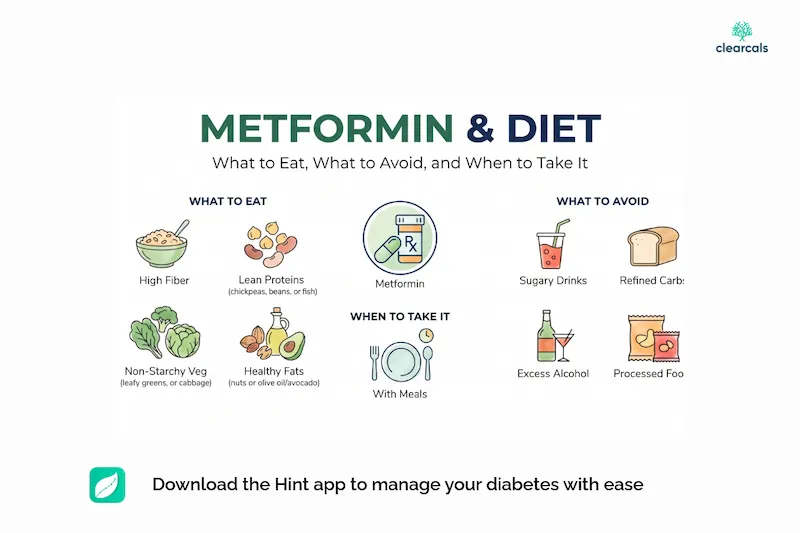
- What to eat: Mostly vegetables, dal and other protein, whole grains or millets, and less refined flour, sugar and fried food.
- What to limit: Sugary drinks, sweets, white bread and maida snacks, and very large portions of rice or roti.
- Alcohol: Heavy or binge drinking raises the risk of a rare but serious problem called lactic acidosis. Talk to your doctor about what is safe for you.
- Long-term use: Metformin can lower vitamin B12, so ask your doctor about checking it, especially if you are vegetarian.
When to take metformin: before or after food?
Take metformin with meals or right after them unless your doctor has told you otherwise. Taking it with food is generally less irritating to the stomach, and most stomach side effects ease when it is taken this way.
The right timing depends on which tablet you have:
- Regular (immediate-release) metformin: usually taken once, twice or three times a day, with or just after a meal. If you take it twice a day, this is normally breakfast and dinner.
- Extended-release or SR tablets: usually taken once a day, often with the evening meal. Swallow them whole; do not crush or chew them.
A few practical points. Take your tablet at the same time each day so your routine is steady. If you miss a dose, take it when you remember with food, but skip it if it is nearly time for the next one; never double up. Do not change your dose, switch between regular and SR tablets, or stop metformin on your own because of what you read online. Your doctor chose the dose for your kidney function, sugar levels, and other medicines.
One more safety point: if you are told you need a scan with contrast dye, surgery, or you have vomiting, diarrhoea, or dehydration, tell your doctor, as metformin may need to be paused for a time.
What to eat while taking metformin
There is no special "metformin diet". The best pattern is the same one that helps control blood sugar in general: balanced plates, steady portions and regular meal times. Metformin works best alongside food choices, not instead of them.
A simple Indian plate method:
- Half the plate: non-starchy vegetables. Sabzi, salad, leafy greens, bhindi, lauki, cabbage, cauliflower.
- A quarter: protein. Dal, rajma, chole, sprouts, paneer, curd, eggs, fish, or chicken if you eat them.
- A quarter: high-fibre carbohydrates. Whole wheat roti, jowar, bajra or ragi, brown rice, oats, or a smaller portion of rice.
- A little healthy fat. Nuts, seeds, and a small amount of oil or ghee for cooking.
Why this works: fibre and protein slow the rise in blood sugar after a meal, and a regular rhythm of meals helps your sugar stay steady through the day. It also tends to be gentler on a stomach that is adjusting to metformin.
Practical habits that help:
- Eat at roughly the same times every day and avoid long gaps followed by very large meals.
- Have vegetables or dal first, then the carbohydrate part of the meal.
- Choose whole fruit instead of juice, and keep portions sensible.
- Drink water throughout the day, especially if you have loose stools.
What to limit or avoid
No common Indian food is strictly forbidden with metformin, but some choices can work against your blood sugar goals or worsen stomach side effects.
- Sugary drinks: soft drinks, packaged juices, sweet chai and sweetened lassi raise blood sugar quickly.
- Refined carbohydrates: maida products, white bread, bakery items, namkeen and instant noodles, which digest fast and have little fibre.
- Large portions of white rice or roti at one sitting, especially without dal, vegetables or protein alongside.
- Sweets and mithai as regular daily items rather than occasional treats.
- Deep-fried and very oily foods, such as samosa, pakora and puri, which add calories and can aggravate nausea or loose stools while your body adjusts.
- Very spicy or heavy meals if you are in the first weeks of treatment and your stomach is sensitive.
This is about patterns, not perfection. One festival meal will not undo your treatment, and cutting out whole food groups without advice is not necessary. If you have other conditions such as kidney disease, fatty liver or high blood pressure, your dietitian may suggest further changes.
Alcohol and metformin
Heavy or binge drinking while on metformin is not safe. Excess alcohol increases the risk of lactic acidosis, a rare but serious build-up of lactic acid in the blood, and metformin's prescribing information specifically warns about it.
Alcohol can also cause low blood sugar, especially on an empty stomach or if you take other diabetes medicines such as glimepiride, and it adds empty calories that work against weight and sugar goals.
If you drink at all, the safest approach is to talk to your doctor first about what is appropriate for you. Never drink on an empty stomach, never drink heavily, and seek medical help promptly if you develop vomiting, unusual drowsiness, rapid breathing, severe stomach pain, or muscle pain after drinking.
Managing side effects with food
Stomach side effects are the most common reason people struggle with metformin, and they are usually worst in the first few weeks. They often settle as your body adjusts, and your doctor may start you on a low dose and raise it slowly for this reason.
| Problem | What may help | When to call your doctor |
|---|---|---|
| Nausea | Take the tablet with a proper meal, eat smaller meals, avoid very oily or spicy food | If it does not settle after a few weeks or you cannot eat |
| Loose stools or diarrhoea | Cut back on fried food and sugary drinks, drink plenty of water, keep meals regular | If it is severe, lasts, or you feel dehydrated |
| Gas and bloating | Eat slowly, avoid very large meals, notice which foods trigger it | If it is persistent and uncomfortable |
| Metallic taste or reduced appetite | Small, regular meals, water between meals | If it affects your eating or you lose weight unintentionally |
Vitamin B12. Long-term metformin use can lower vitamin B12 in some people. This matters more if you are vegetarian or vegan, since B12 comes mostly from animal foods like milk, curd, eggs, fish and meat. Signs of low B12 include tiredness, tingling or numbness in the hands and feet, and weakness. Ask your doctor whether to check your B12 level, and do not start supplements on your own without advice.
Seek urgent medical care for symptoms such as severe vomiting, unusual muscle pain, difficulty breathing, extreme tiredness or stomach pain, which can be signs of a rare serious reaction.
Metformin for PCOS and for weight: what diet can add
Metformin is prescribed for type 2 diabetes and prediabetes, and doctors also use it off-label for PCOS or PCOD, particularly when insulin resistance is a feature. Off-label means your doctor has judged it suitable for you, but it isn't its primary approved use.
For PCOS, food and activity remain the foundation. Helpful habits include protein and fibre at every meal, choosing whole grains and millets over refined flour, limiting sugary drinks and sweets, and keeping meal times regular. Metformin can upset the stomach in the first weeks, so the timing and side effect tips above apply too.
For weight, be realistic. Metformin may help some people lose a small amount of weight, but it is not a weight-loss drug and results vary a lot. In the large US Diabetes Prevention Program trial, people on metformin lost about 2 kg on average, while those who changed their diet and activity lost considerably more. The same is true for most people: the plate you build each day matters more than the tablet.
If you want to lose weight, aim for a gradual pace, watch portions of rice, roti, and sweets, and track what you eat for a couple of weeks to see where calories add up. Do not take metformin without a prescription for weight loss, and do not combine it with crash diets or skipped meals.
Track your meals with Hint
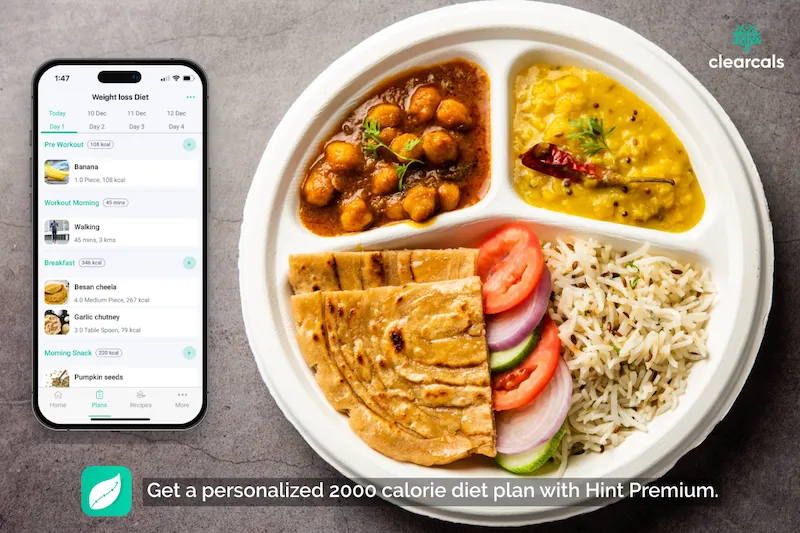
Knowing what is actually on your plate makes all of the advice above easier to follow. Hint is built for Indian food, so you can log dal, roti, sabzi, rice, and snacks and see the calories and protein in each meal.
Many people find that a week or two of logging shows them where portions creep up, which gives you something concrete to discuss with your doctor or dietitian.
Frequently asked questions
Can I take metformin on an empty stomach? It is generally best taken with or right after a meal, as an empty stomach makes nausea and diarrhoea more likely. Follow your doctor's instructions.
Can I eat rice and roti on metformin? Yes. Watch portions, pair them with dal, vegetables and protein, and prefer whole grains or millets where you can.
Is it safe to have a drink occasionally? Heavy drinking is unsafe on metformin, and even moderate drinking should be discussed with your doctor first.
Will metformin make me lose weight? It may help slightly in some people, but food choices, portions and activity make the bigger difference.
Do I need vitamin B12 supplements? Not automatically. Ask your doctor whether to test your level, particularly if you have taken metformin for years or follow a vegetarian diet.
Medical disclaimer. This article is for general education and is not medical advice. Do not start, stop or change any medicine based on it. Speak to your doctor or a registered dietitian about your own situation.
Related reading and tools
Start here: our 2000-calorie Indian diet plan, and calorie tracking for Indian food if you are new to logging meals.
Related reading:
- Metformin for insulin resistance
- Is curd good for diabetes?
- Is papaya good for diabetes?
- Is guava good for diabetes?
- Is coconut water good for diabetes?
- Best juice for diabetes and high blood pressure
- RBS test range and how to read it
- Daily protein requirement in India
Other medicine and diet guides:
Free tools:
- Indian food calorie calculator
- HbA1c calculator
- HOMA-IR calculator
- Macro calculator
- Hint, the Indian food and calorie tracking app
About the author
Dr. Sumedha Verma is a Consultant Physician at Clearcals with extensive experience in clinical medicine and healthcare services.
She has significant expertise in managing chronic conditions such as diabetes, thyroid disorders, PCOS, infertility, and other gynecological health concerns.
Known for her patient-centered approach, Dr. Verma focuses on improving patient compliance and helping individuals achieve better health outcomes through personalized medical guidance and long-term care.
Connect with Dr. Sumedha on LinkedIn