Track your nutrition and health goals

Semaglutide and Diet: What to Eat, Protein & Nausea Tips
Semaglutide and Diet: What to Eat, How to Protect Muscle, and How to Manage Nausea
By Dr. Sumedha Verma, Consultant Physician at Clearcals
The short answer
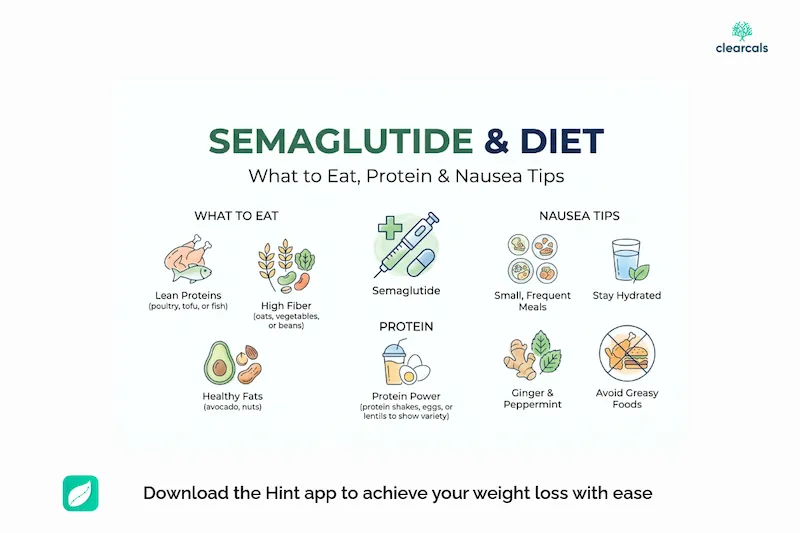
On semaglutide, aim for small, protein-first meals, enough fluids and fibre, and some strength training, and go easy on fried, very sugary, and very large meals. Semaglutide is a prescription medicine, so always follow your own doctor's advice.
- Eat small and slowly. Smaller portions and slower eating are easier on the stomach and reduce nausea.
- Put protein first. It helps protect muscle while you lose weight and keeps you fuller.
- Drink enough water. Dehydration makes nausea, constipation, and tiredness worse.
- Add fibre gradually. Vegetables, dal, fruit and whole grains help prevent constipation.
- Go easy on fried food, sweets and alcohol. These are the most common triggers for nausea and discomfort.
- Do not crash diet. The medicine already lowers your appetite, so eating too little can cost you muscle, energy and nutrients.
What semaglutide does to your appetite, and why diet still matters
Semaglutide mimics a gut hormone called GLP-1. It slows how quickly the stomach empties and acts on appetite signals in the brain, so you feel full sooner, feel hungry less often and think about food less. This is why many people eat noticeably less without trying.
That is helpful, but it creates a new problem: it becomes easy to under-eat protein, fibre, fluids and key vitamins and minerals. When you eat much less overall, the quality of each meal matters more, not less. A smaller plate still has to carry the nutrients your body needs.
The medicine also works best alongside food and activity changes. Meal choices affect how you feel on the drug, how much of the weight you lose is fat rather than muscle, and how well you keep the weight off in the long run.
Protein and muscle: the most important part of your plate
When you lose weight quickly, some of what you lose can be muscle rather than fat. Losing muscle can leave you weaker and tired and can slow your metabolism. Eating enough protein, together with some resistance exercise, is the best way to reduce this.
How much protein? (See also our daily protein requirement guide and protein calculator.) Needs differ by weight, age, kidney health, and other conditions, so ask your doctor or dietitian for your own target. As a rough guide, many clinicians suggest around 1.2 to 1.6 grams of protein per kilogram of body weight per day for people losing weight on these medicines. If you have kidney disease, do not raise your protein without medical advice.
Spread it through the day. Because you eat small meals, try to include a protein source in each one, including snacks.
Indian protein options:
- Vegetarian: dal, rajma, chole, sprouts, moong chilla, besan chilla, paneer, curd, buttermilk, milk, tofu, soya chunks, roasted chana, peanuts and nuts.
- Non-vegetarian: eggs, fish, chicken, and lean meat.
If you struggle to eat enough because of nausea, softer options such as curd, buttermilk, dal soup, eggs or a protein-rich smoothie can be easier than a full thali.
Add strength training. See how many calories push-ups and squats burn. Two to three sessions a week of resistance exercise, using weights, bands, or bodyweight, helps keep muscle. Walking is good, but it does not replace strength work. Check with your doctor before starting a new exercise routine.
Eating around nausea
Nausea is the most common side effect of semaglutide, especially in the first weeks and after each dose increase. Food choices can make a big difference.
- Eat small portions and stop when you feel comfortably full, not stuffed. Eating past fullness is a common trigger.
- Eat slowly and chew well. A meal over 20 to 30 minutes is gentler than one eaten fast.
- Choose simple, bland foods on bad days: khichdi, plain dal and rice, idli, toast, banana, curd, soups, and boiled or steamed vegetables.
- Avoid lying down right after eating, which can make nausea and reflux worse.
- Sip fluids between meals rather than drinking a lot with food.
- Try ginger tea or jeera water if they settle your stomach.
- Skip very oily, spicy or heavy dishes, such as puri, pakora, rich gravies and creamy sweets, which are the most common triggers.
Nausea usually eases as your body adjusts. If it is severe or persistent, do not tough it out in silence: your doctor can adjust the plan, including the dose or how quickly it is raised.
Constipation, dehydration and hair loss
Because semaglutide slows the gut, constipation is common, and eating less means less fibre and fluid coming in.
| Concern | What helps | See your doctor if |
|---|---|---|
| Constipation | Drink water throughout the day, build up fibre slowly with vegetables, dal, fruit, oats, and whole grains, stay active, add curd or buttermilk | No bowel movement for several days, or severe pain or bloating |
| Dehydration | Sip water regularly, include dal soup, buttermilk, coconut water, and watery vegetables | You are vomiting or have diarrhoea and cannot keep fluids down, feel dizzy, or pass very little urine |
| Hair thinning | Eat enough protein, iron, zinc and vitamins, and avoid very rapid weight loss | It is heavy or continues after your weight stabilises |
Hair thinning is reported by some people during rapid weight loss on any diet or medicine. It is usually linked to eating too little protein and other nutrients, and often improves when intake is adequate and weight loss steadies. Ask your doctor to check iron, vitamin D, and thyroid if it bothers you.
Dehydration deserves special attention. Vomiting and diarrhoea can reduce fluids quickly, which can strain the kidneys, so do not ignore these symptoms.
A sample day of eating on semaglutide
This is an example of small, protein-first Indian meals, not a prescribed plan. Adjust portions to your appetite, preferences, and your doctor or dietitian's advice. Vegetarian options are shown, with non-vegetarian swaps.
| Meal | Example | Protein source |
|---|---|---|
| Early morning | Warm water with jeera or ginger tea | None |
| Breakfast | Moong dal chilla with mint chutney and a small bowl of curd | Moong dal, curd (egg omelette as a swap) |
| Mid-morning | A few almonds or a handful of roasted chana | Chana, nuts |
| Lunch | One or two rotis, a bowl of dal, a large serving of sabzi, cucumber salad | Dal (chicken or fish curry as a swap) |
| Evening snack | Buttermilk and sprouts chaat, or paneer cubes | Sprouts, paneer |
| Dinner | Smaller portion of khichdi or one roti, with paneer bhurji or tofu and vegetables | Paneer or tofu (egg curry as a swap) |
If you get full quickly, eat the protein and vegetables first and leave extra rice or roti if you are not hungry. Use Hint to check roughly how much protein you are getting across the day.
Foods and habits to go easy on
Nothing is banned, but these choices are the ones most likely to upset your stomach or work against your goals.
- Fried and very oily food such as samosa, pakora, puri, and heavy gravies. Because the stomach empties slowly, fatty meals sit heavy and trigger nausea and reflux.
- Large meals. One big meal is harder to tolerate than several small ones.
- Sugary drinks, sweets, and mithai. They add calories without protein or fibre, and large sugary servings can cause discomfort.
- Highly processed snacks like chips, biscuits, and packaged namkeen that fill you up without nourishing you.
- Carbonated drinks, which can add to bloating and gas.
- Alcohol. It adds empty calories, can irritate the stomach, may worsen nausea, and can affect blood sugar, especially if you also take diabetes medicines. Talk to your doctor about whether any alcohol is appropriate for you, and avoid it on an empty stomach.
- Skipping meals completely. Your appetite may be low, but regular small meals protect your protein intake and energy.
Before or after food? Timing for tablets and injections
The answer depends on the form of semaglutide you take. Your prescriber and the product leaflet decide the exact instructions.
- Weekly injection: It can be taken at any time of day, with or without food, on the same day each week. Because it works on appetite and gut emptying, you may find the first couple of days after the injection the hardest for nausea, so plan lighter meals then.
- Daily tablet: oral semaglutide has specific rules. It is usually taken first thing in the morning on an empty stomach with a small sip of plain water, then you wait at least 30 minutes before eating, drinking anything else or taking other tablets. Taking it with food can stop it from being absorbed properly.
Because the instructions differ so much between forms and brands, never assume the rules for one apply to another, and ask your doctor or pharmacist if you are unsure.
When to call your doctor
Contact your doctor promptly, or seek urgent care, if you have:
- Severe or persistent stomach pain, with or without vomiting, which may spread to your back (this can be a sign of pancreatitis or gallbladder problems)
- Vomiting or diarrhoea that stops you from keeping fluids down, or signs of dehydration such as dizziness and very little urine
- Yellowing of the skin or eyes, or pale stools
- A lump or swelling in the neck, trouble swallowing, or a hoarse voice that does not go away
- A fast heartbeat that does not settle, or signs of low blood sugar if you take other diabetes medicines (shakiness, sweating, confusion)
- Rapid weight loss, extreme tiredness or weakness
Also tell your doctor about any other medicines you take, and if you are pregnant, planning pregnancy, or breastfeeding.
Track your meals with Hint
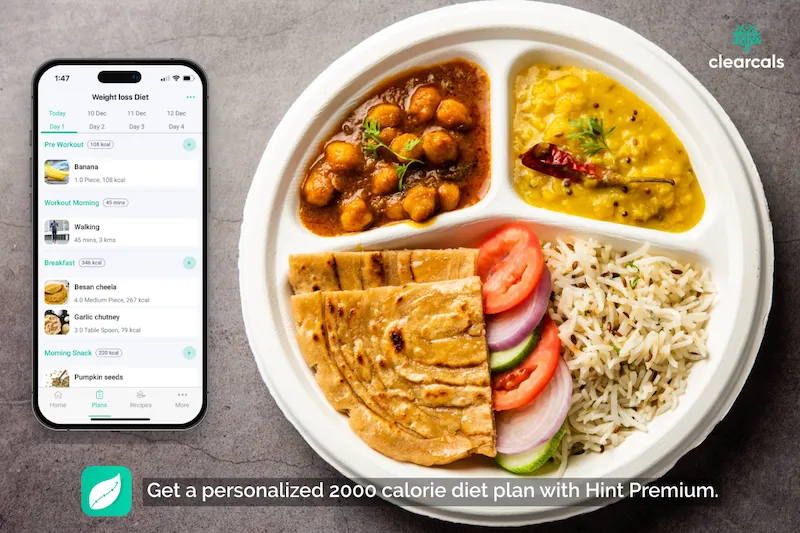
When your appetite is low, it is easy to underestimate how little protein you are eating. Hint is built for Indian food, so you can log dal, roti, sabzi, paneer, and snacks and see the calories and protein in each meal.
A week or two of logging shows you whether you are hitting your protein goal and gives you something concrete to review with your doctor or dietitian. You can also try our free Indian food calorie calculator.
Frequently asked questions
Can I follow any diet on semaglutide? Semaglutide works with most eating styles, but the focus should be on adequate protein, fibre, fluids and regular small meals rather than extreme restriction.
Should I take semaglutide before or after food? It depends on the form. The weekly injection can be taken with or without food. The daily tablet is taken on an empty stomach with a sip of water, with a wait before eating. Follow your prescriber's instructions.
Will I lose muscle on semaglutide? Some muscle loss can happen with any rapid weight loss. Enough protein and regular strength training help reduce it.
Can I drink alcohol on semaglutide? It is best to discuss this with your doctor. Alcohol can worsen nausea, add empty calories, and affect blood sugar.
Will my hair fall out? Some people notice thinning during rapid weight loss, often linked to low protein and nutrient intake. It often improves when nutrition is adequate. Ask your doctor to check iron, vitamin D and thyroid if it persists.
Do I need to eat if I am not hungry? Yes. Regular small meals with protein protect your muscle and energy even when your appetite is low.
Medical disclaimer. This article is for general education and is not medical advice. Semaglutide is a prescription medicine. Do not start, stop, or change any medicine, or make major changes to your diet, based on this article. Speak to your doctor or a registered dietitian about your own situation.
Related reading and tools
Start here: our daily protein requirement guide, and calorie tracking for Indian food if you are new to logging meals.
Related reading:
- Vegetarian protein sources in India
- Which dal is high in protein?
- High-protein Indian instant diet
- High-protein oats in India
- Farxiga and weight loss
- Metformin for insulin resistance
- Best app for weight loss in India
- 2000-calorie Indian diet plan
Other medicine and diet guides:
Free tools:
- Protein calculator
- Macro calculator
- Body fat percentage calculator
- Indian food calorie calculator
- Maintenance calorie calculator
- Calories burned calculator
- Hint, the Indian food and calorie tracking app
About the author
Dr. Sumedha Verma is a Consultant Physician at Clearcals with extensive experience in clinical medicine and healthcare services.
She has significant expertise in managing chronic conditions such as diabetes, thyroid disorders, PCOS, infertility, and other gynecological health concerns.
Known for her patient-centered approach, Dr. Verma focuses on improving patient compliance and helping individuals achieve better health outcomes through personalized medical guidance and long-term care.
Connect with Dr. Sumedha on LinkedIn