Track your nutrition and health goals

Thyronorm and Weight: What to Expect, Timing & Diet
Thyronorm and Weight: What to Expect, When to Take It, and What to Eat
By Dr. Sumedha Verma, Consultant Physician at Clearcals
The short answer
Thyronorm and Eltroxin are brand names of thyroxine (levothyroxine), the medicine that replaces the thyroid hormone your body is not making enough of. Taking it correctly may help you lose some weight that built up because of an underactive thyroid, but it is not a weight-loss medicine, and food and activity still matter. Always follow your own doctor's advice.
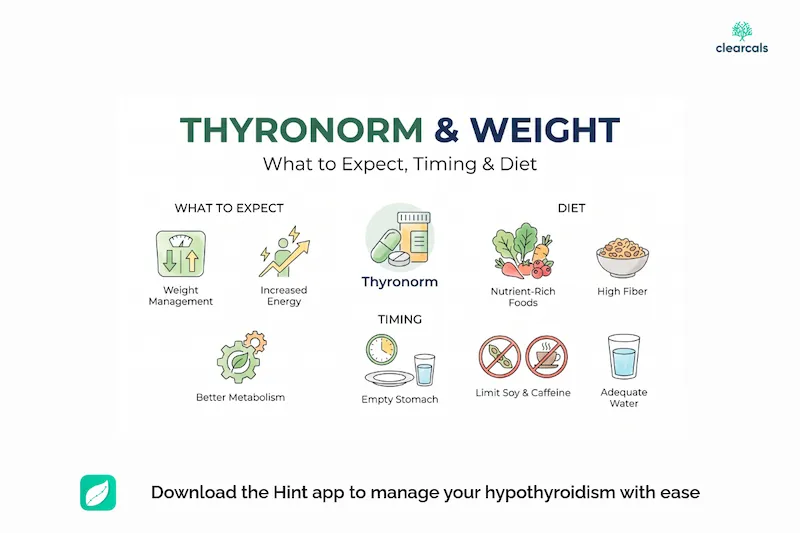
- Weight: Hypothyroidism often causes a modest weight gain, part of it fluid. Once your thyroid level is corrected, you may lose a few kilograms, but you should not expect dramatic weight loss from the tablet.
- Timing: Take it on an empty stomach, usually first thing in the morning with plain water, and wait 30 to 60 minutes before breakfast, tea or coffee.
- Separate: Keep calcium, iron and antacids at least four hours away from the tablet.
- Diet: There is no special thyroid diet. Balanced Indian meals with enough protein, fibre and iodised salt are what you need.
- Never take extra tablets to lose weight. Too much thyroxine can harm your heart and bones.
What is Thyronorm (thyroxine) and who takes it?
Thyroxine is a synthetic form of T4, the main hormone made by the thyroid gland. Doctors prescribe it for hypothyroidism, an underactive thyroid, which is very common in India, especially in women. It is also used after thyroid surgery and in some other thyroid conditions.
Most people take it for life, and the dose is adjusted using blood tests, mainly TSH. The dose depends on your body weight, age, thyroid levels and other conditions, which is why you should never change it without your doctor.
Does Thyronorm cause weight loss or weight gain?
An underactive thyroid slows your metabolism and makes the body hold on to salt and water, so many people gain a few kilograms before they are diagnosed. When treatment brings your hormone level back to normal, some of this can come off, particularly the extra fluid.
What to realistically expect:
- A few kilograms at most for most people, over weeks to months, and results vary a lot.
- No weight loss if your level is already normal. Taking thyroxine when your thyroid is healthy does not burn fat safely.
- Weight can still creep up if you eat more than you burn. The tablet corrects the hormone, but it does not cancel out extra calories.
- Weight gain on treatment is usually due to food, activity, sleep or stress, or to a dose that is not yet right. Tell your doctor if your weight keeps rising despite normal TSH.
A warning about overdosing. Some people take extra thyroxine to lose weight faster. This is dangerous. Too much thyroxine can cause a fast or irregular heartbeat, tremors, anxiety, sleeplessness, sweating, bone loss and, over time, heart rhythm problems. It also does not give lasting weight loss.
How to take Thyronorm: timing and food
Thyroxine is absorbed best on an empty stomach. Food, tea and coffee can reduce how much reaches your blood, which can make your dose less effective.
- Take it at the same time every day. Consistency matters more than the exact hour.
- Morning option: take it with a glass of plain water first thing, then wait 30 to 60 minutes before breakfast, tea or coffee.
- Bedtime option: some doctors allow a bedtime dose, at least three hours after your last meal. Only switch if your doctor agrees.
- Swallow with water only, not with milk, tea or coffee.
- Do not double up if you miss a dose. Take it when you remember on an empty stomach, or skip it if the next dose is close, and ask your doctor if you are unsure.
- Stay on the same brand where possible. If you change brands, tell your doctor, as your TSH may need rechecking.
Before a thyroid blood test: follow your doctor's or lab's instruction. A common approach is to give the blood sample first and then take your tablet on the day of the test. Do not skip your tablet for days before a test.
Foods and supplements that affect absorption
Some foods and supplements can interfere with thyroxine absorption. The usual rule is to keep them apart from the tablet, not to give them up.
| What | Why it matters | What to do |
|---|---|---|
| Calcium supplements, antacids, calcium-rich medicines | Can bind thyroxine in the gut | Keep at least 4 hours apart |
| Iron supplements and multivitamins with iron | Reduce absorption | Keep at least 4 hours apart |
| Tea and coffee | Can lower absorption if taken together | Wait 30 to 60 minutes after the tablet |
| Soy products and very high-fibre meals | May reduce absorption in large amounts | Do not take with the tablet; keep intake regular rather than sudden |
| Biotin (hair and nail supplements) | Can falsely change thyroid blood test results | Tell your doctor and the lab, and ask whether to pause before a test |
| Milk and curd | Calcium can interfere if taken together | Take the tablet first, then wait before milk or curd |
Do not stop eating dairy, soy or high-fibre foods. Keep your pattern steady, and keep the tablet timing steady, so your dose stays effective.
What to eat with hypothyroidism
There is no special "thyroid diet" that replaces medicine. The best approach is a balanced Indian diet that supports your weight, energy and gut health.
- Protein at every meal: dal, sprouts, paneer, curd, eggs, fish, chicken, tofu. Protein keeps you full and helps protect muscle.
- Fibre: vegetables, fruit, whole grains and millets. Fibre helps with constipation, which is common in hypothyroidism. Build it up gradually and drink enough water.
- Iodised salt in normal amounts. Iodine is needed for thyroid hormone, but extra iodine from supplements or seaweed is not helpful and can cause problems. Do not take iodine or kelp supplements without advice.
- Selenium and zinc from food: eggs, fish, seeds, nuts and whole grains give small, useful amounts. Do not take large supplement doses without advice.
- Cabbage, cauliflower, broccoli and other cruciferous vegetables are fine cooked, in normal portions. They only matter in very large raw amounts.
- Limit sugary drinks, sweets, fried snacks and highly processed foods, which add calories without nutrition.
- Check your vitamin D and B12. Both are commonly low in people with thyroid problems, but supplement only on your doctor's advice.
A sample day of eating
This is an example, not a prescribed plan. Adjust it to your appetite, your calorie needs and your doctor or dietitian's advice.
| Time | Example |
|---|---|
| On waking | Thyronorm tablet with plain water, then wait 30 to 60 minutes |
| Breakfast | Vegetable besan chilla or moong chilla with curd, or two egg whites and one whole egg with a roti |
| Mid-morning | A fruit and a handful of nuts |
| Lunch | One or two rotis, a bowl of dal, a large serving of sabzi, salad |
| Evening | Roasted chana or sprouts chaat, and tea (not within an hour of the tablet) |
| Dinner | Smaller portion of rice or roti, paneer or fish or tofu, and vegetables |
If you take calcium or iron supplements, have them with lunch or dinner, well away from the morning tablet.
Beyond diet: habits that help
- Move regularly. Walking and strength training help weight, mood and energy. Hypothyroidism can make you feel tired, so start gently.
- Sleep 7 to 8 hours. Poor sleep affects appetite and weight.
- Get your TSH checked as advised, usually 6 to 8 weeks after a dose change, and then once or twice a year when stable.
- Do not judge your thyroid by weight alone. Fatigue, cold sensitivity, constipation, dry skin and hair thinning also tell you how well your treatment is working.
When to see your doctor
Contact your doctor if you have:
- Palpitations, a fast or irregular heartbeat, tremors, anxiety, sweating or trouble sleeping, which may mean the dose is too high
- Increasing tiredness, constipation, feeling cold, dry skin, or ongoing weight gain, which may mean the dose is too low
- A planned or confirmed pregnancy. Thyroxine needs often rise in pregnancy, and your dose should be reviewed early
- Chest pain, breathlessness or fainting. Seek urgent care
Track your meals with Hint
If your weight is not moving despite treatment, the plate is the next thing to look at. Hint is built for Indian food, so you can log your meals and see the calories and protein in each. A week or two of logging shows where portions and snacks add up, and gives you something concrete to discuss with your doctor or dietitian. You can also try our free Indian food calorie calculator. You can also read our guide to thyroid-friendly Indian foods.
Frequently asked questions
Will Thyronorm help me lose weight? It may help you lose some weight gained because of low thyroid hormone, but it is not a weight-loss medicine. Expect a modest change at most.
Why is Thyronorm taken on an empty stomach? Food, tea and coffee reduce how much thyroxine your body absorbs, so an empty stomach gives the most reliable dose.
Can I take Thyronorm after food? Your doctor may advise a different schedule in some cases, but taking it after food generally lowers absorption. Do not change the timing on your own, and keep it consistent.
Can I drink tea or coffee in the morning? Yes, but wait 30 to 60 minutes after the tablet.
Can I take calcium or iron with Thyronorm? Keep them at least four hours apart from the tablet.
Should I take Thyronorm before a thyroid test? Follow your doctor's or lab's instructions. A common approach is to take the tablet after the blood sample on the test morning.
Can I stop Thyronorm if my TSH is normal? No. A normal TSH usually means the dose is working. Stopping can bring the problem back. Your doctor decides if and when a dose changes.
Do I have to avoid cabbage, cauliflower or soy? No. Normal cooked portions are fine. Just keep intake steady and do not take soy or high-fibre meals with the tablet.
Medical disclaimer. This article is for general education and is not medical advice. Thyroxine is a prescription medicine. Do not start, stop or change your dose, or take extra tablets, based on this article. Speak to your doctor or a registered dietitian about your own situation.
Related reading and tools
Start here: our Indian diet plan for hypothyroidism, and calorie tracking for Indian food if you are new to logging meals.
Related reading:
- Thyroid-friendly Indian foods
- Daily protein requirement in India
- Vegetarian protein sources in India
- High-protein Indian instant diet
- 2000-calorie Indian diet plan
- Is ghee good for weight loss?
- Jeera water for weight loss
- Best app for weight loss in India
Other medicine and diet guides:
Free tools:
- Indian food calorie calculator
- Maintenance calorie calculator
- Protein calculator
- Body fat percentage calculator
- Hint, the Indian food and calorie tracking app
About the author
Dr. Sumedha Verma is a Consultant Physician at Clearcals with extensive experience in clinical medicine and healthcare services.
She has significant expertise in managing chronic conditions such as diabetes, thyroid disorders, PCOS, infertility, and other gynecological health concerns.
Known for her patient-centered approach, Dr. Verma focuses on improving patient compliance and helping individuals achieve better health outcomes through personalized medical guidance and long-term care.
Connect with Dr. Sumedha on LinkedIn