Track your nutrition and health goals

Does Paneer Increase Cholesterol? How Much Is Safe & Low-Fat Alternatives
By Hafsa Farooq, Consultant Dietitian, Clearcals | Updated May 2026
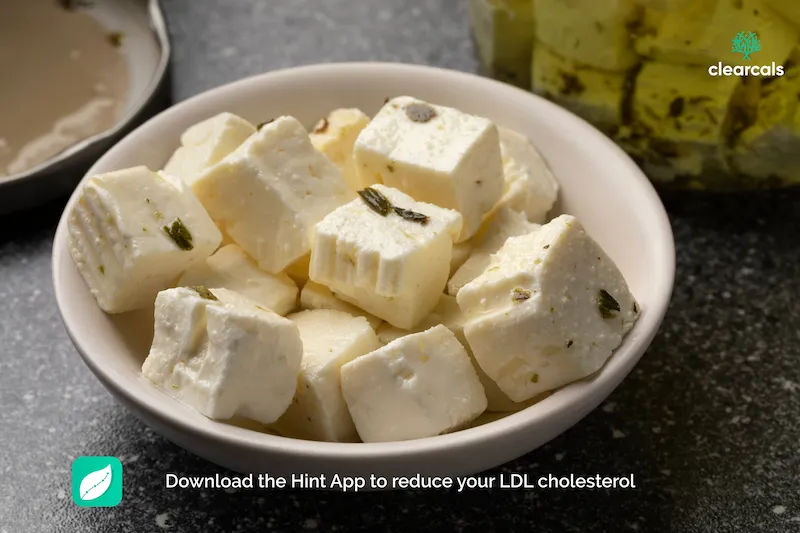
Paneer is one of the most important protein sources in Indian vegetarian diets — and one of the most commonly asked about foods by people managing their cholesterol.
The answer is nuanced: paneer does contain cholesterol and saturated fat, but in moderate quantities, it is compatible with a heart-healthy diet for most people.
What Does Paneer Contain?
Paneer made from full-fat cow's milk (the most common variety in India) per 100g:
| Nutrient | Amount per 100g |
|---|---|
| Calories | ~265 kcal |
| Protein | ~18g |
| Total Fat | ~20g |
| Saturated Fat | ~13g |
| Cholesterol | ~20–25mg |
| Carbohydrates | ~2g |
| Calcium | ~480mg |
Paneer is nutritionally valuable — high in protein and calcium, very low in carbohydrates. Its concern for cholesterol management comes from its saturated fat content (~13g per 100g), not from its cholesterol content per se.
Does Dietary Cholesterol in Paneer Raise Blood Cholesterol?
Paneer's cholesterol content (20–25mg per 100g) is relatively low — a single egg yolk, by comparison, contains about 185mg. For most people, dietary cholesterol from paneer has minimal impact on blood cholesterol because the liver compensates by producing less of its own cholesterol when dietary intake rises.
The more relevant concern is paneer's saturated fat content — 13g per 100g. Saturated fat raises LDL cholesterol by reducing LDL receptor activity in the liver. This is a larger effect than dietary cholesterol for most people.
How Much Paneer Is Safe With High Cholesterol?
| LDL Level | Safe Daily Paneer Amount | Notes |
|---|---|---|
| Optimal (below 100 mg/dL) | Up to 100g | As part of a balanced low-saturated-fat diet |
| Borderline high (130–159 mg/dL) | 50–75g | Choose low-fat paneer when possible |
| High (160+ mg/dL) | 50g or less | Prefer low-fat paneer; limit frequency to 3–4 times per week |
| Very high or with heart disease | Use low-fat paneer only | Full-fat paneer should be avoided during active management |
A typical serving of paneer in Indian cooking (one medium portion of paneer bhurji, palak paneer, or paneer sabzi) uses approximately 80–100g. Reducing portion size or switching to low-fat paneer are the two most practical adjustments.
Full-Fat vs Low-Fat Paneer for Cholesterol
Low-fat paneer (made from skimmed or toned milk) has significantly less saturated fat:
| Type | Saturated Fat per 100g | Cholesterol per 100g |
|---|---|---|
| Full-fat paneer (cow's milk) | ~13g | ~20–25mg |
| Low-fat paneer (toned milk) | ~5–6g | ~10–12mg |
| Tofu (firm) | ~1g | 0mg |
Low-fat paneer retains most of the protein (~16–17g per 100g) and calcium (~420mg) while cutting saturated fat by more than half. For people actively managing high LDL, low-fat paneer is the better choice.
Tofu is an excellent alternative for people needing to keep saturated fat very low — it provides comparable protein with negligible saturated fat and zero cholesterol, and has been shown in some studies to modestly reduce LDL.
Does Cooking Method Affect Paneer's Impact on Cholesterol?
Yes. How paneer is prepared significantly affects its total fat content:
Lower saturated fat impact: Paneer bhurji (minimal oil), palak paneer (spinach-based curry, shallow cooked), paneer in dal or soup, grilled paneer tikka (marinated and grilled without frying).
Higher saturated fat impact: Shahi paneer (cream-based gravy), paneer butter masala (butter + cream), deep-fried paneer pakora or paneer tikka (absorbs oil), paneer in malai-based dishes.
The gravies in restaurant-style dishes often add more saturated fat than the paneer itself — cream, butter, cashew paste, and coconut all add significant saturated fat. Home-prepared paneer dishes with minimal oil and no cream are significantly better for cholesterol than restaurant versions.
Is Paneer Good for Cholesterol Overall?
Paneer is not inherently bad for cholesterol — it is a matter of quantity and preparation. Compared to the most problematic foods for cholesterol in India (vanaspati, reused frying oil, packaged biscuits, full-fat cream in restaurant dishes), paneer in moderate home-cooked quantities is a relatively minor concern.
The key points: use low-fat paneer when LDL is elevated, limit portions to 75–100g per serving, cook with minimal oil, and avoid cream-based preparations when managing cholesterol.
Get a Personalised Diet Plan for High Cholesterol
Managing cholesterol while maintaining adequate protein intake on a vegetarian diet requires a tailored approach. The Hint app provides personalised dyslipidemia diet plans — including vegetarian options — through Hint Pro and Hint Premium, with unlimited dietitian consultations via Hint Premium.
Frequently Asked Questions
Does paneer increase cholesterol? Full-fat paneer can contribute to LDL elevation when consumed in large quantities because of its saturated fat content (~13g per 100g). Moderate amounts (75–100g per day) in an otherwise balanced diet have minimal impact for most people with normal or borderline cholesterol. For people with high LDL or cardiovascular risk factors, switching to low-fat paneer and limiting portion size is advisable.
Is paneer good or bad for high cholesterol? In moderation, paneer is acceptable for most people managing cholesterol. It is a valuable protein source for vegetarians, and its cholesterol content (20–25mg per 100g) is modest. The concern is saturated fat — people with significantly elevated LDL should choose low-fat paneer, limit portions, and avoid cream or butter-heavy paneer preparations.
How much paneer can I eat with high cholesterol? For borderline high LDL (130–159 mg/dL), 50–75g of paneer per day is reasonable, preferably low-fat paneer. For high LDL (160+ mg/dL), limit to 50g or less and use low-fat paneer. Avoid full-fat paneer during active lipid management until LDL reaches the target.
Is tofu better than paneer for cholesterol? Yes, from a saturated fat perspective. Tofu has negligible saturated fat (~1g per 100g) and zero cholesterol, compared to full-fat paneer's 13g saturated fat. Tofu provides comparable protein (8–10g per 100g vs paneer's 18g). For people needing to reduce saturated fat significantly, substituting tofu for paneer in curries, bhurji, and tikka-style dishes is a practical option.
Does paneer raise triglycerides? No. Triglycerides are primarily raised by refined carbohydrates, sugar, and alcohol — not by the fat and protein in paneer. Paneer's effect on lipids is specifically on LDL cholesterol from saturated fat. It has no meaningful direct effect on triglycerides.
About the Author
Hafsaa Farooq is a Consultant Dietitian at Clearcals with a strong passion for nutrition, fitness, and evidence-based health practices.
She is deeply interested in clinical nutrition and enjoys helping individuals build healthier lifestyles through practical dietary guidance.
Beyond her professional work, Hafsaa enjoys developing healthy recipes, writing evidence-based nutrition blogs, and staying active through sports.
She is also expanding her expertise in the science of exercise and weight training to better support holistic health and fitness goals.
🔗 Connect with Hafsaa on LinkedIn
Also Read
- Does Eating Eggs Increase Cholesterol?
- Does Ghee Increase Cholesterol? How Much Is Safe
- Which Oil is Good for Cholesterol in India? Best & Worst Oils Ranked
- Dyslipidemia Diet Plan: 7-Day Indian Meal Plan to Lower Cholesterol & Triglycerides
- Managing Dyslipidemia: Improve Your Cholesterol and Triglycerides