Track your nutrition and health goals

Low-Calorie Fruits & Vegetables (With Calorie Counts)
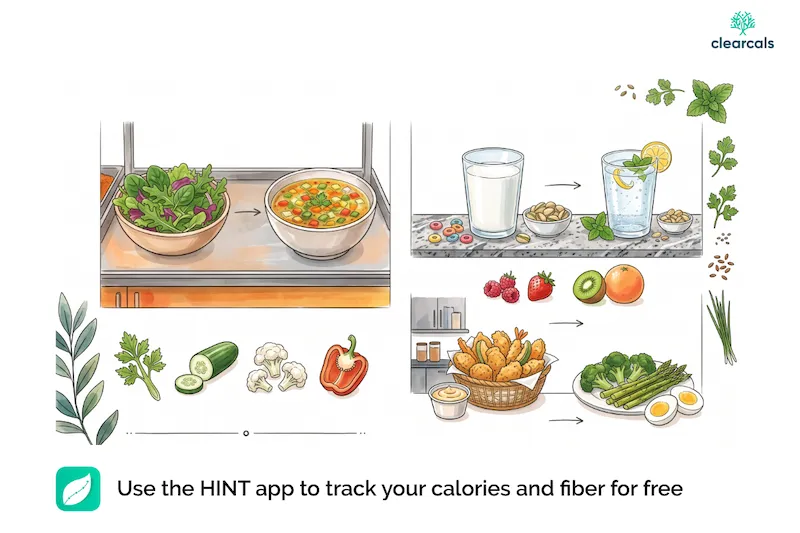
Low-Calorie Fruits & Vegetables (With Calorie Counts)
Why Fruits and Vegetables Are the Easiest "Free" Calories to Add
Most fruits and vegetables are naturally low in calorie density — a lot of volume and water content for relatively few calories — which makes them one of the easiest ways to eat a satisfying amount of food without a large calorie cost. They're a natural fit for a calorie deficit, since they add fullness without eating into much of your daily budget.
Low-Calorie Vegetables (With Calorie Counts, per 100g)
| Vegetable | Approx. Calories |
|---|---|
| Cucumber | ~15 kcal |
| Tomato | ~18 kcal |
| Cabbage | ~25 kcal |
| Spinach | ~23 kcal |
| Cauliflower | ~25 kcal |
| Bottle gourd (lauki) | ~14 kcal |
| Bell pepper (capsicum) | ~20-30 kcal |
| Carrot | ~41 kcal |
| Broccoli | ~34 kcal |
Nearly all common vegetables fall under 50 kcal per 100g, which is why "eat more vegetables" is such reliable advice for weight loss — it's genuinely hard to overeat calories from vegetables alone, even in large portions.
Low-Calorie Fruits (With Calorie Counts, per 100g)
| Fruit | Approx. Calories |
|---|---|
| Watermelon | ~30 kcal |
| Papaya | ~43 kcal |
| Guava | ~68 kcal |
| Orange | ~47 kcal |
| Apple | ~52 kcal |
| Strawberries | ~32 kcal |
| Muskmelon | ~34 kcal |
| Dragon fruit | ~60 kcal |
| Banana | ~89 kcal |
Fruit is naturally higher in calories than most vegetables due to natural sugar content, but still low relative to processed sweet snacks — a serving of fruit is almost always a better choice than a serving of packaged sweets for a similar craving.
Dragon Fruit Calories
Dragon fruit gets searched enough on its own to be worth calling out specifically: a 100g serving runs roughly 60 kcal, and a whole medium dragon fruit (around 300-350g of edible flesh) comes to roughly 180-210 kcal.
That puts it comfortably in the low-calorie fruit range — similar to papaya and lighter than banana — while being higher in fibre than many fruits of a similar calorie count, which helps with fullness. It's a genuinely good choice for weight loss for the same reasons watermelon and papaya are: high volume and water content relative to calories.
Fruits and Vegetables That Are Higher in Calories (Not "Bad," Just Bigger Portions to Watch)
No whole fruit or vegetable needs to be avoided for weight loss — but a few are meaningfully higher in calories than the ones above, mostly because of higher natural sugar or starch content, and it's worth knowing which ones so you can size your portion accordingly rather than treating them the same as cucumber or watermelon:
| Food | Approx. Calories (per 100g) | Notes |
|---|---|---|
| Mango | ~60 kcal | Higher than most fruits above; still a reasonable portion (1 medium mango) fits most calorie budgets |
| Grapes | ~67 kcal | Easy to overeat by volume since they're small and quick to eat |
| Chikoo (sapota) | ~83 kcal | One of the higher-calorie common Indian fruits |
| Litchi | ~66 kcal | |
| Potato | ~77 kcal | The highest-calorie common vegetable, mostly due to starch |
| Corn | ~86 kcal | |
| Green peas | ~81 kcal |
None of these are "bad" foods — mango and potato are both nutritious and fit fine into a calorie deficit at a reasonable portion. The practical takeaway is just that a large bowl of grapes or a big serving of potato isn't calorically similar to the same volume of cucumber or spinach, even though both feel like "healthy" choices.
Using Vegetables to Increase Meal Volume Without Many Calories
One of the most effective, low-effort strategies for a calorie deficit is loading vegetables into dishes you're already making — dal, khichdi, curries, even rice — rather than treating vegetables as a separate side dish you may or may not finish. This increases the volume and fullness of the meal for very few extra calories, which is why "high volume, low calorie" eating (bulking up meals with vegetables) is such a consistently recommended tactic.
What About Dry Fruits?
Dry fruits are a different story from fresh fruit — drying removes water, which concentrates both nutrients and calories into a much smaller, easier-to-overeat portion:
| Dry Fruit | Approx. Calories | Notes |
|---|---|---|
| Almonds, 10 pieces (~12g) | ~70 kcal | Also carries healthy fats and protein |
| Cashews, 10 pieces (~15g) | ~85 kcal | Higher in fat than almonds |
| Walnuts, 4 halves (~10g) | ~65 kcal | Good omega-3 source, still calorie-dense |
| Raisins, 1 tbsp (~10g) | ~30 kcal | Small serving size is easy to underestimate |
| Dried apricots, 4 pieces (~30g) | ~80 kcal | |
| Dates, 2 pieces (~16g) | ~45 kcal |
A small handful of mixed dry fruits (25-30g) can easily add up to 150-200+ kcal — meaningfully more than the same weight of fresh fruit. They're nutritious in moderation (good fats, fibre, micronutrients), but "dry fruit" and "low calorie" don't really belong in the same sentence — treat them as a portion-controlled add-on (a counted handful), not a low-calorie snack to eat freely.
Best time to eat dry fruits for weight loss: There's no special metabolic window — what matters is counting them as part of your daily total rather than treating them as a "free" health food. Many people find having a small, pre-portioned handful earlier in the day (with breakfast or as a mid-morning snack) easier to control than keeping an open bag around in the evening, but this is about convenience and portion control, not timing itself.
Is a Fruit-Only Diet or Detox Good for Weight Loss?
Fruit-only diets, "detox" cleanses, and plans like a 7-day fruit diet show up often in weight-loss searches, but they're worth approaching carefully.
Any strict calorie restriction — which is really what these diets are — will produce weight loss initially, largely water weight and reduced glycogen stores rather than fat loss, and it comes at a cost: fruit alone is low in protein and fat, which makes it hard to preserve muscle and stay full, and most people regain the weight once they return to normal eating.
There's also no evidence that any specific fruit or fruit combination "detoxes" the body — your liver and kidneys already do that continuously, regardless of diet.
A more sustainable version of the same instinct — wanting to eat lighter and reset after a period of overeating — is simply increasing your fruit and vegetable intake within a normal, balanced calorie deficit for a few days, rather than eating only fruit.
If you enjoy fruit-forward eating, pairing it with protein (like Greek yogurt or a source of dal) keeps you fuller and preserves the nutritional gaps a fruit-only approach leaves. For assembled fruit and vegetable dishes rather than whole produce, see our salad recipes for weight loss guide.
A Simple Way to Use This List
- Fill a quarter to half your plate with low-calorie vegetables at lunch and dinner before adding grains or protein — this is one of the most effective, sustainable ways to reduce a meal's overall calorie density.
- Keep cut vegetables ready (cucumber, carrot, bell pepper) for when a snack craving hits — the lower the effort to reach for them, the more likely you are to actually choose them.
- Use fruit to satisfy a sweet craving before reaching for something processed — a bowl of watermelon or papaya is a genuinely different calorie cost than a packaged dessert.
Track Fruits and Vegetables With Hint
Because they're low in calories individually, fruits and vegetables are also easy to under-log — a handful of grapes or an extra serving of sabzi rarely feels worth tracking, but it adds up. The Hint app's Indian food database makes logging quick enough that it's worth doing even for the "small" additions.
FAQs
What are the lowest-calorie vegetables? Cucumber, bottle gourd (lauki), tomato, spinach, and cabbage are among the lowest, typically 14-25 kcal per 100g.
What are the lowest-calorie fruits? Watermelon, strawberries, muskmelon, and papaya are among the lightest fruit options, typically 30-45 kcal per 100g.
Are dry fruits low calorie? No — drying concentrates calories along with nutrients, so dry fruits like almonds, cashews, and raisins typically run 150-250+ kcal per small handful. Enjoy them in controlled portions rather than treating them as a low-calorie snack.
How can vegetables help with weight loss specifically? Their low calorie density lets you eat a large, filling volume of food for relatively few calories, which makes it easier to stay within a calorie deficit without feeling deprived.
Is fruit good for weight loss, or does the sugar matter? Whole fruit is generally a good choice for weight loss — the fibre in whole fruit slows sugar absorption compared to juice, and fruit's calorie density is still far lower than most processed sweets for a similar amount of satisfaction.
How many calories are in dragon fruit? Roughly 60 kcal per 100g, and about 180-210 kcal for a whole medium fruit — in the same low-calorie range as papaya and watermelon.
Are there fruits or vegetables I should avoid for weight loss? No whole fruit or vegetable needs to be avoided — mango, grapes, potato, and corn are simply higher in calories than options like cucumber or watermelon, so the practical adjustment is portion size, not elimination.
What are the highest-calorie common fruits and vegetables? Among fruits, chikoo (sapota), mango, and grapes run higher (~60-83 kcal/100g); among vegetables, potato and corn are the highest (~77-86 kcal/100g) — still moderate compared to processed food, just less "free" than cucumber or spinach.
Is a fruit-only diet or fruit detox good for weight loss? Not recommended as a long-term strategy — any weight lost is mostly water weight, and fruit alone lacks the protein needed to stay full and preserve muscle. A balanced deficit that includes plenty of fruit is more sustainable than eating fruit exclusively.
About the Author
Asfia Fatima is the Chief Dietitian at Clearcals, with a Master's Degree in Dietetics and Clinical Nutrition and over a decade of experience in clinical nutrition and lifestyle management. She specialises in evidence-based diet planning for weight loss, diabetes, and metabolic health, and leads the nutrition strategy behind the Hint app.
Connect with Asfia on LinkedIn