Track your nutrition and health goals

arrowTry the Hint app

Oats Marumaru Pasipparuppu Vada

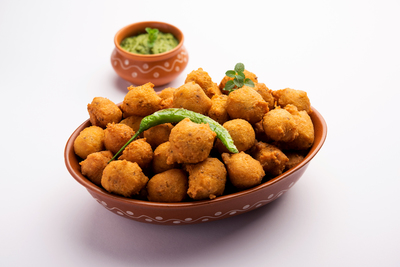
Oats Marumaru Pasipparuppu Vada has 143 calories per serving (1 Large Piece) — that's 288 calories per 100g. It provides 5.1g protein, 11.9g carbs, and 8.3g fat. With a low glycemic index (GI: 30), this recipe is suitable for weight loss, diabetes management, heart health and more. The 4g of dietary fiber per serving adds to its nutritional value. It contains anti-inflammatory ingredients like turmeric and ginger.

Track the exact calories and macros of Oats Marumaru Pasipparuppu Vada in the Hint app — India's comprehensive recipe and nutrition tracking platform.

143kcal
per piece
Protein
5.1 g
Carbs
11.9 g
Fat
8.3 g
GI
30 (Low)
Vegan High fibre
Prep: 15 minCook: 30 min Total: 45 minServes 13
Oats Marumaru Pasipparuppu Vada
  • Serving Size 1 large piece (49.7 g)
  • Calories143.0 kcal
  • Carbs11.9 g (47.6 kcal)
  • Protein5.1 g (20.3 kcal)
  • Fat8.3 g (75.1 kcal)

Calories by portion

Calories and macros of Oats Marumaru Pasipparuppu Vada for common portion sizes.

PortionWeight (g)Calories (kcal)Protein (g)Carbs (g)Fat (g)
1 Oats Marumaru Pasipparuppu Vada501435.111.98.3
2 Oats Marumaru Pasipparuppu Vada9928610.123.816.7
3 Oats Marumaru Pasipparuppu Vada14942915.235.725
4 Oats Marumaru Pasipparuppu Vada19957220.347.633.4
100 g10028810.22416.8

Nutrition Label

Oats Marumaru Pasipparuppu Vada

  • Serving Size1 large piece (49.7 g)
  • Calories143.0 kcal
  • Carbs11.9 g
  • Fiber4.0 g
  • Sugar0.6 g
  • Protein5.1 g
  • Fat8.3 g
  • Saturated fat1.3 g
  • Mono unsaturated fat1.5 g
  • Poly unsaturated fat4.9 g
  • Cholesterol0.0 mg
  • Sodium156.4 mg

Nutrition per 100g

  • Calories288.0 kcal
  • Carbs24.0 g
  • Fiber8.1 g
  • Sugar1.1 g
  • Protein10.2 g
  • Fat16.8 g
  • Cholesterol0.0 mg
  • Sodium315.0 mg

1 serving = 49.7g

Ingredients

Raw oats
2 tbsp
Sunflower oil
90 ml
Bengal gram dal
3 tbsp
Black gram dal
100 g
Whole green gram
100 g
Green cabbage
50 g
Chillies green - all varieties
15 g
Coriander leaves
20 g
Curry leaves
10 g
Ginger fresh
2 g
Onion small
50 g
Asafoetida
1 g
Chillies red
10 g
Coconut kernal dry
15 g
Salt
1 tsp
Water
100 ml
Garam masala powder
1 tsp
Red chilli powder
0.5 tsp

Instructions

1
Preparing batter
Firstly, in a large bowl wash and soak bengal gram dal black gram dal, green gram dal and red chili for 2 hours. Further, drain off the water and rest for 10 minutes, so that all water will be drained off. Transfer the dal to a blender and blend to a coarse paste without adding any water. add just a tsp of water if required
2
Mixing
Now transfer the coarse dal paste into a large mixing bowl. Add in oats powder, green chilli, inch ginger, onion, few curry leaves, coriander leaves, chopped cabbage, red chili powder, a pinch of hing and salt to taste. Combine them well.
3
Frying
Heat oil in a Kadai until hot. Furthermore, grease your hand with oil and drop small balls of the batter into the oil, and deep fry. Also stir occasionally till the vada turns golden and crisp.
4
Serving
Serve vada immediately.

How long to burn it off

Time a 65 kg adult needs to burn one serving (143 kcal).

  • Brisk walking (5 km/h)36 min≈ 3,600 steps
  • Running (8 km/h)15 min
  • Cycling (moderate)18 min
  • Yoga50 min

Glycemic Index

30 Low
Low
Medium
High

Likely to produce a slower, steadier rise in blood glucose for most people.

How to flatten the spike

  • Pair this dish with a protein source (dal, paneer, eggs, fish, or curd).
  • Add a fiber-rich side salad or non-starchy vegetables.
  • Avoid combining this with another high-carb side in the same meal.

Compare & Substitute

NutrientOats Marumaru Pasipparuppu VadaBandhakopi BhoraCabbage vadaKobiche vade
Calories143 kcal127.9 kcal127.9 kcal127.9 kcal
Carbs11.9 g8.8 g8.8 g8.8 g
Protein5.1 g3.9 g3.9 g3.9 g
Fat8.3 g8.5 g8.5 g8.5 g
Fiber4 g3.2 g3.2 g3.2 g
Sugar0.6 g0.6 g0.6 g0.6 g
Sodium156.4 mg201.9 mg201.9 mg201.9 mg
Cholesterol0 mg0 mg0 mg0 mg

Health Goals Suitability

Weight Loss

At just 143 kcal per serving, this is an excellent choice for weight management. The 4g of dietary fiber promotes satiety, helping you feel full longer.

Diabetes

With a low glycemic index of 30, this recipe supports stable blood sugar levels. The 4g fiber further slows glucose absorption.

Muscle Gain

Low protein content (5.1g per serving) — not sufficient alone for muscle building. Combine with high-protein sides like paneer, eggs, chicken, dal, or a protein shake to reach 25-30g protein per meal.

Heart Health

Zero cholesterol and low saturated fat (1.3g) make this heart-friendly. Anti-inflammatory ingredients benefit overall heart health. Low sodium content is ideal for blood pressure management.

PCOS

Low GI (30) with 4g fiber supports insulin sensitivity — key for PCOS management. Anti-inflammatory ingredients like turmeric and ginger are especially beneficial for PCOS. The high fiber content supports hormone balance by aiding estrogen metabolism.

Thyroid

Contains cruciferous vegetables which are goitrogenic when raw. However, cooking significantly reduces goitrogen activity. If you have hypothyroidism, ensure these are well-cooked and maintain a gap of 30-60 minutes from thyroid medication.

Portion Guidance

Weight Loss

1 Large Piece (~49.7g). A light, kcal-friendly portion. Pair with roti or salad for a complete meal under 300 kcal.

Muscle Gain

1 Large Piece (~49.7g) plus a protein-rich addition (100g paneer, 2 eggs, or 1 cup dal) to hit 25-30g protein per meal.

Diabetes

1 Large Piece (~49.7g). Pair with whole wheat roti (not rice) to lower glycemic load. Eat protein and fiber portions first, carbs last.

General

1 Large Piece (~49.7g) provides a balanced portion. Adjust based on your daily kcal target — track accurately in the Hint app.

Recipe Modifications

Lower fat

Use low-fat paneer or reduce ghee/butter by half. Switch to a non-stick pan to minimize oil.

Boost protein

Add 50g paneer, a boiled egg, or a side of sprouted moong dal. Stirring in 1 tbsp of peanut butter also adds 4g protein.

Meal prep friendly

Oats Marumaru Pasipparuppu Vada stores well for 2-3 days refrigerated. Reheat on stovetop for best texture. Prepare ingredients in advance for quick weeknight cooking.

Common Mistakes

Using too much oil or ghee

Why it matters: Excess oil can double the calorie content without adding nutritional value.

Fix: Measure oil with a tablespoon instead of pouring freely. 1 tbsp = 120 kcal.

Not measuring serving size

Why it matters: The nutrition values are for 1 standard serving. Eating 2-3x the serving means 2-3x the kcal (286-428.9 kcal).

Fix: Use the Hint app to scan and log the exact portion you eat for accurate tracking.

Overcooking the vegetables

Why it matters: Overcooking destroys heat-sensitive vitamins (C, B-complex) and reduces fiber quality.

Fix: Cook vegetables until just tender. Add delicate vegetables (like spinach or capsicum) in the last 2-3 minutes.

Frequently Asked Questions

One serving of Oats Marumaru Pasipparuppu Vada contains 143 kcal (5.1g protein, 11.9g carbs, 8.3g fat). That's 288 kcal per 100g. You can track exact portions in the Hint app.

At just 143 kcal per serving, this is an excellent choice for weight management. The 4g of dietary fiber promotes satiety, helping you feel full longer. Pair with a salad or raita for a filling, low-calorie meal.

With a low glycemic index of 30, this recipe supports stable blood sugar levels. The 4g fiber further slows glucose absorption. The glycemic index is 30 (Low). Always consult your dietitian for personalized guidance — Hint Premium connects you with expert dietitians.

Oats Marumaru Pasipparuppu Vada has 5.1g protein per serving. It provides moderate protein — add a protein-rich side for a complete meal.

Yes, Oats Marumaru Pasipparuppu Vada is light enough for dinner at 143 kcal. Having a lighter dinner 2-3 hours before sleep supports better digestion and weight management.

Since Oats Marumaru Pasipparuppu Vada is moderate in protein, pair it with dal, paneer, curd, or eggs. Add a fiber-rich salad for completeness. Track your full meal in the Hint app for accurate nutrition totals.

Low GI (30) with 4g fiber supports insulin sensitivity — key for PCOS management. Anti-inflammatory ingredients like turmeric and ginger are especially beneficial for PCOS. The high fiber content supports hormone balance by aiding estrogen metabolism.

Scientific References

  1. Low glycemic index foods help improve blood sugar control in people with diabetes

    Brand-Miller J et al. (2003). Low-glycemic index diets in the management of diabetes. Diabetes Care.

    DOI: 10.2337/diacare.26.8.2261
  2. Increased dietary fiber intake is associated with lower body weight

    Slavin JL (2005). Dietary fiber and body weight. Nutrition.

    DOI: 10.1016/j.nut.2003.09.004
  3. Dietary fiber slows glucose absorption and reduces post-meal blood sugar spikes

    Weickert MO & Pfeiffer AFH (2008). Metabolic effects of dietary fiber consumption. Journal of Nutrition.

    DOI: 10.1093/jn/138.3.439
  4. Curcumin in turmeric has significant anti-inflammatory properties

    Hewlings SJ & Kalman DS (2017). Curcumin: A Review of Its Effects on Human Health. Foods.

    DOI: 10.3390/foods6100092

How we calculate

Nutrition is calculated from the ingredient quantities above using the Indian Food Composition Tables (IFCT 2017, ICMR-NIN) and USDA FNDDS. The glycemic index is estimated from the ingredients, not lab-tested. Activity times use the Compendium of Physical Activities for a 65 kg adult. This page is general information, not medical advice. Our data sources

Last updated:

Looking for an Indian Food Calorie Calculator?

Try the Hint app

promo banner