Track your nutrition and health goals

Banana Calories & Protein: Per Piece, Per 100g, Shake & Smoothie | Clearcals

Written by Asfia Fatima, Chief Dietitian at Clearcals
TL;DR
- One banana has 86–162 kcal, depending on size — a small banana (80g) has 86 kcal, a medium (100g) has 108 kcal, and a large (120g) has 130 kcal
- Per 100g, a banana provides 108 kcal and 1.25g of protein
- Half a banana has 54 kcal and 0.6g protein
- A glass of banana shake (240mL) has 262 kcal; a banana smoothie has 220 kcal
- Bananas are an excellent source of potassium, vitamin B6, and vitamin C — supporting heart health, muscle function, and energy
- Track your banana intake and see how it fits your daily calorie and protein goals with the free Hint app
How Many Calories Are in a Banana?
Banana calorie content varies depending on size. A small banana weighs around 80g and has 86 kcal. A medium banana — the most commonly eaten size — weighs around 100g and has 108 kcal. A large banana weighs 120g or more and contains 130 kcal or more.
If you are eating 2–4 bananas per day, your total intake ranges from 172 kcal to over 400 kcal before any accompaniments like milk or peanut butter.
The tables below cover every practical combination of size and quantity.
Banana Calories by Size and Quantity
| Banana Size | 1 Banana | 2 Bananas | 3 Bananas | 4 Bananas | 5 Bananas | 6 Bananas |
|---|---|---|---|---|---|---|
| Small (80g) | 86 kcal | 173 kcal | 259 kcal | 346 kcal | 432 kcal | 518 kcal |
| Medium (100g) | 108 kcal | 216 kcal | 324 kcal | 432 kcal | 540 kcal | 648 kcal |
| Large (120g) | 130 kcal | 260 kcal | 390 kcal | 518 kcal | 648 kcal | 778 kcal |
| Extra Large (150g) | 162 kcal | 324 kcal | 486 kcal | 648 kcal | 810 kcal | 972 kcal |
Half Banana Calories
| Banana Size | Half Banana | Calories | Protein |
|---|---|---|---|
| Small (80g) | 40g | 43 kcal | 0.5g |
| Medium (100g) | 50g | 54 kcal | 0.6g |
| Large (120g) | 60g | 65 kcal | 0.8g |
Banana Nutrition Facts
One medium banana (100g) contains 108 kcal. It is made up of 92.7% carbohydrates, 4.6% protein, and 2.7% fat. Bananas are a good source of potassium, vitamin C, manganese, and vitamin B6 — nutrients that support heart health, muscle function, energy metabolism, and immune defence.
Calories and Nutrients Per Medium Banana (100g)
| Nutrient | Per Medium Banana (100g) |
|---|---|
| Calories | 108 kcal |
| Carbohydrates | 25.0g |
| Sugar | 14.9g |
| Dietary Fibre | 2.2g |
| Protein | 1.25g |
| Fat | 0.3g |
| Potassium | 362mg |
| Vitamin B6 | 0.5mg |
| Vitamin C | 8.06mg |
| Manganese | 0.4mg |
| Sodium | 1.0mg |
Use the free Hint app to log your banana and see exactly how it fits into your daily calorie, protein, and micronutrient targets.
Banana Calories and Protein
Each medium banana (100g) provides 108 kcal and 1.25g of protein. While protein is modest compared to dairy or pulses, banana protein contributes meaningfully when eaten daily as part of a mixed Indian diet. The table below shows calories and protein together so you can track both in one view.
Banana Calories and Protein by Quantity (Medium, 100g)
| Quantity | Calories | Protein |
|---|---|---|
| 1 banana | 108 kcal | 1.25g |
| 2 bananas | 216 kcal | 2.5g |
| 3 bananas | 324 kcal | 3.75g |
| 4 bananas | 432 kcal | 5.0g |
| 5 bananas | 540 kcal | 6.25g |
| 6 bananas | 648 kcal | 7.5g |
Banana Calories and Protein by Size (1 banana)
| Size | Calories | Protein |
|---|---|---|
| Small (80g) | 86 kcal | 1.0g |
| Medium (100g) | 108 kcal | 1.25g |
| Large (120g) | 130 kcal | 1.5g |
| Extra Large (150g) | 162 kcal | 1.9g |
For a complete picture of daily protein intake across all your meals, the Hint app tracks protein alongside 30 other nutrients calibrated to Indian foods, and NIN-ICMR recommended daily allowances.
Banana with Milk Calories
A popular combination in Indian households — banana with milk — significantly increases calorie intake compared to a banana alone.
Banana + Milk Calorie Estimates
| Combination | Calories |
|---|---|
| 1 medium banana + 1 glass whole milk (240mL) | ~366 kcal |
| 2 medium bananas + 1 glass whole milk (240mL) | ~474 kcal |
| 2 medium bananas + 1 glass toned milk (240mL) | ~338 kcal |
Note: Whole milk = approximately 258 kcal per 240mL; toned milk = approximately 122 kcal per 240mL. Protein in banana + whole milk combination (2 bananas): approximately 11.3g.
Use the Hint app's Create Your Recipe feature to enter your exact milk type and quantities for a personalised calorie and protein count.
Banana Shake and Smoothie Calories
Banana Shake and Smoothie Calories at a Glance
| Drink | Serving | Calories | Key Nutrients |
|---|---|---|---|
| Banana milkshake | 240mL | 262 kcal | Protein 6.5g, vitamin B6, B12, calcium |
| Banana smoothie | 240mL | 220 kcal | Potassium, vitamin B6, fibre |
| Banana oats smoothie | 240mL | 231 kcal | Fibre, protein, selenium, vitamin B6 |
| Banana dates milkshake | 240mL | 269 kcal | Potassium, B6, B12, calcium |
| Banana nuts milkshake | 240mL | 334 kcal | Protein, vitamin E, magnesium, copper |
| Mango banana smoothie | 240mL | 197 kcal | Vitamin C, vitamin B6, D, potassium |
| Banana green smoothie | 240mL | 203 kcal | Vitamin C, B6, copper, magnesium |
| Banana lassi | 240mL | 245 kcal | Calcium, B12, probiotics, potassium |
| Banana raita | 100g | 85 kcal | Probiotics, B6, B12, protein |
Banana Milkshake (240mL)
One glass of banana milkshake has 262 kcal — made up of 57% carbohydrates, 9.9% protein, and 33.1% fat. It is a good source of protein, potassium, calcium, vitamin D, riboflavin, phosphorus, magnesium, selenium, and an excellent source of vitamin B6, vitamin B12, and manganese.
Note that banana milkshake has high natural sugar content — those with diabetes, prediabetes, or insulin resistance should consume it with caution.
How Much Protein in a Banana Shake?
A standard glass (240mL) of banana shake made with whole milk contains approximately 6.5g of protein. Protein content increases if you add low-fat milk, Greek yogurt, or protein powder.
Is Banana Shake Good for Weight Gain?
Yes. Banana shakes are calorie-dense and easy to consume, making them effective for healthy weight gain. Adding full-fat milk, peanut butter, nuts, or protein powder increases the calorie content further.
👉 Read our complete muscle gain diet guide →
Is Banana Shake Good for Weight Loss?
Banana shakes can support weight loss when made with low-calorie ingredients — almond milk or low-fat yogurt in place of whole milk, and no added sugar or honey. The fibre and protein combination helps control appetite and reduce overall calorie intake throughout the day.
👉 Read our weight loss diet guide for Indians →
Banana Benefits
Bananas offer a range of health benefits beyond their energy content. Here is why they belong in a balanced Indian diet:
Heart Health: Bananas are rich in potassium, an essential mineral for maintaining healthy blood pressure and reducing the risk of heart disease. Their low sodium content adds further cardiovascular benefit.
Digestion: Bananas contain dietary fibre that promotes healthy digestion and prevents constipation, making them a practical everyday snack for gut health.
Muscle Function: Potassium and magnesium in bananas both support muscle health — potassium regulates contractions and magnesium aids in relaxation, making bananas a natural post-workout option.
Energy: As a carbohydrate-rich fruit, bananas provide quick, sustained energy. Vitamin B6 assists in converting food into usable energy, making a banana one of the most practical pre- or mid-day snacks.
Mood and Sleep: Vitamin B6 supports serotonin production, a neurotransmitter that regulates mood. Magnesium and tryptophan contribute to muscle relaxation and better sleep quality.
Kidney Health: Potassium helps regulate blood pressure and may reduce the risk of kidney stones with regular consumption as part of a balanced diet.
Skin Health: Vitamin C in bananas supports collagen production, contributing to skin elasticity and repair.
Weight Management: The fibre in bananas supports satiety — helping you feel fuller for longer and reducing unnecessary snacking between meals.
Post-Exercise Recovery: Bananas help replenish glycogen stores and prevent muscle cramps after exercise, making them one of the most practical and portable recovery foods available.
Banana Recipe Calories
Bananas are versatile and can be incorporated into various delicious recipes. Whether you're looking for a quick snack or a satisfying meal, here are some popular banana-based recipes:
1. Banana Lassi Calories (240 mL)

One glass of banana lassi has 245 kcal — 61.3% carbohydrates, 11.1% protein, and 27.6% fat.
It is a good source of protein, probiotics, potassium, vitamin D, phosphorus, riboflavin, and vitamin B6, and an excellent source of calcium and vitamin B12.
2. Banana Raita Calories (100g)
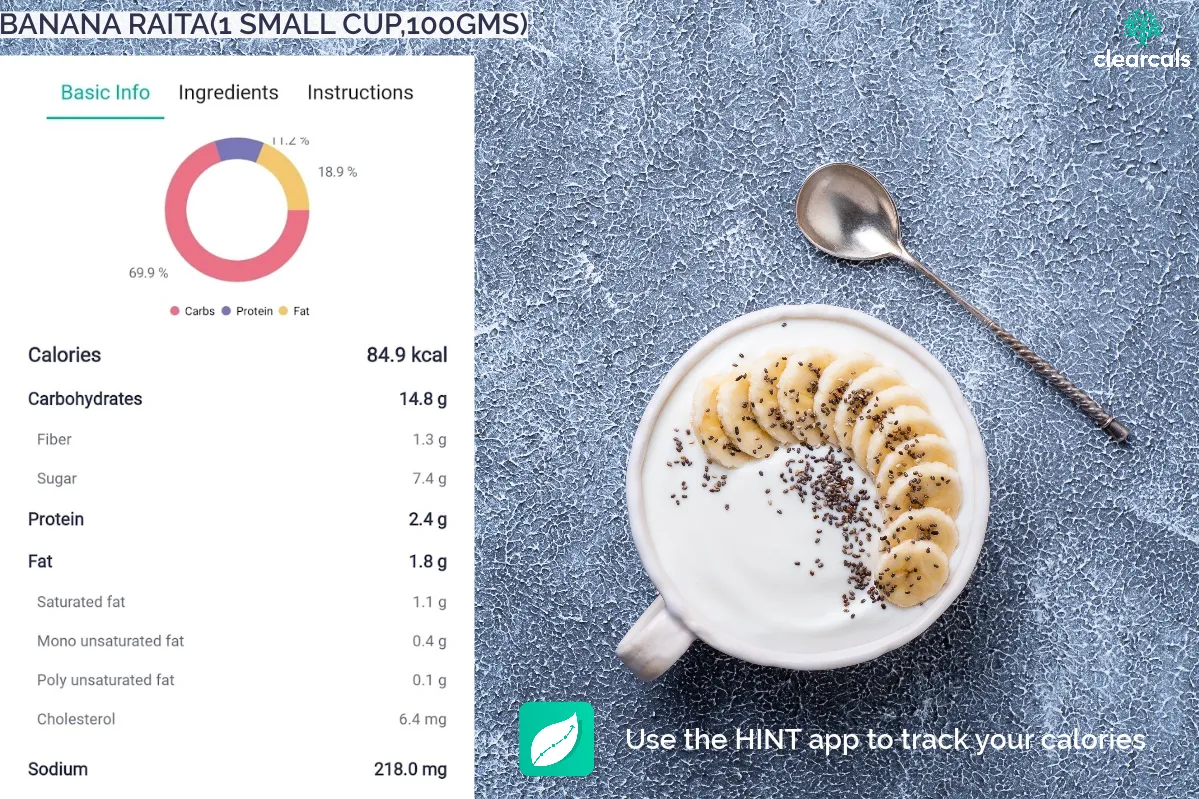
One small cup of banana raita has 85 kcal — 69.9% carbohydrates, 11.2% protein, and 18.9% fat. It is a good source of probiotics, protein, vitamin B6, and vitamin B12.
3. Banana Milkshake Calories (240 mL)

One glass of banana milkshake has 262 kcal — 57% carbohydrates, 9.9% protein, and 33.1% fat. Good source of protein, potassium, vitamin D, riboflavin, calcium, phosphorus, magnesium, selenium, and an excellent source of vitamin B6, B12, and manganese.
4. Banana Dates Milkshake Calories (240 mL)

One glass has 269 kcal — 59% carbohydrates, 9.4% protein, and 31.6% fat. Good source of potassium, riboflavin, vitamin D, calcium, phosphorus, magnesium, selenium, manganese, B6, and B12. Avoid if managing diabetes, prediabetes, or insulin resistance.
5. Banana Nuts Milkshake Calories (240 mL)
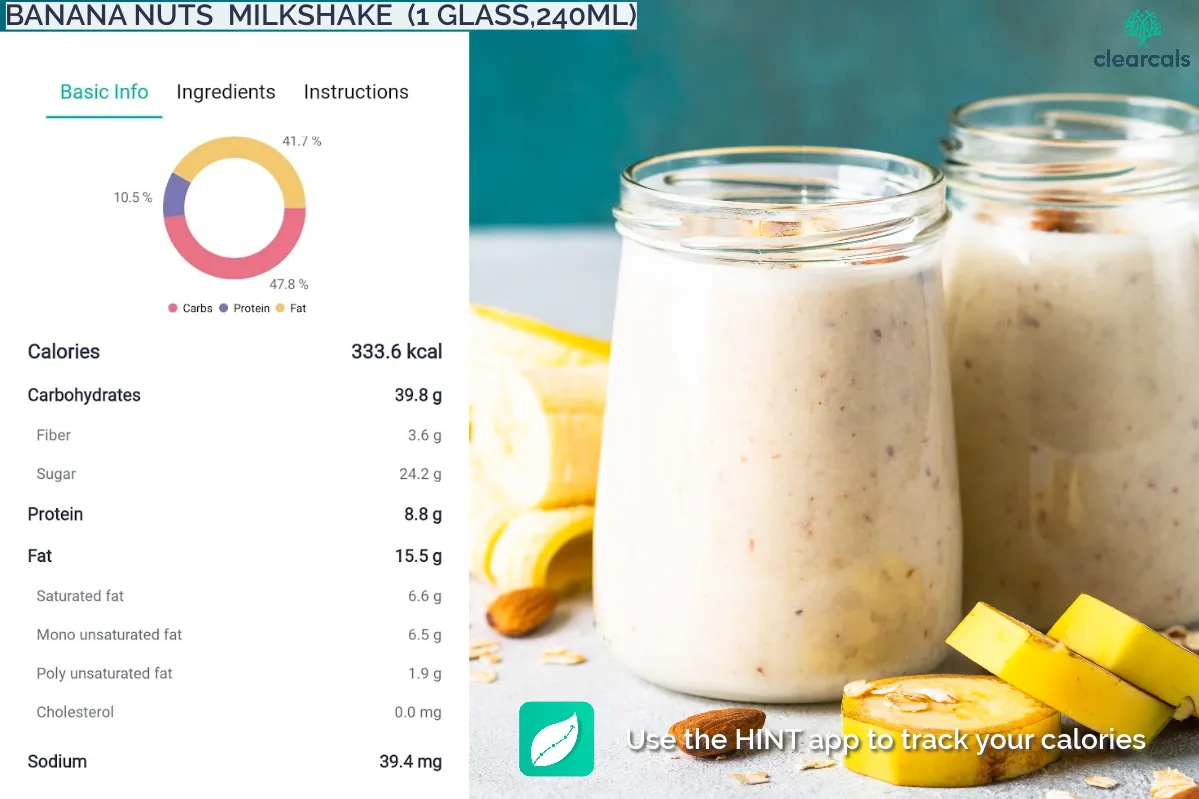
One glass has 334 kcal — 47.8% carbohydrates, 10.5% protein, and 41.7% fat. Excellent source of vitamin E, phosphorus, magnesium, copper, and manganese.
6. Banana Smoothie Calories (240 mL)
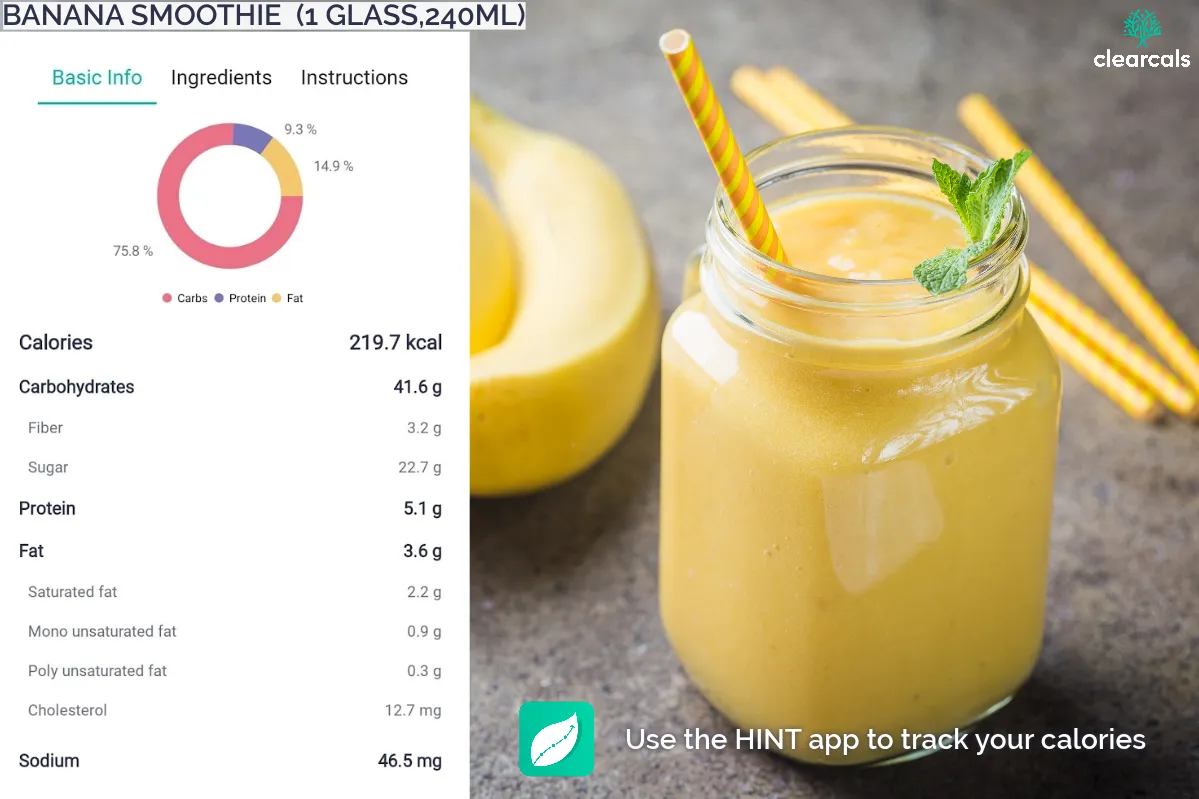
One glass has 220 kcal — 75.8% carbohydrates, 9.3% protein, and 14.9% fat. Good source of potassium, fibre, calcium, phosphorus, magnesium, vitamin B12, and manganese.
7. Banana Oats Smoothie Calories (240 mL)
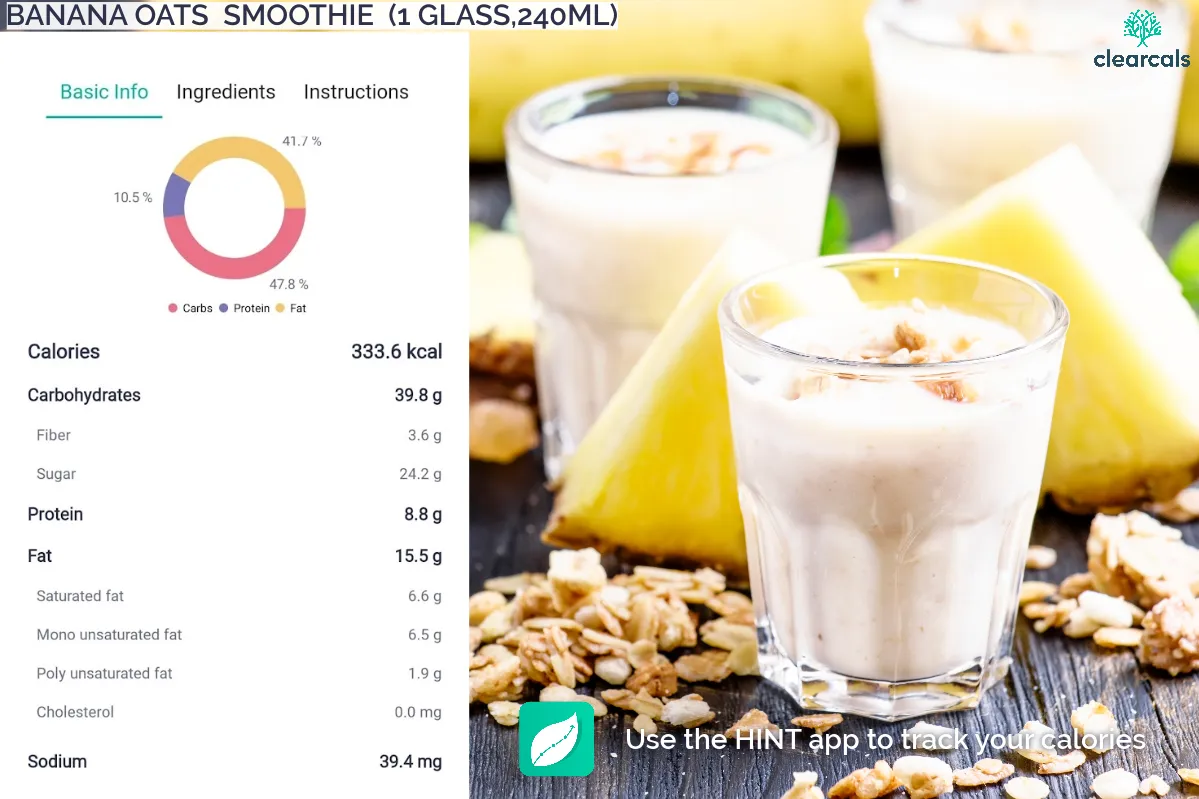
One glass has 231 kcal — 71.9% carbohydrates, 11.1% protein, and 17% fat. Excellent source of vitamin B6. Makes a practical pre-workout meal and aids in weight management.
8. Mango Banana Smoothie Calories
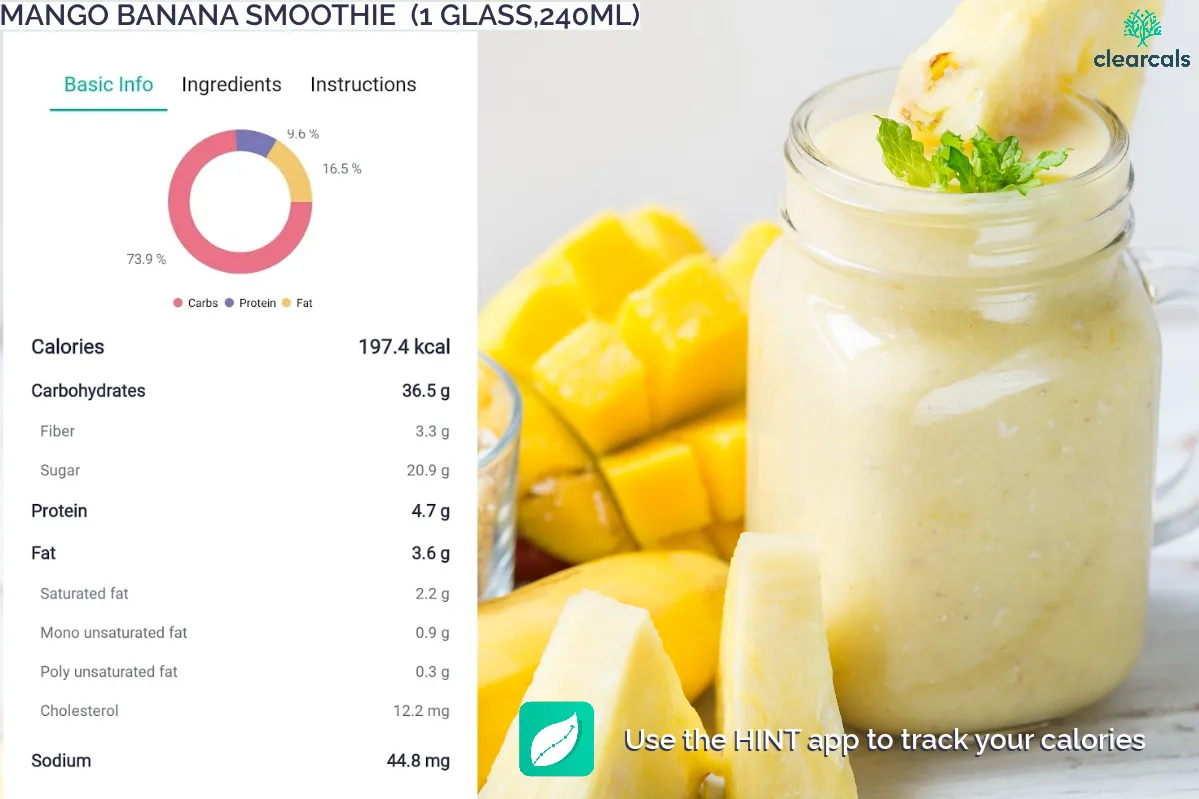
One glass has 197 kcal — 73.9% carbohydrates, 9.6% protein, and 16.5% fat. Excellent source of vitamin B6, vitamin C, and vitamin D. Avoid if managing diabetes or insulin resistance.
9. Banana Green Smoothie Calories (240 mL)
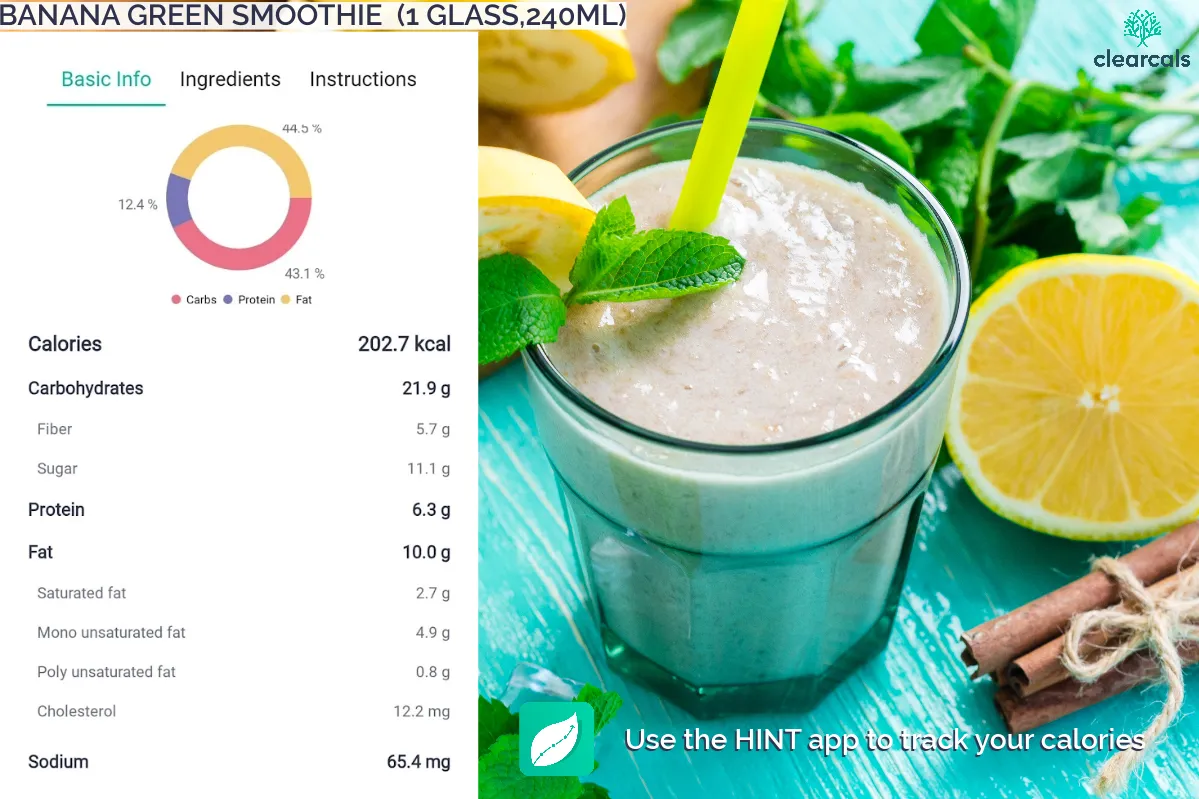
One glass has 203 kcal — 43.1% carbohydrates, 12.4% protein, and 44.5% fat. Excellent source of copper, magnesium, manganese, vitamin B6, and vitamin C. Supports immunity and weight management.
10. Cinnamon Oats Porridge with Banana and Strawberries (100 g)
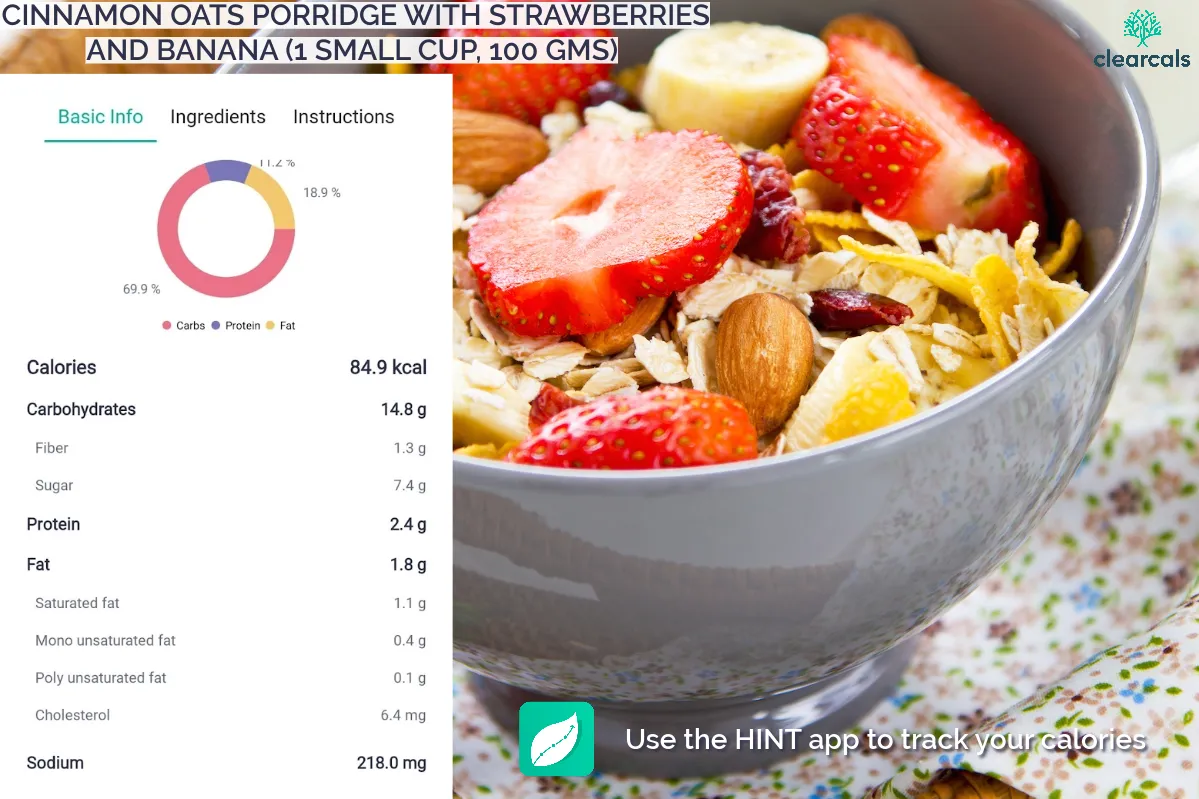
One small cup has 85 kcal — 59.8% carbohydrates, 11.9% protein, and 28.3% fat. Good source of selenium, phosphorus, thiamine, vitamin C, and vitamin D. Supports blood sugar control.
Frequently Asked Questions
How many calories are in a banana? A medium banana (100g) has 108 kcal. A small banana (80g) has 86 kcal, and a large banana (120g) has 130 kcal. The calorie range across all common sizes is approximately 86–162 kcal per banana.
How many calories are in half a banana? Half a medium banana (50g) has approximately 54 kcal and 0.6g of protein. Half a large banana (60g) has approximately 65 kcal.
How many calories are in 2 bananas? Two medium bananas (200g) provide 216 kcal and 2.5g of protein. Two large bananas provide approximately 260 kcal.
How many calories are in a banana per 100g? Per 100g, a banana has 108 kcal, 25g carbohydrates, 1.25g protein, 0.3g fat, and 2.2g dietary fibre. It is also a good source of potassium (362mg) and vitamin B6.
Is a banana good for weight loss? Yes. Bananas are relatively low in calories, high in fibre, and filling — making them a practical snack that supports appetite control during a calorie deficit.
The fibre content slows digestion and promotes satiety. Opt for smaller bananas and pair with protein sources like Greek yogurt or boiled eggs for a more balanced snack. 👉 Read our weight loss diet guide for Indians →
Is a banana good for weight gain? Yes. Ripe bananas are calorie-dense and carbohydrate-rich, making them ideal for healthy weight gain when consumed in quantities of 3–6 per day alongside other calorie-dense foods.
Banana shakes with full-fat milk and peanut butter are a highly effective weight gain strategy. 👉 Read our muscle gain diet guide →
Is a banana good for diabetes? Bananas have a moderate glycaemic index (approximately 51–55) and a meaningful amount of dietary fibre, which helps slow glucose absorption.
Smaller bananas have lower total sugar content and are generally better tolerated.
Riper bananas have a higher GI than less ripe ones — those managing blood sugar are better served by slightly firm, less ripe bananas in moderate portions. 👉 Read our complete diabetes diet guide →
Is a banana good for PCOS? Whole bananas — particularly slightly underripe ones — are a better choice for PCOS than many other high-sugar fruits because of their fibre and resistant starch content.
Their potassium and magnesium support hormonal balance and reduce inflammation.
Avoid very ripe bananas in large quantities if managing insulin resistance.
👉 Read our PCOS diet guide → | Read our insulin resistance diet guide →
Is a banana good for muscle gain? Yes. Bananas provide fast-digesting carbohydrates that fuel workouts and replenish glycogen stores after exercise. They also contain potassium and magnesium, which support muscle contraction and recovery.
Pair bananas with a protein source — milk, paneer, or boiled eggs — for an effective pre- or post-workout meal. 👉 Read our muscle gain diet guide →
Is it good to eat a banana on an empty stomach? Some people experience digestive discomfort from bananas on an empty stomach, particularly due to their natural sugar content and acidity, which can cause an energy spike followed by a crash.
Pairing bananas with a protein or fat source — yogurt, nuts, or eggs — helps balance the effect and provides more sustained energy.
Is it good to eat a banana at night? Bananas contain magnesium and tryptophan, which support muscle relaxation and serotonin production — making them a reasonable evening snack for sleep support. However, if you are managing weight or blood sugar, a half banana is preferable to a whole one as a late-night option.
Are banana chips healthy? Commercially available banana chips are typically deep-fried and contain added sugar — significantly increasing their calorie and fat content compared to fresh bananas.
Baked or air-dried banana chips are a healthier alternative. For weight management, fresh bananas are always the better choice over processed chips.
Which banana is good for weight gain? Ripe Cavendish bananas — the most commonly available variety — are ideal for weight gain due to their high natural sugar and carbohydrate content.
Red bananas (approximately 90–100 kcal per 100g) are also a good option and have a sweeter flavour and slightly higher antioxidant content.
Final Thoughts
Banana is one of the most practical and nutritious foods in an Indian diet — portable, affordable, and genuinely versatile across meals, snacks, and post-workout recovery.
Whether you are tracking 1 banana or 4, managing diabetes or building muscle, the Hint app makes it easy to log your intake and see how it fits within your daily calorie and nutrient goals.
Download the free Hint app to start tracking.
Upgrade to Hint Pro for personalised Indian diet plans, weekly insights, and 300+ workout plans — or Hint Premium for unlimited dietitian consultations on top of everything in Hint Pro.
🎁 Free Hint with Every Watch Purchase
Garmin watches: Purchase any Garmin watch from the Clearcals Store and receive 1 month of Hint Premium (worth ₹1,999) free — including unlimited dietitian consultations, personalised diet and workout plans, and advanced nutrition tracking.
Apple Watch: Purchase any Apple Watch from the Clearcals Store and receive a free Hint Pro subscription — including personalised Indian diet plans, 300+ workouts, weekly insights, and more.
Read Next
- Indian Food Calorie Calculator — Free Online Tool
- Calories in Rice — Nutrition Facts & Health Benefits
- Calories in Roti — Nutrition Facts & Health Benefits
- Weight Loss Diet Plan for Indians
- Muscle Gain Diet Plan India
- Diabetes Diet Plan India
- PCOS Diet Plan India
- Calorie Tracking in India — Beginner's Guide
About the Author
Asfia Fatima is the Chief Dietitian at Clearcals, with a Master’s Degree in Dietetics and Clinical Nutrition and over a decade of experience in clinical nutrition and lifestyle management.
She specializes in evidence-based diet planning for weight loss, diabetes, and metabolic health.
At Clearcals, she leads the nutrition strategy behind the Hint app, helping users achieve their goals with science-backed guidance.
🔗 Connect with Asfia on LinkedIn