Track your nutrition and health goals

Vitamin A Rich Foods in India (Veg & Non-Veg List)
Vitamin A-Rich Foods in India: Vegetarian and Non-Vegetarian Sources
By Dr. Sumedha Verma, Consultant Physician at Clearcals
The short answer
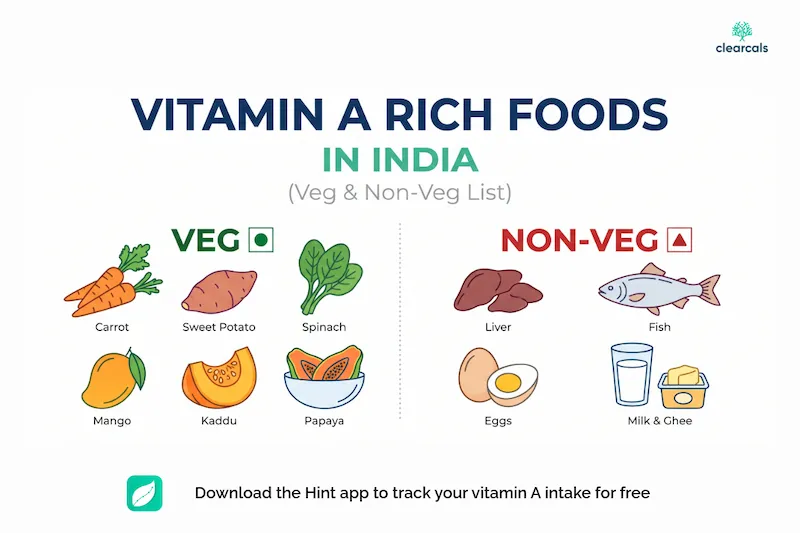
Vitamin A comes in two forms: preformed vitamin A (retinol) from animal foods such as eggs, milk, ghee, fish, and liver, and beta-carotene from orange, yellow, and dark green plant foods that your body converts to vitamin A. Good Indian sources are carrots, sweet potato, pumpkin, papaya, mango, spinach, methi, drumstick leaves, eggs, milk and ghee. Eating them with a little fat helps absorption. Deficiency is rare in adults with varied diets, but it affects eyesight, so night blindness or dry eyes should be checked by a doctor.
- Plant sources: carrot, sweet potato, pumpkin, papaya, ripe mango, spinach, methi, coriander, drumstick leaves.
- Animal sources: egg yolk, milk, curd, paneer, ghee, fish, liver.
- Cook with a little oil or ghee, because vitamin A is fat-soluble.
- Food is safe; high-dose supplements are not for self-use. Too much preformed vitamin A can be harmful, especially in pregnancy.
Why vitamin A matters
Vitamin A supports vision (especially in dim light), skin and the lining of the gut and lungs, and the immune system. It also matters for growth in children and for pregnancy.
Vitamin A foods: Indian vegetarian list
| Food | Notes |
|---|---|
| Carrot | Beta-carotene rich. Cooked with a little oil absorbs better. |
| Sweet potato (shakarkandi) | One of the best plant sources. |
| Pumpkin (kaddu) | Good in sabzi and soups. |
| Papaya and ripe mango | Easy fruit sources in season. |
| Spinach, methi, sarson, coriander, drumstick leaves | Dark green leaves are rich in beta-carotene. |
| Milk, curd, paneer, ghee | Preformed vitamin A, more in full-fat dairy. |
Non-vegetarian sources
Eggs (the yolk), fish, and liver contain preformed vitamin A. Liver is very rich, so having it often is not necessary and is not advised in pregnancy.
How much do you need?
Indian guidance sets the requirement in micrograms of retinol activity equivalents (RAE), higher for men than women, and higher still during breastfeeding. For most people, a plate with a serving of orange or green vegetables or fruit most days, plus some dairy or eggs, covers it. You do not need to count micrograms by hand.
Signs of vitamin A deficiency
- Difficulty seeing in dim light (night blindness)
- Dry eyes, or foamy white spots on the eye surface
- Dry, rough skin
- Frequent infections
Deficiency is more common in children and in people with poor diets or fat-absorption problems. If you notice night blindness, see a doctor promptly.
Can you have too much?
Yes, but almost always from supplements or liver, not from vegetables. Too much preformed vitamin A can cause headache, nausea, liver damage, and, in pregnancy, birth defects. Do not take vitamin A supplements without advice. Eating lots of carrots can turn skin slightly orange, which is harmless.
Tips to get more from your food
- Add a visible orange or green vegetable to lunch and dinner.
- Cook with a little oil or ghee, or add it to the dish at the end.
- Do not overcook, as long boiling reduces some nutrients.
- Choose a seasonal fruit like papaya or mango as a snack.
- For children, include eggs, dairy, and orange fruit and vegetables regularly.
Track your vitamins with Hint
Hint lets you log your Indian meals and track your intake of all the essential vitamins for free, including vitamin A, alongside calories and protein. It shows which meals carry your vitamin A, and whether you are leaning on liver or supplements instead of vegetables. It estimates intake from food and cannot diagnose deficiency. See your doctor if you have eye symptoms. You can also try our free Indian food calorie calculator.
Frequently asked questions
Which food has the most vitamin A? Liver is richest, but for everyday eating, sweet potato, carrot, pumpkin, spinach, and eggs are practical, safe choices.
Is vitamin A in carrot or spinach? Yes, as beta-carotene, which your body converts to vitamin A.
Which vegetables are rich in vitamin A? Carrot, sweet potato, pumpkin, spinach, methi, coriander, and drumstick leaves.
What does vitamin A deficiency cause? Night blindness, dry eyes, dry skin, and more infections.
Is vitamin A good for eyes? It is needed for normal vision, but extra will not improve normal eyesight.
Can I take vitamin A tablets daily? Only if your doctor advises. High doses can be harmful.
Medical disclaimer. This article is for general education and is not medical advice. Do not start, stop, or change a vitamin supplement based on this article. If you have symptoms or a medical condition, or you are pregnant, speak to your doctor or a registered dietitian.
Related reading and tools
Start here: calorie tracking for Indian food if you are new to logging meals.
Other vitamin guides:
- Vitamin B12 foods for vegetarians
- Vitamin D foods and sunlight
- Vitamin C-rich foods
- Vitamin E-rich foods
- Vitamin K-rich foods
- B-complex vitamin foods (B1, B2, B3, B5, B6, B7, B9)
Related reading:
Free tools:
- Indian food calorie calculator
- Protein calculator
- Hint, the Indian food, calorie and vitamin tracking app
About the author
Dr. Sumedha Verma is a Consultant Physician at Clearcals with extensive experience in clinical medicine and healthcare services.
She has significant expertise in managing chronic conditions such as diabetes, thyroid disorders, PCOS, infertility, and other gynecological health concerns.
Known for her patient-centered approach, Dr. Verma focuses on improving patient compliance and helping individuals achieve better health outcomes through personalized medical guidance and long-term care.
Connect with Dr. Sumedha on LinkedIn