Track your nutrition and health goals

Vitamin E Rich Foods in India (Almonds, Seeds, Oils)
Vitamin E-Rich Foods in India: Nuts, Seeds, Oils and Greens
By Dr. Sumedha Verma, Consultant Physician at Clearcals
The short answer
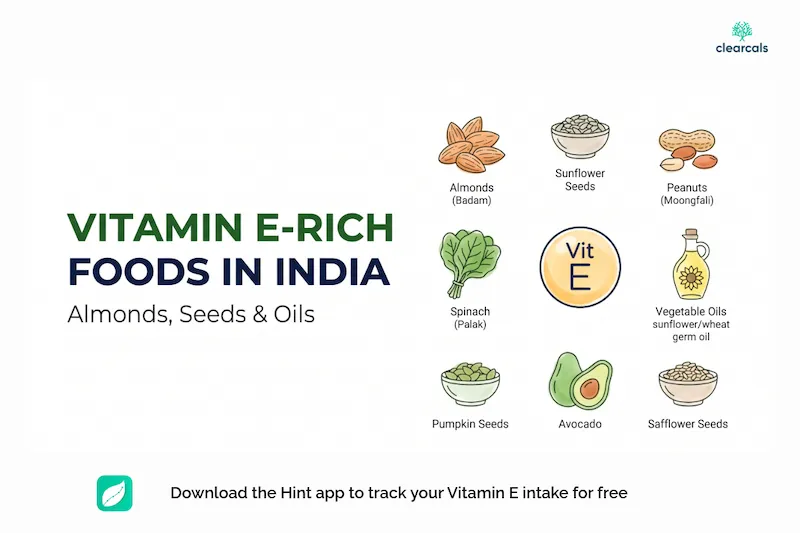
Vitamin E is mainly found in nuts, seeds, and vegetable oils. Good Indian sources are almonds, peanuts, sunflower seeds, sunflower and safflower oil, groundnut oil, wheat germ, spinach and mustard greens. A handful of nuts and seeds a day, together with cooking oils, covers most people. Dietary deficiency is rare, and high-dose supplements are not harmless, so use them only on medical advice.
- Best sources: sunflower seeds, almonds, peanuts, hazelnuts, wheat germ.
- Oils: sunflower, safflower and groundnut oil, with smaller amounts in mustard and rice bran oil.
- Greens: spinach, mustard greens, and broccoli add smaller amounts.
- Supplements: not needed for most people, and high doses can raise bleeding risk.
Why vitamin E matters
Vitamin E is a fat-soluble antioxidant that protects cells from damage and supports the immune system and nerves. Adults need about 10 mg a day according to ICMR-NIN guidance, which is easily met by a normal diet with some nuts, seeds, and oil.
Vitamin E foods: Indian list
| Food | Notes |
|---|---|
| Sunflower seeds | One of the richest sources; a small handful is plenty. |
| Almonds | A reliable everyday source: 6 to 8 almonds a day is a common portion. |
| Peanuts and peanut butter | Affordable and widely eaten. Choose unsweetened. |
| Sunflower, safflower and groundnut oil | Good sources, but remember oil is calorie-dense. |
| Wheat germ | Very rich but not commonly eaten. |
| Spinach, mustard greens, broccoli | Smaller amounts that add up. |
| Avocado, mango | Modest contributions. |
A note on calories
Nuts, seeds and oils are very calorie-dense, so stick to modest portions: a small handful of nuts (about 20 to 30 g) and measured oil in cooking. If you are watching your weight, this matters more than chasing vitamin E.
Signs of deficiency
True vitamin E deficiency is rare in people who eat normally. It mostly occurs with conditions that stop fat absorption, such as certain gut, liver, or genetic disorders, or in premature babies. Signs include nerve problems (numbness, poor balance), muscle weakness and vision problems. See a doctor if you have these.
Vitamin E supplements: take care
- Not needed by most people who eat nuts, seeds, and oils.
- High doses can raise bleeding risk, particularly if you take blood thinners such as warfarin or aspirin.
- Capsules for skin or hair are a separate topic. Talk to a dermatologist; this article is about food.
Tips to get more vitamin E from food
- Add a handful of mixed nuts and seeds to breakfast or as a snack.
- Rotate cooking oils instead of using the same one all the time.
- Eat green leafy vegetables regularly.
- Do not heat oils to the smoking point, which damages vitamin E.
- Keep portions of nuts and oil in line with your calorie target.
Track your vitamins with Hint
Hint lets you log your Indian meals and track your intake of all the essential vitamins for free, including vitamin E, alongside calories. This is helpful because the richest vitamin E foods are also high in calories, so you can see both numbers together. It estimates intake from food and does not replace medical advice. You can also try our free Indian food calorie calculator.
Frequently asked questions
Which food has the most vitamin E? Sunflower seeds, almonds, and wheat germ are among the richest, along with sunflower and safflower oil.
How many almonds should I eat for vitamin E? A small handful, around 6 to 8, gives a good amount. More adds calories.
Does vitamin E deficiency happen often? Not from diet in people who eat normally.
Is vitamin E good for skin and hair? Eating enough supports general health. Claims about capsules for skin and hair should be discussed with a dermatologist.
Can I take vitamin E with blood thinners? Ask your doctor first, because high doses can raise bleeding risk.
Medical disclaimer. This article is for general education and is not medical advice. Do not start, stop or change a vitamin supplement based on this article. If you have symptoms or a medical condition, or you are pregnant, speak to your doctor or a registered dietitian.
Related reading and tools
Start here: calorie tracking for Indian food if you are new to logging meals.
Other vitamin guides:
- Vitamin B12 foods for vegetarians
- Vitamin D foods and sunlight
- Vitamin A-rich foods
- Vitamin C rich foods
- Vitamin K-rich foods
- B-complex vitamin foods (B1, B2, B3, B5, B6, B7, B9)
Related reading:
Free tools:
- Indian food calorie calculator
- Protein calculator
- Hint, the Indian food, calorie and vitamin tracking app
About the author
Dr. Sumedha Verma is a Consultant Physician at Clearcals with extensive experience in clinical medicine and healthcare services.
She has significant expertise in managing chronic conditions such as diabetes, thyroid disorders, PCOS, infertility, and other gynecological health concerns.
Known for her patient-centered approach, Dr. Verma focuses on improving patient compliance and helping individuals achieve better health outcomes through personalized medical guidance and long-term care.
Connect with Dr. Sumedha on LinkedIn