Track your nutrition and health goals

Vitamin C Rich Foods in India: Amla, Guava, Lemon & More
Vitamin C-Rich Foods in India: Amla, Guava and Other Best Sources
By Dr. Sumedha Verma, Consultant Physician at Clearcals
The short answer
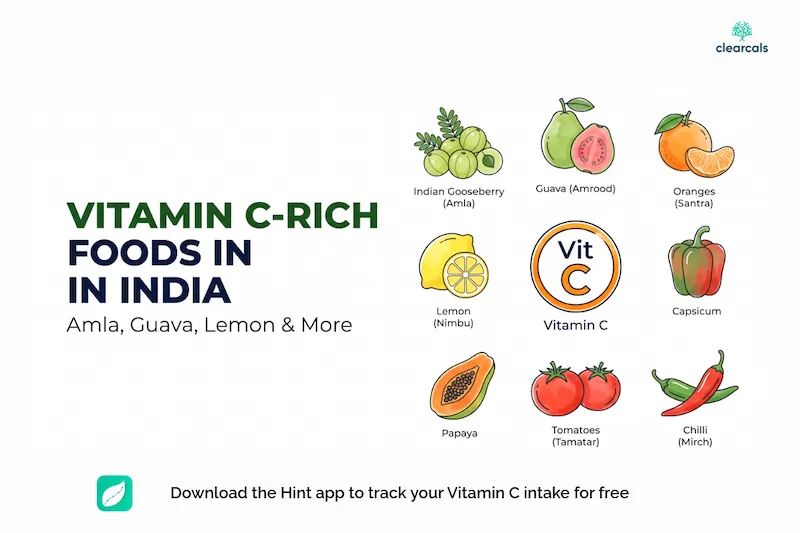
Indian kitchens are full of vitamin C. The richest everyday sources are amla, guava, lemon, orange, kiwi, capsicum, tomato, cabbage, cauliflower and broccoli. Amla and guava often provide more than oranges. Vitamin C is easily lost in heat and water, so eat some of it raw. Most people who eat fruit and vegetables daily do not need a supplement.
- Top foods: amla, guava, lemon, orange, kiwi, strawberries, papaya, raw mango.
- Vegetables: capsicum, tomato, cabbage, cauliflower, broccoli, coriander leaves, green chillies.
- Eat some raw and avoid overcooking or boiling for long.
- Supplements are rarely needed. Very high doses can upset your stomach and are not for self-use.
Why vitamin C matters
Vitamin C helps your body make collagen (for skin, gums, blood vessels, and wound healing), supports your immune system, acts as an antioxidant, and helps you absorb iron from plant foods like dal, spinach, and rajma. Adults need roughly 65 to 80 mg a day according to ICMR-NIN guidance, and smokers need more.
Vitamin C foods: Indian list
| Food | Notes |
|---|---|
| Amla (Indian gooseberry) | Among the richest sources by weight. Eat fresh, or as chutney or murabba (some content is lost in cooking and sugar). |
| Guava | Very rich and a cheap everyday fruit. |
| Lemon and lime | Squeeze onto dal, salad, and chaat at the end. |
| Orange, mosambi, kiwi, strawberry, papaya | Easy fruit options. |
| Capsicum (green, red, yellow) | Very high, especially raw. |
| Tomato, cabbage, cauliflower, broccoli | Moderate and useful in everyday meals. |
| Coriander and mint leaves, green chillies | Small amounts that add up as garnishes. |
| Raw mango | Good in season. |
How cooking affects vitamin C
Vitamin C dissolves in water and breaks down with heat and time.
- Eat some raw: salads, fruit, chutneys, and lemon squeezed on at the end.
- Cook briefly: quick sautéing or steaming loses less than long boiling.
- Use the cooking water in dals and soups when you can.
- Cut just before eating, because chopped fruit left out loses vitamin C.
- Store whole produce properly, and avoid long storage.
Vitamin C and iron
Having a vitamin C food with iron-rich plant foods improves iron absorption. For example, lemon on dal or palak, or guava after a meal. This is useful if you are vegetarian or prone to low haemoglobin.
Signs of vitamin C deficiency
Severe deficiency (scurvy) is rare in India now but can occur with a very restricted diet. Signs include bleeding or swollen gums, easy bruising, slow wound healing, fatigue, and joint pain. See a doctor if you notice these.
Does vitamin C prevent colds?
Not in general. Vitamin C is needed for normal immune function, but extra tablets do not reliably prevent colds in most people. Eating fruit and vegetables daily is a better approach than megadoses.
Can you have too much?
From food, no. From supplements, high doses (above about 1,000 mg a day) can cause diarrhoea and stomach upset, and may raise kidney stone risk in people prone to them. Check with your doctor first if you have kidney stones, kidney disease, or iron overload.
Track your vitamins with Hint
Hint lets you log your Indian meals and track your intake of all the essential vitamins for free, including vitamin C, alongside calories and protein. You can see how many days include a vitamin C food like guava, lemon, or capsicum. It estimates intake from food and does not replace medical advice. You can also try our free Indian food calorie calculator.
Frequently asked questions
Which fruit has the most vitamin C? Amla and guava are among the richest, ahead of oranges.
Is lemon rich in vitamin C? Yes, but the amount you actually eat is small. Pair it with other sources.
Which vegetables have vitamin C? Capsicum, tomato, cabbage, cauliflower, broccoli, and green leaves.
Does cooking destroy vitamin C? It reduces it, especially with long boiling. Mix raw and lightly cooked foods.
What causes vitamin C deficiency? A very limited diet with little fruit or vegetables, smoking, or certain medical conditions.
Do I need a vitamin C tablet? Usually not, if you eat fruit and vegetables daily. Ask your doctor.
Medical disclaimer. This article is for general education and is not medical advice. Do not start, stop or change a vitamin supplement based on this article. If you have symptoms or a medical condition, or you are pregnant, speak to your doctor or a registered dietitian.
Related reading and tools
Start here: calorie tracking for Indian food if you are new to logging meals.
Other vitamin guides:
- Vitamin B12 foods for vegetarians
- Vitamin D foods and sunlight
- Vitamin A-rich foods
- Vitamin E rich foods
- Vitamin K rich foods
- B-complex vitamin foods (B1, B2, B3, B5, B6, B7, B9)
Related reading:
- Daily protein requirement in India
- Daily protein requirement in India
- High-protein Indian instant diet
Free tools:
- Indian food calorie calculator
- Protein calculator
- Hint, the Indian food, calorie and vitamin tracking app
About the author
Dr. Sumedha Verma is a Consultant Physician at Clearcals with extensive experience in clinical medicine and healthcare services.
She has significant expertise in managing chronic conditions such as diabetes, thyroid disorders, PCOS, infertility, and other gynecological health concerns.
Known for her patient-centered approach, Dr. Verma focuses on improving patient compliance and helping individuals achieve better health outcomes through personalized medical guidance and long-term care.
Connect with Dr. Sumedha on LinkedIn