Track your nutrition and health goals

Vitamin K Rich Foods in India (Greens, K1 & K2 List)
Vitamin K-Rich Foods in India: Leafy Greens, Curd and What to Know on Warfarin
By Dr. Sumedha Verma, Consultant Physician at Clearcals
The short answer
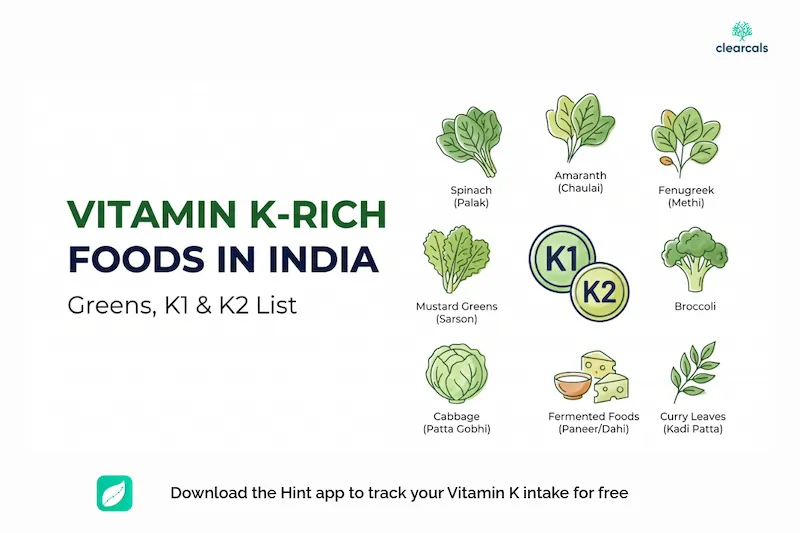
Vitamin K is found mostly in green leafy vegetables (vitamin K1) and in some fermented and animal foods (vitamin K2). Good Indian sources are palak (spinach), methi, sarson, coriander, cabbage, broccoli, lettuce, curd, paneer and eggs. Most people get enough from normal meals. If you take warfarin, vitamin K matters in a different way: keep your intake steady and do not change it suddenly without telling your doctor.
- K1 sources: spinach, methi, mustard greens, coriander, cabbage, broccoli, lettuce, spring onion greens.
- K2 sources: curd, cheese, paneer, egg yolk, chicken, and fermented foods.
- Deficiency from diet is rare in adults.
- On warfarin? Do not avoid greens. Eat a consistent amount and tell your doctor about big changes.
Why vitamin K matters
Vitamin K helps your blood clot properly and supports bone health. Adults need about 55 micrograms a day according to Indian guidance, and one serving of cooked greens can supply that.
Vitamin K1 and K2: what is the difference?
| Type | Main sources | Role |
|---|---|---|
| K1 (phylloquinone) | Green leafy vegetables, cabbage, broccoli | Mainly blood clotting |
| K2 (menaquinones) | Fermented foods, curd, cheese, egg yolk, meat | Linked to bone and blood vessel health; research is still developing |
Your gut bacteria also make some K2, though this is not a replacement for food.
Vitamin K foods: Indian list
| Food | Notes |
|---|---|
| Spinach, methi, sarson, bathua, coriander | Very rich. A small cooked serving gives a lot. |
| Cabbage, broccoli, cauliflower leaves, lettuce | Good everyday sources. |
| Spring onion greens, peas | Moderate amounts. |
| Curd, paneer, cheese | K2 in small amounts. |
| Egg yolk, chicken | Some K2. |
| Cooking oils (soybean, canola/rapeseed) | Contain K1 in modest amounts. |
Cooking does not destroy vitamin K, but eating it with a little fat (oil, ghee) helps absorption.
Vitamin K deficiency
It is uncommon in healthy adults. It can happen with fat malabsorption (some gut, liver, or gallbladder conditions), long-term antibiotic use together with poor intake, or certain medicines. The main sign is easy bruising or bleeding. See a doctor for unexplained bleeding, nosebleeds, or blood in urine or stool.
If you take warfarin: read this
Warfarin works by blocking vitamin K's effect, so your dose is set against your usual vitamin K intake.
- Do not stop eating leafy greens. They are healthy.
- Keep your intake consistent from week to week. The goal is stability, not zero.
- Tell your doctor if you change your diet a lot, for example, a new diet plan, a lot more greens, or a green juice habit. Your INR may need checking.
- Do not start vitamin K supplements or herbal products without checking with your doctor.
- Never change your warfarin dose because of what you ate.
Newer blood thinners (such as apixaban, rivaroxaban, or dabigatran) do not depend on vitamin K in the same way, but ask your doctor about your own medicine.
Tips to get enough
- Eat a serving of green leafy vegetables most days.
- Cook greens lightly with a little oil.
- Add cabbage or broccoli to sabzi, soups, or salads.
- Include curd or paneer in a daily meal.
Track your vitamins with Hint
Hint lets you log your Indian meals and track your intake of all the essential vitamins for free, including vitamin K, alongside calories and protein. For anyone on warfarin, a steady food log can show how much your vitamin K intake varies, which you can then discuss with your doctor. Hint estimates intake from food and does not replace your doctor's INR monitoring. You can also try our free Indian food calorie calculator.
Frequently asked questions
Which food has the most vitamin K? Green leafy vegetables like spinach, methi, mustard greens, and coriander are among the richest.
Is vitamin K in curd? In small amounts, as vitamin K2.
Should I avoid spinach on warfarin? No. Keep a consistent amount and tell your doctor about major changes.
What happens in vitamin K deficiency? Easy bruising and bleeding because blood does not clot well.
Do I need a vitamin K supplement? Most people do not. Ask your doctor.
Medical disclaimer. This article is for general education and is not medical advice. Do not start, stop, or change a vitamin supplement or a blood-thinner dose based on this article. If you have symptoms or a medical condition, or you are pregnant, speak to your doctor or a registered dietitian.
Related reading and tools
Start here: calorie tracking for Indian food if you are new to logging meals.
Other vitamin guides:
- Vitamin B12 foods for vegetarians
- Vitamin D foods and sunlight
- Vitamin A-rich foods
- Vitamin C-rich foods
- Vitamin E-rich foods
- B-complex vitamin foods (B1, B2, B3, B5, B6, B7, B9)
Related reading:
- DASH diet, an Indian plan for high blood pressure
- Daily protein requirement in India
- High-protein Indian instant diet
Free tools:
- Indian food calorie calculator
- Protein calculator
- Hint, the Indian food, calorie and vitamin tracking app
About the author
Dr. Sumedha Verma is a Consultant Physician at Clearcals with extensive experience in clinical medicine and healthcare services.
She has significant expertise in managing chronic conditions such as diabetes, thyroid disorders, PCOS, infertility, and other gynecological health concerns.
Known for her patient-centered approach, Dr. Verma focuses on improving patient compliance and helping individuals achieve better health outcomes through personalized medical guidance and long-term care.
Connect with Dr. Sumedha on LinkedIn