Track your nutrition and health goals

BP Tablets (Amlodipine, Telmisartan) and Diet: Timing & Foods
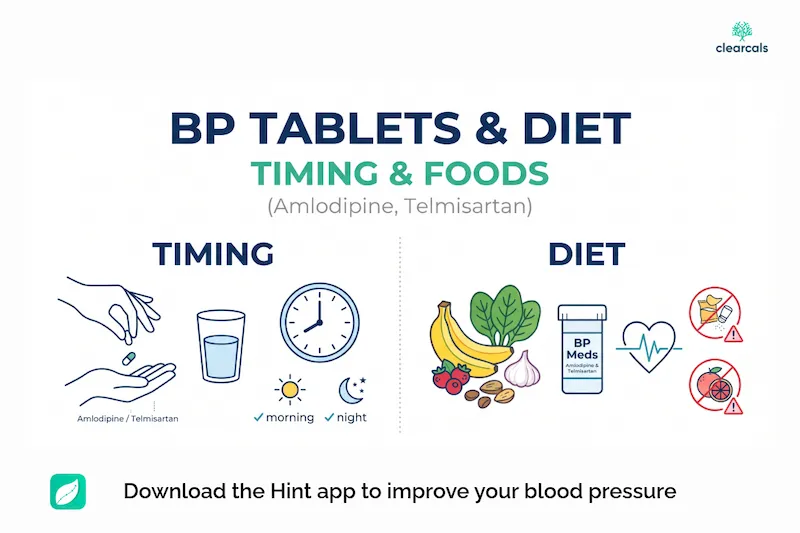
Amlodipine and Telmisartan (BP Tablets) and Diet: When to Take Them, What to Eat, and What to Avoid
By Dr. Sumedha Verma, Consultant Physician at Clearcals
The short answer
Amlodipine and telmisartan are two of the most commonly prescribed blood pressure tablets in India. They work best together with a low-salt, balanced diet and regular activity, and food cannot replace them if your doctor has prescribed them. Always follow your own doctor's advice.
- When to take it: At the same time every day, usually once a day. For most people, the time of day matters less than taking it regularly.
- With or without food: Both can usually be taken with or without food.
- Salt: Cutting down on salt is the single most useful food change. Most adults should aim for less than about 5 grams (one level teaspoon) of salt a day, counting hidden salt in pickles, papad, namkeen, and packaged foods.
- Potassium: Telmisartan can raise blood potassium. For most people with healthy kidneys, normal fruit like bananas is fine. Be careful with potassium-based "low-sodium" salt substitutes and potassium supplements, and ask your doctor if you have kidney disease.
- Alcohol: Alcohol raises blood pressure and can add to dizziness. Limit it or avoid it.
- Never stop on your own, even if your readings are normal. Normal readings usually mean the tablets are working.
What do amlodipine and telmisartan do?
Amlodipine is a calcium channel blocker. It relaxes and widens blood vessels so that blood flows more easily and pressure falls.
Telmisartan is an angiotensin receptor blocker (ARB). It blocks a hormone that tightens blood vessels and also helps the kidneys remove salt and water, which lowers blood pressure.
Doctors often prescribe them together in one tablet when one medicine is not enough. High blood pressure usually has no symptoms, so most people take these tablets for years. The dose is chosen based on your readings, age, kidney health, and other conditions, so never change it without your doctor.
When to take amlodipine or telmisartan: morning or night?
Both medicines stay in the body for a long time, so they work through the whole day and night when taken once daily.
- Take it at the same time every day, so you do not forget doses and your blood pressure stays steady.
- Morning or evening: research so far suggests that for most people, taking blood pressure tablets in the morning or at night does not make a meaningful difference to heart protection. Pick the time you can stick to, unless your doctor has asked for a specific time.
- Dizziness: if you feel dizzy or light-headed after your tablet, tell your doctor. Your doctor may suggest a different time of day.
- With or without food: both can be taken either way. Follow your prescriber's instructions.
- If you miss a dose, take it when you remember that day, but skip it if it is almost time for the next one. Never double up.
- Do not stop or change your dose because you feel fine or your readings look good. Stopping suddenly can let your blood pressure rise again.
Salt: the most important food change
Salt (sodium) makes the body hold on to water, which raises blood pressure and can reduce how well your tablets work.
How much? Many guidelines suggest less than about 5 grams of salt a day, roughly one level teaspoon, and less if your doctor advises it.
Where the salt hides in Indian food:
- Pickles (achaar), papad, chutneys and sauces
- Namkeen, chips, bhujia and packaged snacks
- Instant noodles, soup mixes and ready-to-eat meals
- Bread, biscuits and bakery items
- Cheese, processed paneer products and salted butter
- Restaurant and street food, which often contain a lot of salt
- Extra salt sprinkled on salad, curd, fruit or rice
Practical ways to cut down:
- Add less salt while cooking, and keep the salt shaker off the table.
- Flavour food with lemon, jeera, coriander, mint, garlic, ginger, pepper and other spices instead of extra salt.
- Eat pickles and papad occasionally and in small amounts.
- Read labels and choose lower-sodium products (see our low-sodium diet guide). Compare "sodium" per 100 g.
- Get used to less salt gradually. Your taste adapts within a few weeks.
What about rock salt (sendha namak or kala namak)? These are still salt and still contain sodium. They are not a free pass. Use small amounts and count them within your daily limit. See our guides on which salt is good for high blood pressure and what to eat with high blood pressure.
Potassium, bananas and salt substitutes
Many people ask whether they can eat bananas on blood pressure tablets.
- Amlodipine does not raise potassium, so bananas, oranges, coconut water and other fruit are fine.
- Telmisartan can raise potassium slightly. For most people with healthy kidneys, normal portions of potassium-rich foods are fine and may even help blood pressure. Your doctor may check potassium and creatinine from time to time.
- Take extra care if you have kidney disease, take potassium supplements or certain other medicines such as spironolactone, or use a "low-sodium" or "lite" salt. Many of these salt substitutes are made with potassium chloride and can push potassium too high when combined with telmisartan.
- Do not start potassium supplements or salt substitutes without checking with your doctor.
A heart-healthy eating pattern for blood pressure
A well-studied approach called the DASH diet lowers blood pressure. You can follow it with ordinary Indian food.
Eat more of:
- Vegetables and fruit, at every meal. Aim to fill half your plate with vegetables.
- Whole grains and millets such as whole wheat, jowar, bajra and ragi, instead of refined flour.
- Dal, rajma, chole and sprouts for protein and fibre.
- Low-fat dairy such as curd, buttermilk and toned milk.
- Nuts and seeds in small amounts, such as a small handful of almonds or walnuts.
- Fish, especially oily fish, a couple of times a week if you eat fish.
Eat less of:
- Salt and salty foods, as described above. See also foods to avoid with high blood pressure.
- Fried and oily food such as samosa, pakora, puri and chips.
- Sweets, sugary drinks and highly processed food.
- Red and processed meat.
- Large amounts of ghee and butter.
Alcohol, coffee, grapefruit and other things to watch
- Alcohol: It raises blood pressure over time, and together with blood pressure tablets it can make you dizzy or faint. Limit it, or avoid it, and speak to your doctor.
- Tea and coffee: Caffeine can raise blood pressure briefly. Two to three cups a day is fine for most people, but go lighter if your readings rise after having it. See is coffee good for high blood pressure.
- Grapefruit: Very large amounts of grapefruit juice may slightly raise amlodipine levels. Ordinary fruit is fine.
- Painkillers: Common anti-inflammatory painkillers (such as ibuprofen or diclofenac) can raise blood pressure and affect the kidneys, especially with telmisartan. Ask your doctor or pharmacist before using them regularly.
- Dehydration: If you have vomiting, diarrhoea or heavy sweating, tell your doctor. Telmisartan can strain the kidneys when you are dehydrated, and your doctor may ask you to pause it temporarily.
- Herbal and "natural BP cure" products: Do not replace your tablets with these, and check with your doctor before combining them.
A sample low-salt Indian day
This is an example, not a prescribed plan. Adjust it to your appetite, calorie needs and your doctor or dietitian's advice.
| Meal | Example |
|---|---|
| Early morning | Warm water, a few soaked almonds or a fruit |
| Breakfast | Vegetable poha or oats upma with little salt, or moong chilla with mint chutney, and curd |
| Mid-morning | A fruit such as banana, papaya or guava, or unsalted buttermilk with jeera |
| Lunch | One or two rotis, a bowl of dal made with less salt, a large serving of sabzi, salad with lemon |
| Evening snack | Roasted chana (unsalted) or sprouts chaat with lemon and chaat masala in small amounts |
| Dinner | Smaller portion of rice or roti, vegetable curry, and grilled fish, paneer or tofu |
Taste food before adding salt, and use lemon, herbs and spices for flavour. More ideas: breakfast for high blood pressure and the 7-day Indian diet plan for high blood pressure.
Habits beyond the plate
- Move most days. Aim for around 150 minutes of brisk walking or similar activity each week, unless your doctor advises otherwise.
- Manage your weight. Even a modest weight loss lowers blood pressure.
- Do not smoke, as it raises your heart risk.
- Sleep 7 to 8 hours and manage stress, as poor sleep and stress both raise blood pressure.
- Check your blood pressure at home if your doctor advises it. Sit quietly for a few minutes, take readings at the same times, and note them to show your doctor. Your doctor decides your target.
- Get tests as advised, including kidney function and potassium, especially if you take telmisartan.
Side effects and when to call your doctor
Most people tolerate these medicines well. Common effects are:
- Amlodipine: ankle or foot swelling, flushing, headache, dizziness and tiredness.
- Telmisartan: dizziness, back pain, a blocked or runny nose, and a rise in potassium.
Contact your doctor if you have:
- Dizziness, light-headedness or fainting, especially when standing up. Rise slowly from lying or sitting
- Swelling of the ankles or feet that is increasing
- Muscle weakness, an irregular heartbeat or very little urine, which can be signs of high potassium or kidney problems
- A planned or confirmed pregnancy. Telmisartan should not be used in pregnancy, so tell your doctor straight away
- Swelling of the face, lips or tongue, or difficulty breathing. Seek urgent care
- Chest pain, a severe headache, confusion, weakness on one side of the body or trouble speaking. Seek emergency help
Track your meals with Hint
Heart-healthy eating and weight control are easier when you can see what is on your plate. Hint is built for Indian food, so you can log your meals and see the calories and protein in each. A week or two of logging shows where fried snacks, sweets, and large portions add up, and gives you something concrete to discuss with your doctor or dietitian. You can also try our free Indian food calorie calculator.
Frequently asked questions
Should I take amlodipine or telmisartan in the morning or at night? Either works for most people. Take it at the same time every day, and follow your doctor's advice.
Can I take BP tablets with food? Yes. Both amlodipine and telmisartan can usually be taken with or without food.
Can I eat bananas on amlodipine or telmisartan? Yes, for most people. Amlodipine does not raise potassium, and with telmisartan, normal portions are fine if your kidneys are healthy. Check with your doctor if you have kidney disease or take potassium supplements.
Can I use low-sodium salt? Be careful. Many are made with potassium chloride and can raise potassium too much with telmisartan. Ask your doctor first.
Is rock salt (sendha or kala namak) better for BP? It still contains sodium. Use small amounts and count it in your daily salt limit.
Can I drink alcohol on BP tablets? Alcohol raises blood pressure and can add to dizziness. Limit it or avoid it, and speak to your doctor.
Can I stop my BP tablet if my readings are normal? No. Normal readings usually mean the tablet is working. Only your doctor should decide to change or stop it.
Can diet alone replace BP tablets? Not if your doctor has prescribed them. Diet and exercise are an essential partner and can sometimes reduce how much medicine you need, but that decision should be made with your doctor.
Medical disclaimer. This article is for general education and is not medical advice. Amlodipine and telmisartan are prescription medicines. Do not start, stop, or change your dose based on this article. Speak to your doctor or a registered dietitian about your own situation.
Related reading and tools
Start here: our DASH diet plan for Indian food, and calorie tracking for Indian food if you are new to logging meals.
Related reading:
- Low-sodium diet guide
- Which salt is good for high blood pressure?
- High blood pressure me kya khana chahiye
- Indian foods and high blood pressure
- Foods to avoid with high blood pressure
- Fruits for high blood pressure
- Breakfast for high blood pressure
- 7-day diet plan for high blood pressure (Indian)
- Is coffee good for high blood pressure?
- Best juice for diabetes and high blood pressure
- Calories burned in 10,000 steps
Other medicine and diet guides:
Free tools:
- Blood pressure calculator
- Indian food calorie calculator
- Calories burned calculator
- Hint, the Indian food and calorie tracking app
About the author
Dr. Sumedha Verma is a Consultant Physician at Clearcals with extensive experience in clinical medicine and healthcare services.
She has significant expertise in managing chronic conditions such as diabetes, thyroid disorders, PCOS, infertility, and other gynecological health concerns.
Known for her patient-centered approach, Dr. Verma focuses on improving patient compliance and helping individuals achieve better health outcomes through personalized medical guidance and long-term care.
Connect with Dr. Sumedha on LinkedIn