Track your nutrition and health goals

Calcium Rich Foods in India: Veg & Vegan List, Daily Need
Calcium-Rich Foods in India: Vegetarian and Vegan Sources, Daily Need and a Sample Day
By Dr. Sumedha Verma, Consultant Physician at Clearcals
The short answer
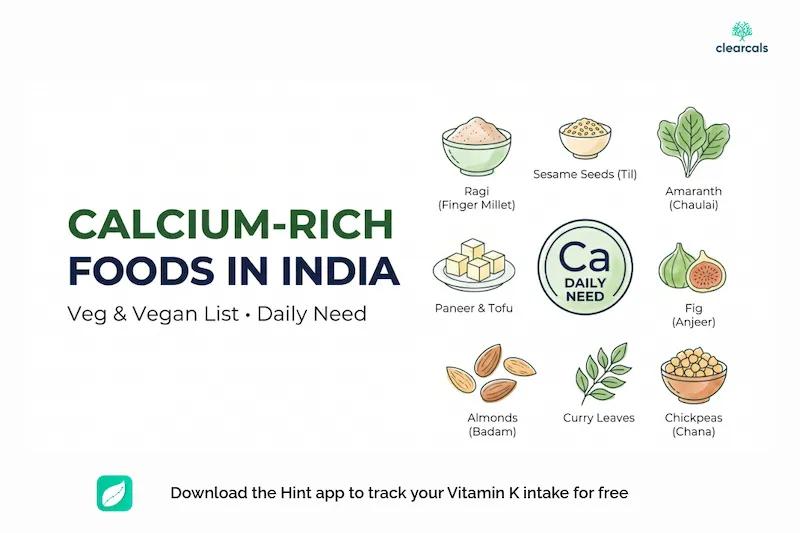
For most Indians, the best everyday calcium sources are milk, curd, paneer and cheese; ragi; sesame seeds (til); and some green leaves such as amaranth (chaulai), drumstick leaves and methi. If you eat fish, small fish eaten with the bones are excellent. Vegans can use ragi, sesame, calcium-set tofu, fortified plant milks and certain greens. Most adults need about 1,000 mg a day, which a varied diet can meet. Vitamin D helps you absorb it, so the two work together.
- Dairy: milk, curd, buttermilk, paneer, cheese. The easiest route if you eat dairy.
- Plant sources: ragi, sesame, amaranth and drumstick leaves, methi, curry leaves, almonds, dried figs, soya and calcium-set tofu.
- Not as good as it looks: spinach is high in calcium, but oxalate in it blocks most absorption. Don't count on it.
- Absorption needs vitamin D, so see our guide to vitamin D foods and sunlight.
- Supplements: only on a doctor's advice. More is not better.
Why calcium matters
About 99 percent of your body's calcium is in your bones and teeth, and the rest helps muscles, nerves, the heart, and blood clotting. If you don't eat enough, your body pulls it from your bones, which raises the risk of weak bones (osteoporosis) later in life. Women are at higher risk after menopause, and teenagers and pregnant or breastfeeding women have higher needs.
How much calcium do you need?
Indian guidance (ICMR-NIN) sets adult needs at roughly 1,000 mg a day. Needs are higher during the teenage growth years and while breastfeeding, and children need less according to age. Your doctor or dietitian may set a different target if you have a bone, kidney, or other condition. More than about 2,500 mg a day from food and supplements together is not advised.
Calcium-rich foods: Indian list
The numbers below are rough amounts per typical serving. They vary by brand, variety, and preparation.
| Food | Typical serving | Roughly how much calcium | Notes |
|---|---|---|---|
| Milk (cow or buffalo) | 1 glass (250 ml) | about 300 mg | Toned, full-fat, and skimmed have similar calcium. |
| Curd | 1 bowl (100 g) | about 100 to 150 mg | Buttermilk has less. |
| Paneer | 50 g | about 100 to 250 mg | Varies by fat content. |
| Cheese | 1 slice or 20 g | about 100 to 200 mg | Check the label. |
| Ragi (finger millet) | 50 g flour | about 170 mg | A strong plant source. Ragi dosa, roti, porridge, idli. |
| Sesame seeds (til) | 1 tablespoon (10 g) | about 100 mg | Chikki, laddoo, chutney, or sprinkled on salads. |
| Amaranth leaves (chaulai), drumstick leaves, methi | 1 cooked bowl | about 150 to 250 mg | Better absorbed than spinach. |
| Curry leaves | a handful | notable amounts | Used daily in tadkas, so they add up. |
| Almonds | 10 | about 30 mg | Helpful but not a main source. |
| Dried figs (anjeer) | 2 to 3 | about 60 to 80 mg | A useful snack. |
| Calcium-set tofu | 100 g | about 200 to 350 mg | Check the label for a calcium salt. |
| Small fish eaten with bones | 50 g | high | Excellent if you eat fish. |
| Fortified milk, plant milk or cereal | per label | per label | Useful for vegans. |
Vegetarian and vegan calcium: what is realistic
- Vegetarians who eat dairy: two to three servings of milk, curd, paneer or cheese a day, plus ragi or sesame, go a long way.
- Vegans: rely on ragi, sesame, calcium-set tofu, fortified plant milk, and the greens that are well absorbed (amaranth, drumstick leaves, methi). Plan this deliberately.
- People who avoid dairy because of lactose intolerance: curd, buttermilk, and paneer are often tolerated better than milk. Lactose-free milk has the same calcium.
What blocks calcium absorption?
- Oxalates: high in spinach, rhubarb, and some other greens; they bind calcium and reduce how much you absorb. Cooked amaranth and drumstick leaves are better choices.
- Phytates: in whole grains and pulses. Soaking, sprouting, and fermenting reduce them.
- Too much salt, caffeine, and soft drinks can increase calcium loss. Keep these moderate.
- Low vitamin D: reduces absorption. Get regular sunlight and talk to your doctor if you may be low.
Calcium, kidney stones and your diet
Calcium oxalate is the most common type of kidney stone, but that does not mean you should cut dietary calcium. Eating calcium in food often lowers stone risk, because it binds oxalate in the gut. If you have kidney stones, ask your doctor before changing calcium foods or taking calcium tablets.
Signs of calcium deficiency
- Muscle cramps, spasms, or tingling around the mouth and in the fingers
- Brittle nails and dry skin
- Fatigue
- Weak or easily fractured bones over time (often with no symptoms until a fracture)
- In children: delayed growth and tooth problems
Many of these have other causes, and low calcium is often tied to low vitamin D, magnesium, or kidney, thyroid, or parathyroid problems. A blood test is the way to know. Don't start tablets on a guess.
Calcium tablets: a few cautions
Most healthy people who eat dairy or other calcium foods don't need a tablet. If your doctor prescribes one:
- Follow the dose and form they gave you. Doses above what your body can absorb at one time are wasted, so doctors often split them.
- Keep it 4 hours away from your thyroid tablet (thyroxine) and from iron tablets. See our guide to Thyronorm and diet.
- Take calcium carbonate with food, which helps absorption. Calcium citrate can be taken with or without.
- Do not exceed the amount prescribed. Too much can cause constipation, kidney stones, and other problems.
A sample day of calcium-rich Indian eating
This is an example, not a prescribed plan, and the amounts are approximate. Adjust to your needs and your doctor or dietitian's advice.
| Time | Example | Approx. calcium |
|---|---|---|
| Breakfast | Ragi dosa or porridge made with milk | 250 to 350 mg |
| Mid-morning | A glass of buttermilk and 2 figs | 150 to 200 mg |
| Lunch | Roti, dal, amaranth or methi sabzi, a bowl of curd | 250 to 350 mg |
| Evening | Sesame chikki or a handful of almonds, tea | 80 to 120 mg |
| Dinner | Paneer or tofu sabzi, roti, salad with sesame | 150 to 250 mg |
| Day total | Roughly 900 to 1,300 mg |
Vegans can swap milk and curd for fortified plant milk and extra tofu, ragi and sesame.
Track your calcium with Hint
It's hard to know whether your usual meals add up to 1,000 mg. Hint lets you log your Indian meals and track your calcium intake, along with calories, protein and the essential vitamins, for free.
After a week, you can see which days are well below your target, and which foods such as curd, ragi or sesame would close the gap most easily. Hint estimates your intake from food and cannot replace a blood test or your doctor's advice. You can also try our free Indian food calorie calculator.
Frequently asked questions
Which food has the most calcium? Among everyday Indian foods, sesame seeds, ragi, milk, curd, paneer, cheese, small fish with bones, and some green leaves such as amaranth and drumstick leaves are the top sources.
Which vegetarian foods are rich in calcium? Milk, curd, paneer, ragi, sesame, amaranth and drumstick leaves, methi, curry leaves, figs and calcium-set tofu.
Which fruit is rich in calcium? Fruits have modest calcium. Dried figs, oranges and kiwi contribute a little. Don't rely on fruit for calcium.
Is spinach a good source of calcium? It looks high on paper, but oxalate blocks most of it from being absorbed. Choose amaranth, drumstick leaves or methi instead.
How much calcium do I need per day? About 1,000 mg a day for most adults, more during teen growth years and breastfeeding. Your doctor may advise differently.
What is the best time to take calcium tablets? If your doctor prescribed them, take calcium carbonate with a meal and keep it 4 hours away from thyroid and iron tablets. Follow your doctor's schedule.
Can I get enough calcium without milk? Yes, with ragi, sesame, calcium-set tofu, fortified plant milk and certain greens, but it takes planning.
Should I avoid calcium if I have kidney stones? Not on your own. Ask your doctor, because dietary calcium often helps.
Medical disclaimer. This article is for general education and is not medical advice. Do not start, stop or change a calcium or vitamin D supplement based on this article. If you have symptoms, kidney or bone disease, or you are pregnant or breastfeeding, speak to your doctor or a registered dietitian.
Related reading and tools
Start here: calorie tracking for Indian food if you are new to logging meals.
Other vitamin guides:
- Vitamin B12 foods for vegetarians
- Vitamin D foods and sunlight
- Vitamin A rich foods
- Vitamin C rich foods
- Vitamin E rich foods
- Vitamin K rich foods
- B-complex vitamin foods (B1, B2, B3, B5, B6, B7, B9)
Related reading:
- Thyronorm and diet (keep calcium 4 hours apart)
- Vegetarian protein sources in India
- Daily protein requirement in India
- High-protein Indian instant diet
Free tools:
- Indian food calorie calculator
- Protein calculator
- Hint, the Indian food, calorie and nutrient tracking app
About the author
Dr. Sumedha Verma is a Consultant Physician at Clearcals with extensive experience in clinical medicine and healthcare services.
She has significant expertise in managing chronic conditions such as diabetes, thyroid disorders, PCOS, infertility, and other gynecological health concerns.
Known for her patient-centered approach, Dr. Verma focuses on improving patient compliance and helping individuals achieve better health outcomes through personalized medical guidance and long-term care.
Connect with Dr. Sumedha on LinkedIn